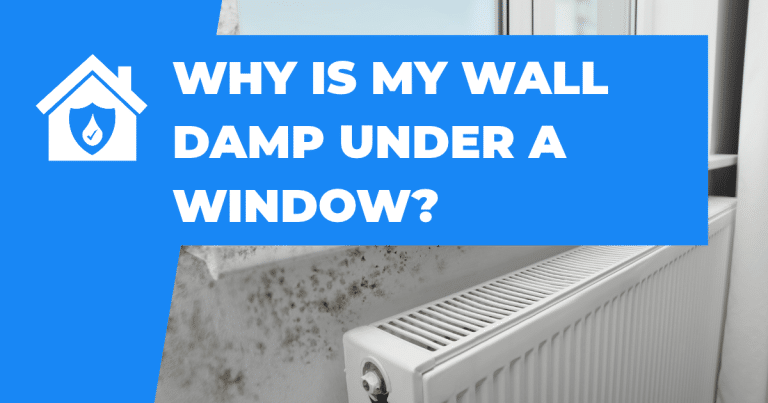
Damp around windows is one of the most common problems inside a home. For example, you might see black mould on the reveals, a damp stain spreading from the corner of the frame, peeling paint on the cill or water pooling on the window board on cold mornings.
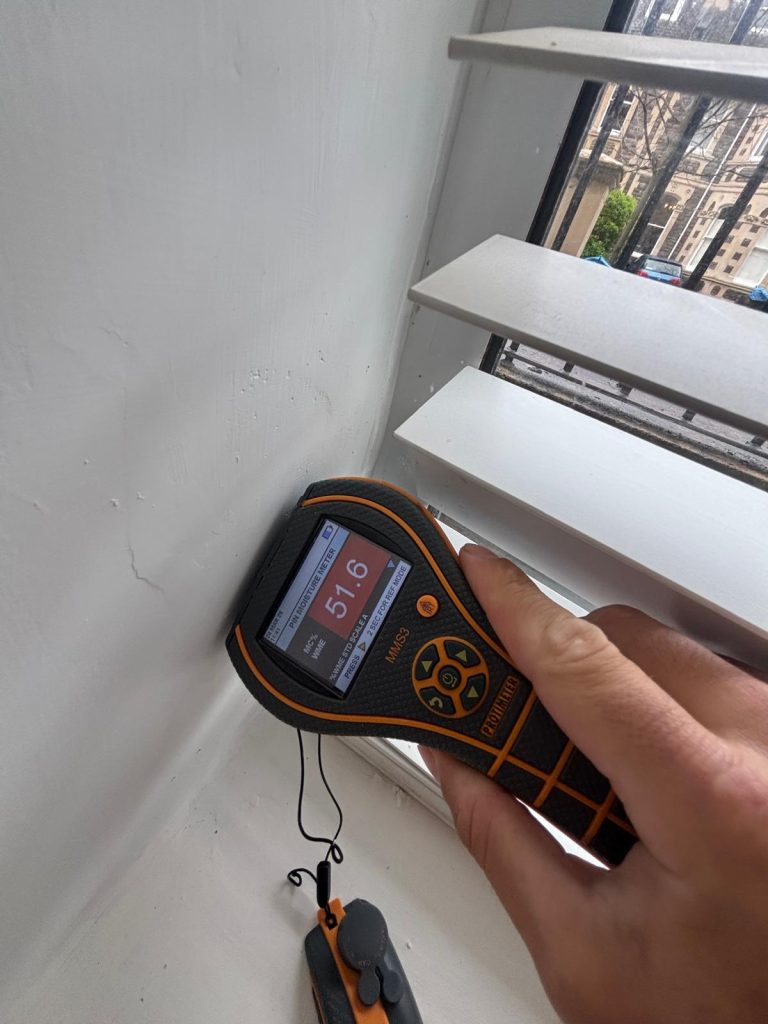
Windows are a weak point because they break up the wall. Every opening has joints, seals, a lintel above and a cill below, and each of these can let in rain or create a cold spot where condensation forms. On top of that, older single-glazed windows add another source, because water runs off the cold glass.
The pattern of the damp is a useful clue. Damp that appears after rain points to water getting in from outside. By contrast, damp that is worst on cold mornings points to condensation. So finding the right cause is the difference between a lasting fix and repainting the same reveal every winter.
Condensation Around Windows
Why windows attract condensation
Glass and window frames are usually the coldest surfaces in a room. So when warm, moist air inside touches them, water condenses. On single glazing, it runs down onto the cill. On double glazing, it forms on the frame and the edge of the glass, where the insulation is weakest.
Cold reveals
The plastered sides and top of a window opening, known as reveals, often stay colder than the rest of the wall. This is especially true where a concrete lintel or an uninsulated cavity edge creates a cold bridge. As a result, mould often starts in the top corners.
Poor ventilation
Modern windows often come with trickle vents. However, if you keep them shut, or someone fitted new windows without them, moisture has nowhere to go. Approved Document F of the Building Regulations sets ventilation rules, and replacement windows should not leave a room with less airflow than before.
Rain Getting In Around the Window
Failed seals between frame and wall
Installers usually seal the joint between the window frame and the masonry with mastic or silicone. When this cracks or shrinks, wind-driven rain can get into the joint and track into the wall. Then damp appears at the edges of the reveals, often lower down.
Missing or faulty cavity tray
In cavity walls, a cavity tray above the window collects water running down inside the outer wall and sends it out through weep holes. Approved Document C covers keeping moisture out, and good detail over openings is a key part of this. However, if the tray is missing or damaged, or debris clogs the weep holes, water drops onto the top of the window and runs inside. The usual sign is damp above the window after heavy rain.
Cills and drips
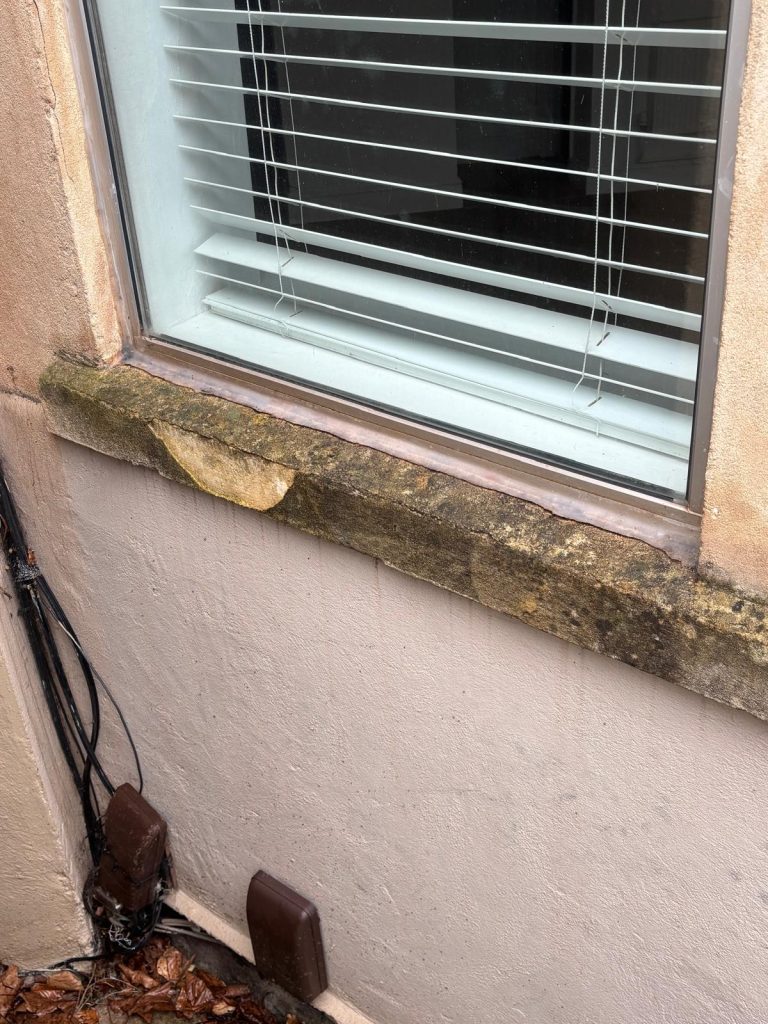
A cill should slope away from the building and have a drip groove underneath so that water falls clear of the wall. But a cracked, flat or back-sloping cill, or a drip full of paint, lets water soak into the wall below the window.
Faulty lintels
A rusty steel lintel, or one without stop ends, can also let water into the wall around the top of the opening.
Open cavities
When someone replaces windows in a cavity wall, they should close the cavity at the edges of the opening with an insulated cavity closer. This also acts as an upright damp barrier. Where it is missing, both rain and cold can reach the inside.
How to Read the Pattern of Damp Around Windows
| Visual sign | Likely causes to consider |
|---|---|
| Water on cill and black mould on cold mornings | Condensation, poor ventilation |
| Mould in the top corners of reveals | Cold bridging at the lintel, condensation |
| Damp patch above the window after rain | Missing or clogged cavity tray, faulty lintel |
| Damp at the sides of reveals after rain | Failed frame seal, missing cavity closer |
| Damp below the window after rain | Faulty cill, clogged drip, cracked render |
| Rotting timber cill or frame | Long-term water exposure, condensation run-off |
Use this table as a first check rather than a diagnosis.
Is it worse on one side of the house?
Walls facing the prevailing south-westerly weather take the most wind-driven rain. In fact, BRE guidance based on BS 8104 maps exposure zones across the UK, and coastal and western areas are among the most exposed. So if damp around windows is worst on that side, rain is a more likely cause than condensation.
How to Fix Damp Around Windows
For condensation
- Keep trickle vents open, especially in bedrooms and kitchens.
- Use extractor fans when you cook and shower, and leave them running for a while afterwards.
- Keep heating at a steady, moderate level rather than short bursts.
- Wipe condensation off windows and cills each morning.
- Avoid drying clothes on radiators.
- Don’t press curtains or blinds tight against cold glass overnight.
- Consider insulated reveals or thermal plaster where cold bridging is the problem.
For rain getting in
- Renew failed sealant between the frame and the wall.
- Clear clogged weep holes above and below openings.
- Repair or replace cracked cills, and clear drip grooves.
- Repoint worn mortar and repair cracked render around the opening.
- Investigate the cavity tray and lintel if damp appears above the window.
For damaged finishes
Once you fix the cause and the wall has dried, treat and remove mould. After that, replace damaged plaster and redecorate with an anti-mould paint in rooms prone to condensation.
Never just paint over mould, because it will grow back through the new finish.
Landlords and Tenants
Damp and mould around windows is one of the most frequent complaints in rented homes. Landlords have a duty under section 11 of the Landlord and Tenant Act 1985 to keep the structure, exterior and window frames in repair. They must also keep homes free of serious hazards under the Homes (Fitness for Human Habitation) Act 2018. So a failed seal, missing cavity tray or rotten frame is a repair issue rather than a lifestyle one. Even where condensation is the cause, landlords should still check that ventilation and heating are good enough before they put the blame on tenants.
When to Call a Professional
Book an inspection if you notice:
- Damp around windows that appears after rain
- Mould that returns quickly after cleaning
- Damp above the top of the window
- Rotting cills or frames
- Damp that started after new windows went in
- Ongoing condensation despite good ventilation habits
A specialist will:
- Measure moisture in the wall around the opening
- Inspect seals, cills, lintels, cavity trays and weep holes
- Use thermal imaging to find cold bridges
- Find the real cause, whether condensation or rain
- Recommend a repair that deals with it
Nordic Damp Proofing provides damp surveys, penetrating damp treatment, condensation control and mould remediation across England & Wales!
Our PCA-trained and accredited surveyors follow recognised industry standards, and we hold Biokil Crown and ISSE accreditations. We also offer free quotes for homeowners and landlords, with 25-year guarantees available on qualifying remedial work – book a survey.
Don’t keep wiping and repainting, because the damp will return until you find where the water comes from.
We Find It, We Treat It, We Stop It Coming Back.