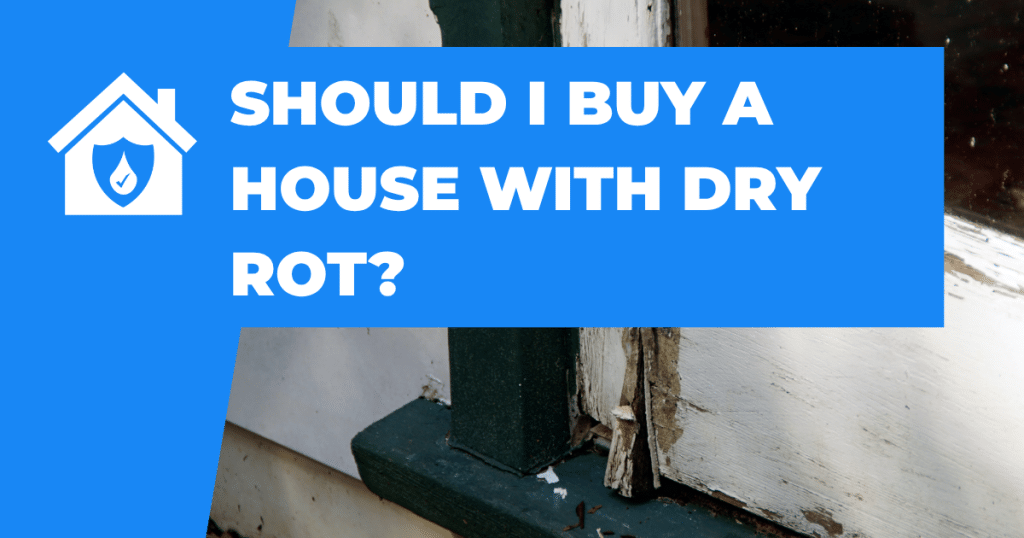
If you are deciding whether to buy a house with dry rot, you are not alone. Few words on a survey report worry buyers more. Dry rot has a reputation for spreading unseen through a house and eating through floors and roof timbers. Some of that reputation is fair. However, much of it is not.
Dry rot is a wood-destroying fungus called Serpula lacrymans. It attacks damp timber and, unlike most other decay fungi, it can grow across and through damp masonry to reach timber further away. That is why surveyors take it more seriously than wet rot.
So, should you buy? The honest answer is that it depends. A small outbreak with a clear cause is usually treatable, and it gives you a reason to negotiate rather than walk away. In contrast, a large, active outbreak in a house with ongoing damp is a much bigger risk. Either way, you need the facts before you exchange contracts.
What Dry Rot Actually Is

The conditions it needs
Dry rot is a fungus, and like all fungi it needs moisture to grow. Timber in a heated, well-kept home usually sits at about 18–20% moisture, which is too dry for decay. Dry rot typically starts where timber has stayed wet for some time, ideally at around 30–40%. Once the timber dries back below about 20%, the fungus goes dormant and eventually dies.
Why it worries people
What makes dry rot different is how it spreads. Its strands can travel through mortar joints, behind plaster and through damp masonry for several metres while they search for new timber. As a result, an outbreak is often bigger than it looks on the surface.
The name is misleading
“Dry” describes the dry, crumbly timber it leaves behind rather than the conditions it needs. In fact, dry rot always starts with a moisture problem.
How Dry Rot Shows Up
Signs to look for
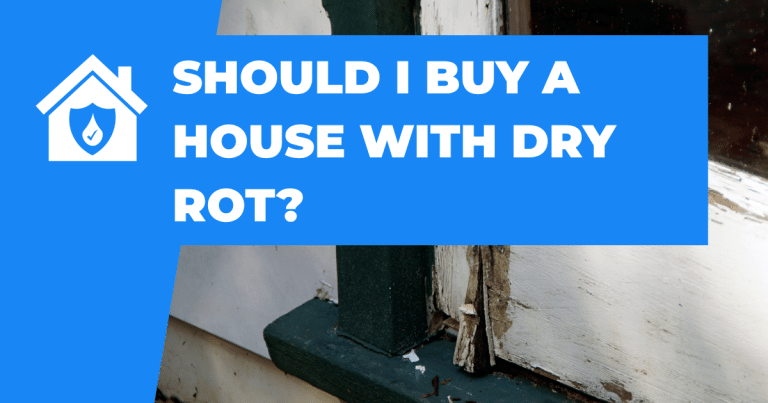
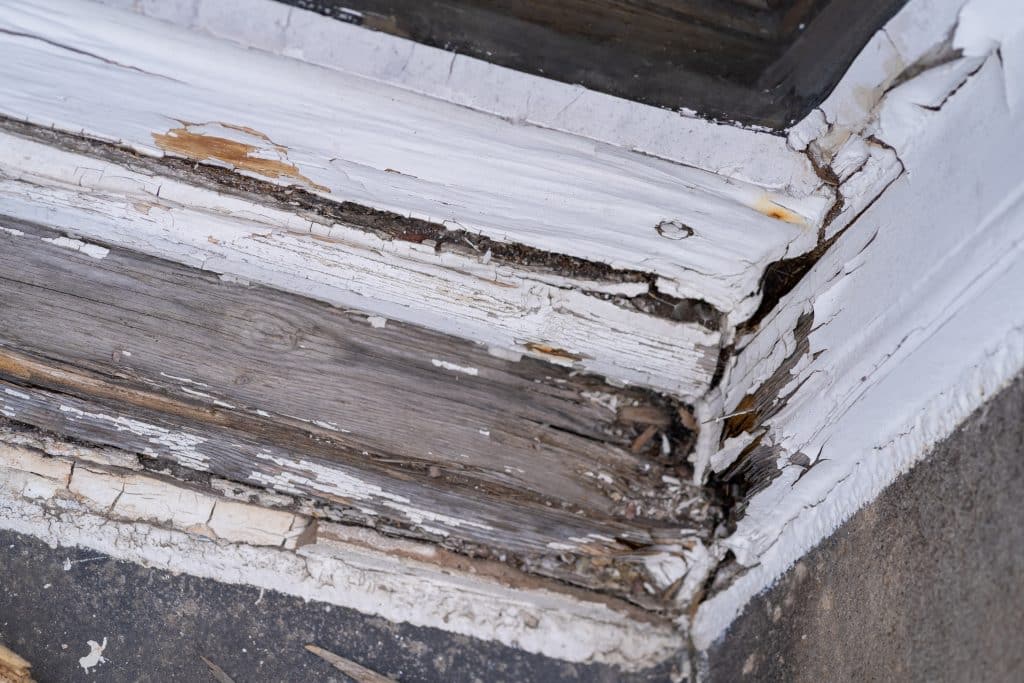
- Timber that has shrunk and cracked into cube-shaped pieces
- White or grey cotton-wool-like growth in damp, still spaces
- Grey strands spreading across masonry
- A flat, pancake-shaped growth with a rust-coloured centre
- Fine rust-red dust on nearby surfaces
- A damp, mushroomy smell in a closed space
- Floors that feel soft or springy, or skirting boards that crumble
Where it hides
Dry rot favours dark, still spaces with little airflow, such as under suspended timber floors, behind panelling and skirting, around leaking roofs and gutters, and in cellars. A RICS Level 2 or Level 3 survey may flag signs of it. However, surveyors don’t usually lift floors or remove fittings, so at that stage nobody may know the true extent.
Questions to Answer Before You Buy a House with Dry Rot
How far has it spread?
A specialist damp and timber survey aims to find the edges of the outbreak. To do this, the surveyor may lift floorboards, take off skirting and, with the seller’s permission, open up small areas of plaster.
Is it active or dead?
Old, dormant dry rot from a problem someone fixed years ago is very different from an active outbreak. Moisture readings and the state of the growth help tell the two apart.
What caused it?
Every outbreak has a moisture source. For example, it might be a leaking roof or gutter, a burst pipe, blocked airbricks, rising or penetrating damp, or a long-term plumbing leak. Unless someone fixes that cause, treatment will fail.
Is there an existing guarantee?
If someone has treated the property before, ask for the paperwork. A guarantee that transfers to you, ideally backed by insurance, may cover the problem if it comes back. Also check whether it is still valid, who issued it and whether that company still trades.
Has the rot reached structural timber?
Rot in joists, wall plates, lintels or roof timbers is a structural issue. In that case, the timber needs repair as well as treatment.
How Dry Rot Affects a Purchase
Your mortgage
Lenders take timber decay seriously. If the valuer notes dry rot, the lender may hold back part of the loan until the work is complete. Alternatively, it may ask for a report from a Property Care Association (PCA) qualified surveyor, or refuse to lend until you resolve it. Because of this, a PCA-qualified report carries real weight with lenders.
The price
Once you have a specialist report with a costed treatment plan, you are in a strong position. You can either renegotiate the price or ask the seller to carry out the work before completion.
Insurance
Most standard home insurance policies exclude slow deterioration, including rot. So don’t assume an insurer will pay if the problem gets worse after you move in.
| What you find | What it can indicate |
|---|---|
| Small area of decay, clear leak source, dry surroundings | Local outbreak, likely treatable |
| Fresh cotton-wool growth and spore dust | Active outbreak, needs urgent investigation |
| Strands across masonry, several rooms affected | Wide spread, higher cost and risk |
| Valid, insurance-backed guarantee from earlier treatment | Some protection if it returns |
| Rot in joists or roof timbers | Structural repair as well as treatment |
Use this as a guide for talking to your surveyor rather than as a verdict.
What Treatment Involves
Good treatment follows clear stages:
- Find and fix the moisture source. This is the most important step, because nothing else lasts without it.
- Expose the full extent. Next, remove plaster, skirting and flooring to trace the fungus to its limits.
- Remove decayed timber. Then cut out affected timber with a safety margin into sound wood.
- Treat masonry and timber. After that, apply fungicide to the masonry around it and preservative to the timber you keep, using products approved under the Control of Pesticides Regulations (COPR).
- Replace and isolate. Fit new, pre-treated timber and keep it apart from damp masonry.
- Dry and ventilate. Finally, improve airflow so the area stays dry.
Modern practice puts drying out and controlling the space first. Once the moisture goes, dry rot cannot survive, so heavy chemical use is not always necessary.
So, Should You Buy a House with Dry Rot?
The key requirement is clear: don’t decide on a general survey alone. Instead, commission a specialist damp and timber survey before you exchange, get a written treatment plan and a cost, and then factor both into your offer.
In short, you can buy a house with dry rot as long as:
- A surveyor has found the outbreak and how far it reaches
- You know the moisture source and how to fix it
- Treatment has a clear cost, and the price reflects it
- Your lender is happy to proceed
- The work comes with a meaningful guarantee
On the other hand, walk away, or go ahead only with great caution, if the rot is widespread, the cause is unclear, structural timbers have suffered badly or the seller won’t allow proper checks.
When to Call a Professional
Book a specialist survey if:
- Your Homebuyer or Building Survey mentions rot, fungal decay or high timber moisture
- Your lender asks for a damp and timber report
- You see cotton-wool growth, fruiting bodies or rust-coloured dust during a viewing
- Floors feel soft or skirting boards crumble
- The property has a history of leaks, flooding or long periods empty
- The seller mentions earlier rot treatment
A specialist will:
- Measure moisture in timber and masonry
- Inspect the structure, including floor voids and roof spaces where they can reach them
- Confirm the fungus and whether it is active
- Find the real moisture source
- Recommend treatment and give a clear, written cost
Nordic Damp Proofing carries out pre-purchase reports, timber surveys and dry rot treatment across England & Wales!
Our PCA-trained and accredited surveyors follow recognised industry standards, and we hold Biokil Crown and ISSE accreditations. We also offer free quotes, and 25-year guarantees are available on qualifying remedial work.
Don’t exchange contracts on a house with suspected dry rot until you know exactly what you are buying.
We Find It, We Treat It, We Stop It Coming Back.