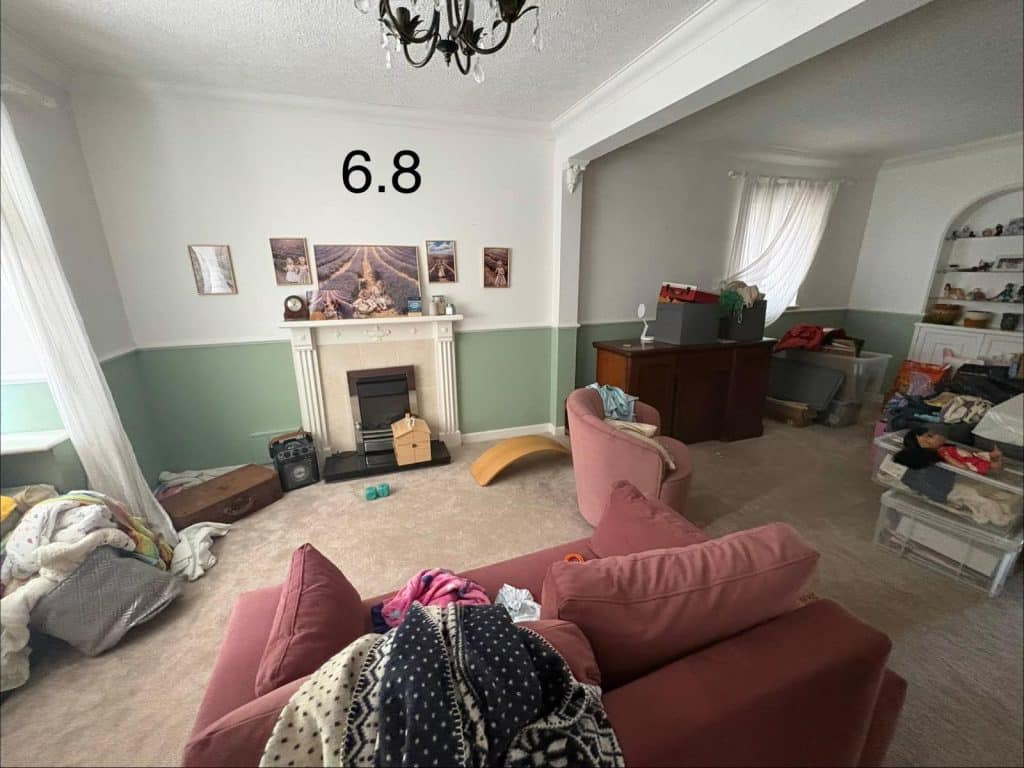
We recently completed another rising damp treatment project at a property in Southampton, where moisture was affecting a substantial section of the lounge walls.
Following assessment of the affected areas, approximately 9.8 linear metres of wall required remedial treatment. The work involved removing deteriorated and contaminated plaster, installing a new chemical damp proof course, fitting a damp proof membrane system and replastering the treated walls.
The aim was not simply to cover over the visible signs of damp, but to create a complete remedial system designed to control moisture movement and protect the replacement internal finishes.
The Damp Problem in the Lounge
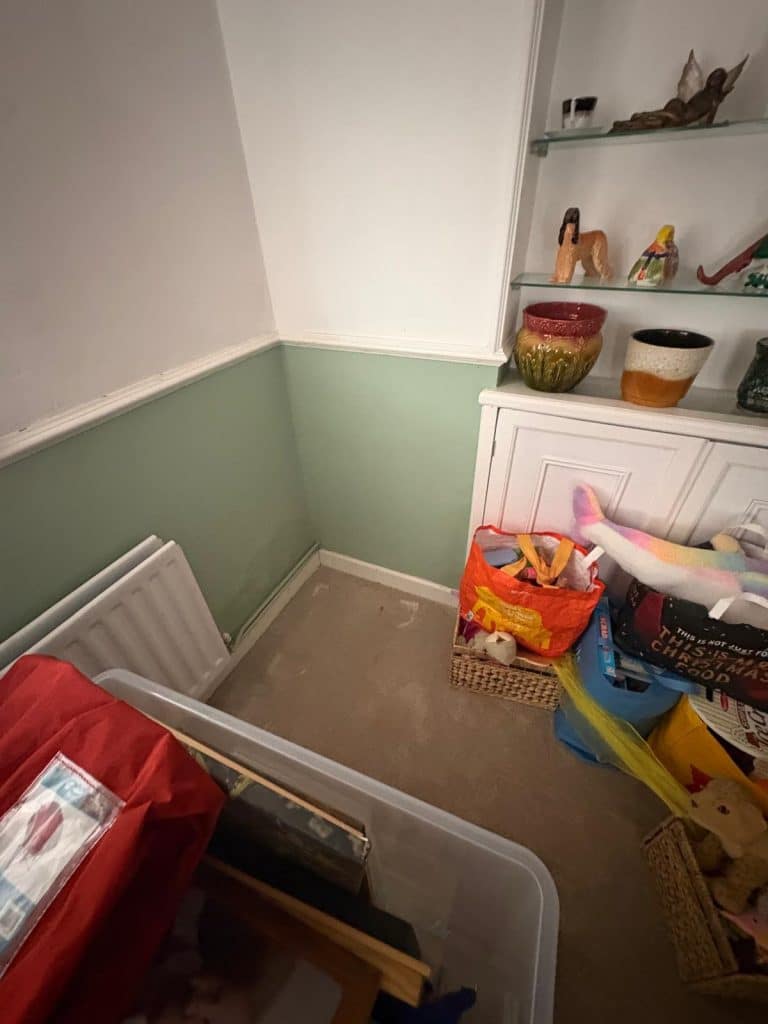
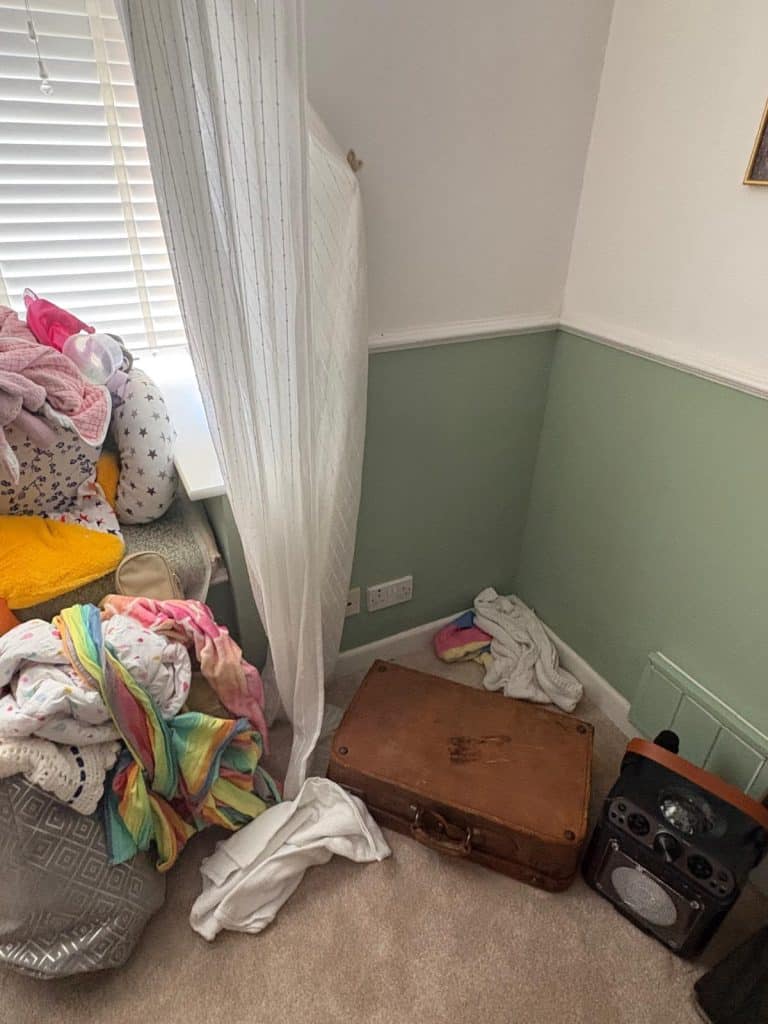
Moisture had affected the lower sections of several walls throughout the lounge and adjoining living space. In situations like this, plaster can become damaged by both moisture and salts contained within the masonry.
These salts can remain within a wall even after the source of moisture has been addressed. Some are hygroscopic, meaning they can continue attracting moisture from the surrounding air and cause staining or deterioration to new finishes.
This is one of the reasons why correct preparation is such an important part of professional damp proofing. Simply painting or skimming over an affected wall is unlikely to provide a reliable long-term solution.
Removing the Damp and Contaminated Plaster
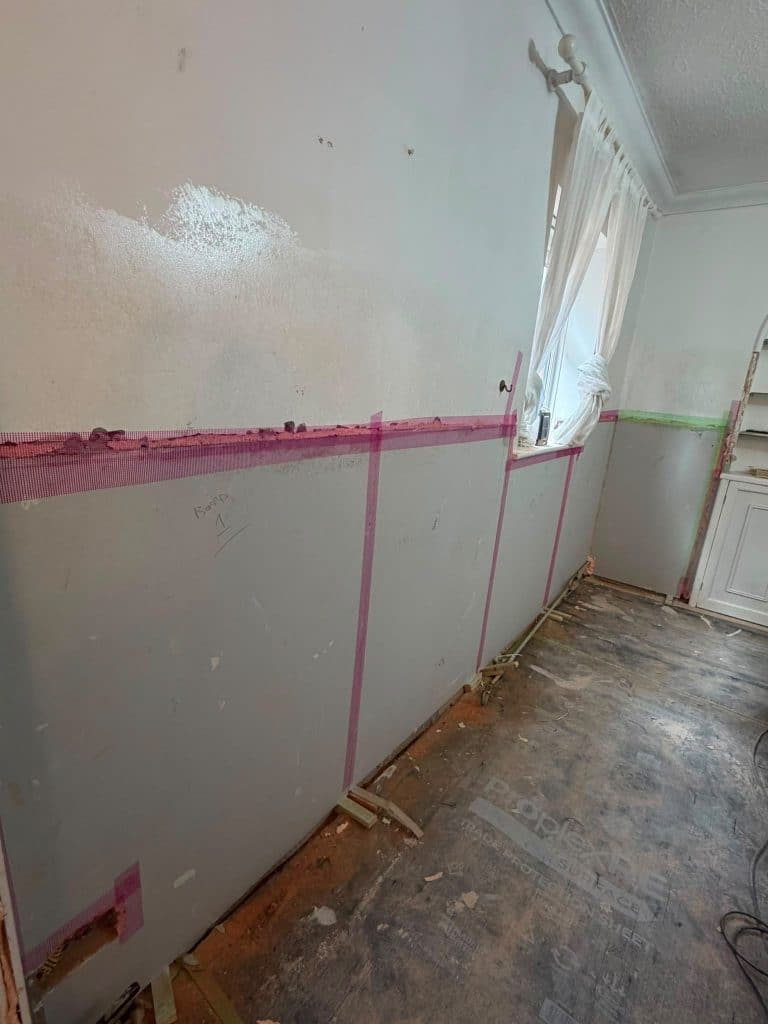
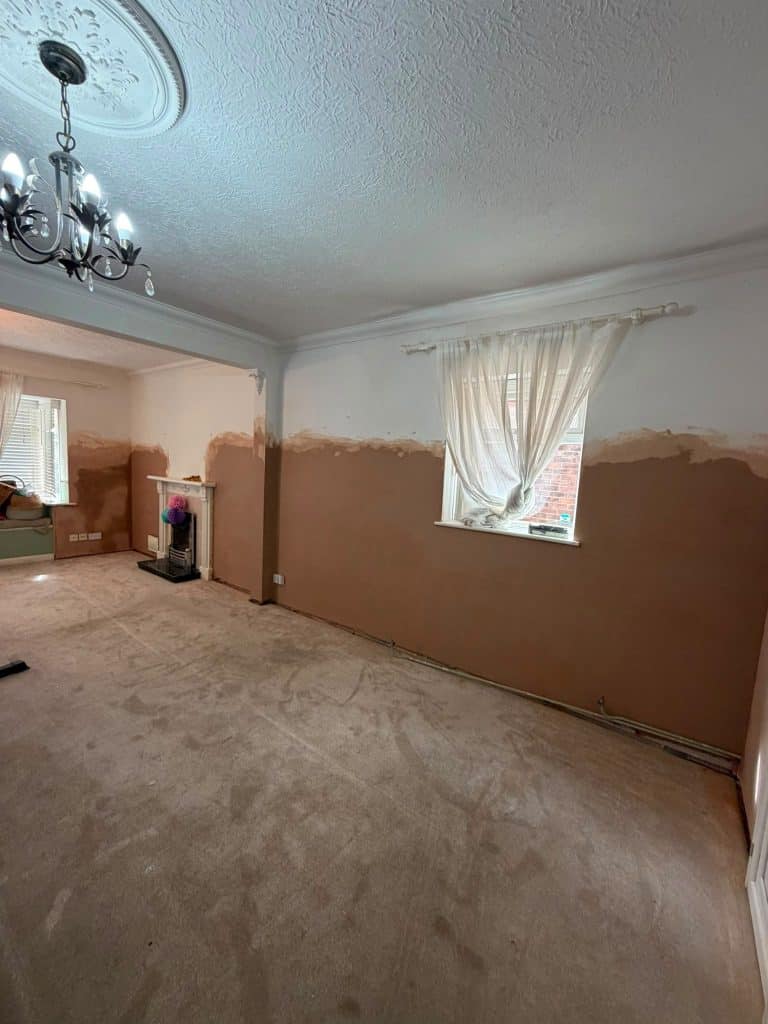
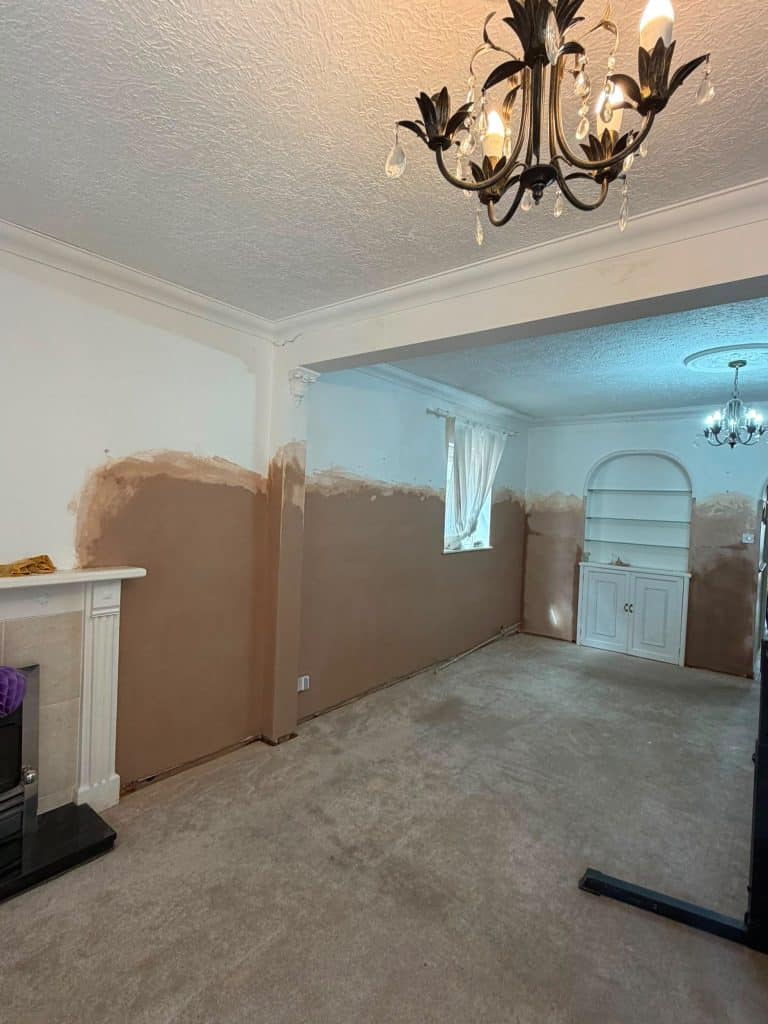
The first stage of the project involved removing and disposing of the damp, deteriorated and contaminated plaster from the identified wall areas.
This exposed the underlying wall structure and allowed our technicians to properly prepare the surfaces for treatment.
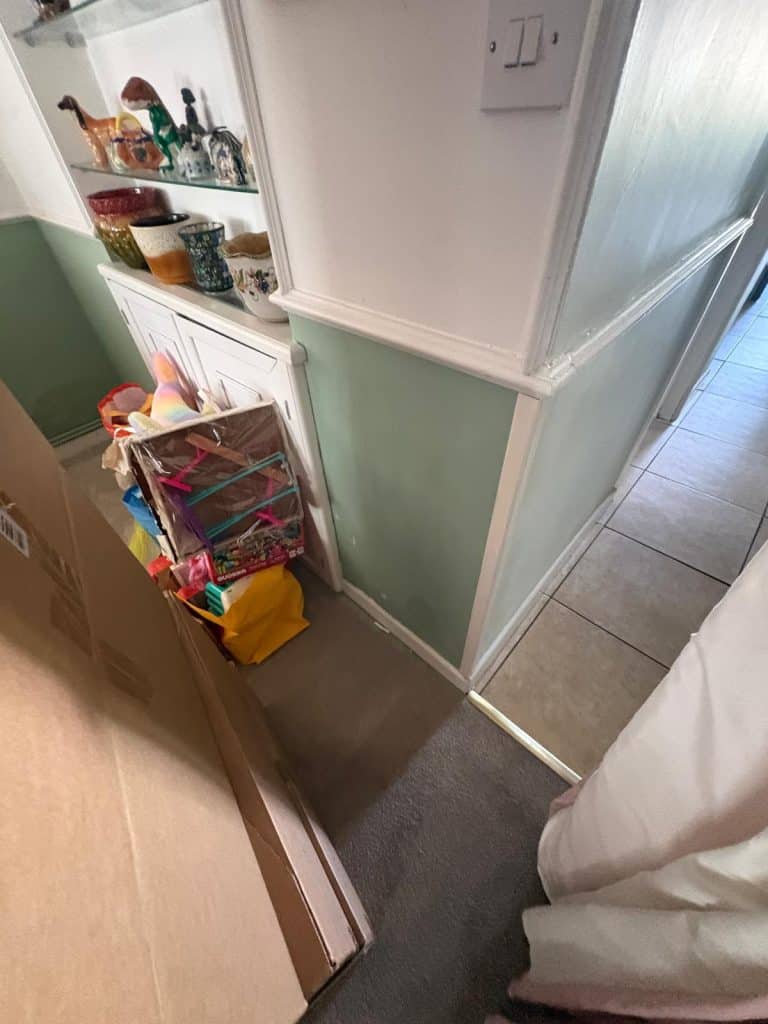
The remedial area extended for approximately 9.8 linear metres, including sections beneath the windows, around corners and alongside existing architectural features within the room.
Where existing plaster has been significantly affected by moisture or salt contamination, removal is often necessary before a new damp proofing system can be installed.
Installing a Chemical Damp Proof Course
Once the affected wall areas had been prepared, a new chemical damp proof course was installed into the appropriate mortar bed.
The treatment is designed to create a moisture-resistant barrier within the masonry and help reduce the upward movement of ground moisture through the wall structure.
Chemical DPC installation should only be specified where the cause and construction of the property make it appropriate. Damp at low level can have several possible causes, which is why diagnosis is an important part of the process.
You can read more about how this type of system works in our guide to how a damp proof course should be installed.
Installing the Damp Proof Membrane System
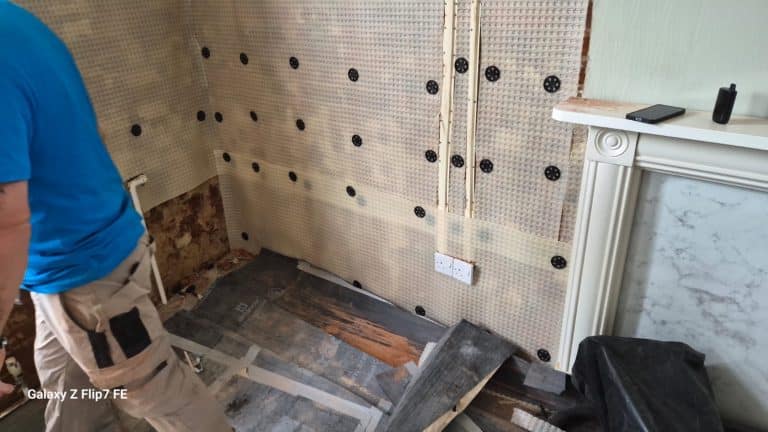
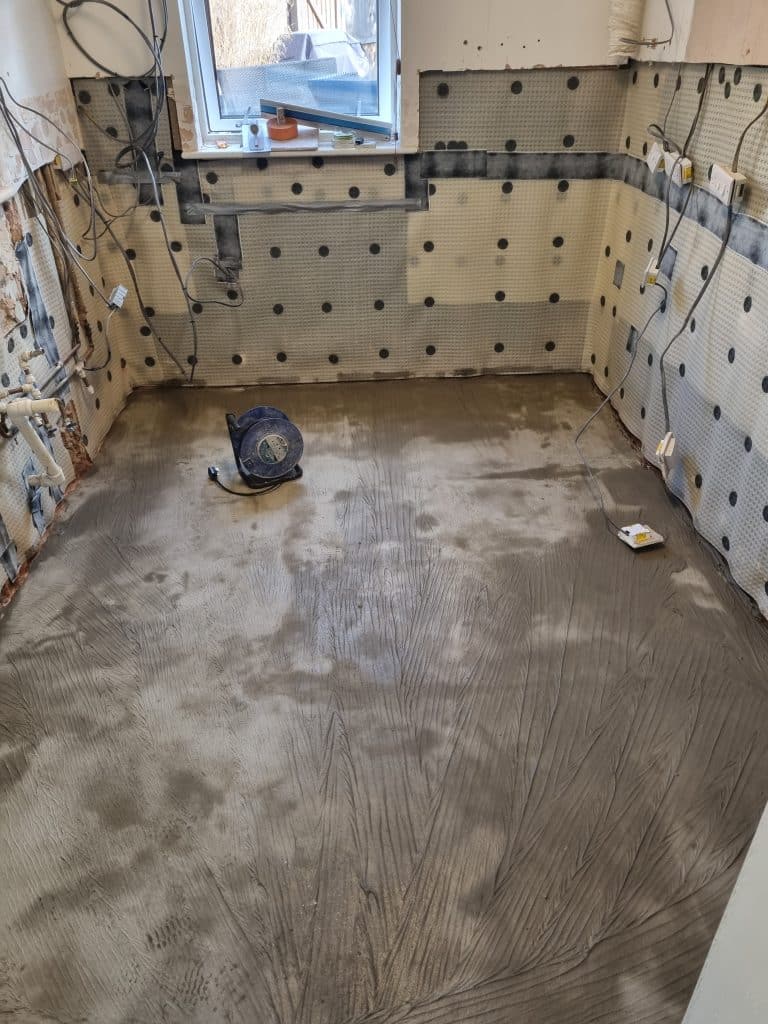
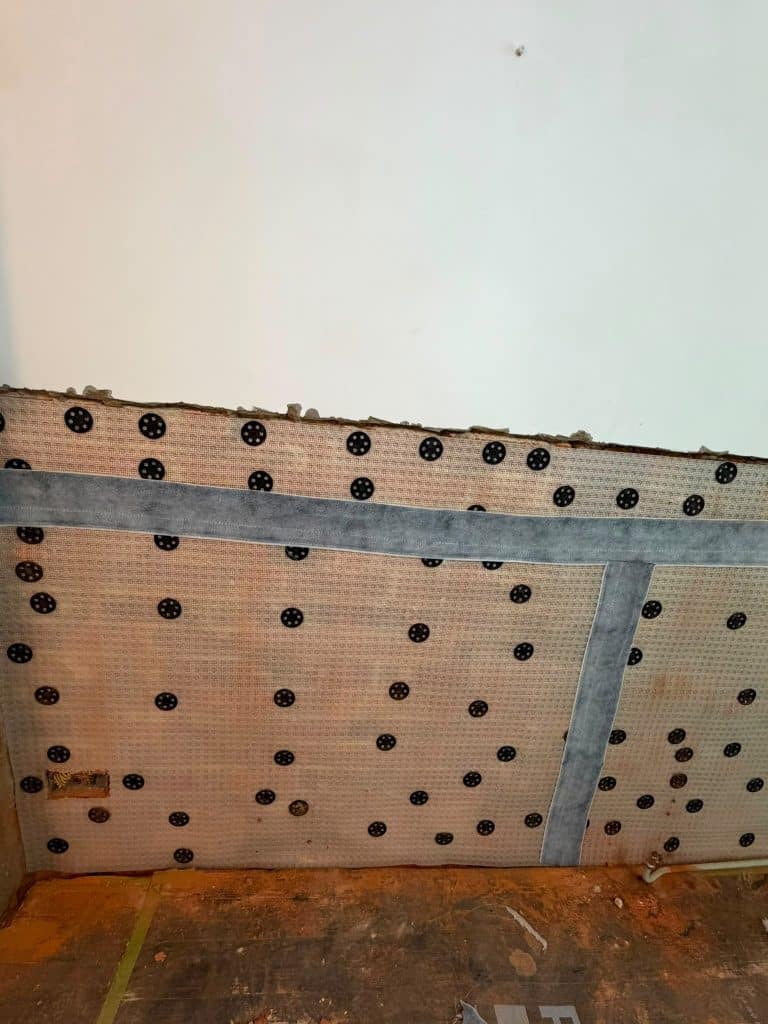
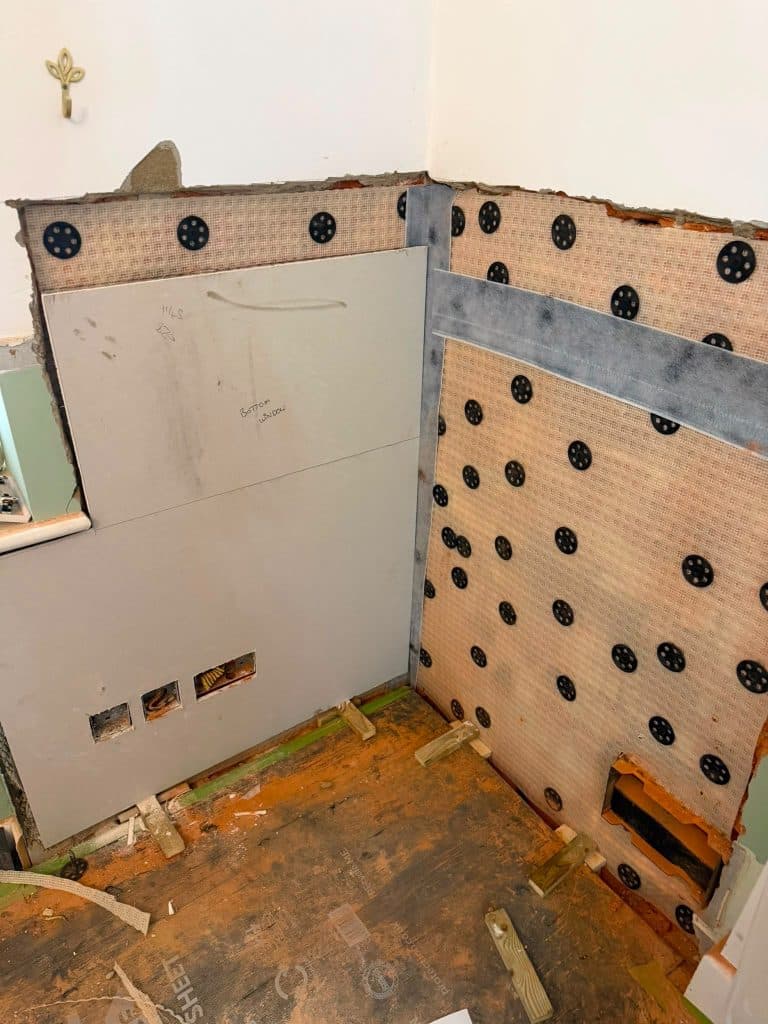
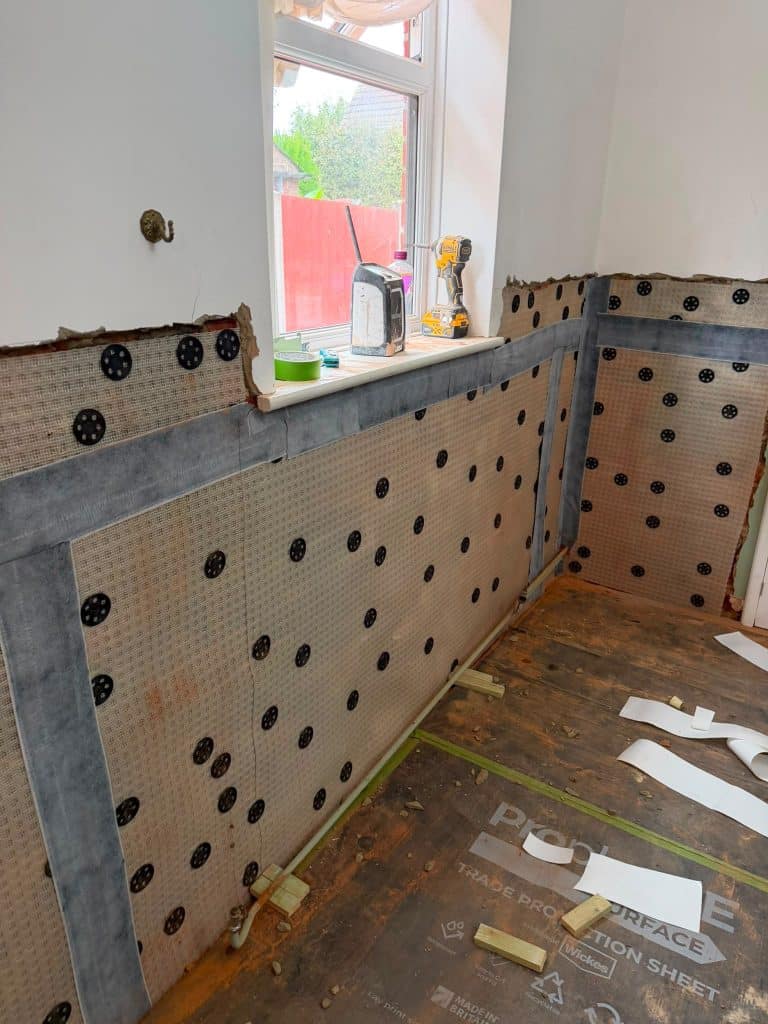
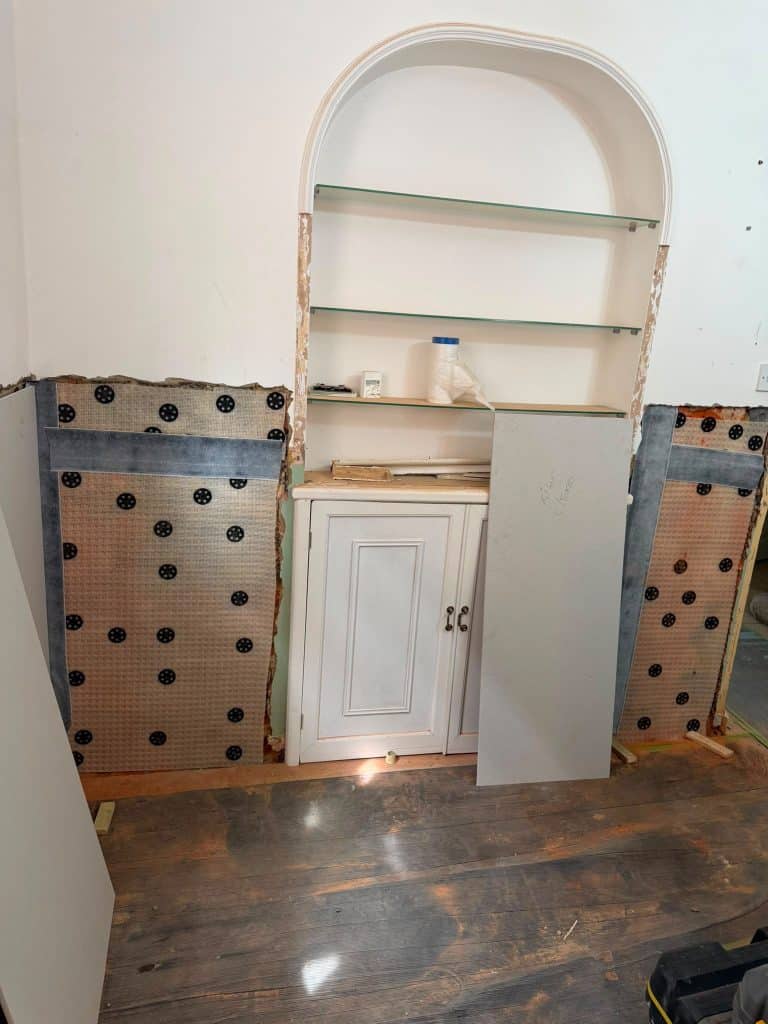
Following the DPC treatment, we installed a specialist damp proof membrane across the affected wall surfaces.
The membrane provides a physical separation between the original masonry and the new internal finish. This helps protect the replacement plaster from residual moisture and salt contamination that may remain within the existing wall.
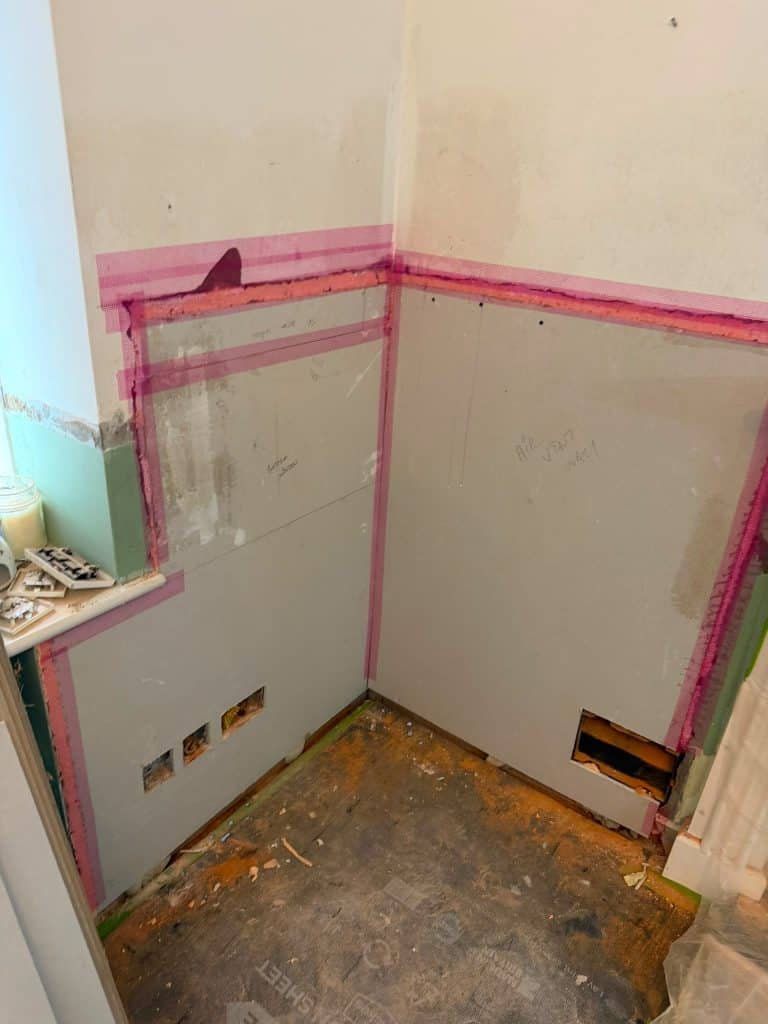
The photographs from the project show the membrane fitted across the affected sections before the final wall finishes were installed.
Careful detailing was required around:
- Window openings and reveals
- Internal corners
- Electrical sockets and penetrations
- Existing recessed shelving
- Changes in wall direction
Maintaining continuity across these areas is important so that the new finish remains isolated from the affected masonry behind it.
Reboarding and Replastering the Treated Walls
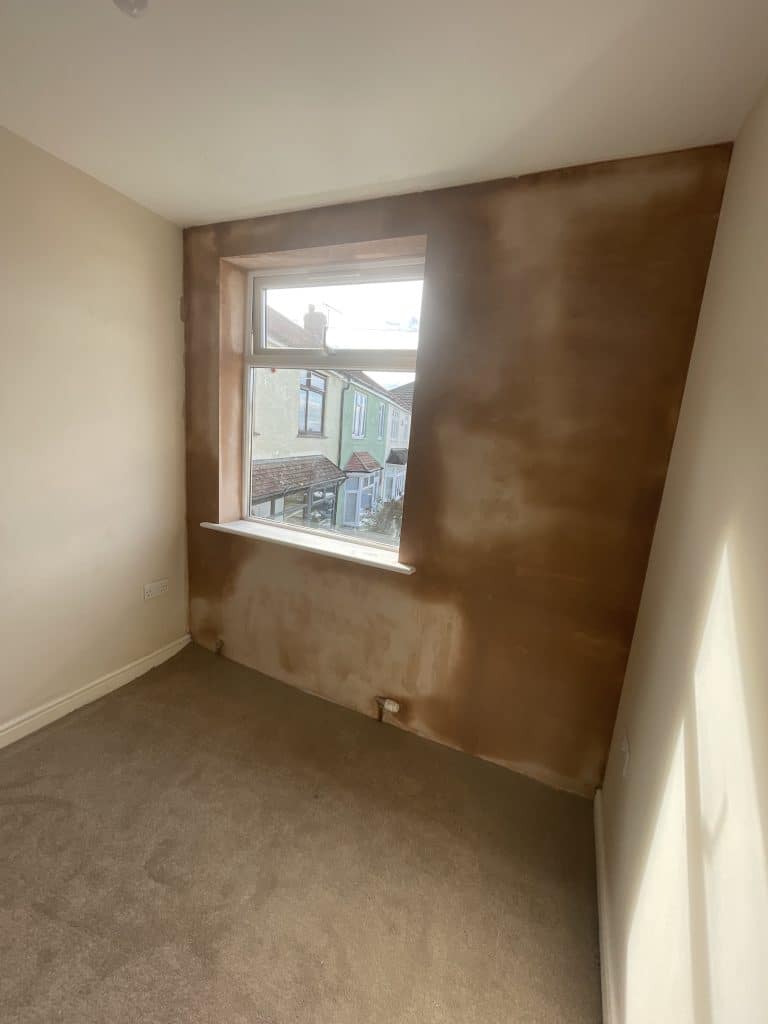
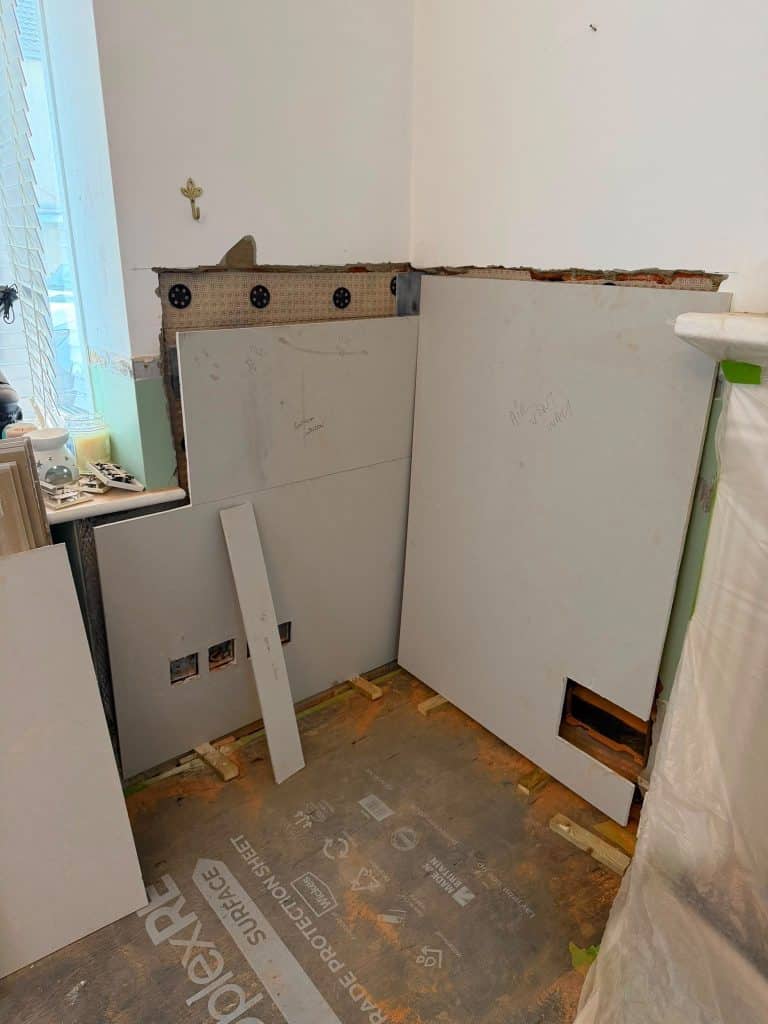
Once the damp proofing system had been installed, the treated wall sections were prepared for their new finish.
Boards were carefully cut and fitted around the existing windows, electrical points and other features before the walls were replastered.
The final stage involved applying a smooth plaster finish across the affected areas, leaving the room ready to dry before subsequent decoration.
Nordic Damp Proofing also provides dedicated wall repair and replastering services where damp treatment requires damaged internal finishes to be removed and reinstated.
Why a Membrane Was Used After the DPC
Installing a new damp proof course helps control rising moisture, but masonry that has been affected for a prolonged period can still contain moisture and salt contamination.
The membrane provides an additional protective layer between the existing wall and the new decorative finish.
This means the remedial system addresses two separate issues:
- Moisture movement through the masonry – controlled using the chemical damp proof course.
- Residual moisture and salt contamination – isolated from the new plaster using the membrane system.
For more information about salt contamination in damp walls, see our guide to hygroscopic salts in walls.
What Was Included in This Southampton Damp Proofing Project?
The remedial works completed within the lounge included:
- Protection of the working area before commencement.
- Removal and disposal of damp and contaminated plaster.
- Preparation of the exposed wall surfaces.
- Installation of a chemical damp proof course.
- Installation of a damp proof membrane system.
- Detailed membrane work around windows, corners and electrical points.
- Reboarding of the treated areas where required.
- Replastering to provide a smooth finish.
- Preparation of the completed walls ready for drying and future decoration.
Diagnosing Rising Damp Correctly
Not every damp patch found near floor level is automatically rising damp.
Leaks, penetrating moisture, defective external drainage, condensation, bridged damp proof courses and plumbing problems can sometimes produce similar symptoms.
Before recommending remedial work, it is important to establish how moisture is entering or travelling through the building.
Our damp surveys are designed to identify the likely source of the problem so that treatment can be based on the cause rather than simply the appearance of the damp.
You can also read our detailed guide explaining how rising damp is treated and the different stages that may be involved.
Why Southampton Properties Can Develop Damp Problems
Southampton contains a wide variety of housing, from older solid-wall properties and Victorian terraces to post-war homes and modern developments.
The correct approach to damp proofing can therefore vary considerably depending on the age of the building, wall construction, ground levels, previous alterations and condition of the existing damp proof course.
Properties across the South Coast can also be exposed to persistent rainfall, coastal weather and relatively high humidity levels. These factors do not automatically cause rising damp, but they can contribute to wider moisture problems where a property already has defects.
We have written more about these regional conditions in our guide to why homes across Southampton and the South Coast experience damp problems.
Damp Proofing Specialists in Southampton
Nordic Damp Proofing provides specialist damp proofing services in Southampton and throughout the surrounding areas of Hampshire.
Our services include rising damp treatment, penetrating damp diagnosis, damp proof course installation, damp proof membranes, mould treatment, timber preservation, ventilation improvements and internal wall repairs.
The correct treatment depends on the individual property. Our approach is to identify the likely cause of the moisture problem first and then specify remedial works appropriate to the building and the conditions found.
Concerned About Damp in Your Southampton Property?
If you have noticed damp patches, deteriorating plaster, salt deposits, damaged skirting boards or recurring moisture on internal walls, it is worth having the problem properly investigated before carrying out cosmetic repairs.
You can book a damp survey with Nordic Damp Proofing to have the affected areas assessed and receive recommendations based on the condition of your property.
Alternatively, contact Nordic Damp Proofing to discuss damp proofing and rising damp treatment in Southampton and the surrounding Hampshire area.