Nordic Damp Proofing recently completed a programme of internal damp-proofing treatments and external building repairs at a property in Wembley, West London.
The project involved addressing vulnerable areas around external window and door openings while carrying out specialist damp-proofing work to affected internal walls. Our team removed deteriorated plaster, applied a salt-neutralising treatment, installed a chemical damp-proof course and fitted a cavity drainage membrane system before replastering the treated areas.
This combination of external maintenance and internal waterproofing demonstrates the importance of considering several potential moisture pathways when carrying out damp proofing in Wembley.
Investigating Moisture Problems Around the Property
Moisture problems within a building can develop for several reasons. Water may enter through defects in external masonry, deteriorated seals around windows and doors, or through other vulnerable parts of the building envelope. Ground moisture can also affect masonry where suitable damp-proofing protection is absent or ineffective.
At this Wembley property, the specified remedial works covered both external openings and affected internal wall surfaces.
The external work focused on repairing gaps and improving seals around window and door frames, while the internal treatment programme introduced additional protection against moisture and salt contamination.
By carrying out these works together, the team addressed several areas requiring attention rather than simply covering over the damaged internal plaster.
Protecting the Property Before Work Began
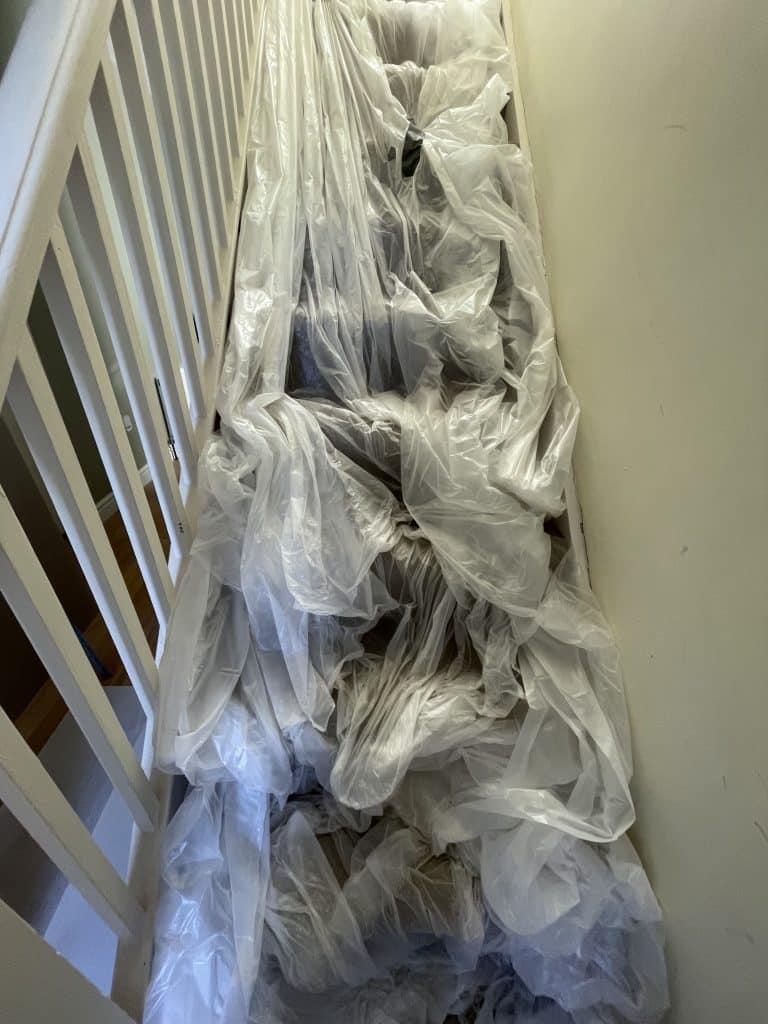
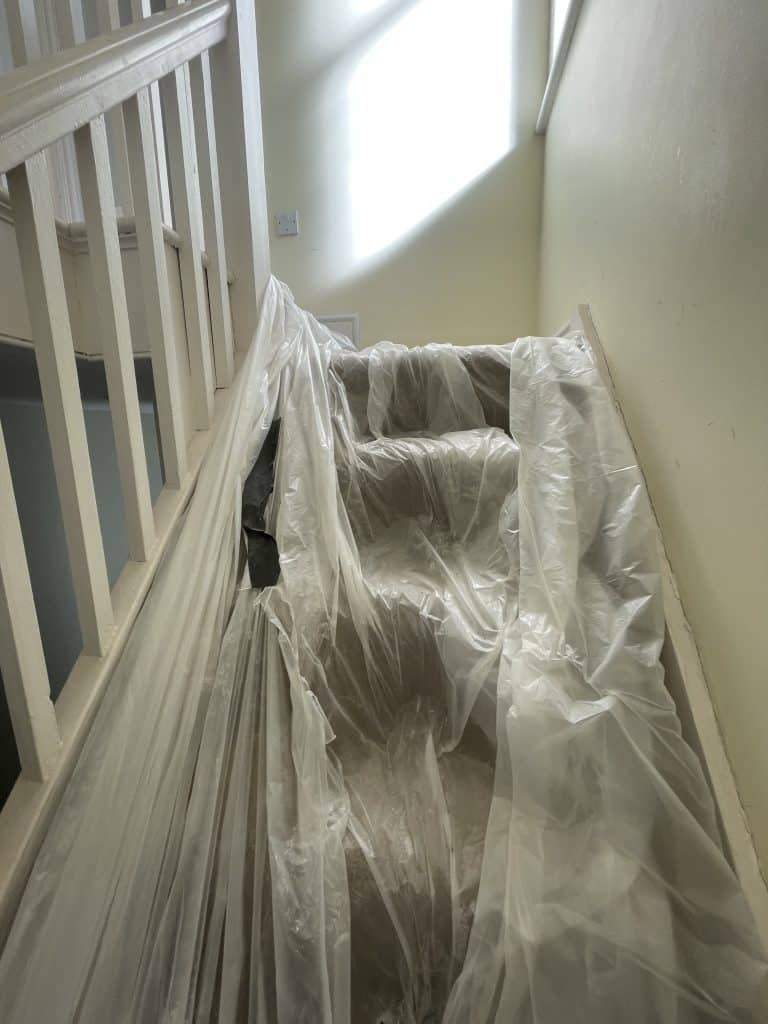
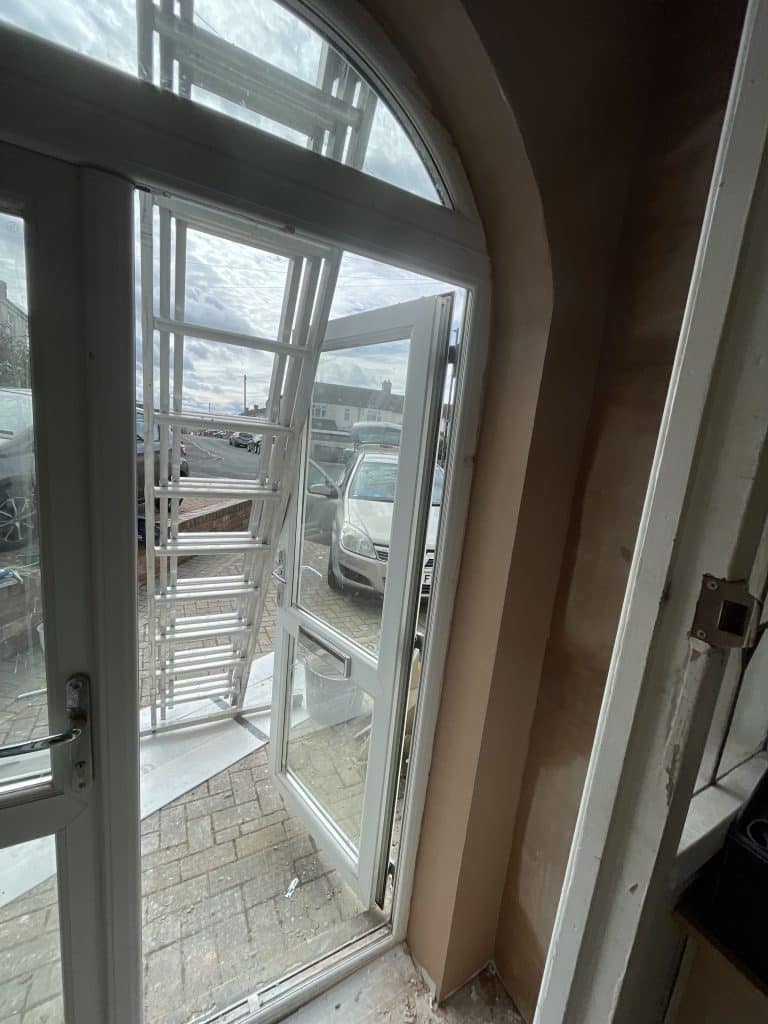
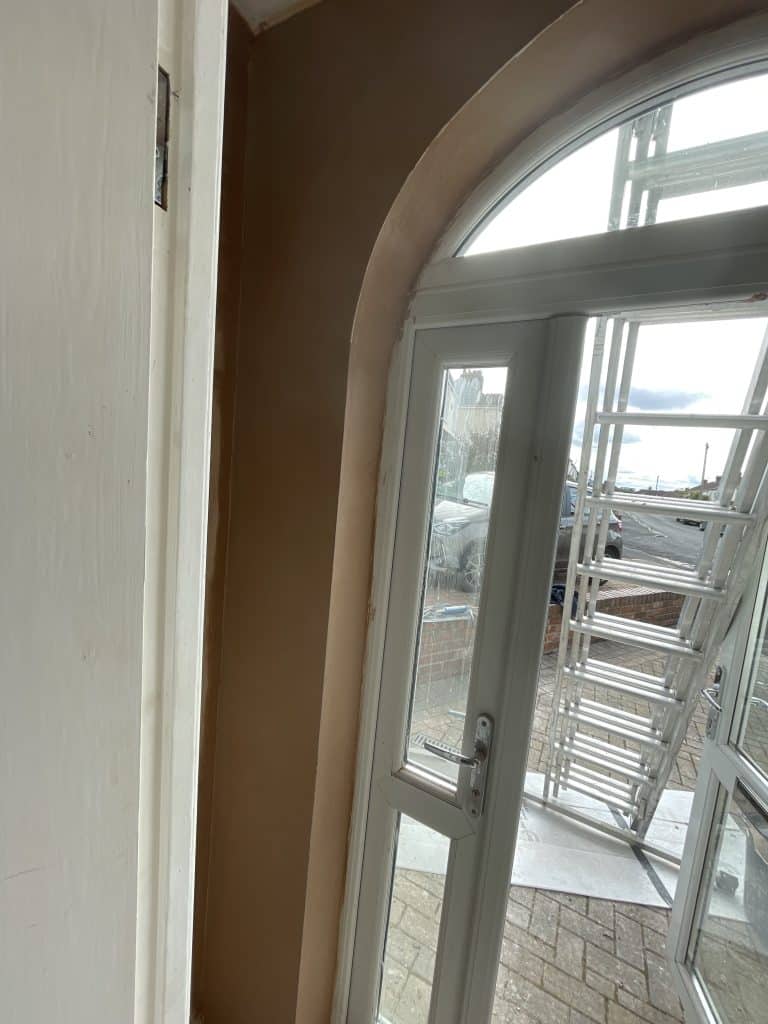
Before starting the repairs, Nordic Damp Proofing installed protective coverings around the relevant working areas.
Preparing the site carefully is particularly important when internal plaster removal, masonry preparation and external repair work are being undertaken during the same project.
Protective measures help minimise dust and debris affecting surrounding surfaces and allow the team to work around existing fixtures and finishes.
External Render Repairs Around Window Openings
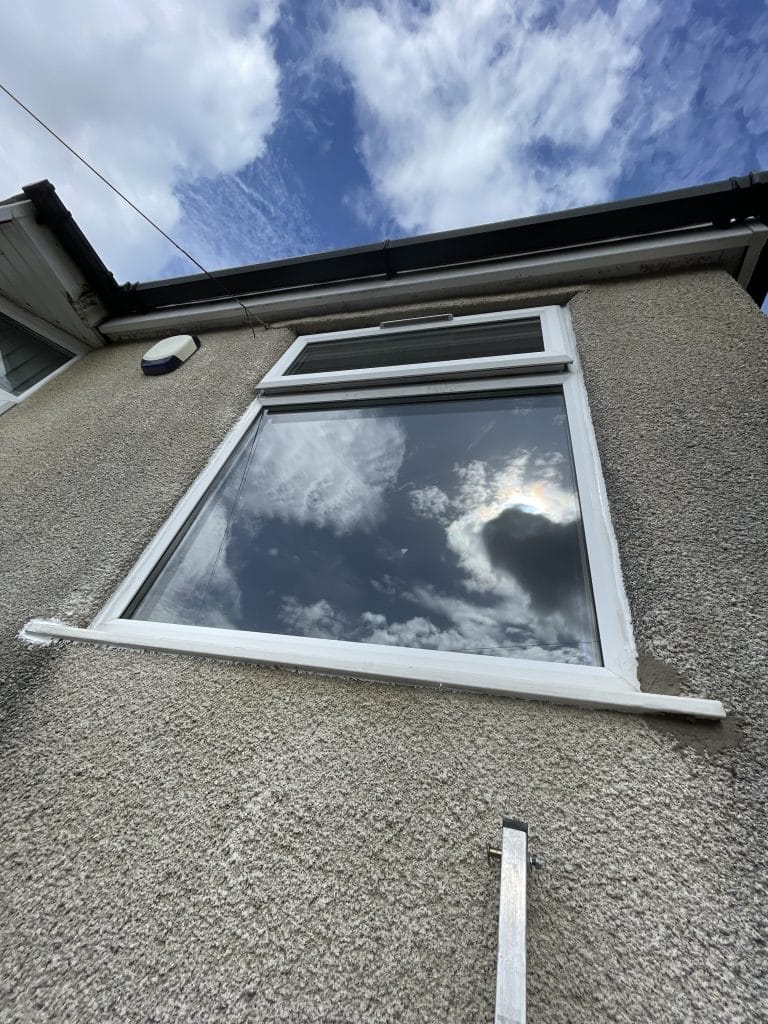
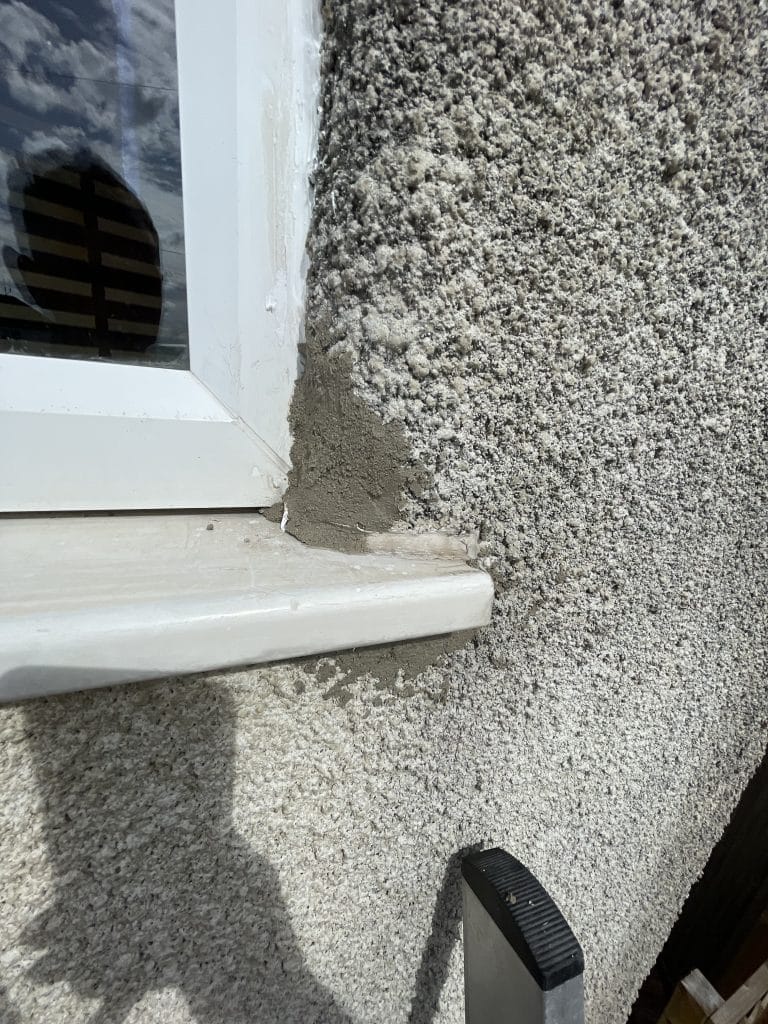
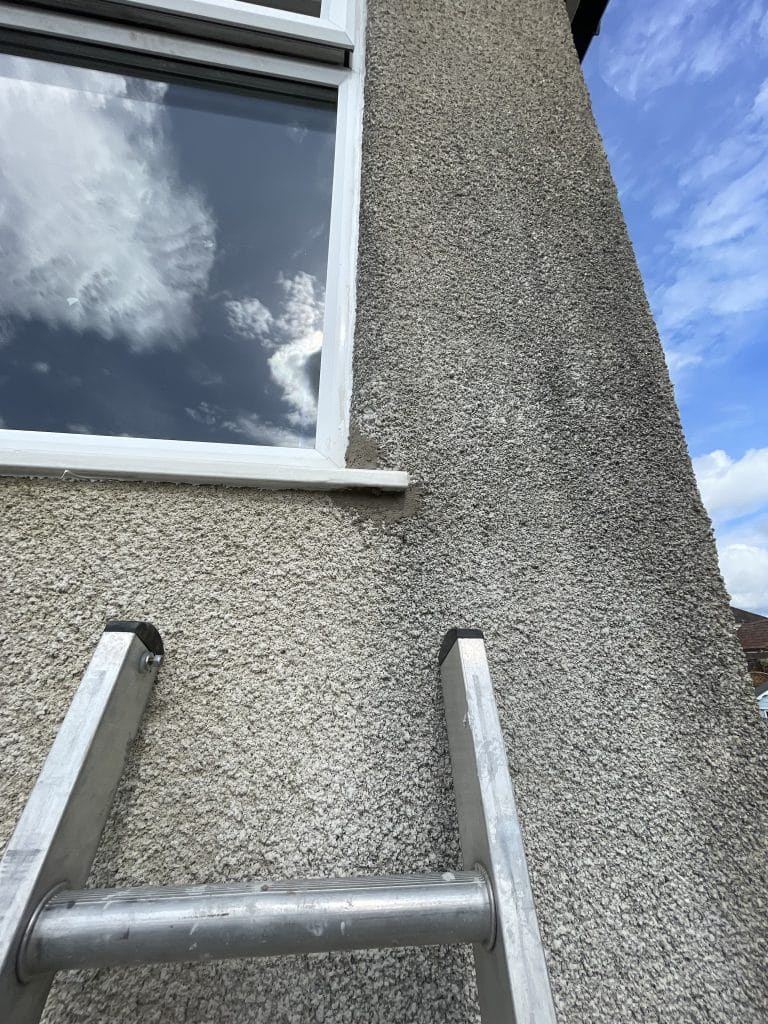
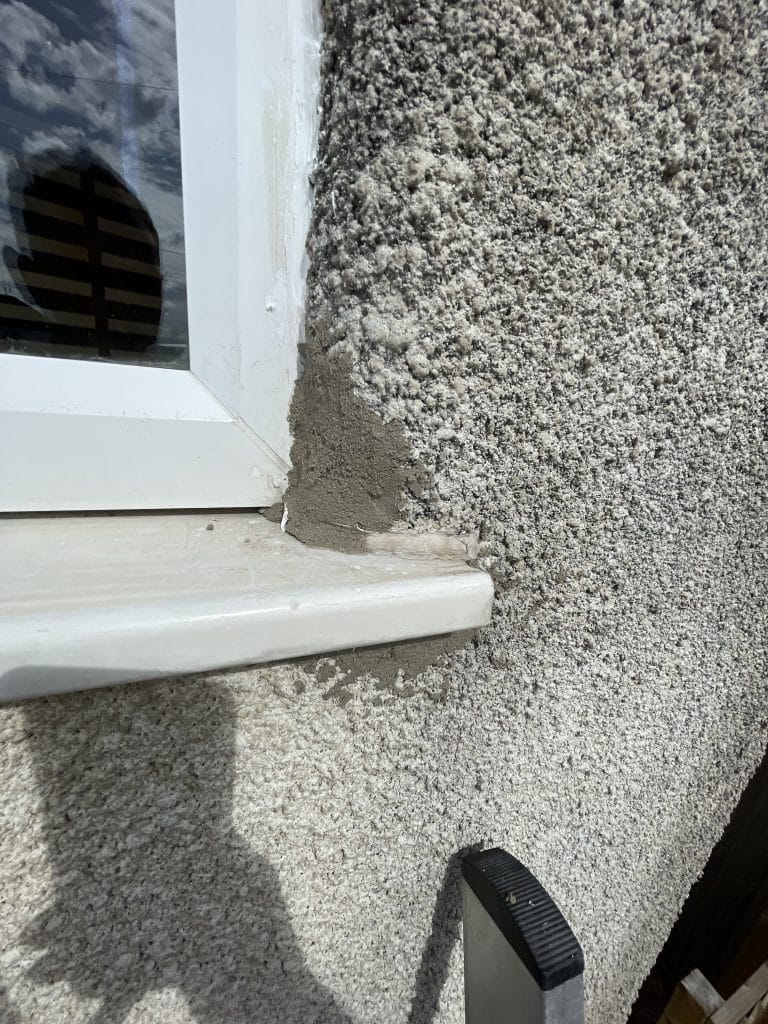
Part of the project involved carrying out localised render repairs around external window openings.
Render provides a protective finish to suitable external wall surfaces. Where it becomes cracked, damaged or detached, openings may develop that allow rainwater to reach the underlying construction.
The team worked on the identified areas around the windows, repairing the affected sections to improve the condition of the surrounding external finishes.
Maintaining sound render and properly detailed openings is an important consideration when investigating penetrating damp and other moisture-related problems.
Repairing Open Joints and Gaps in External Masonry
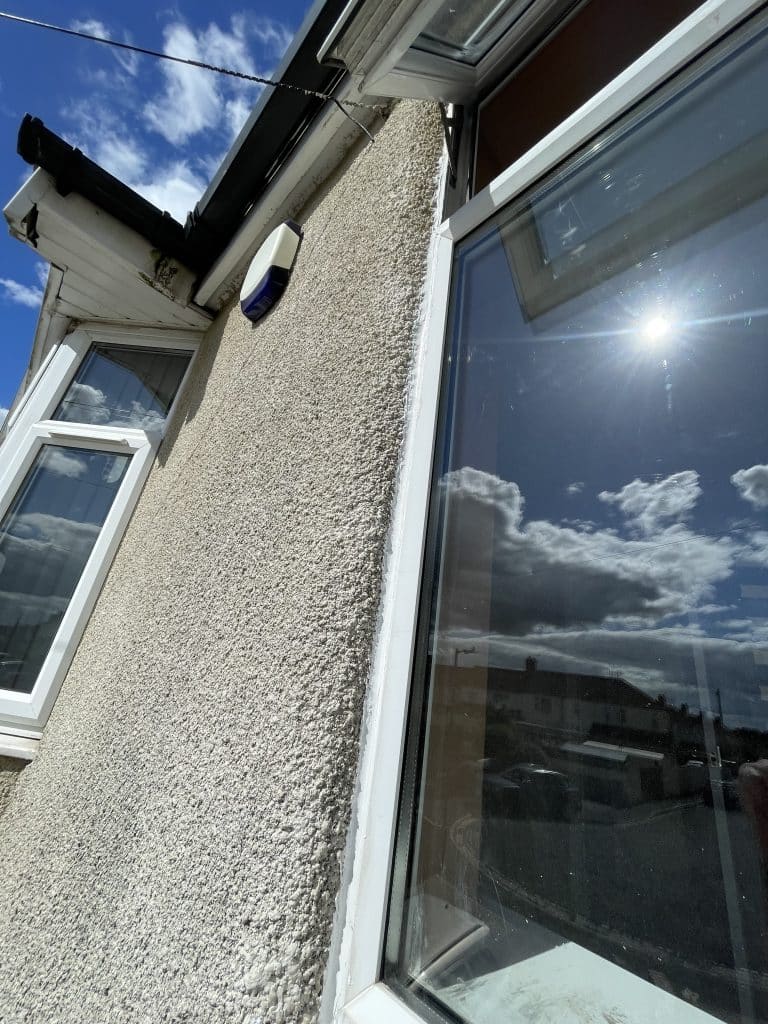
The external repair programme also included attention to open joints and gaps around the building.
Gaps in masonry and adjoining finishes can provide routes for wind-driven rain to enter the building fabric. Over time, this may contribute to moisture staining, deterioration of internal plaster or other damp-related symptoms.
The identified openings were repaired as part of the wider external maintenance work.
These targeted repairs helped address vulnerable points around the building envelope and complemented the internal damp-proofing treatments.
Re-Sealing Window and Door Frames
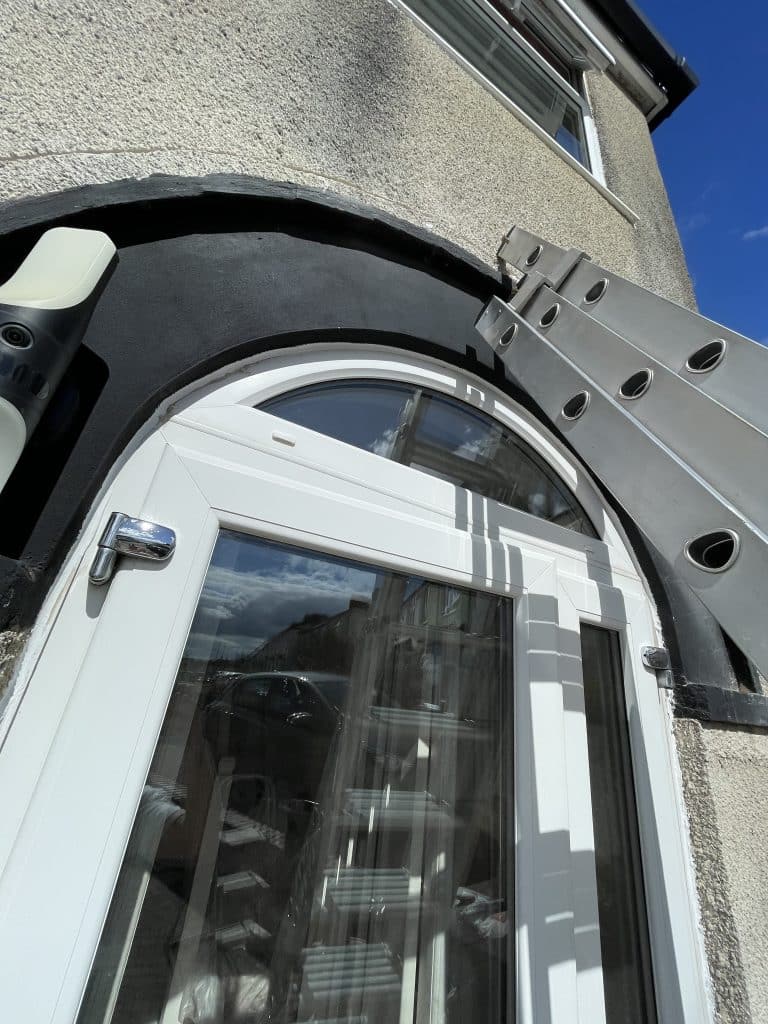
Another important element of the Wembley project was renewing seals around the relevant window and door frames.
Perimeter seals can deteriorate with age, weather exposure and movement between adjoining materials. When gaps develop, rainwater may find its way between the frame and surrounding wall.
Our team carried out re-sealing work to the specified openings, improving the junctions between the frames and adjacent surfaces.
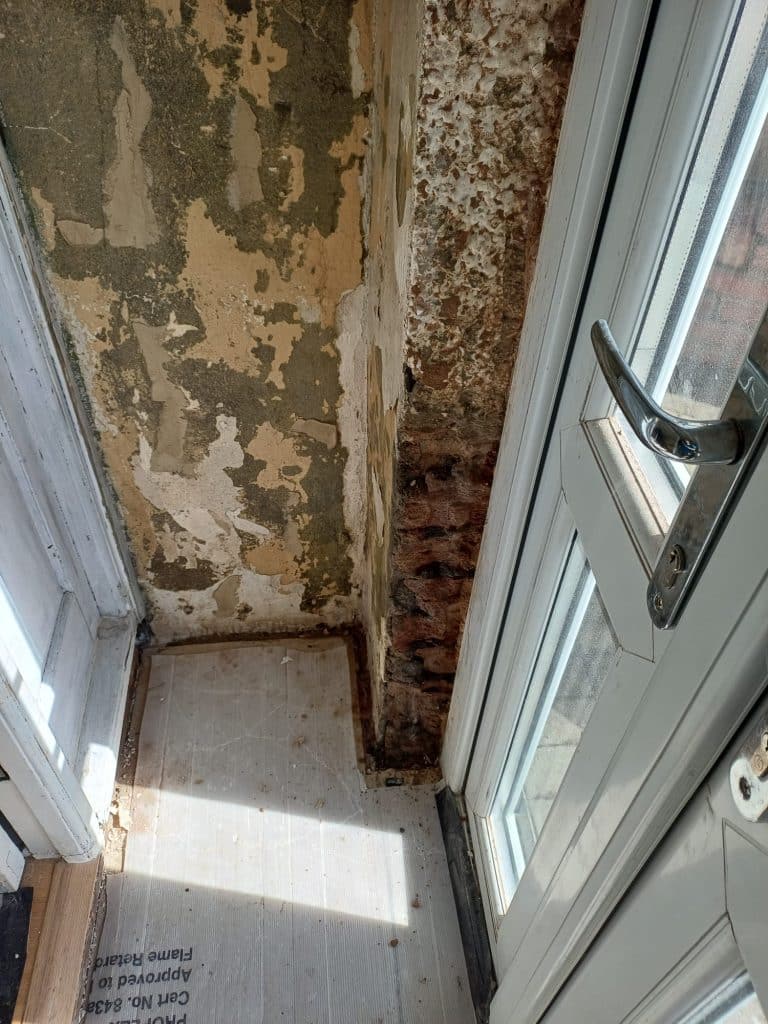
Particular attention was also given to the area beneath a window sill, where the existing seal required remedial work.
Correctly maintained window and door seals are an important part of protecting a property against unwanted water ingress.
Removing Damp-Affected Internal Plaster
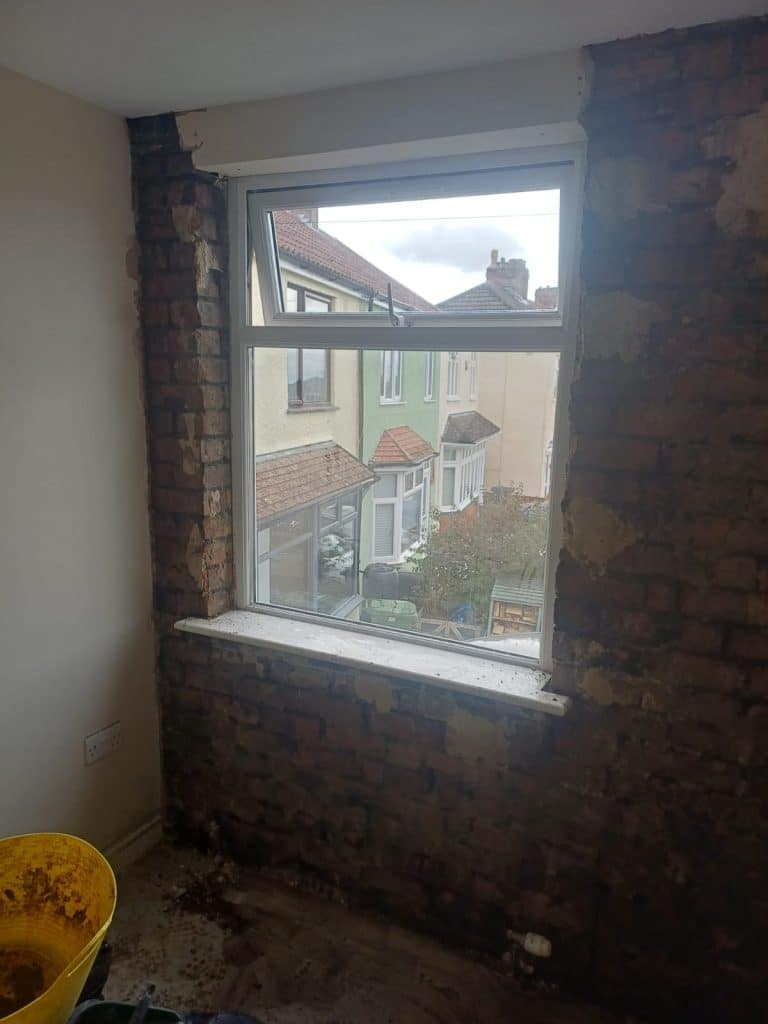
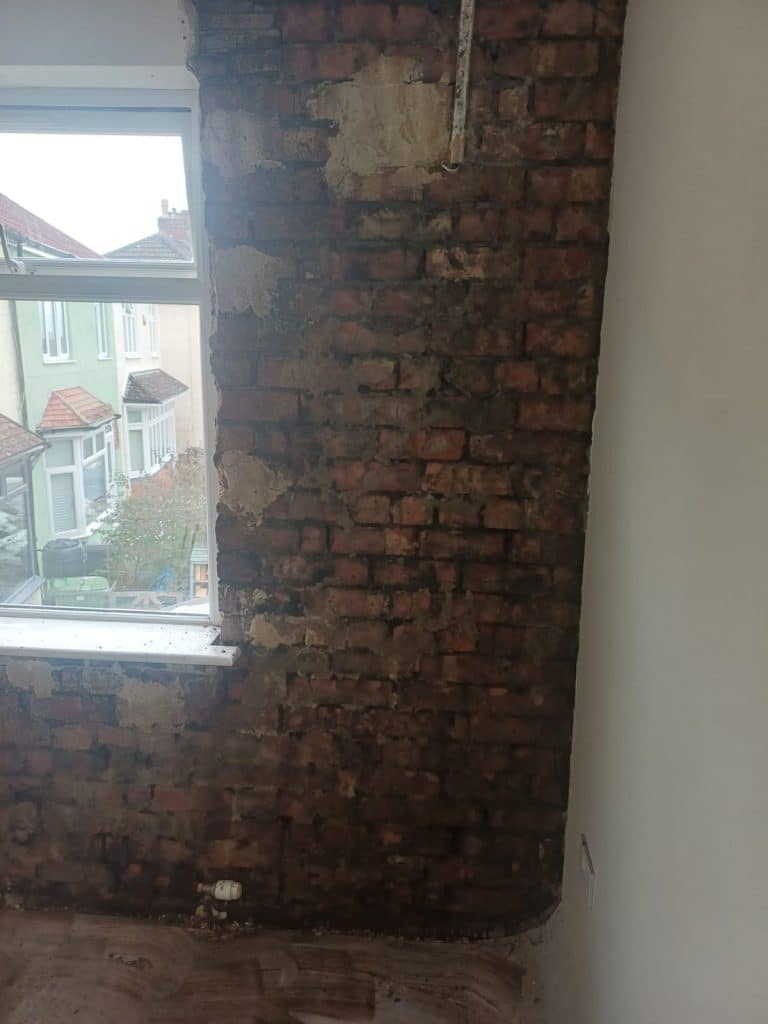
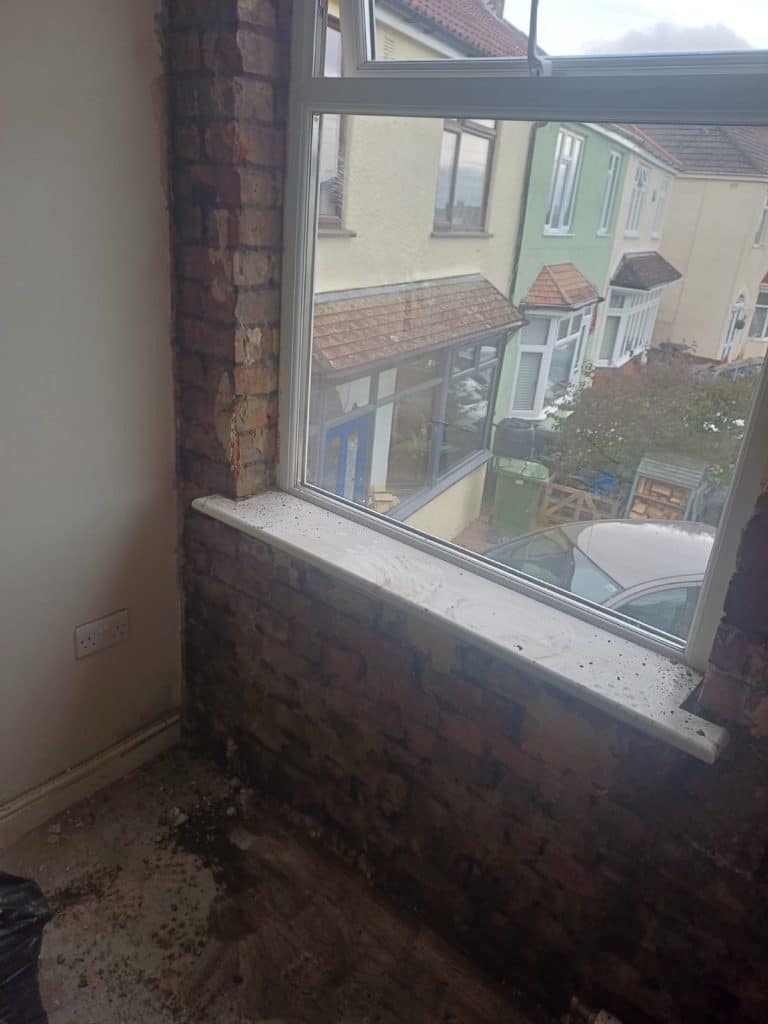
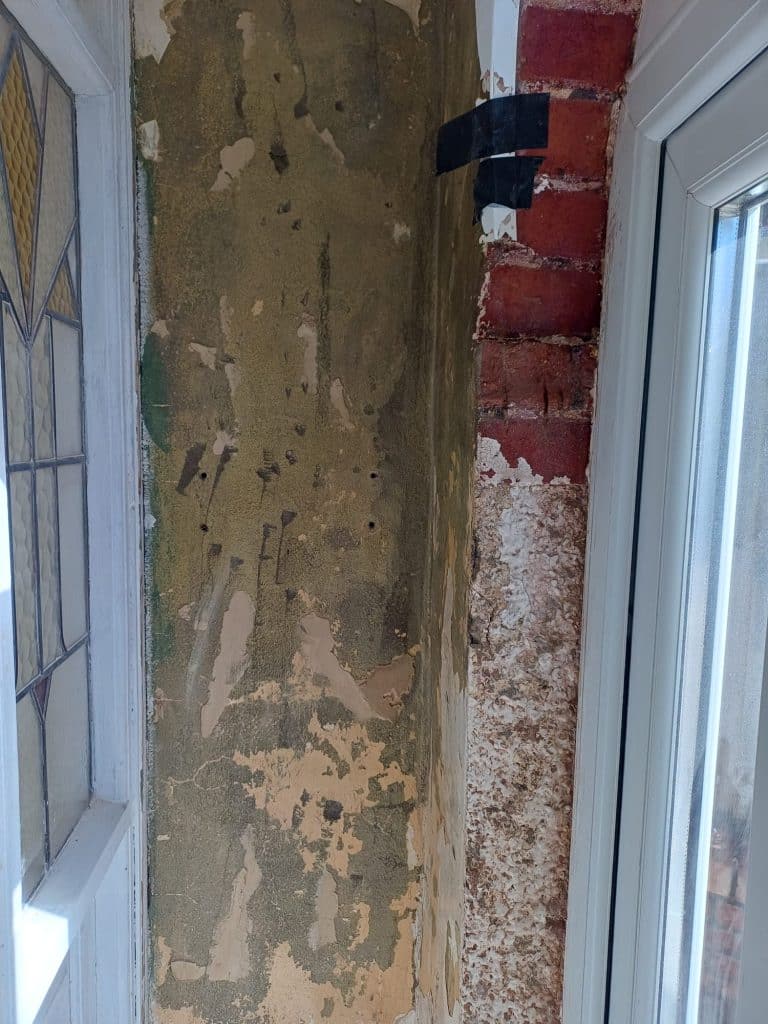
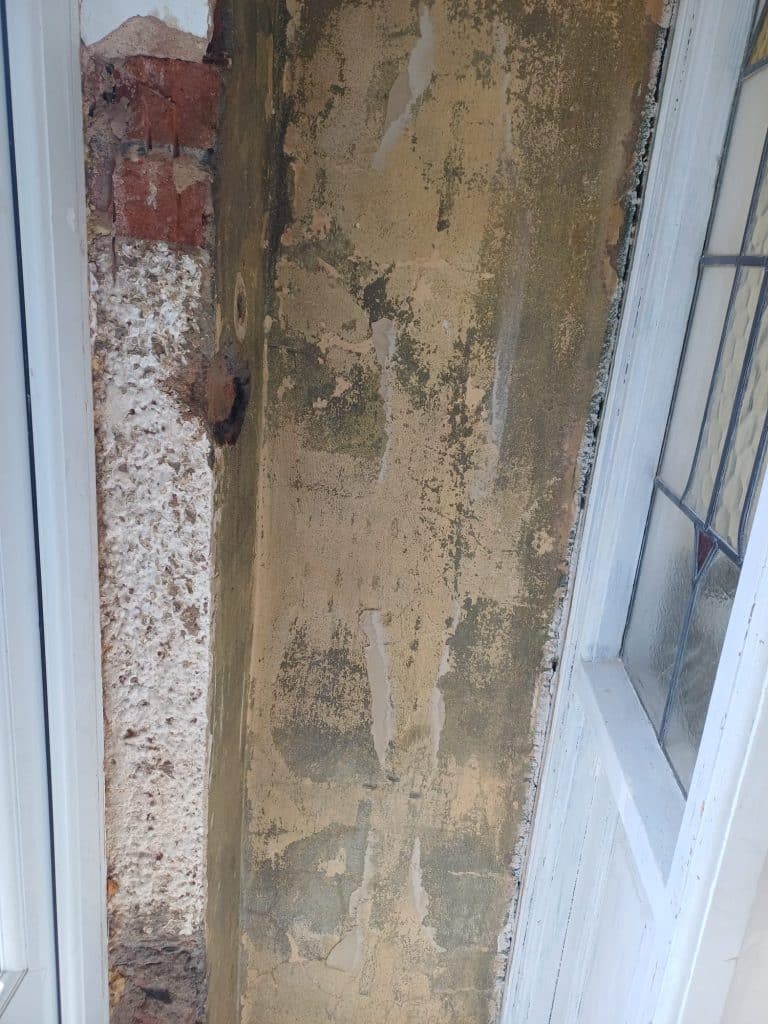
Inside the property, the team removed plaster from the identified damp-affected wall areas to expose the underlying masonry.
Plaster that has been exposed to moisture can become weakened, stained or contaminated by soluble salts. Replastering directly over contaminated material without suitable preparation can lead to further problems with the replacement finish.
Removing the affected plaster allowed the team to prepare the masonry for the specified damp-proofing treatments.
For more information about the problems salts can cause, read our guide to hygroscopic salts in walls.
Applying a Specialist Salt-Neutralising Treatment
Following plaster removal, a specialist salt-neutralising solution was applied to the prepared wall areas.
Salts within masonry and plaster can contribute to recurring staining and deterioration of decorative finishes. Some salts can attract moisture from the surrounding atmosphere, making it particularly important to consider contamination when repairing damp-affected walls.
The salt-neutralising treatment formed part of the preparation process before installation of the new damp-proofing system.
Installing a Chemical Damp-Proof Course
A new chemical damp-proof course was installed within the specified sections of masonry.
This involved injecting a specialist damp-proofing product into the appropriate mortar course to provide additional resistance to moisture rising through the wall by capillary action.
Chemical injection is a recognised treatment option for suitable cases of rising damp, although the appropriate system depends on the construction and condition of the property.
At this Wembley property, the injected damp-proof course was installed alongside the other specified treatments to form part of a coordinated remedial system.
Installing a Cavity Drainage Membrane System
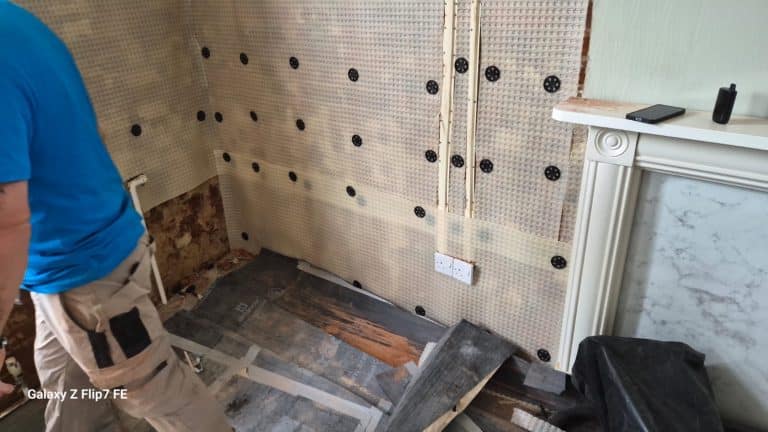
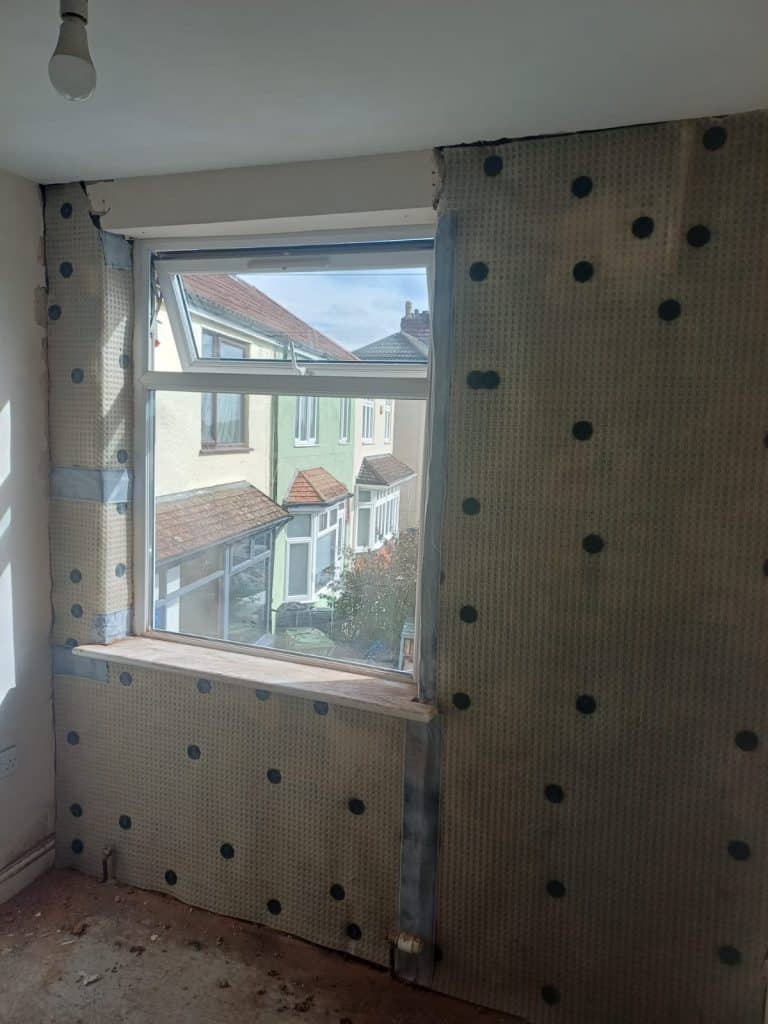
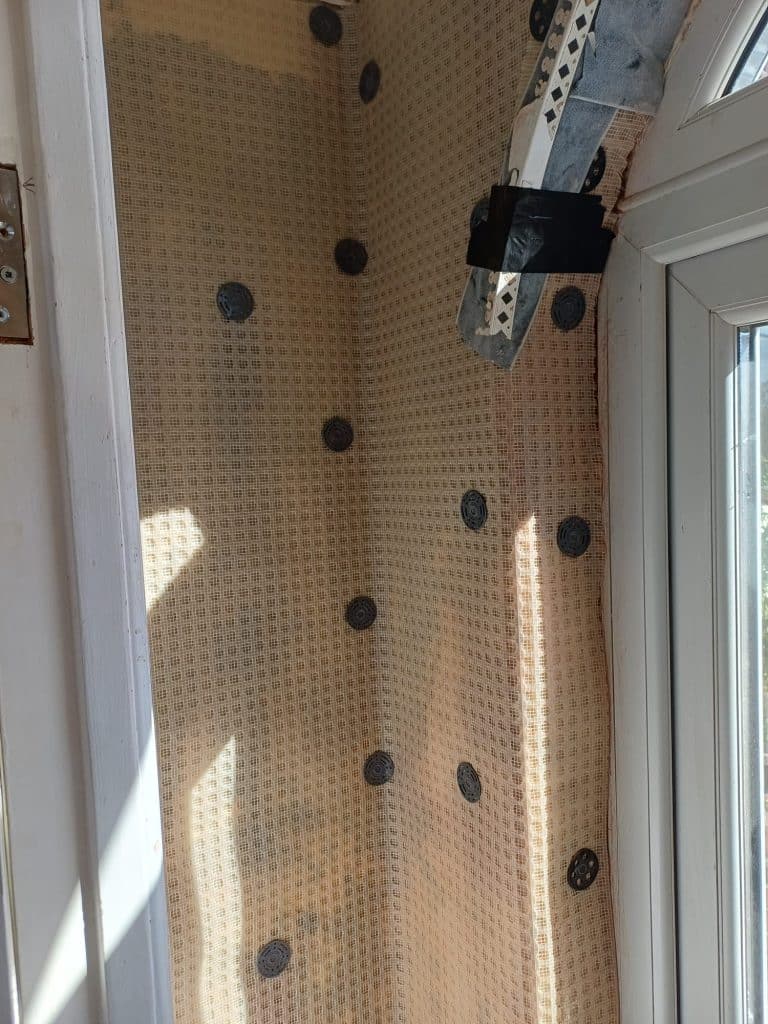
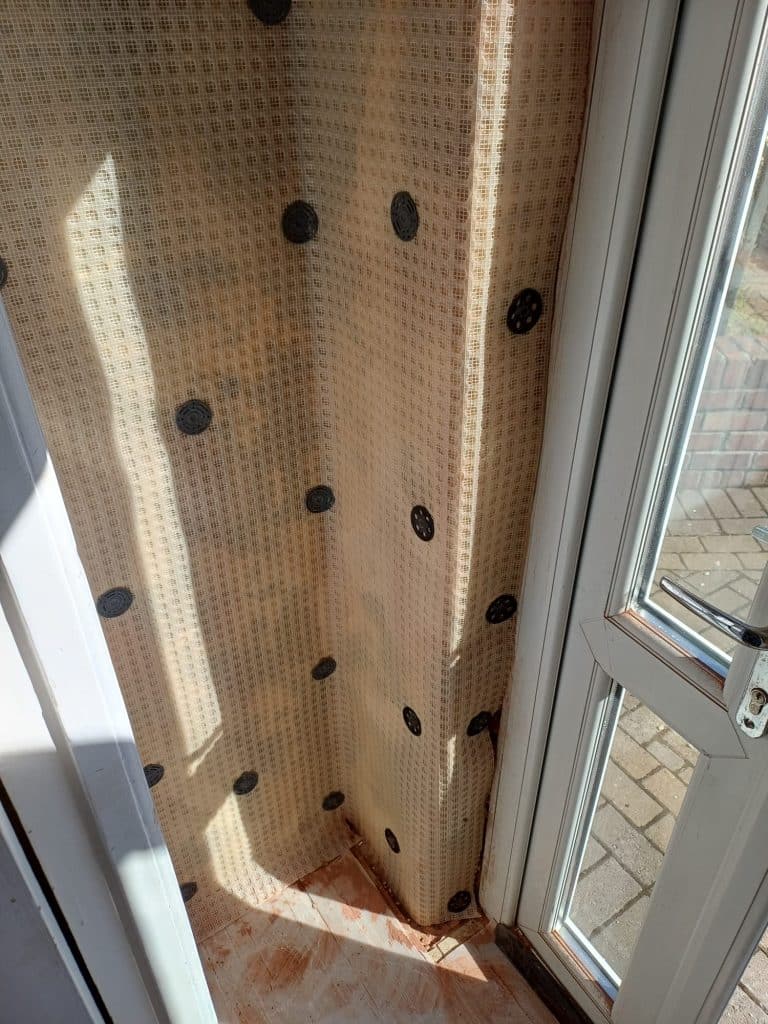
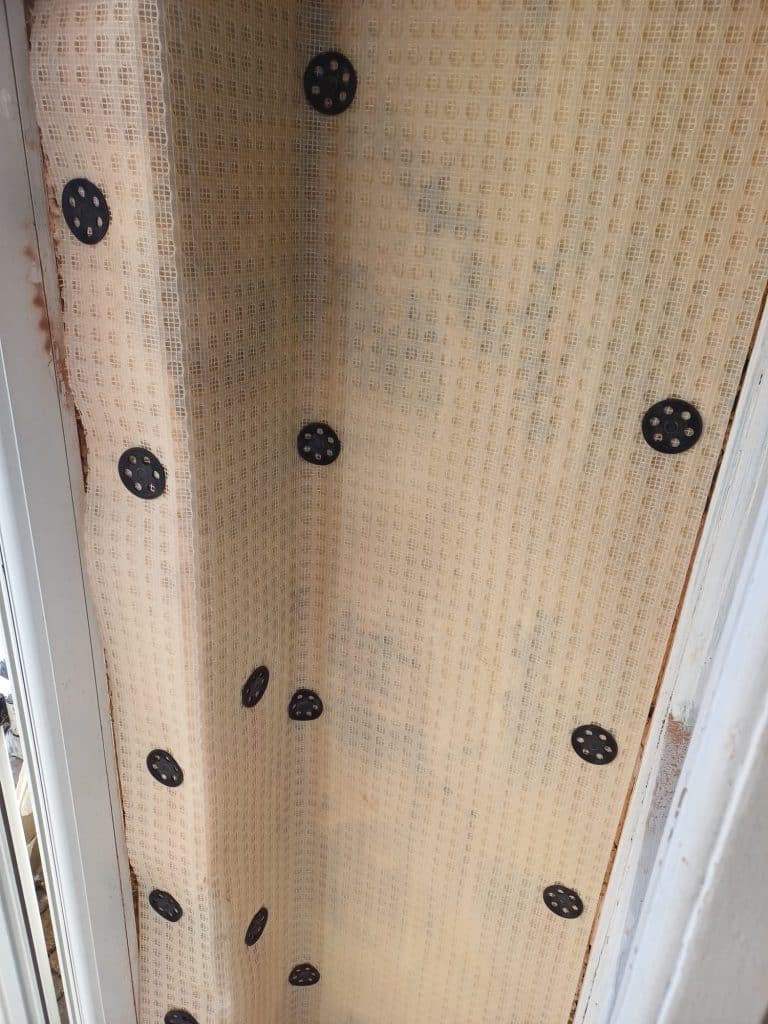
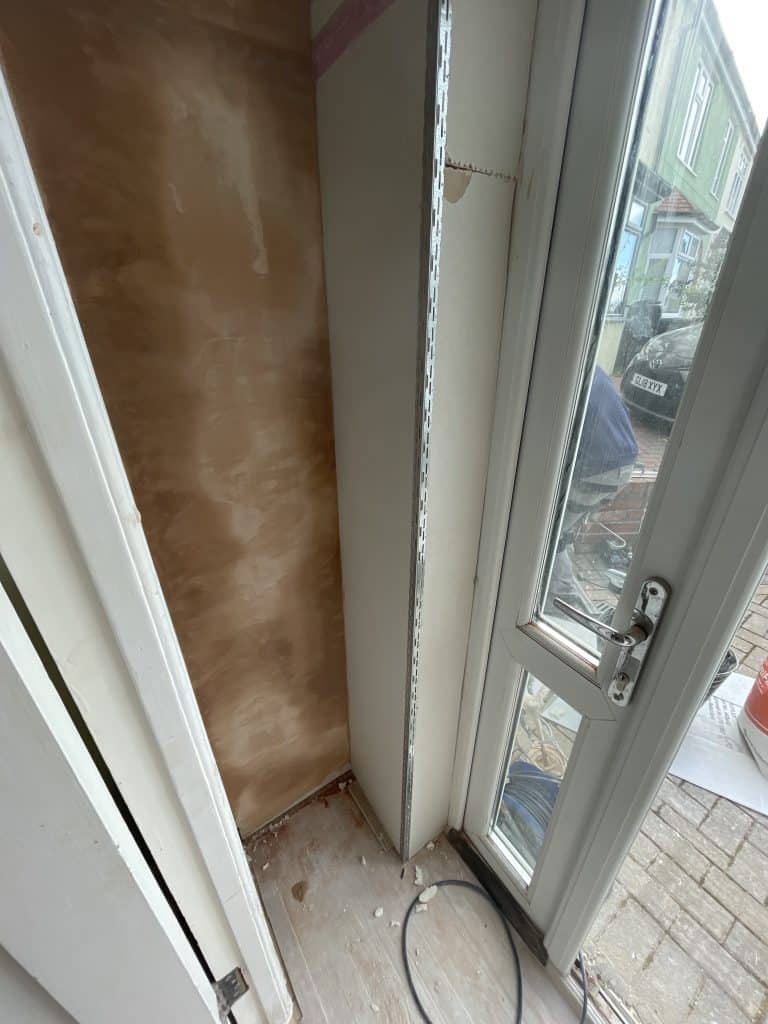
Following the masonry treatment, the team installed a specialist cavity drainage membrane system to the affected internal wall areas.
Cavity drainage membranes provide a separation between the underlying masonry and the new internal finish. In appropriately designed systems, the membrane helps manage the effects of residual moisture and salt contamination within the original wall.
The membrane was mechanically fixed to the prepared surfaces, creating a suitable base for the subsequent plastering work.
This type of approach can be particularly useful where traditional plaster finishes would otherwise remain vulnerable to moisture or salts within the masonry.
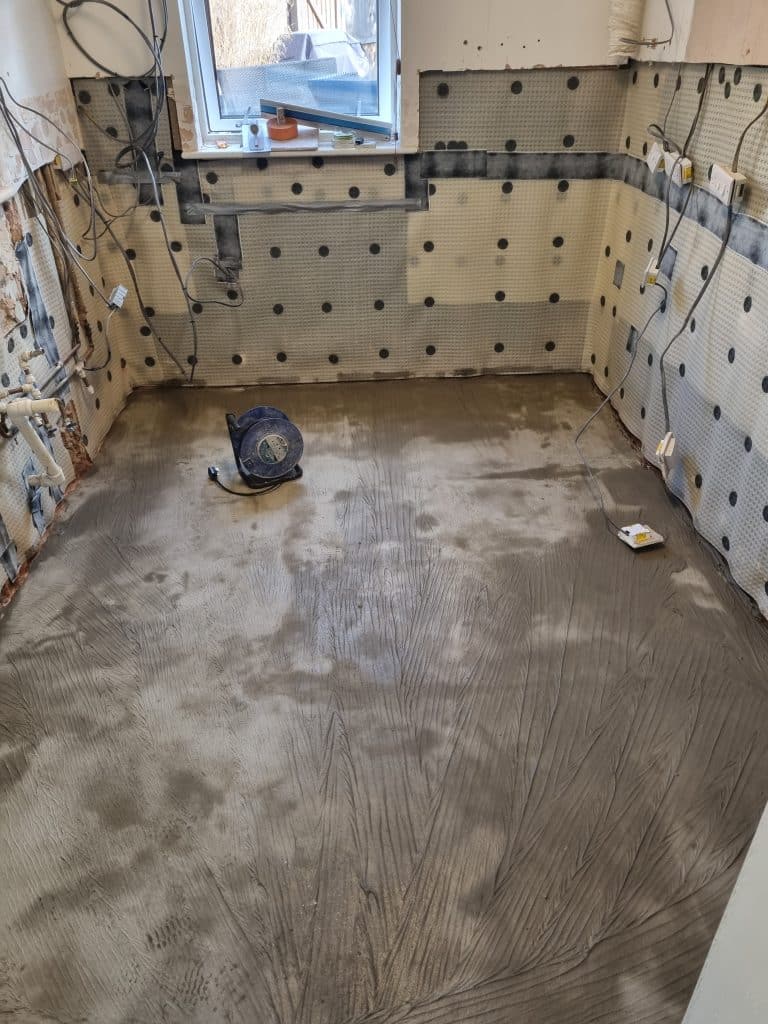
Forming a Recessed Channel at the Wall Base
As part of the membrane installation, the team formed a recessed channel at the relevant wall and floor junction.
Correct detailing at the base of a membrane installation is important because this is where the wall treatment meets the adjoining floor construction.
The recessed channel allowed the specified membrane detailing to be incorporated at the junction, helping maintain continuity of the installed system.
Careful preparation around edges, junctions and adjoining surfaces is essential to achieving a properly installed damp-proofing treatment.
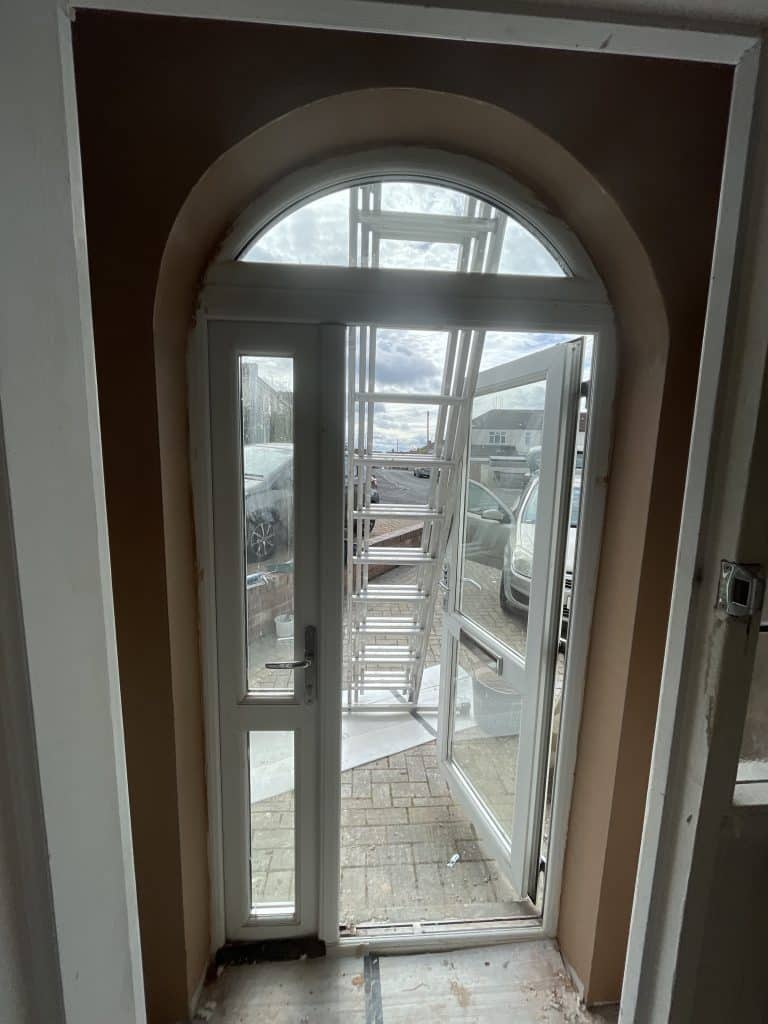
Replastering the Treated Internal Walls
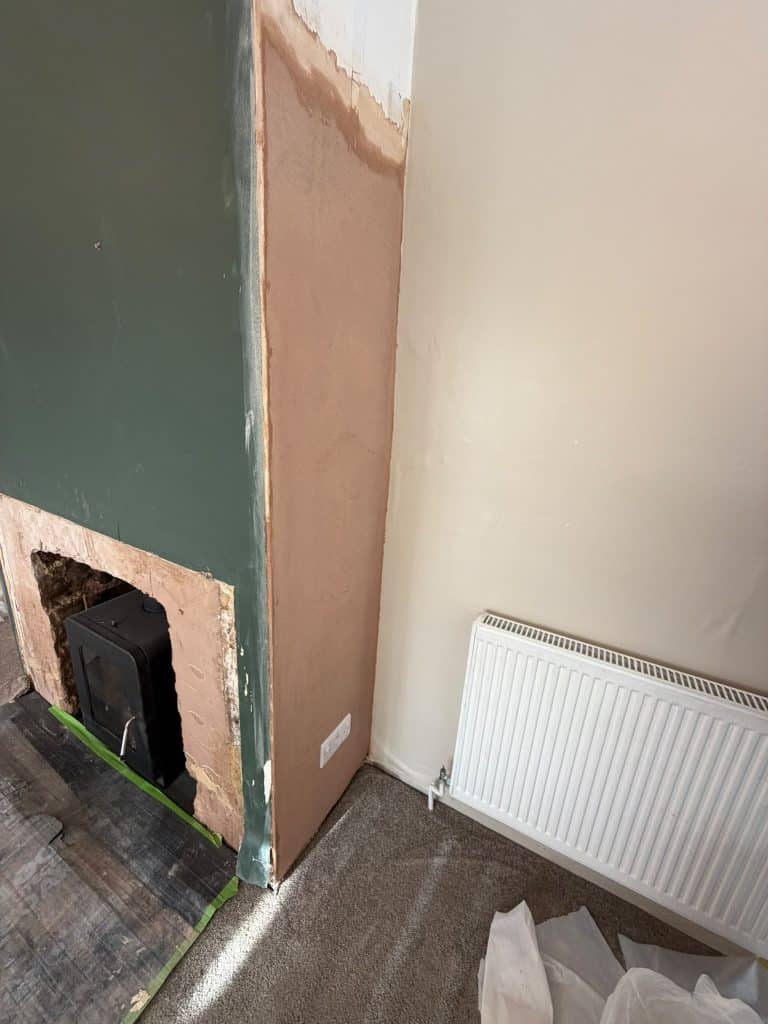
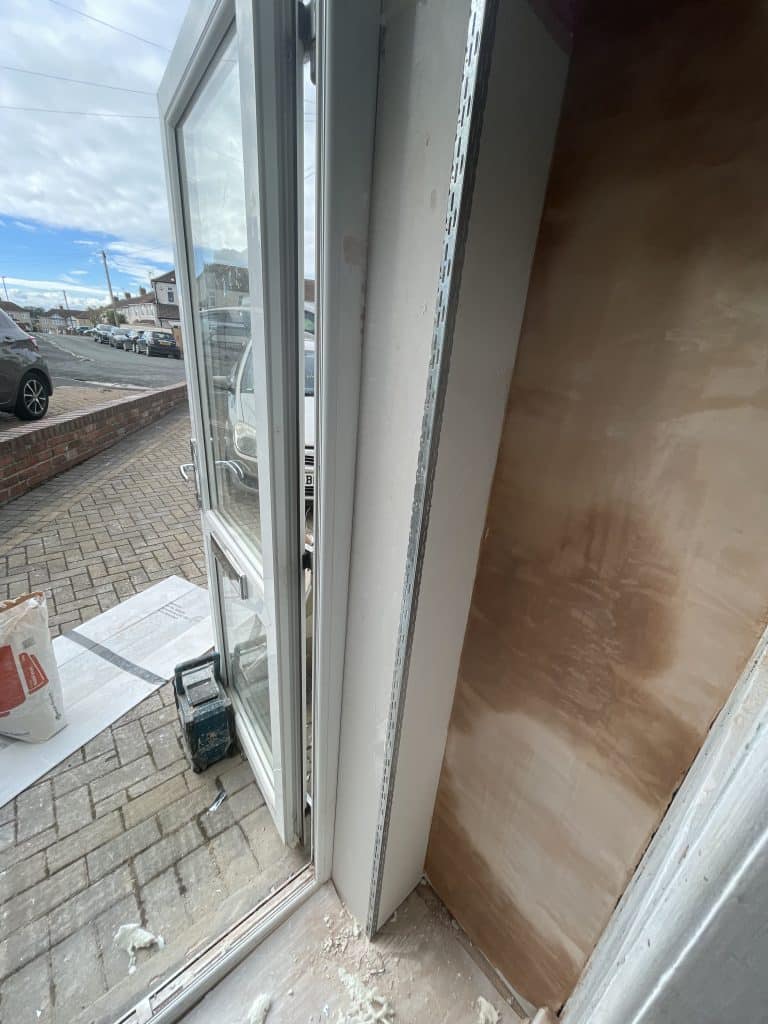
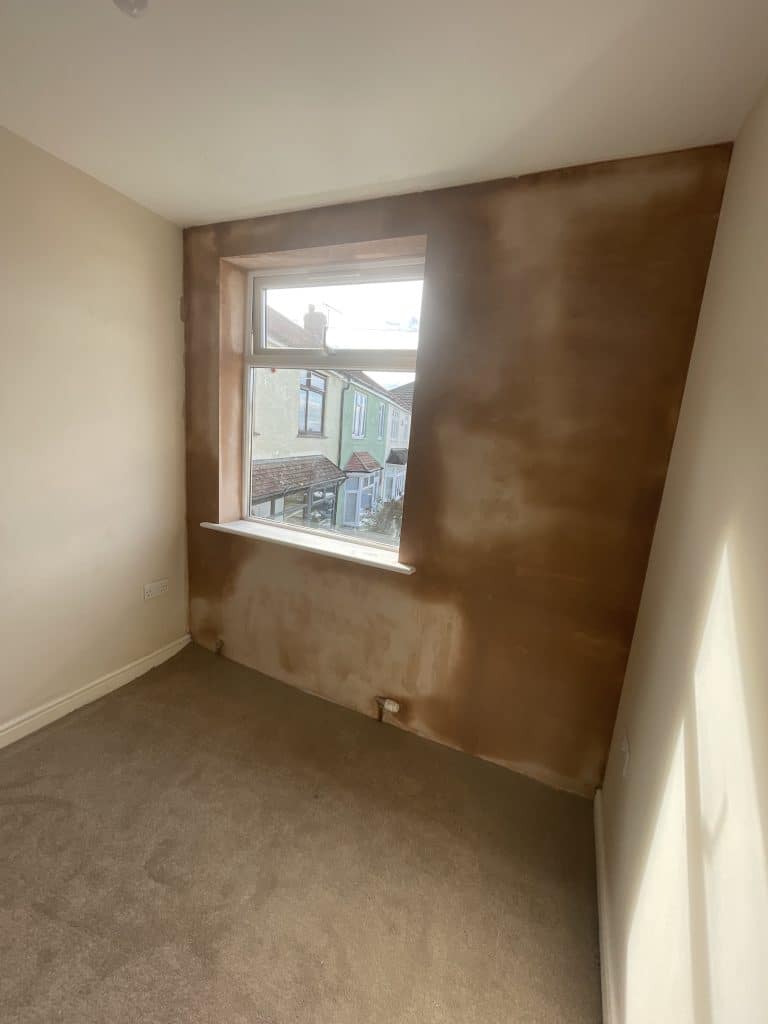
Once the damp-proofing treatments and membrane installation had been completed, the affected wall areas were replastered.
The new plaster restored the internal surfaces following the removal of the original damaged material.
Replastering is an important final stage of many internal damp-proofing projects, allowing the treated wall to be returned to a smooth finish suitable for decoration once the plaster has dried sufficiently.
The submitted photographs document the progress of the project through the preparation, treatment and reinstatement stages.
Why External Repairs and Internal Damp Proofing Work Together
One of the important aspects of this Wembley project was the combination of external building repairs with internal damp-proofing treatments.
Repairing damaged seals and openings can help reduce the risk of rainwater entering through vulnerable external details. Meanwhile, the internal chemical damp-proof course and membrane system provide protection suited to the specified wall treatment areas.
These measures address different aspects of moisture management and should not be treated as interchangeable solutions.
For homeowners experiencing recurring damp patches, the first step should be identifying the relevant moisture sources before selecting the appropriate remedial work.
Our guide on how to stop damp returning after treatment explains why diagnosing the cause is essential to achieving a lasting result.
Professional Damp Proofing in Wembley and West London
Nordic Damp Proofing provides professional damp-proofing services in Wembley, helping property owners investigate and resolve moisture-related problems.
Our experienced team also works throughout West London, providing damp surveys, rising damp treatments, penetrating damp repairs, cavity drainage membrane systems and specialist plastering.
Whether your property has deteriorating internal plaster, damp patches around windows, damaged external render or recurring moisture problems, we can assess the affected areas and recommend appropriate remedial work.
We focus on identifying the underlying cause of damp and delivering suitable long-term solutions, with 25-year guarantees available on qualifying treatments.
If you’re concerned about damp in your home or commercial property, contact Nordic Damp Proofing to arrange a professional damp survey.