Buying a house with damp is not always a mistake. In fact, it can be a smart way to get a good home for less money. However, the damp you can see on a viewing is rarely the whole story. Behind a fresh coat of paint there may be salt-soaked plaster, a missing damp-proof course, or an earlier treatment that never worked.
So what does damp really cost once you get the keys? To answer that, this article looks at two real jobs that Nordic surveyors and technicians completed in 2026. Both homes had damp that looked fairly modest on the surface. In both cases, the full fix went well beyond a quick repair.
After that, the article shows how to put those lessons to work before you make an offer, so you pay a price that reflects the real cost of the home.
Case Study 1: Full-Height Rising Damp in a Bristol Kitchen
What the wall looked like
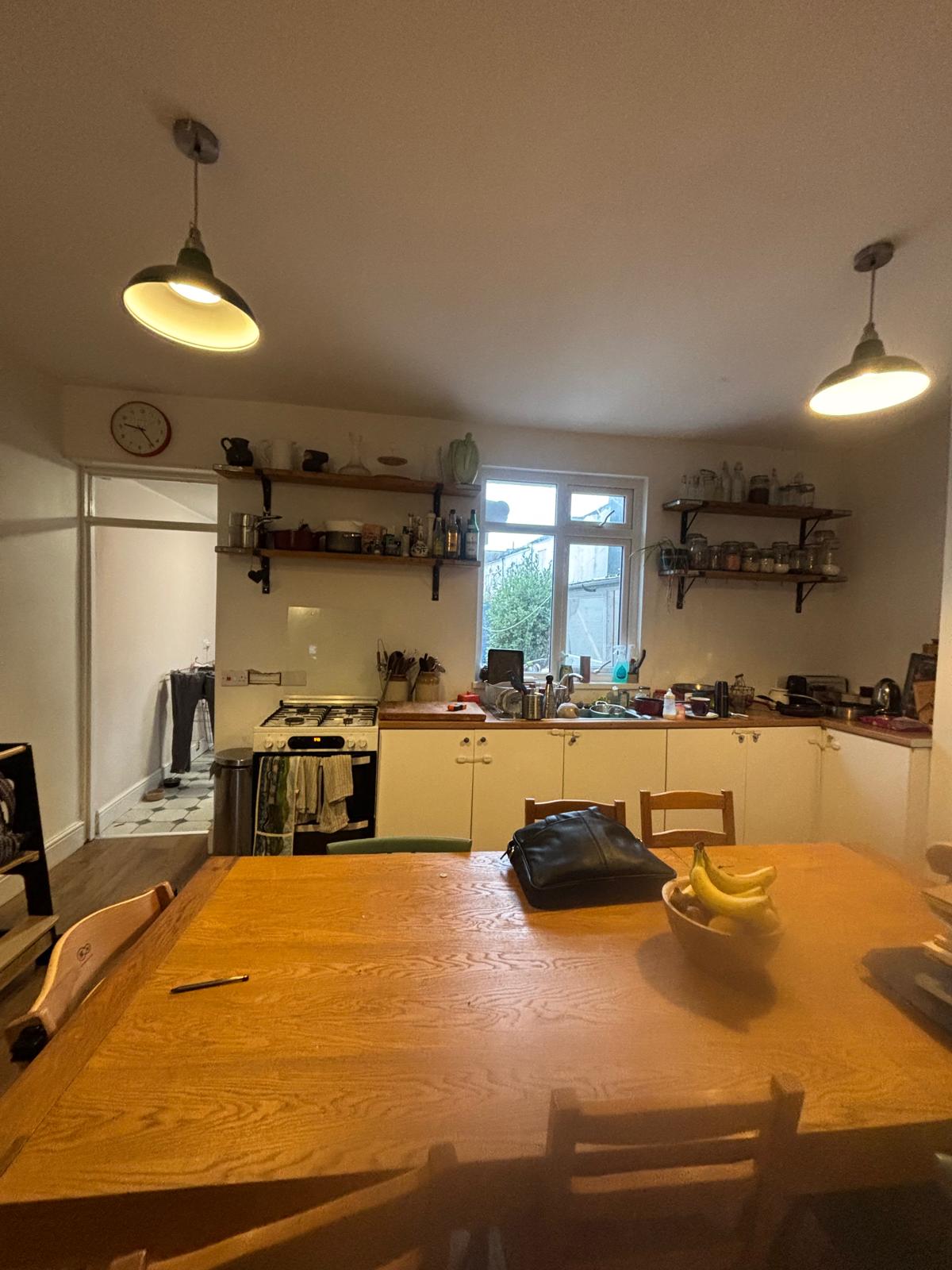
At first glance, the problem sat on one rear kitchen wall. The plaster had broken down, the paint would not stay on, and the room felt damp. Many buyers would see a patch of plaster and a tin of paint.
What the survey found
The survey told a different story. Moisture readings were high throughout the house, and they peaked on the rear, north-facing wall. In addition, hygroscopic salts had spread through the plaster. These salts pull moisture out of the air, so any new paint or plaster on top would simply fail again.
The surveyor found several causes working together:
- The house had no effective original damp-proof course.
- A raised patio had bridged the base of the wall over many years.
- External render ran right down to the ground, so the wall could not dry out.
- Cracks in the render let rain in.
- High humidity and poor ventilation inside slowed drying even further.
What the fix involved
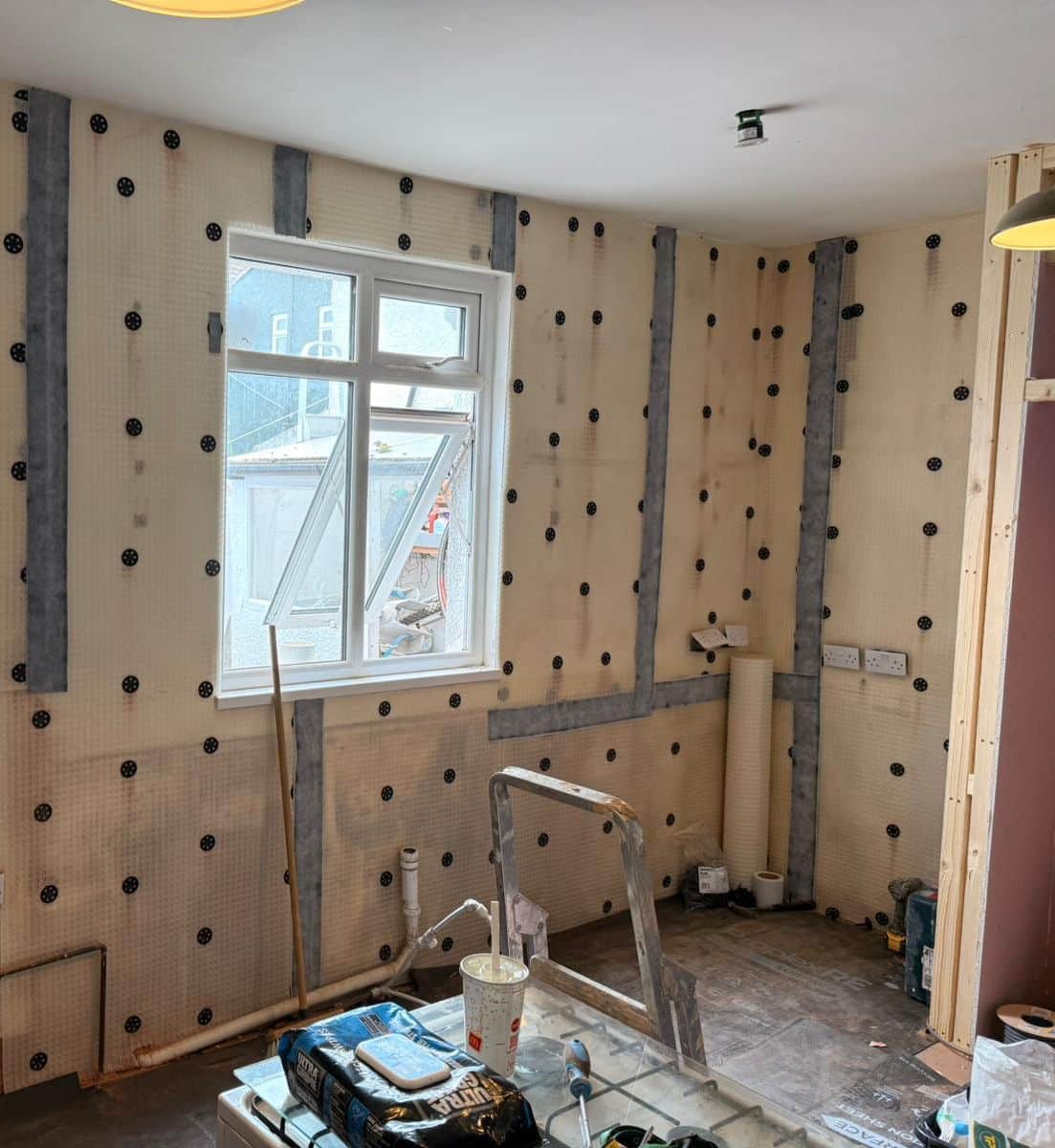
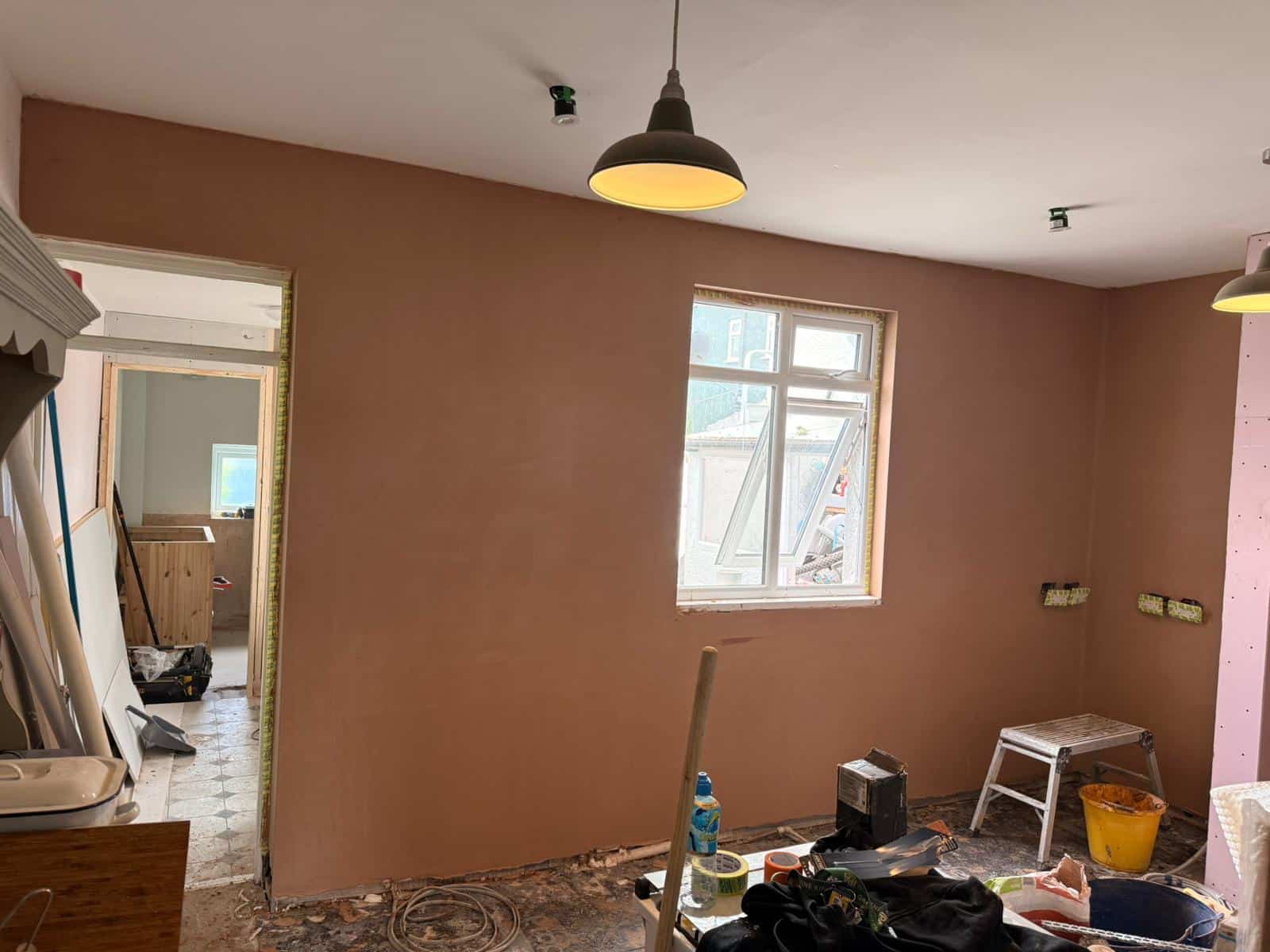
Because the salts had spread so widely, a patch repair would not have lasted. Instead, the team stripped the plaster back to bare masonry across the full height of the wall. Next, they fixed a cavity drainage membrane across the whole wall and sealed every joint and fixing. Finally, they replastered the wall to a smooth finish, ready for decoration.
The work inside was only part of it, though. The surveyor also advised lowering the patio, cutting the render back above ground level, repairing cracked render and improving ventilation. Those outside jobs sit on top of the internal works, and a buyer would need to budget for them too. You can read the full Bristol case study for more detail.
Case Study 2: A Hemel Hempstead Flat Where Earlier Treatment Had Failed
A vacant flat with several problems
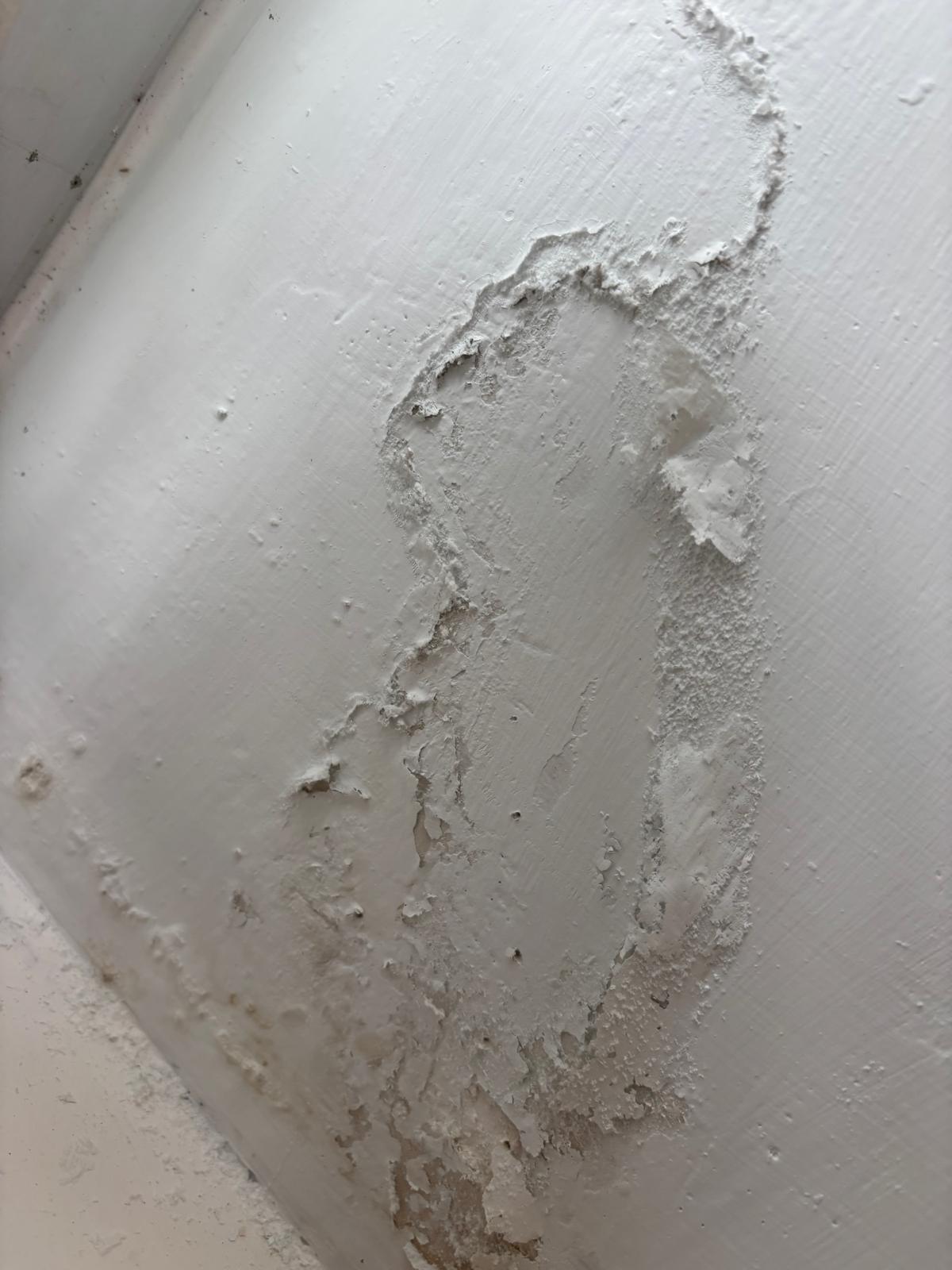
The second job was a ground-floor flat in Hemel Hempstead. It stood empty at the time of the survey, which is common when a property is up for sale. Damp showed in the window bay, the boiler cupboard and around the chimney breast.
Five causes, not one
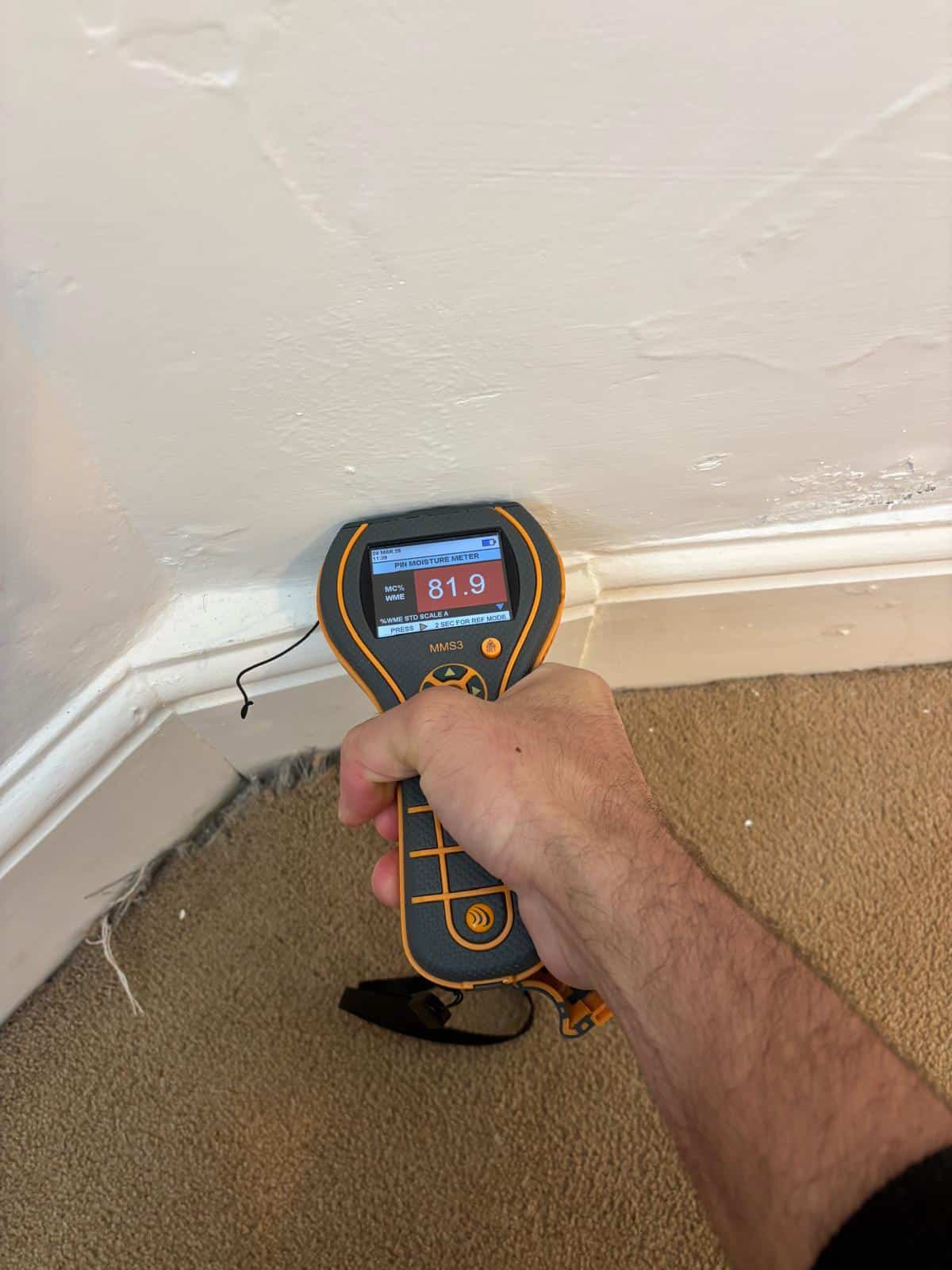
Moisture readings ran from 31.8 up to 81.9 in some low-level areas. On closer inspection, the surveyor found:
- Rising damp at low level, with bubbling plaster near the floor
- Salts in the walls and plaster
- Penetrating damp around the window bay, from worn window plinths, perished sealant and cast stone cills that held water
- Cracked external render that let wind-driven rain in
- An old leak around the boiler cupboard
The detail that changes everything
Most importantly, the outside of the building showed signs of an earlier chemical damp-proofing injection. Somebody had already paid to treat this flat, yet significant damp remained. That earlier work had only tackled one cause, so the other four carried on regardless.
As a result, the fix meant removing damaged finishes and installing a new membrane-based wall system across the affected areas. The Hemel Hempstead case study covers the full survey and works.
The Hidden Costs of Buying a House With Damp
Both jobs show the same pattern. The visible damp is a symptom, while the real bill depends on the causes. So when you think about buying a house with damp, look beyond the repair itself.
The survey comes first
You need a proper damp survey before you can price anything. Checkatrade’s cost guide puts a damp survey at roughly £100–£600. Although it is an extra cost, it is the only way to know what you are buying.
The treatment itself
Treatment costs vary widely with the size of the job and the system used. For example, Checkatrade’s guide quotes injection damp proofing at around £800–£1,200 for a terraced house and £2,000–£5,000 for a detached one. It also puts a membrane retrofit at around £2,000–£6,000. Importantly, those figures exclude plaster removal, decoration, drying out and the survey.
Replastering and redecorating
In both case studies, the salty plaster had to go. So budget for stripping, replastering, a drying period and then decorating. Kitchen units, radiators, sockets and skirting may also need to come off and go back on.
Outside repairs
The Bristol job needed patio and render work outside, while the Hemel flat needed window and render repairs. These jobs often fall to a different trade, so they come on top of the damp quote.
Paying twice
The Hemel flat shows the most expensive hidden cost of all. A treatment that misses the real cause still costs money, and then you pay again to fix it properly. A guarantee from the earlier job may help, but only if it is valid and transferable, and only if the company still trades.
Time and disruption
Finally, there is the cost of living with building work. Rooms may be out of use for days or weeks while plaster dries. If you plan to move in straight away, factor that in.
| Hidden cost | Why buyers miss it |
|---|---|
| Specialist damp survey | Many buyers rely on the Homebuyer Survey alone |
| Full-height plaster removal | Damp looks low-level, but salts spread higher |
| Outside repairs | Render, patios and cills sit outside the damp quote |
| Redecoration and refitting | Units, skirting and radiators come off and go back on |
| A second treatment | An earlier treatment missed the real cause |
| Lease and freeholder issues (flats) | External walls may be the freeholder’s responsibility |
Use this table as a planning checklist rather than a quote.
How to Check the Numbers Before You Offer
Start with a damp survey
The surveys in these case studies found causes that a viewing would never reveal. So before you agree a price, ask whether you need a damp survey before buying. If your Homebuyer Survey has already flagged damp, a specialist report gives you a written diagnosis and a cost you can use in negotiations.
Then check what the house is really worth
A survey tells you what the repairs will cost. However, it doesn’t tell you whether the asking price already allows for them. For that, you need sales data.
This is where it pays to research a property before making an offer. Offer Smart is a UK property research service that pulls together HM Land Registry sold prices, comparable sales and local data. Its buyer reports include:
- An estimated valuation, plus suggested opening and maximum offers
- Recent sold prices on the same road, along with nearby comparable sales
- Price per square foot, where there is enough verified evidence
- Listing history, including price reductions and how long the home has been on the market
- EPC, flood risk and other area data
- Refurbishment cost scenarios when you choose a project strategy
Listing history is especially useful with damp. For instance, a home that has sat on the market for months with several price drops may have already put off buyers who found the same problem.
Put the two together
Once you have both the damp report and the sales data, the maths becomes much clearer. Here is a simple illustrative example, rather than figures from either case study:
- Similar homes on the road have sold for around £260,000.
- The house you like is on the market at £255,000.
- Your damp report costs the full fix, inside and out, at £9,000 including replastering and redecoration.
In that case, the asking price only allows £5,000 for a £9,000 problem. With both reports in hand, you can make a lower offer and explain exactly why. Offer Smart itself notes that its reports do not replace a survey, and that is the point: the two work best together.
Is Buying a House With Damp Still Worth It?
Yes, for the buyer who prices it properly. The damp itself is rarely the danger. Instead, the danger is paying a “nothing wrong here” price for a house that needs real work.
Look back at the two case studies. A buyer who costed the Bristol house correctly would know they were taking on a full wall rebuild, a lower patio and new render, rather than a patch of plaster. Meanwhile, a buyer who trusted the old injection in the Hemel flat would have paid for a treatment that had already failed once. In each case, the same house could be a good buy or a costly mistake. The only difference is what the buyer knew before they made an offer.
So the question to ask is not “does it have damp?” but “has anyone found every cause, and does the price allow for it?” If you can’t answer both, you are not ready to offer. And if you are buying a flat, also read the lease and the damp problems to look for before buying a flat, because the freeholder may control the walls, render and windows.
Four Questions to Ask Before You Make an Offer
1. What is causing the damp, all of it?
One cause is easy to spot. In the Hemel flat, however, there were five. Only a specialist survey with moisture readings and salt tests will find them all.
2. What will the full fix cost, inside and out?
Ask for one written figure that covers stripping, membranes or DPC work, replastering, redecorating and any outside repairs. A quote for the “damp bit” alone leaves you exposed.
3. Does the asking price already allow for it?
Compare the price with recent sales on the road and the price per square foot of similar homes. If the gap is smaller than your repair cost, you have your case for a lower offer.
4. Who pays if it comes back?
Ask the seller for any earlier treatment paperwork. Then check whether the guarantee is valid, whether it transfers to you, and whether the company behind it still trades.
Know the Real Cost Before You Commit
The seller usually knows the house has damp. Estate agents often know too. The only person in the deal without the full picture is the buyer, unless you go and get it.
A Nordic pre-purchase report gives you that picture in writing. Our PCA-trained and accredited surveyors take moisture readings through the walls, test the plaster for salts, check render, ground levels and cills outside, and photograph what they find. Then you get a clear diagnosis and a written cost that you can put in front of the seller or your lender.
Because Nordic also carries out the remedial work, holds Biokil Crown and ISSE accreditations and offers 25-year guarantees on qualifying work, that cost reflects what the job really involves rather than a guess.
The seller already knows what the damp is worth to them. Make sure you know what it will cost you.
We Find It, We Treat It, We Stop It Coming Back.