If you have found some soft, crumbling or discoloured timber somewhere in your home, there is a good chance it is rot. Both wet rot and dry rot get blamed for the same thing: wood quietly falling apart. But they do not behave the same way, and one of them is far more serious than the other. Knowing which you are dealing with matters because it changes how much work you are in for.
Here is how to tell them apart.
What they have in common
Both are types of fungal decay, and both need one thing to get going: moisture. Timber that stays dry does not rot, which is why rot almost always turns up alongside a leak, condensation, penetrating damp, or poor ventilation. Both feed on the wood itself, breaking down the fibers until the timber loses its strength.
That is roughly where the similarities end. The name ‘dry rot’ is a little misleading too. It still needs damp to get started. It just leaves the wood looking dry and crumbly once it has done its damage.
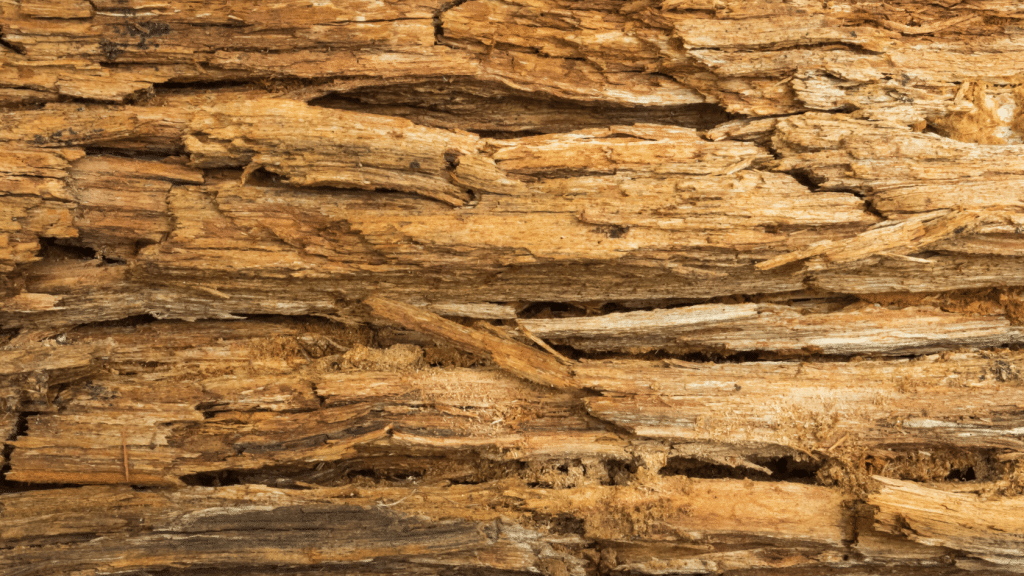
Wet rot: the common one
Wet rot is the most common type you are likely to meet. It develops when timber is exposed to a fairly high level of moisture over a long period, usually because of an ongoing source like a leaking gutter, a dripping pipe, a failed seal around a bath, or groundwater getting into floor timbers.
The good news is that wet rot does not usually spread beyond the source of the moisture. It only affects the timber that is actually damp, so the damage is typically limited to the affected area rather than spreading throughout the house.
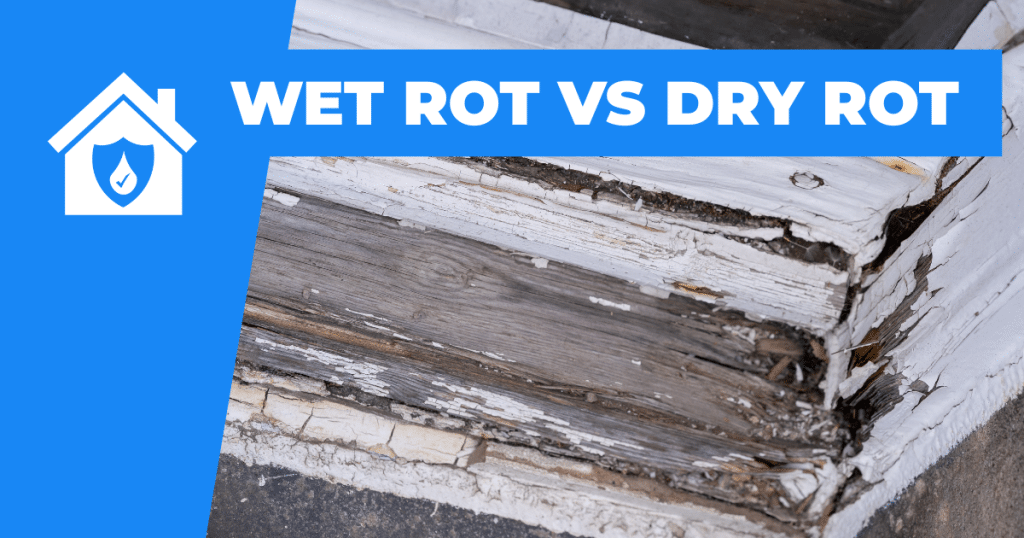
The signs are fairly easy to recognize. The wood often looks darker than usual and feels soft, or spongy, or sometimes damp to the touch. It may crack along the grain, and you may notice a thin brown or black fungal growth on the surface, accompanied by a musty, damp smell. If you press affected timber with a screwdriver, then it gives way easily, almost like wet cardboard.

Dry rot: the serious one
Dry rot, known by its scientific name Serpula lacrymans, is less common, but it is the type that causes the biggest concern. Unlike wet rot, it can survive with much less moisture, and it does not stay in one place. Instead, it sends out fine strands that travel across brickwork, plaster and mortar to reach the fresh timber. That means a leak in one part of the property can end up threatening structural joints on the other side of a wall.
Because of that, dry rot often causes significant damage before you even realise it is there.
The warning signs are different from wet rot. You may notice fine grey or white strands, similar to cotton wool, spreading across walls or other surfaces with a slight silky sheen. In an active outbreak, dry rot can produce a large, soft fruiting body that is often orange or rust-colored and pancake-shaped. This releases a fine reddish-brown dust of spores that settles on nearby surfaces.
The affected timber turns dry, brittle and browner than normal, and cracks into small cube shapes across and along the grain. A strong mushroom-like smell is another common sign that dry rot may be present.
How to tell them apart
The easiest way to tell the difference is by looking at how the decay spreads and its texture. Wet rot stays where the moisture is, and leaves the timber soft, damp, and spongy. On the other hand, dry rot can spread beyond the damp area. It leaves the timber dry and brittle, and often brings those reddish spores and cotton wool strands with it. If the decay seems to be travelling, or you spot rust coloured dust, treat it as dry rot until proven otherwise.
That said, the two can look surprisingly alike in the early stages, and both tend to hide in the places you rarely check, such as under floors, behind skirting boards, inside roof spaces and around window frames. Guessing wrong gets expensive.
Why it is worth getting it checked
Whether it is wet or dry rot, simply painting over the timber or replacing a single damaged board will not solve the problem if the source of the moisture is still there. The rot simply comes back. In particular, dry rot needs proper treatment, because leaving it unchecked can lead to serious structural damage to joists, floors, and roof timbers.
A timber survey settles it quickly. At Nordic Damp Proofing, our fully-trained surveyors identify exactly which type of rot you have, trace the moisture feeding it, and set out what needs replacing and what can be treated and saved. We cover Dorset, Hampshire and the wider South Coast of England and Wales, and every job comes with our guarantee.
If you’ve found soft or crumbling timber anywhere in your home, don’t wait to see how far it spreads. Book a survey, and we’ll find it, treat it, and stop it from coming back.