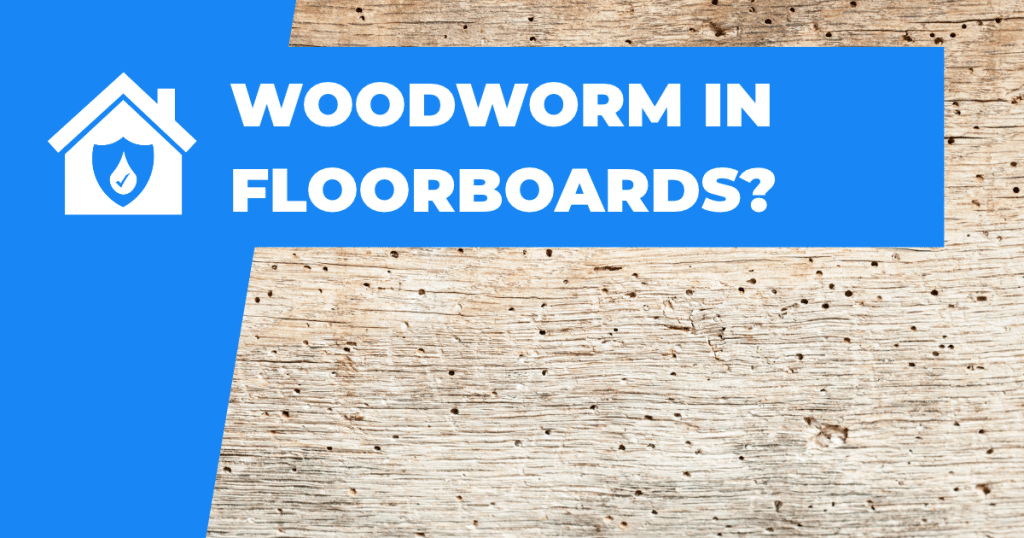
You have lifted a rug, or pulled back a corner of carpet, and found a scatter of small round holes across the boards underneath. The first question is always the same one, and it is the right question to ask: is this still happening, or did it finish decades ago?
That single distinction decides everything that follows.
Old woodworm damage in timber that is still sound often needs nothing done to it at all, and plenty of Victorian and Edwardian floors carry historic holes that have caused no trouble in a century. Active woodworm in weakened boards and joists is a different proposition.
Getting the answer wrong costs you money in one direction and structural safety in the other.

What causes woodworm?
Woodworm is not a worm. The word describes the larval stage of several wood-boring beetles, and in UK homes the culprit is usually the common furniture beetle.
The cycle works like this. An adult beetle lays her eggs in a crack, a joint or an area of open grain on a piece of timber. The larvae hatch and burrow inwards, then spend somewhere between two and five years eating their way through the wood, out of sight and doing all the damage. When they mature they tunnel back towards the surface, chew their way out, emerge as adult beetles and fly off to breed. That happens mostly between May and September.
The important consequence is that the hole you are looking at is an exit hole. It was made by a beetle leaving, not arriving. Every hole in your floorboards represents an insect that has already gone, which is why counting holes tells you very little about whether anything is still living in the timber.
What draws them in the first place is moisture. Wood-boring beetles strongly prefer damp timber, because larvae develop faster in wood with a raised moisture content and females select damper wood to lay in.
Dry, well-ventilated timber is a poor host and tends to be left alone.
What are the first signs of woodworm in floorboards?
Several things give it away, and it is worth checking for all of them rather than stopping at the first.
Woodworm holes
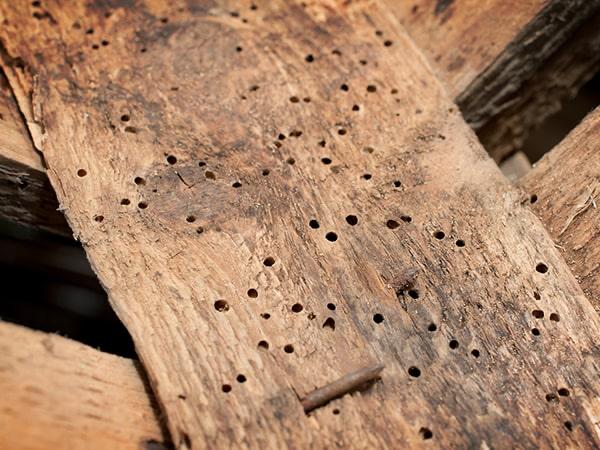
Small, round and clean-edged, typically between one and two millimetres across for the common furniture beetle. They appear scattered across the surface rather than in rows or lines. Anything noticeably larger, up to five or six millimetres, points towards a different species such as the house longhorn or deathwatch beetle, and those are worth taking more seriously and having identified.
Woodworm frass
Frass is the fine powder produced as the larvae tunnel, and it is the single most useful clue you have. It is usually close to the colour of the timber itself and feels gritty between finger and thumb rather than soft like household dust. Look for it collecting below exit holes, in the gaps between boards, along the edges of the skirting, or on whatever happens to be stored underneath.
Tunnels in the wood
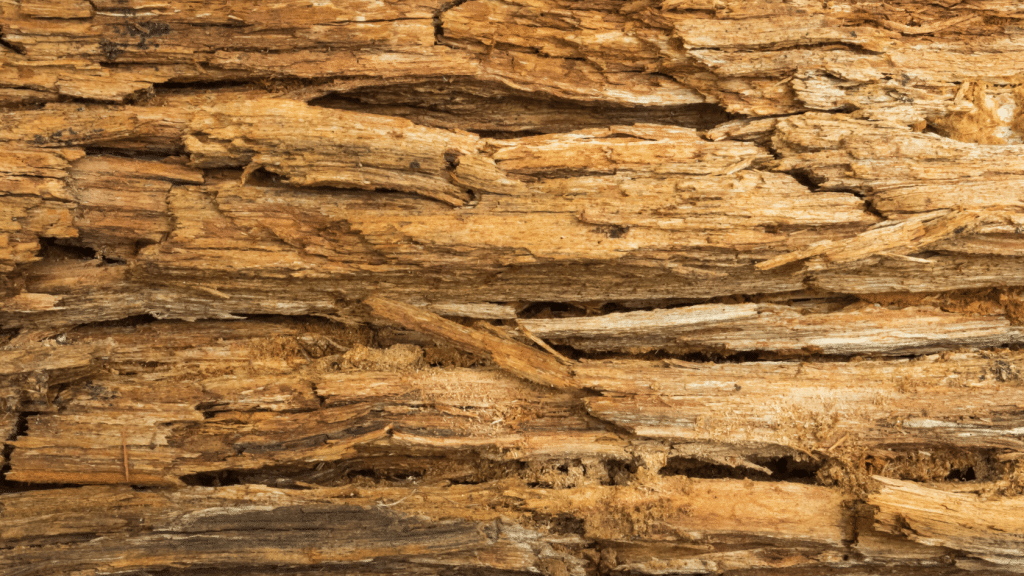
You will normally only see these when a board splits or gets lifted, but they are unmistakable once exposed. The larvae leave winding galleries running through the timber, quite unlike the straight bore of a drill hole, and their extent tells you how much of the interior has been eaten away.
Crumbling wood
Board edges that break away when you press them, corners that have gone soft and powdery, or timber that flakes under a fingernail. This tells you the damage has gone beyond cosmetic, whatever the holes on the surface suggest.
Seeing adult beetles
Small brown beetles between three and five millimetres long, turning up on windowsills, in cobwebs near the affected floor, or on the surface of the boards themselves during early summer. Live adults in the room are the clearest confirmation you will get without professional help.
Alongside all of these, pay attention to how the floor feels. Boards that have developed a spring underfoot, or that flex more than their neighbours, are telling you something the surface appearance may not.
How to tell if woodworm in floorboards is active or old
This is the part homeowners get stuck on, and it becomes straightforward once you know what to compare.
Fresh exit holes vs old holes
A recent exit hole is clean, sharply cut and pale inside, showing timber the colour of freshly sawn wood because the beetle only made it a matter of months ago. An old hole has darkened with age and collected decades of wax, polish, paint, varnish or general grime around the rim and inside the bore.
Take a torch and shine it into the holes at an angle. Pale and crisp means recent activity. Dark, dull and filled with the same finish as the surrounding board means the beetles left long before you moved in.
Wood dust (frass): what it really means
Fresh frass is the strongest evidence of live larvae, but it needs testing rather than assuming, because old frass sits undisturbed in gaps for years and gets shaken loose by vibration.
Do it properly. Brush or vacuum all the powder away from around and below the holes, then write the date somewhere you will remember it. Come back in two to four weeks, ideally during the summer months when the beetles are active, and look again. New powder in a cleared area means larvae are still working inside the timber. Nothing at all is encouraging, though a single check in winter proves less than a check in July.
Structural softness vs surface marks
Take a screwdriver or a blunt blade and press it firmly against the timber near the holes, then try the same on a clearly unaffected board for comparison. Sound wood resists and the blade skids off. If the blade sinks in, or the surface crumbles away under moderate pressure, the interior has been hollowed out and the board may need replacing regardless of whether anything is still living in it.
Does woodworm damage floorboards structurally?
Sometimes, and the honest answer depends on how long the infestation ran, how many generations passed through the timber, and which species you are dealing with.
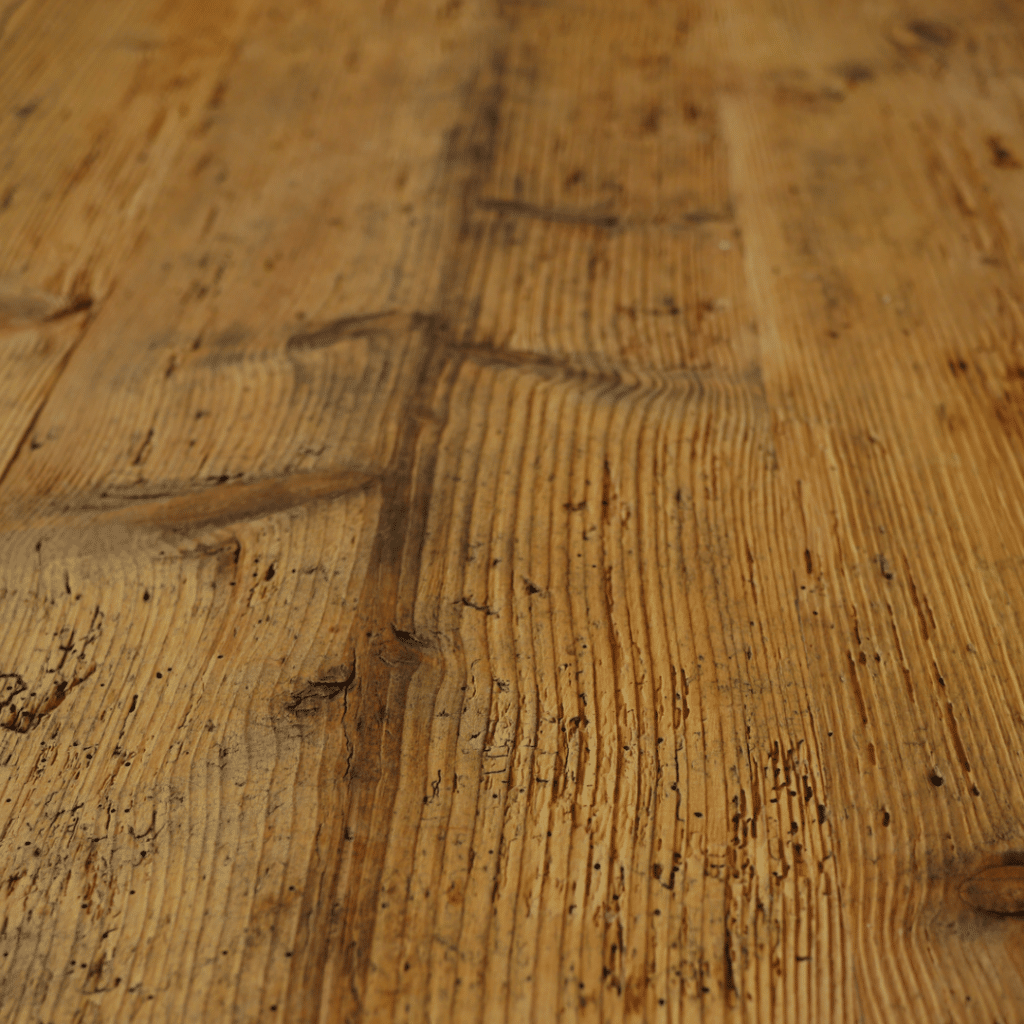
Common furniture beetle working through a thick, well-seasoned board over several decades can leave the surface looking heavily peppered while the board remains perfectly capable of doing its job. The same beetle in a thinner board, or concentrated into one small area, can hollow it to the point where it will not take a person’s weight.
The larger concern sits underneath. Floorboards are replaceable and comparatively inexpensive. The joists they rest on are structural, they are harder to get at, and they are usually the timbers closest to whatever damp exists in the subfloor void. When a surveyor lifts a board, the joists are what they have come to look at.
Any new deflection when you walk across the floor, boards that have started creaking in a way they did not before, or a floor that has developed a visible dip all deserve investigating rather than living with.
Can moisture control alone prevent woodworm recurrence?
Largely, yes, and this is the point most homeowners miss.
Treating the beetles while ignoring the moisture is the most common mistake made with woodworm. The chemical kills what is present in the timber at the time of application. If the wood stays damp, conditions remain ideal for the next generation, and beetles from elsewhere in the property or from outside will find it again.
When woodworm turns up in floorboards, there is usually water involved somewhere. Subfloor air bricks that have been blocked by a flowerbed, a decking board or years of debris, leaving the void underneath permanently unventilated. External ground levels raised above the damp proof course by a new patio or path, pushing moisture into the wall and across into the floor structure. A slow leak from a waste pipe beneath a bathroom or kitchen. A failed or bridged damp proof course allowing moisture up into the ground floor. Or a solid floor laid over old timber without a membrane.
Find the water and deal with it, and the timber becomes an unattractive place for beetles to live. That does more for the long-term outcome than any spray.
Do you need to treat or replace floorboards with woodworm?
Treatment makes sense where the infestation is live, the timber retains its structural integrity and there is reasonable access to apply the product properly. The sequence matters: identify the species and the extent, deal with the moisture source, then treat the timber with an appropriate insecticide.
Replacement becomes necessary where boards or joists have lost strength, where damage is heavily concentrated, or where fungal decay has set in alongside the beetle damage. Treating rotten timber achieves nothing useful, because the wood has already failed.
Doing nothing is a perfectly legitimate outcome where the damage is historic, the timber is sound and the property is dry. Not every hole needs a chemical response.
One practical point worth knowing before you buy anything from a DIY shop. Surface-applied treatments penetrate only a few millimetres into the timber. Where larvae are working deep inside a thick joist, a spray-on product simply cannot reach them, which is why treatments sometimes appear to fail when in truth they never made contact with anything.
How to prevent woodworm returning to floorboards
Everything on this list comes back to keeping the timber dry and the air moving.
Keep subfloor air bricks clear and unobstructed, and consider adding more where the void is poorly ventilated, since most older properties were built with fewer than they need. Maintain external ground levels at least 150mm below the damp proof course, and resist the temptation to raise a path or patio without checking. Deal with plumbing leaks promptly, particularly under kitchens and bathrooms where they can run undetected for years. Keep gutters and downpipes clear so that walls stay dry and the moisture never reaches the floor structure. Ventilate the house properly so internal humidity stays down. And lift a board every few years in an older property to see what is happening underneath.
Who can check for woodworm?
Call someone in if you find fresh frass in a cleared area, if you see live beetles during the summer, if the floor has developed movement or softness, if the holes are larger than three millimetres, or if you are buying the property and want to understand what you are taking on before you commit.
A proper timber survey identifies the species, establishes whether the infestation is live rather than assuming either way, inspects the joists and subfloor rather than only the visible boards, and locates the moisture that made the timber attractive in the first place. That last part is what stops the problem returning.
Nordic Damp Proofing carries out timber and damp surveys across Dorset, Hampshire, Wiltshire, Somerset and surrounding areas across the South Coast and South Wales, and handles woodworm, rot and damp treatment in-house with long-term guarantees.
If you have found holes in your floorboards and want to know whether they matter, book a survey and get a straight answer