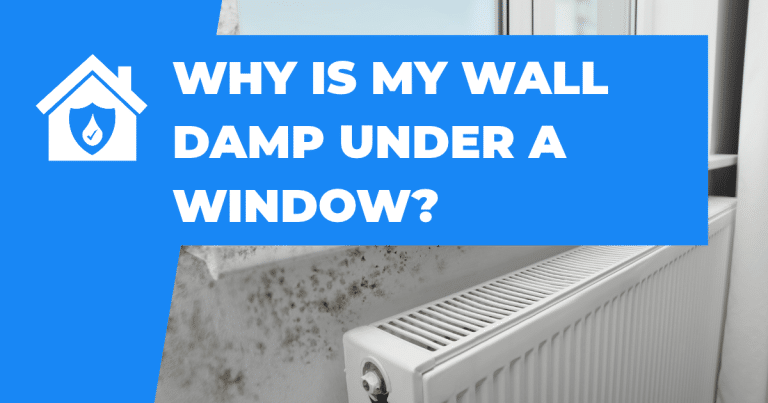
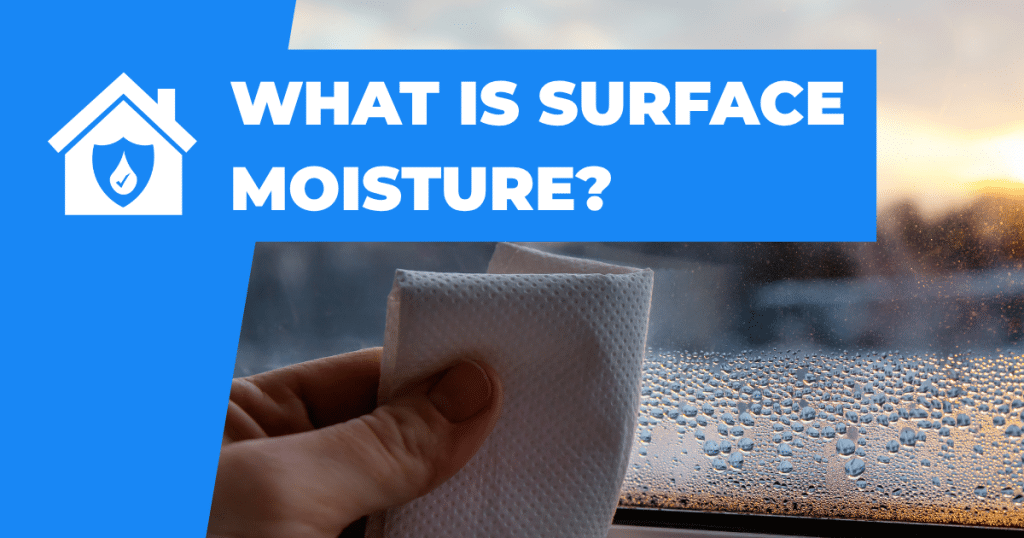
You run your hand along the wall. It feels cold and slightly damp. The paint looks patchy. Maybe there is a hint of mould in the corner. The obvious worry is that water is getting deep into the wall. But that is not always the case. What you are often feeling is surface moisture. Knowing the difference can save you a great deal of money and stress.

Surface moisture explained
Surface moisture is exactly what it sounds like: moisture sitting on or just beneath the surface of a wall, ceiling or floor, rather than soaked deep into the fabric of the building. The wall itself may be perfectly sound underneath. The problem is what is happening in the room around it.
Think of a cold drink on a summer day. The glass is watertight. Within minutes, the outside is covered in droplets. Nothing is leaking; the moisture is coming from the air around it. Walls, windows, and ceilings behave in the same way when the conditions are right, and that is surface moisture in action.
Where surface moisture comes from
The biggest source by far is condensation. Everyday life produces a surprising amount of water vapour. Cooking, showering, drying clothes indoors, and even breathing can release several litres of moisture into the air of an average home every day. When that warm moist air touches a cold surface, such as an external wall, a window reveal or a bathroom ceiling, it cools and condenses into water droplets on the surface.
Other sources include steam lingering after a shower, new plaster that is still drying out, and rain wetting the outer face of a wall. In most of these cases, the moisture stays close to the surface. It clears when conditions improve.
Surface moisture vs damp inside the wall
This distinction matters because the treatments are completely different. Surface moisture comes from the air in the room, so the fix is about managing moisture and ventilation. Damp inside the wall is fed by an external source, such as rising damp drawing ground moisture up through the masonry or penetrating damp pushing rainwater through a defect, and it will not dry out until that source is dealt with.
Get the two confused. You pay the price either way. Installing a damp-proof course to cure what is really a condensation problem wastes money and solves nothing. Dismissing rising damp as “just a bit of condensation” lets a serious problem quietly get worse.
How professionals tell the difference
A cheap pin-type moisture meter mostly reads the surface, which is one reason DIY readings can be so misleading. A proper survey goes further. Surveyors profile moisture at different depths within the wall, use thermal imaging to find cold spots, measure humidity and dew points in the room, and test for salts that indicate long-term moisture movement. Together, these checks show whether the water is coming from the room or from the wall itself.
Why surface moisture still matters
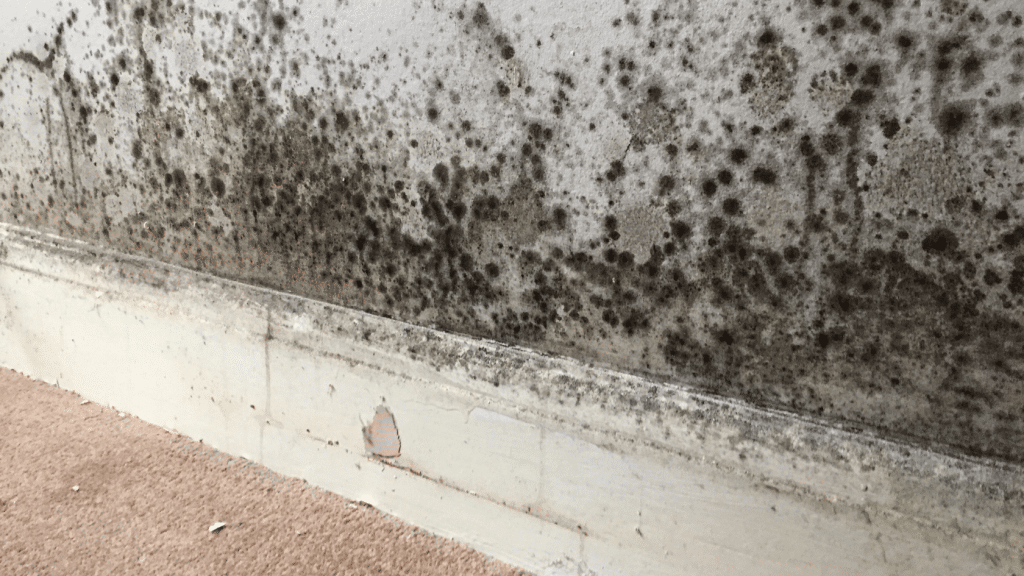
It is tempting to shrug off surface moisture as harmless, but it is not. Black mould grows happily on damp surfaces and can spread quickly across paint, sealant and wallpaper, which is why persistent patches often need professional mould remediation. Repeated wetting also damages decoration, and over time it can rot skirting boards and window boards, leading to timber repairs that could have been avoided.
For landlords, ongoing damp and mould now carry real legal weight under Awaab’s Law, so ignoring these are not an option.
How to reduce surface moisture at home
The good news is that day-to-day habits make a real difference.
Run the extractor fan during showers and for fifteen to twenty minutes afterwards, and keep the bathroom door closed so the steam does not drift through the house.
Put lids on pans while cooking.
Dry clothes outdoors when you can, or in one well-ventilated room rather than draped over radiators everywhere.
Keep a steady background heat in cold weather instead of short blasts, and leave a small gap between furniture and external walls so air can circulate.
If the surface moisture problem persists, improved ventilation, such as a humidity-controlled fan, can do the work your habits could not.
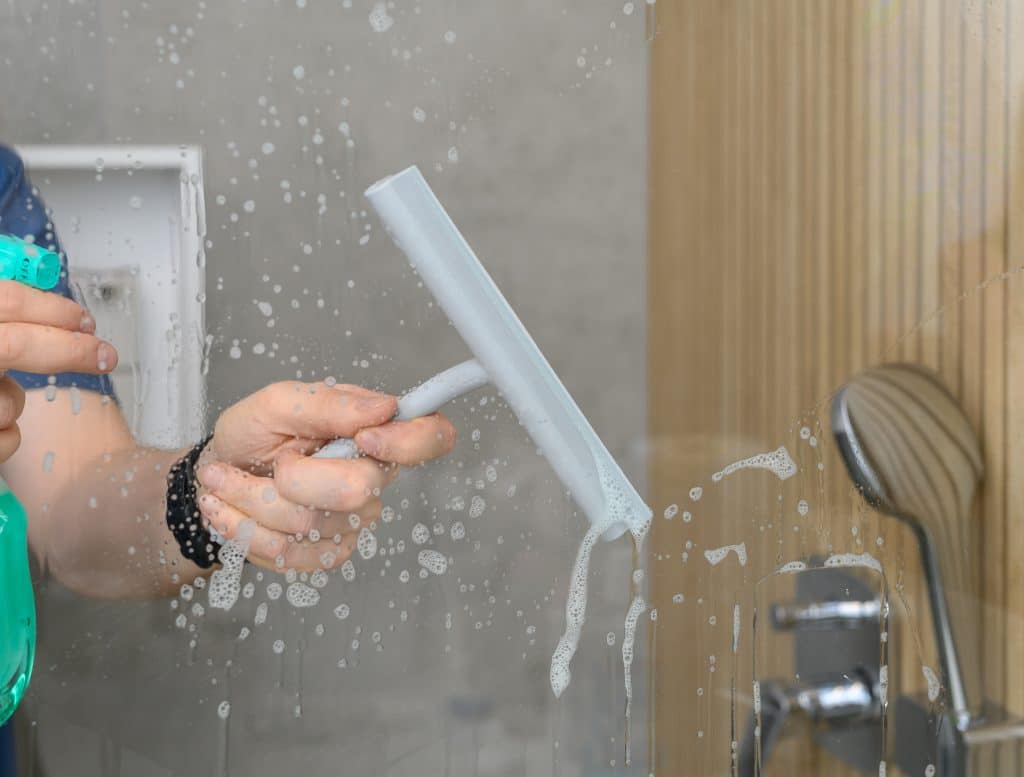
One habit worth building is a quick wipe-down. Running a squeegee or cloth over the shower screen, tiles, and windowsills after use removes water before it has the chance to evaporate back into the room. It takes thirty seconds and it noticeably reduces the amount of moisture the room has to deal with.
When it’s more than surface moisture
Some signs point to a deeper problem. A wall that stays wet even in warm, dry weather, a tide mark near the skirting, crumbling or bubbling plaster and a persistent musty smell all suggest moisture is coming from within the building rather than the air around it. At that stage, guessing is expensive and a professional damp survey is the sensible next step.
Nordic Damp Proofing help homeowners and landlords across Dorset, Hampshire and the South Coast work out exactly where the moisture is coming from, so you only ever pay to fix the real problem.