Nordic Damp Proofing recently completed a comprehensive damp and timber remediation project at a property near Warminster in West Wiltshire, where several different sources of moisture were affecting the building.
Rather than treating the internal damp in isolation, the project involved work to the roof, external render, loft ventilation, internal walls and affected timber. This allowed our team to address both the visible damage inside the property and a number of external defects that could continue introducing moisture into the building.
The works included a new chemical damp proof course, salt treatment, cavity drainage membrane systems, extensive re-plastering, roof repairs, ventilation improvements and specialist woodworm treatment.
This project was completed by our team providing damp proofing in Warminster and the surrounding areas of Wiltshire.
A Combination of Damp Problems
One of the most important parts of professional damp proofing is establishing why moisture is entering or accumulating within a property before deciding how it should be treated.
At this Warminster property, the remedial specification involved several different areas of the building rather than one isolated damp patch.
Internally, moisture and salt contamination had affected walls within the lounge and kitchen. Externally, defects around the roof covering, flashing and rendered elevations also required attention, while improvements were needed to ventilation within both the loft and living accommodation.
There was also evidence requiring specialist timber treatment within the first-floor structure.
This meant the property required a combined programme of damp proofing, external repairs, timber preservation and ventilation improvements rather than simply replacing damaged plaster.
Removing Damp and Salt-Contaminated Plaster
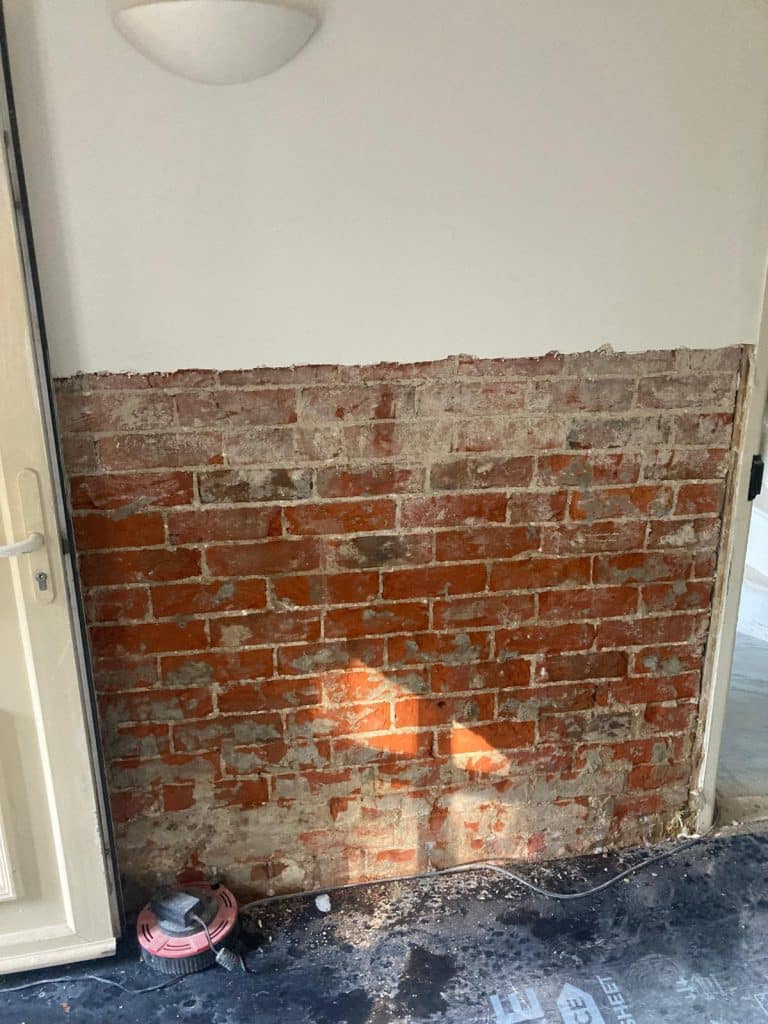
The internal remedial works began by exposing the affected masonry.
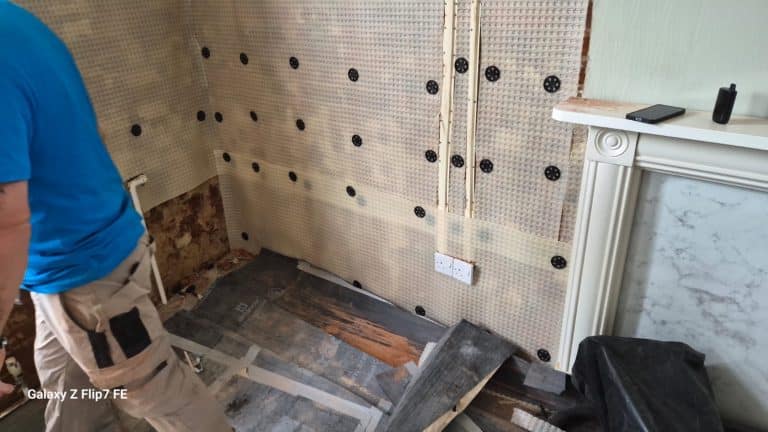
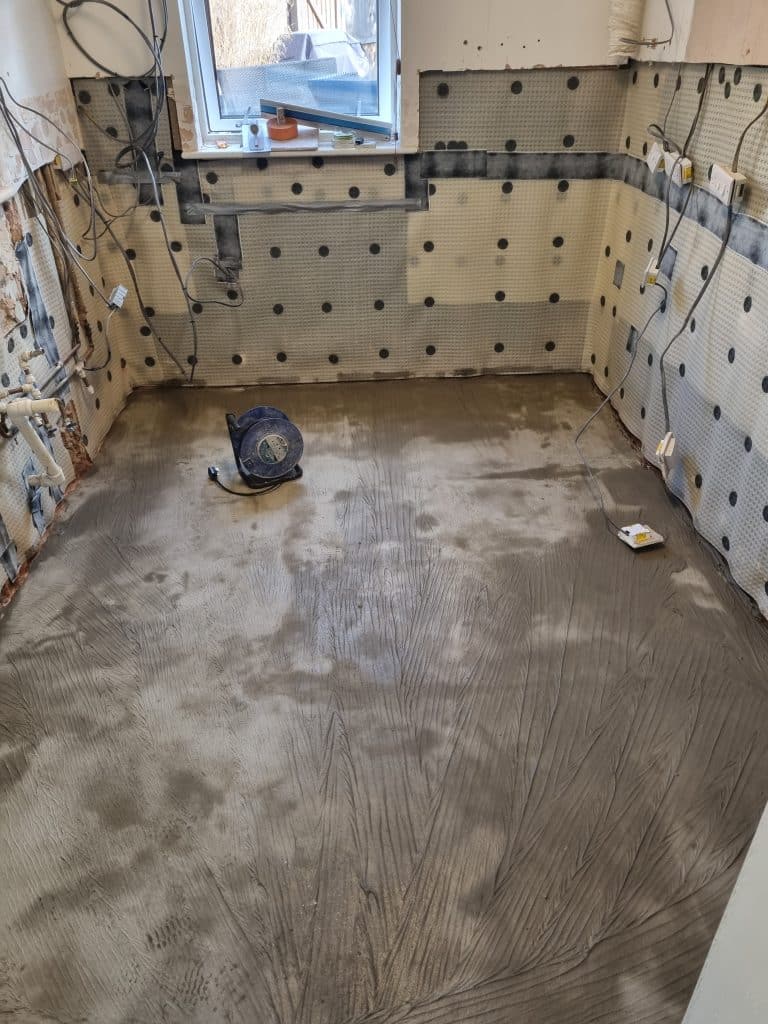
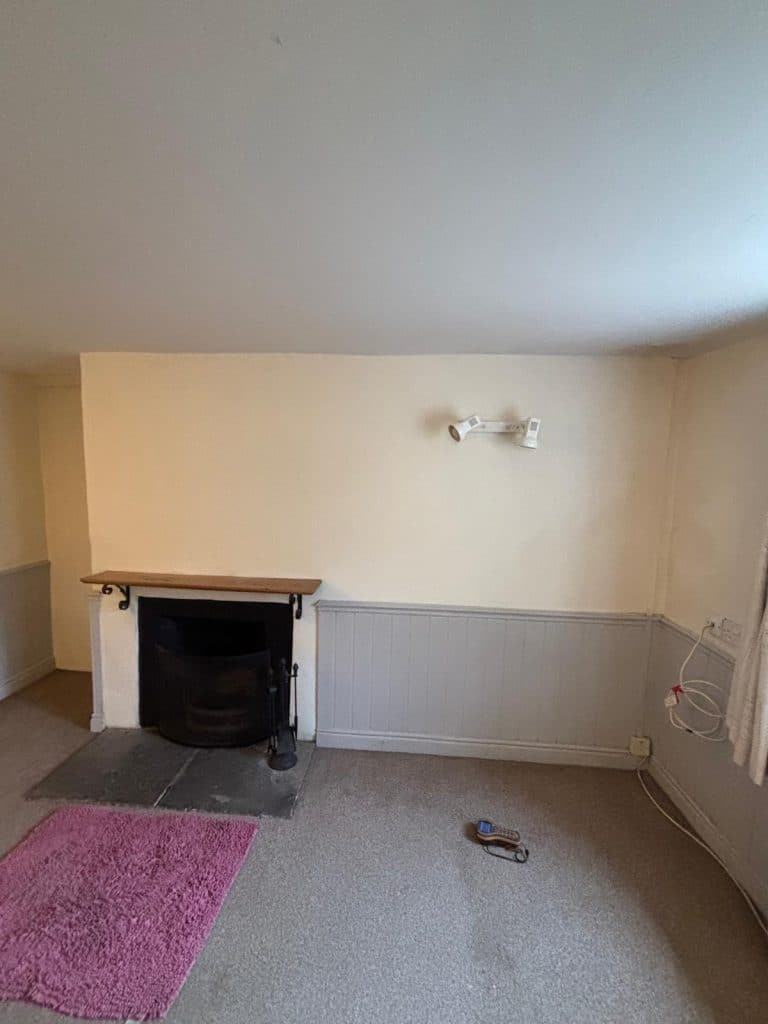
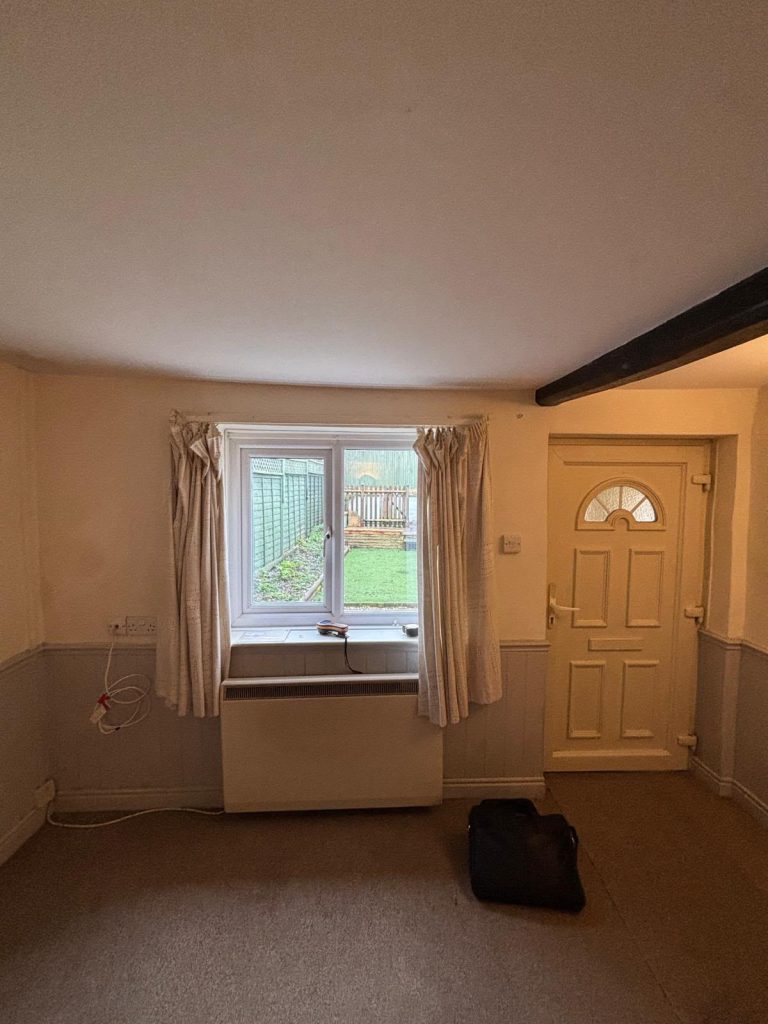
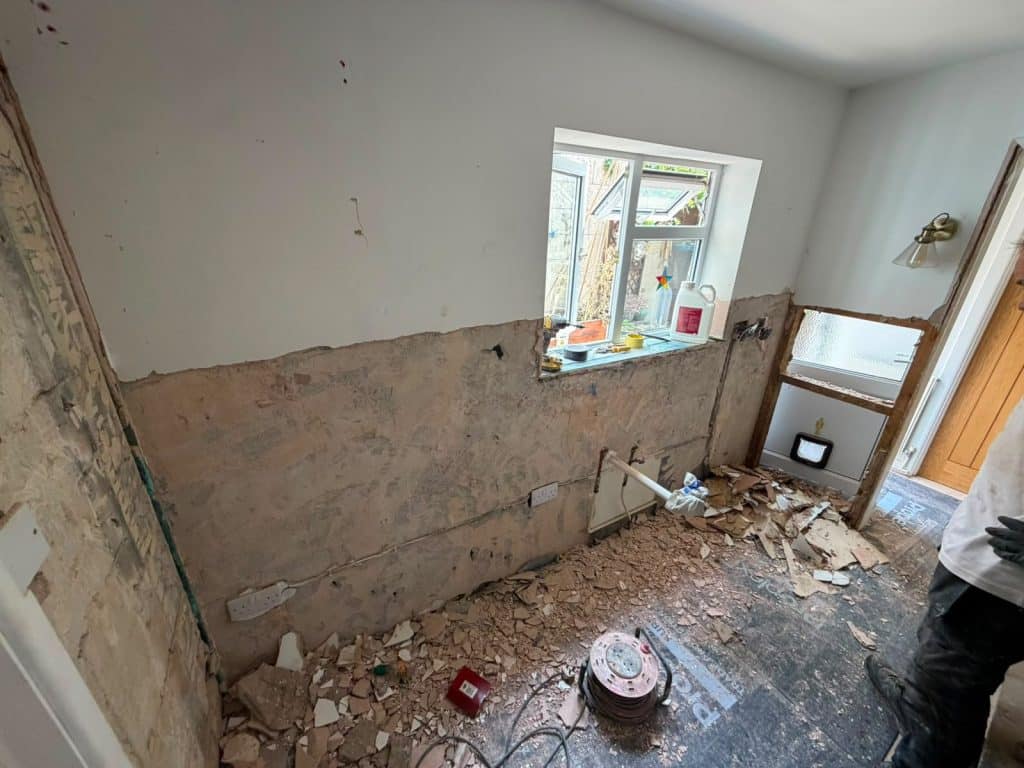
Within the lounge, timber cladding and contaminated plaster were removed from three affected walls. A further affected wall within the kitchen was also stripped back.
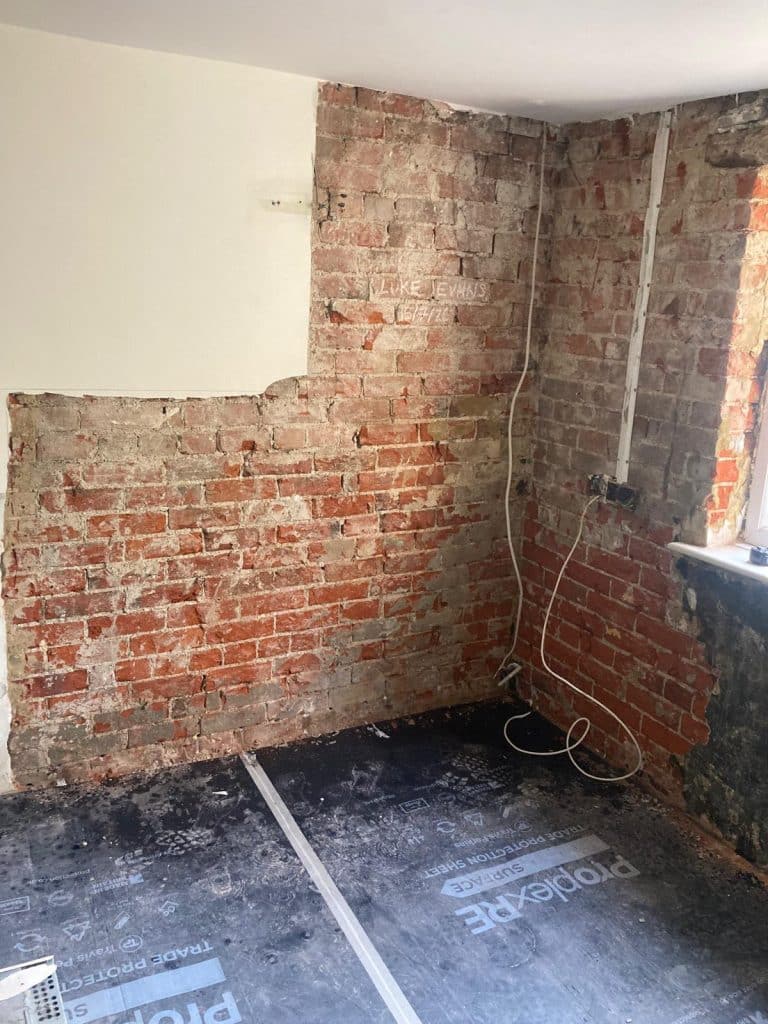
The photographs from the project show how extensive this preparation was, with sections of the original brickwork completely exposed before installation of the new damp proofing system.
Removing contaminated plaster is particularly important where moisture has carried salts into existing wall finishes. Hygroscopic salts can remain within plaster and continue attracting moisture from the surrounding air even after the original moisture source has been controlled.
Simply plastering over these areas can therefore result in staining and deterioration returning.
Installing a New Chemical Damp Proof Course
Once the affected walls had been properly prepared, a new chemical damp proof course was installed using an injection system.
The chemical treatment is introduced into the appropriate mortar bed to form a new moisture-resistant barrier within the masonry and significantly reduce the upward movement of ground moisture.
This forms an important part of our rising damp treatment where investigation confirms that moisture is travelling upwards through masonry at ground level.
It is important that a chemical DPC is installed as part of a complete remedial specification rather than being viewed as a standalone solution. Contaminated plaster and salts also need to be correctly managed if the decorative finish is to remain protected.
Treating Hygroscopic Salts
Following preparation of the masonry, a specialist salt-neutralising treatment was applied across the exposed walls.
Salts left behind within masonry and plaster can cause recurring damp-looking staining long after the original moisture source has been addressed.
Treating the exposed substrate helps minimise the effects of this historic contamination before the new wall system is installed.
Installing the Cavity Drainage Membrane System
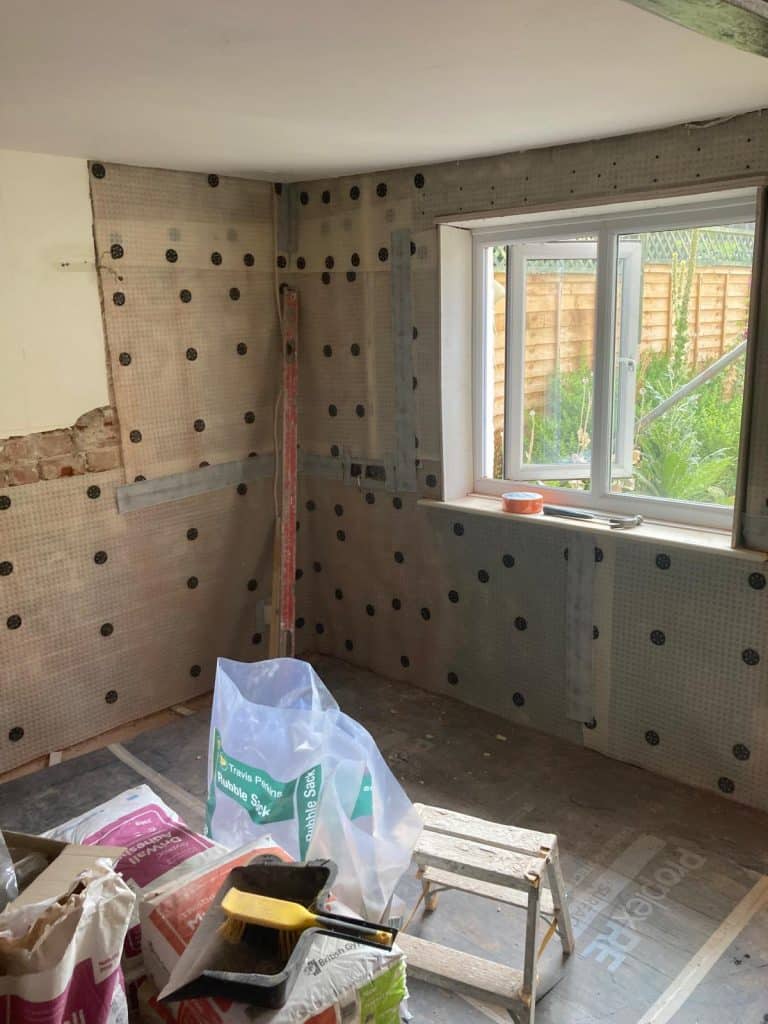
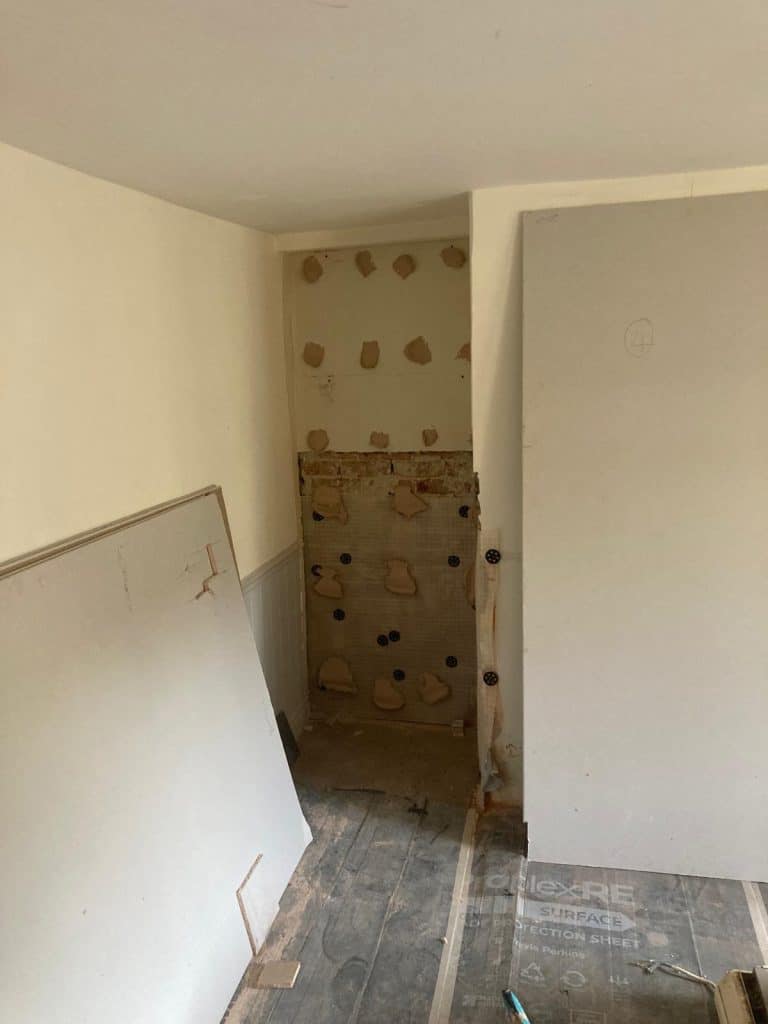
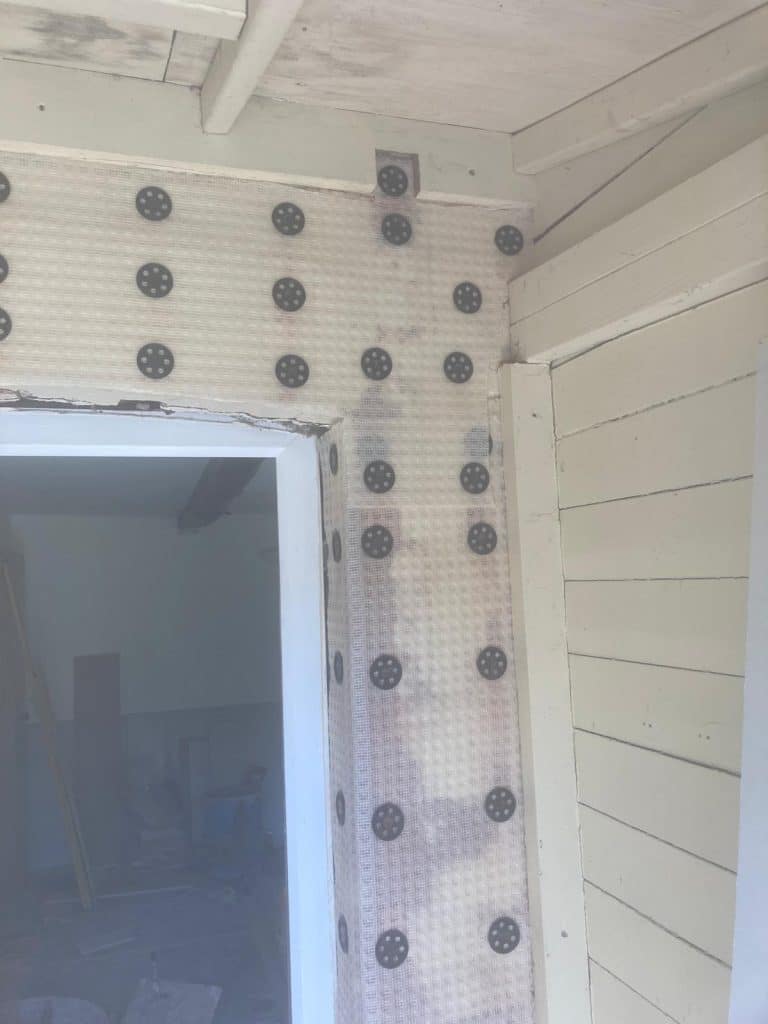
Following the damp proof course and salt treatment, a cavity drainage membrane system was mechanically fixed across the affected walls.
The membrane creates a physical separation between the original masonry and the new internal finish. This allows residual moisture to remain safely behind the system while preventing damp and salt contamination from transferring into the replacement plaster.
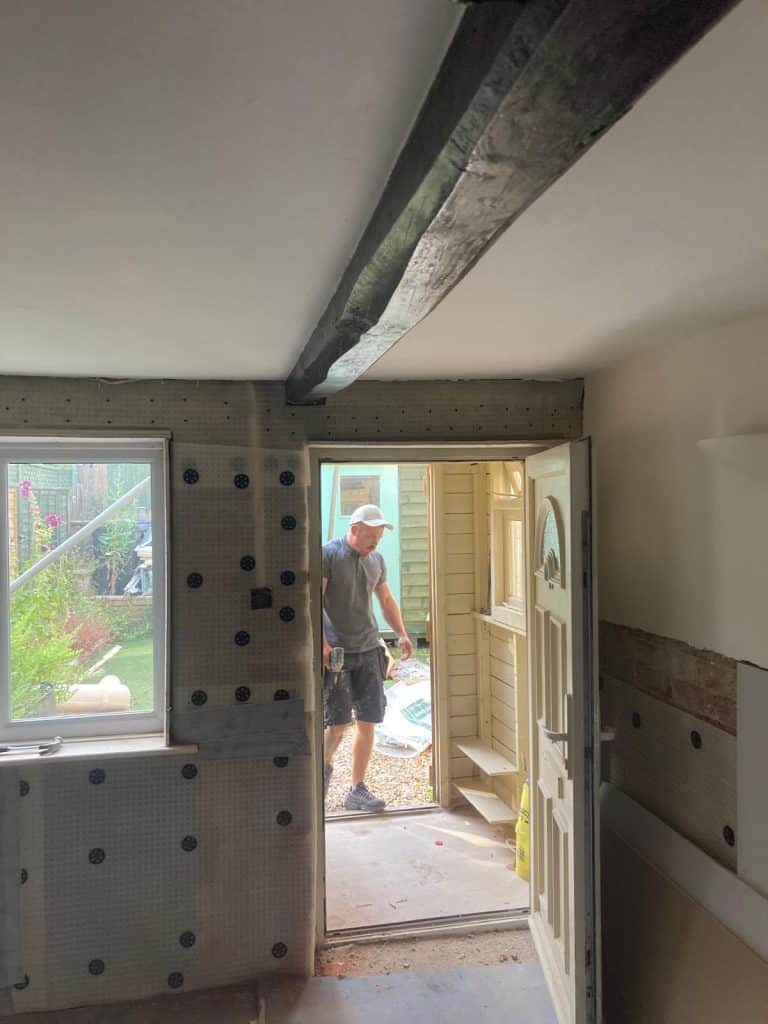
Specialist membrane fixing plugs were used throughout, with joints and detailing carefully completed around windows, doors, corners and other changes in the wall construction.
A recessed channel was also formed at ground level so that the membrane could be correctly returned and terminated before the walls were reinstated.
You can find more information about this type of treatment on our damp proof membrane systems page.
The cavity drainage membrane installation completed at this Warminster property is supplied with a 25-Year Guarantee.
Re-Plastering the Treated Walls
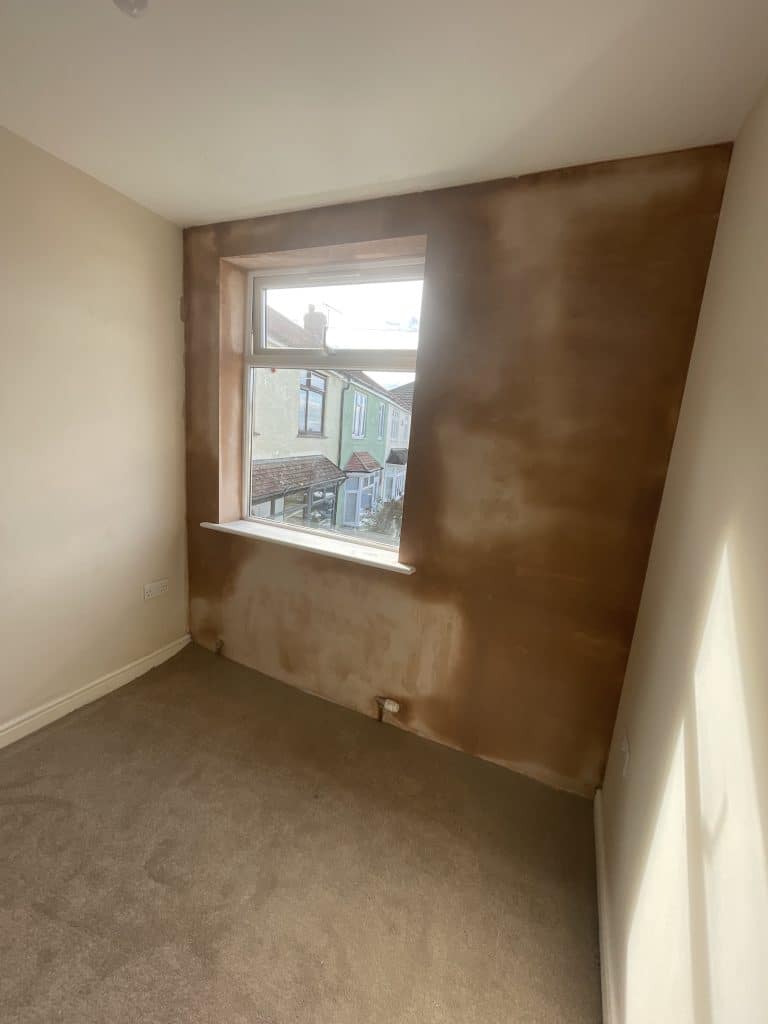
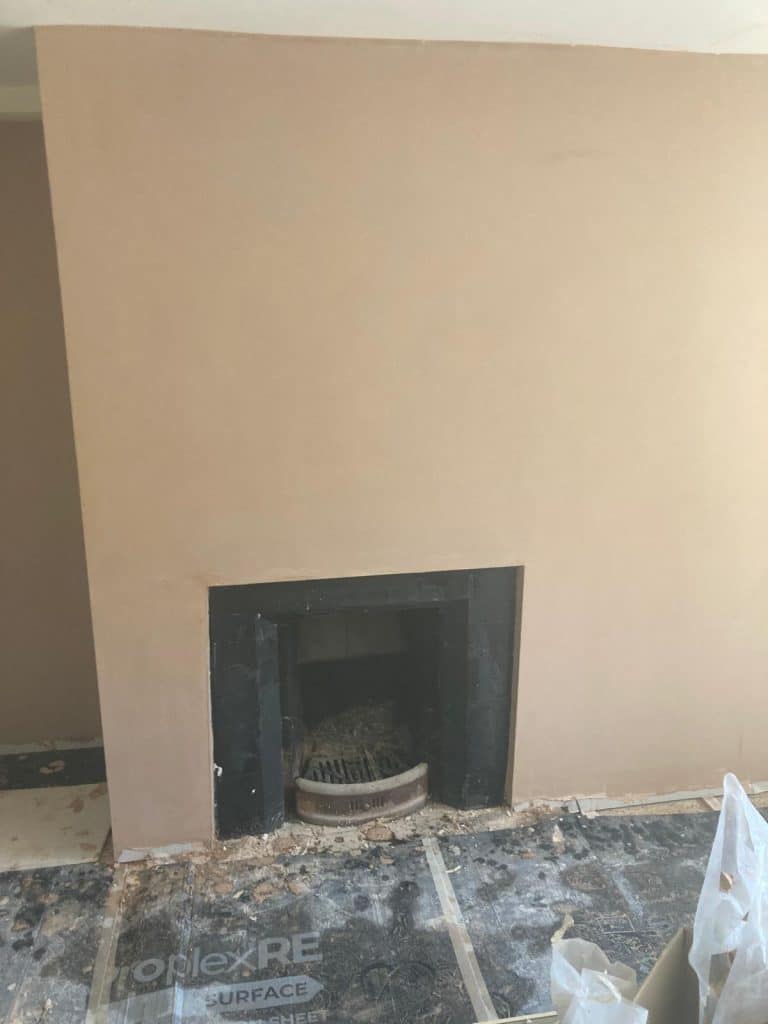
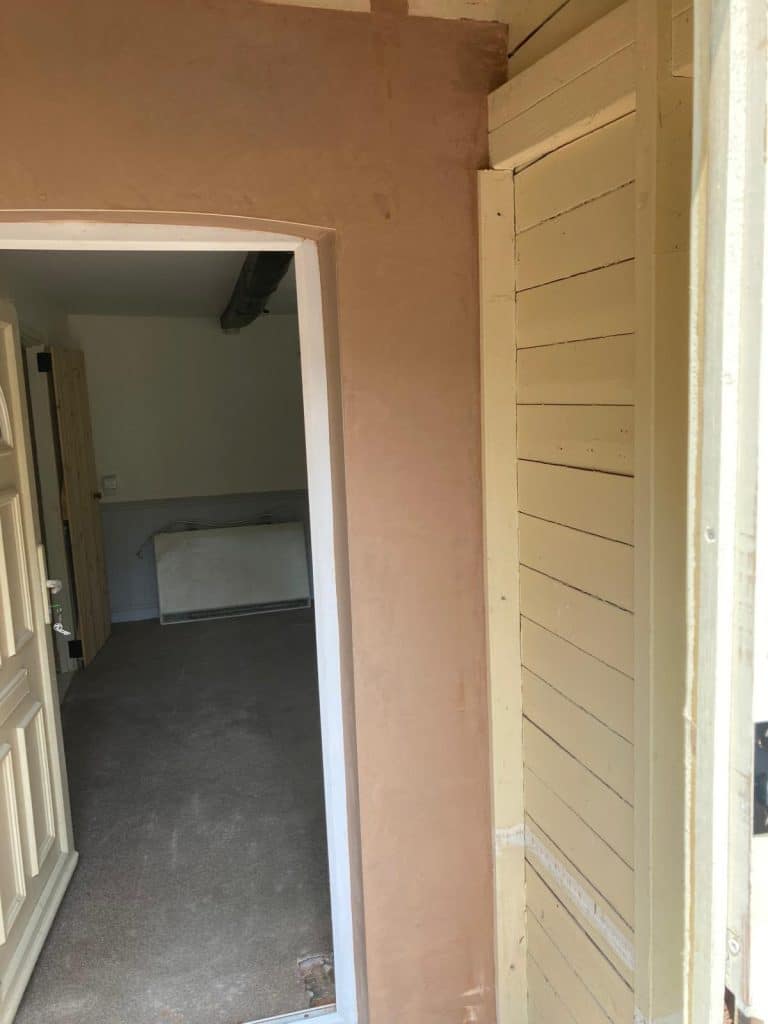
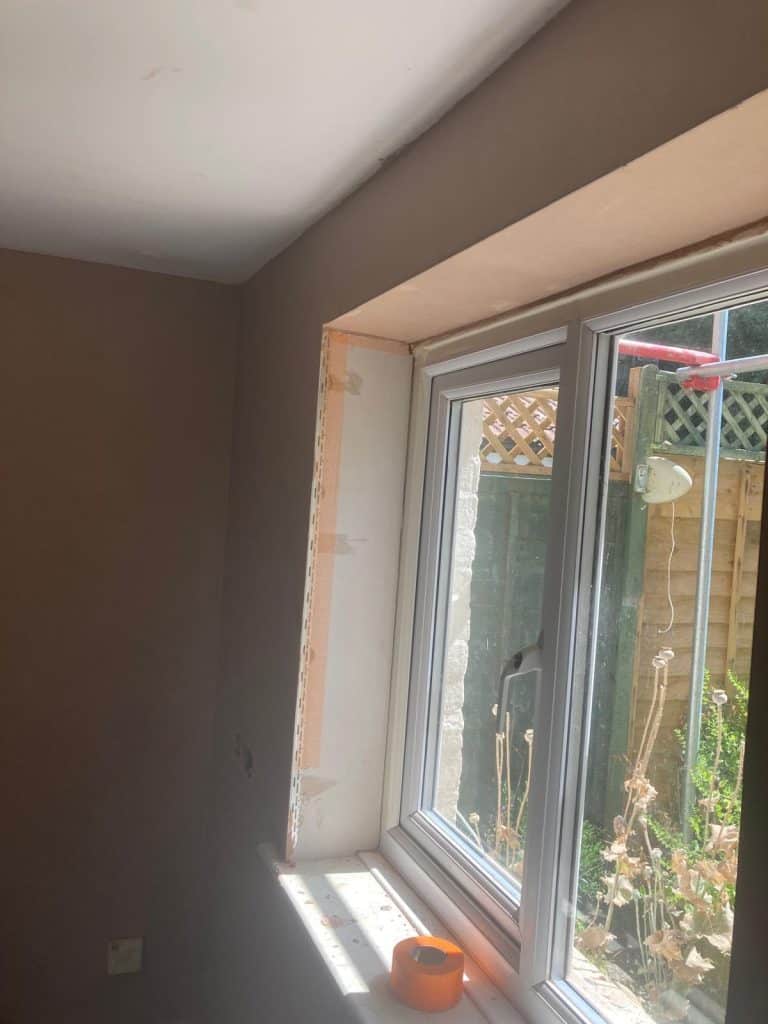
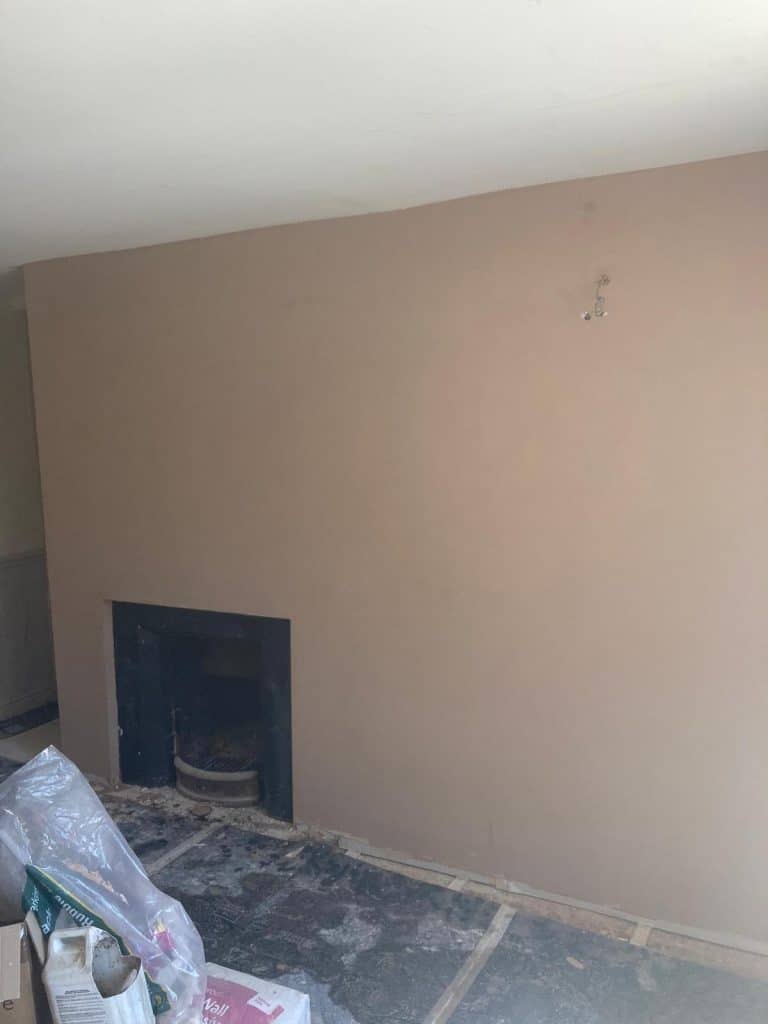
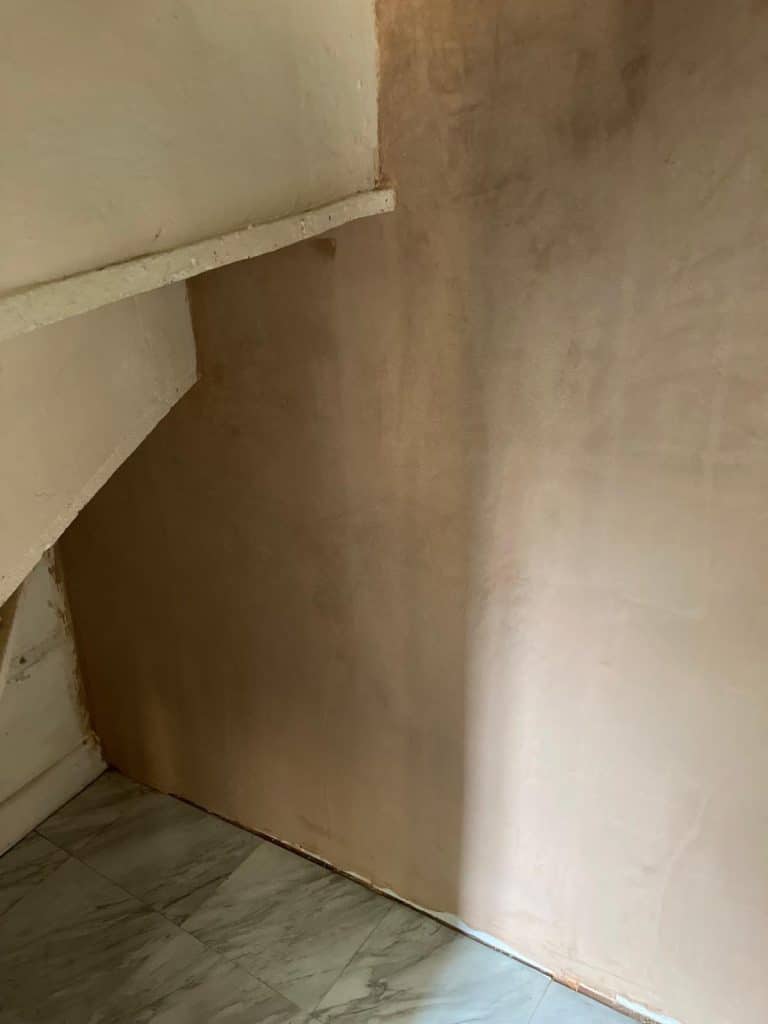
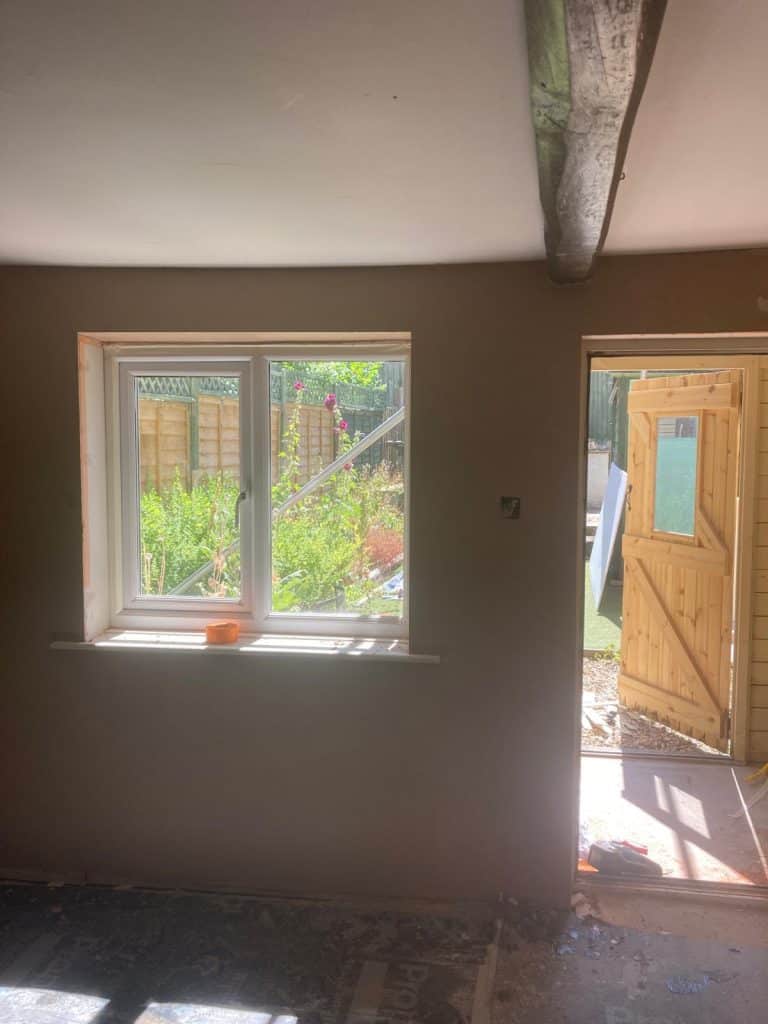
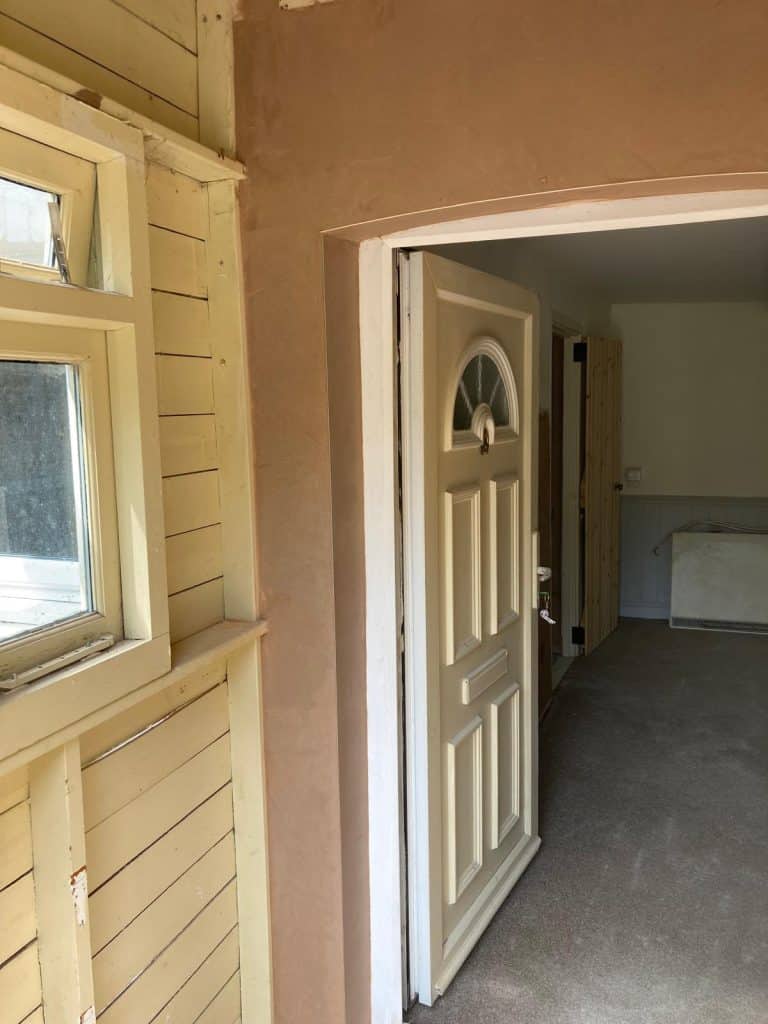
Once the damp proofing system had been completed, the affected walls were professionally re-plastered.
The photographs show the difference between the stripped masonry, membrane installation and newly plastered surfaces once the remedial works were complete.
The membrane now remains concealed behind the new wall finish, permanently separating the decorative surface from the previously damp and salt-contaminated masonry.
The walls were finished smooth and ready for final decoration.
Nordic Damp Proofing provides wall repairs and re-plastering alongside our remedial damp treatments, allowing affected rooms to be properly reinstated once the underlying moisture problem has been addressed.
Roof Repairs to Prevent Further Water Ingress
The internal damp treatment formed only one part of this project.
Several defects were also identified externally which required attention to reduce the risk of additional water entering the property.
Scaffolding was erected to provide safe access to the roof before the deteriorated ridge tile was removed and replaced.
A damaged or poorly sealed ridge can allow rainwater to penetrate the roof structure, particularly during periods of wind-driven rain.
Replacing the defective section helped reinstate the weatherproof integrity of the roof covering.
New Lead Flashing at the Conservatory Roof Junction
The junction between the main building and conservatory roof also required remedial work.
The existing detail was cut out and new lead flashing installed to create a more reliable watertight junction.
Roof abutments are common locations for penetrating moisture because even relatively small defects can allow rainwater to track behind finishes and into the structure.
Where moisture is entering a building through defective external details, the source needs to be repaired before internal finishes are reinstated.
Our penetrating damp treatment service focuses on identifying and correcting these external moisture pathways rather than simply covering the symptoms internally.
Repairing Cracked External Render
Cracked areas of external render were also addressed as part of the remedial works.
Loose and defective sections were raked out before localised repairs were completed using a suitable render system incorporating a waterproof additive.
Cracks within external finishes can provide a direct pathway for wind-driven rain, particularly on exposed elevations.
Closing these defects helps reduce further moisture penetration into the underlying masonry.
Improving Loft Ventilation
Moisture problems are not always caused by water entering from outside or rising through masonry. Condensation within poorly ventilated roof voids can also create significant problems.
As part of this Warminster project, two roof tile vents were installed to increase airflow through the loft space.
Two lengths of vented soffit were also installed across the elevations to improve low-level ventilation.
Together, these improvements create better movement of air through the roof void, helping moisture-laden air escape rather than accumulating around roof timbers and insulation.
Where condensation or excessive humidity is suspected, our ventilation and condensation surveys can identify potential ventilation deficiencies and recommend suitable improvements.
Woodworm Treatment to First-Floor Timbers
The project also included specialist treatment of affected timber within the first-floor structure.
Carpets were carefully lifted to provide access before the exposed timber elements were inspected and treated.
A specialist hand-applied biocidal woodworm treatment was applied to affected timbers to eradicate active infestation and provide ongoing protection.
The floor void was also fogged using specialist insecticidal treatment so that the product could reach concealed and difficult-to-access sections of the timber structure.
Where weakened or degraded timber was identified, timber hardener could then be applied as required to strengthen affected sections.
This type of work forms part of our wider timber treatment services for properties affected by wood-boring insects, fungal decay and prolonged moisture exposure.
Why Woodworm and Damp Often Need to Be Investigated Together
Timber problems and damp are often closely connected.
Excessive moisture can create conditions that make structural timber more vulnerable to deterioration and certain wood-boring insects. This is why simply treating visible woodworm holes without considering the surrounding moisture environment may not provide the best long-term outcome.
During projects involving potentially affected structural timber, our team can inspect accessible areas and determine whether further timber investigation or preservation work is required.
Installing a Digital Humidistat Extractor Fan
Ventilation improvements were also made within the kitchen.
A new digital humidistat-controlled extractor fan was installed to help regulate internal humidity.
Unlike a basic extractor that relies entirely on manual operation, a humidistat-controlled unit continuously monitors relative humidity and automatically increases extraction when moisture levels rise.
This is particularly useful within kitchens where cooking and everyday household activity can release significant amounts of water vapour into the air.
Improving extraction helps reduce condensation on colder surfaces and complements the other remedial works carried out throughout the property.
You can learn more about this approach on our humidity control and ventilation page.
Treating the Property as a Whole
This Warminster project is a good example of why damp problems should not automatically be treated with one standard solution.
There were several different factors affecting the property, including rising moisture within internal masonry, salt-contaminated plaster, external render defects, roof-level water ingress risks, inadequate ventilation and timber requiring woodworm treatment.
Addressing only one of these issues would have left other contributing factors unresolved.
Instead, our team completed a coordinated programme of work including:
- Chemical damp proof course installation.
- Removal of contaminated plaster and timber cladding.
- Specialist salt-neutralising treatment.
- Cavity drainage membrane installation.
- Re-plastering of treated walls.
- Replacement of a deteriorated ridge tile.
- New lead flashing at the conservatory roof junction.
- Repairs to cracked external render.
- Installation of roof tile vents.
- Installation of vented soffits.
- Specialist woodworm treatment.
- First-floor void treatment.
- Timber strengthening where required.
- Installation of a digital humidistat extractor fan.
This approach deals with both the moisture affecting the building fabric and the conditions that could contribute to future damp problems.
25-Year Guaranteed Damp Proofing System
The cavity drainage membrane system installed within the property is supplied with a 25-Year Guarantee.
Our approach is to diagnose the source of the damp first, carry out the appropriate remedial works and then provide long-term protection where the installed system qualifies.
If you’re experiencing recurring damp and are unsure what is causing it, a professional damp survey can help distinguish between rising damp, penetrating moisture, condensation, defective building details and other potential causes.
Damp Proofing Specialists in Warminster
Nordic Damp Proofing provides professional damp, timber and moisture-control services throughout Warminster and the surrounding areas of Wiltshire.
Our Warminster damp proofing specialists can assist with rising damp, penetrating damp, damp proof courses, cavity drainage membranes, mould, condensation, woodworm, timber decay and associated remedial work.
Rather than treating visible symptoms alone, we aim to identify the underlying cause and specify the most appropriate long-term solution for the individual property.
If you have damp patches, deteriorating plaster, mould, suspected woodworm or recurring moisture problems in your home, you can book a damp survey with Nordic Damp Proofing.