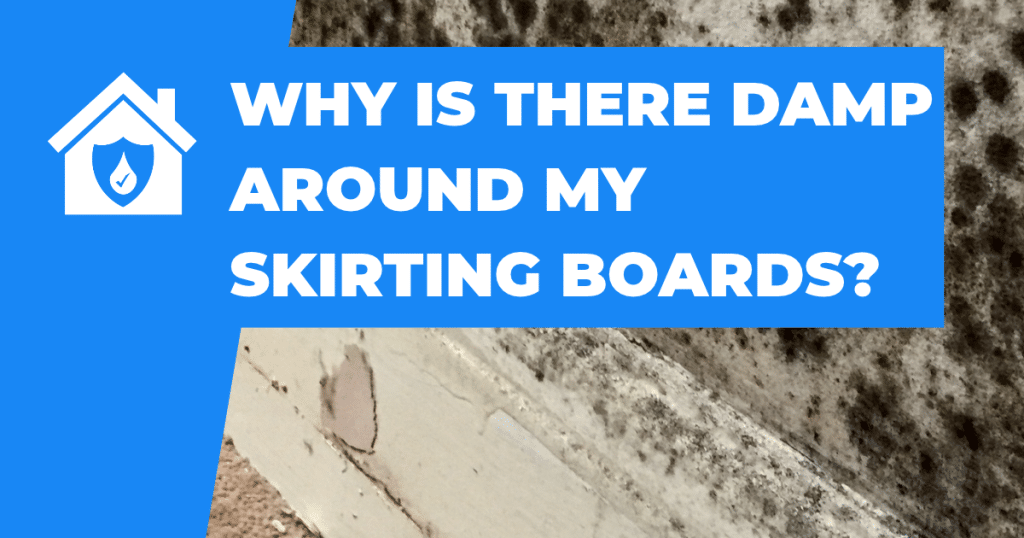
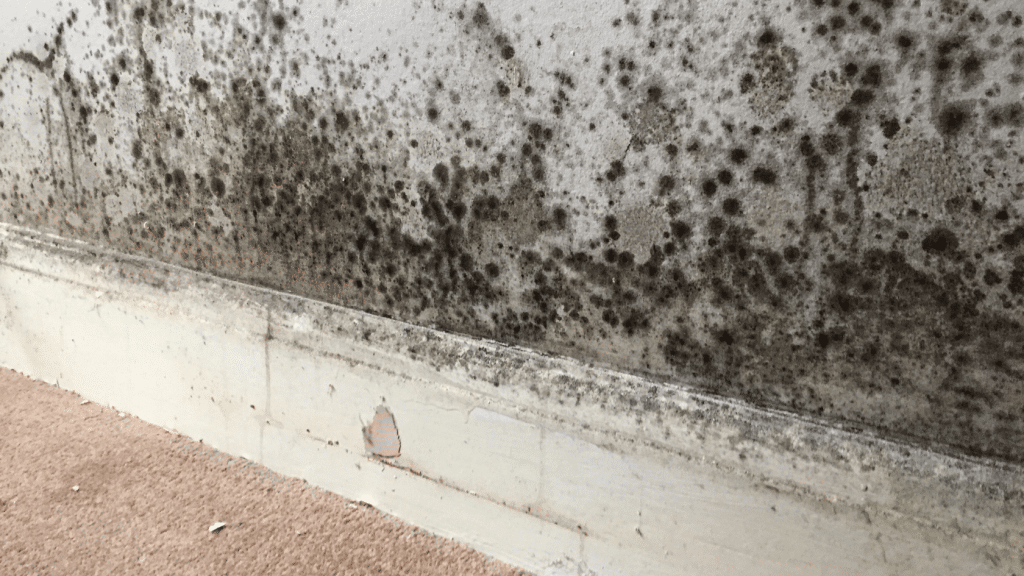
Damp around skirting boards is often the first sign of a problem that homeowners notice. For example, paint bubbles just above the skirting, wallpaper peels at the bottom edge, the skirting darkens or feels soft, and a musty smell hangs near the floor.
It is tempting to assume rising damp straight away. Sometimes that is right. Just as often, though, the cause is something else, such as a bridge over the damp-proof course, condensation at the coldest part of the wall, a slow leak under the floor or rain splashing against the outside wall.
Getting the diagnosis right matters, because the treatments are very different. Besides, skirting boards are timber, so the longer damp sits against them, the higher the risk of wet rot or dry rot spreading into floors and joists.
Why Skirting Level Is a Damp Hotspot
Several moisture sources meet there
The base of a ground-floor wall sits close to the ground, the floor slab or floor void, and any pipes that run along the wall. It is also one of the coldest inside surfaces in a room.
Timber against masonry
Skirting boards fix straight onto the wall, often over timber grounds. So if the wall is damp, the back of the skirting stays damp too, out of sight and with no air to dry it.
Furniture blocks airflow
Sofas, beds and wardrobes against outside walls trap cold, still air at floor level. As a result, condensation and mould grow behind them.

Common Causes of Damp Around Skirting Boards
Rising damp
Moisture from the ground rising through the wall where there is no working damp-proof course is one cause. Rising damp only affects the lower part of ground-floor walls, usually up to about 1 to 1.2 m. In addition to damage at skirting level, it usually leaves a tide mark and white salt crystals.
A bridge over the DPC (often the real culprit)
Approved Document C expects the DPC to sit at least 150 mm above outside ground level. However, flower beds, paths, patios, driveways or render that rise above that level let moisture get around it. Likewise, inside plaster that runs down behind the skirting to a solid floor can form a bridge too.
Condensation
The bottom of an outside wall, especially in a corner, is often the coldest surface in the room. Moist air condenses there, especially behind furniture. Unlike rising damp, condensation tends to leave black mould spots rather than tide marks, and it gets worse in winter.
Leaking pipes
Heating pipes often run along skirting level or under the floor. A weeping joint can soak the wall and skirting for months before anyone notices. Usually, damp from a pipe leak stays in one small area and doesn’t change with the weather.
Penetrating damp from splashback
Rain bouncing off a hard surface beside the wall can soak the lower wall from outside. So can water from a leaking downpipe or an overflowing gutter that pools at the base.
Floor problems
A missing or failed damp-proof membrane in a solid floor can push moisture into the base of walls. Similarly, poor airflow under a suspended timber floor, often because debris blocks the airbricks, does the same.
| Visual sign | Likely causes to consider |
|---|---|
| Tide mark up to around 1 m, salt crystals | Rising damp, a bridge over the DPC |
| Black spots behind furniture, worse in winter | Condensation |
| Small wet patch that doesn’t change with the weather | Leaking heating or water pipe |
| Damp after heavy rain on one wall | Splashback, high ground outside, leaking downpipe |
| Damp along all walls at floor level, solid floor | Failed floor DPM, a bridge over the DPC |
| Springy floor near the skirting, musty smell | Moisture under the floor, clogged airbricks, timber decay |
Use this table as a first check rather than a diagnosis.

Signs of Rot in Skirting Boards
What to look for
Damp skirting boards face a real risk of fungal decay. So check for:
- Timber that feels soft when you press it with a screwdriver
- Cracking, shrinking or crumbling wood
- Paint flaking away from the face of the skirting
- A musty, mushroomy smell
- White or grey cotton-wool growth behind the skirting
Why it matters
Wet rot generally stays where the timber is wet. In contrast, dry rot can spread from skirting into floorboards, joists and other timber, and it travels through damp masonry to get there. So if you see cotton-wool growth or rust-coloured dust, get it checked quickly.
Simple Checks You Can Do
Outside
- Find your DPC line, usually a thin dark line in the mortar near the base of the wall.
- Measure the gap between it and the ground, because anything under 150 mm is a problem.
- Check whether render runs all the way down to the ground.
- Look for leaking downpipes, overflowing gutters and clogged airbricks.
Inside
- Pull furniture away from the wall and look for mould.
- Note whether the damp gets worse in winter or after rain.
- Press the skirting to feel for softness.
- Check whether any pipes run along that wall.
How to Fix Damp Around Skirting Boards
A lasting fix follows clear stages:
- Diagnose correctly. First, confirm the moisture source before you choose a treatment.
- Fix outside issues. Next, lower ground levels to at least 150 mm below the DPC, cut render back, repair gutters and downpipes, and clear airbricks.
- Repair leaks. Then trace and fix any leaking pipes.
- Deal with condensation. Improve ventilation and heating, and also keep furniture a few centimetres off outside walls.
- Treat rising damp if confirmed. Install a new DPC to BS 6576, and then replaster with a salt-resistant system.
- Replace damaged timber. Finally, remove rotten skirting, treat the timber and masonry around it, and fit new pre-treated skirting, ideally with a gap from the wall.
Don’t just replace the skirting
New skirting on a damp wall will rot in the same way. So fix the moisture source first.
Don’t caulk and paint
Sealing the gap between skirting and wall and then repainting traps moisture and hides the problem.
When to Call a Professional
Book an inspection if you notice:
- Damp, staining or peeling paint above skirting boards that won’t go away
- Soft, crumbling or rotting skirting
- Tide marks or salt crystals at the base of walls
- Floors that feel springy or soft near the walls
- A musty smell at floor level
- Any sign of dry rot
A specialist will:
- Measure moisture in the wall and timber
- Inspect the DPC, ground levels, floors and airflow under the floor
- Test the plaster for salts
- Find the real cause, which may not be rising damp
- Recommend treatment for both the damp and any timber decay
Nordic Damp Proofing provides damp surveys, rising damp treatment, timber treatment and wood rot repairs across The South of England & Wales.
Our PCA-trained and accredited surveyors work to BS 6576 and recognised industry standards, and we hold Biokil Crown and ISSE accreditations.
Don’t ignore damp around skirting boards, because it is often the first sign of a much bigger problem underneath.
We Find It, We Treat It, We Stop It Coming Back.