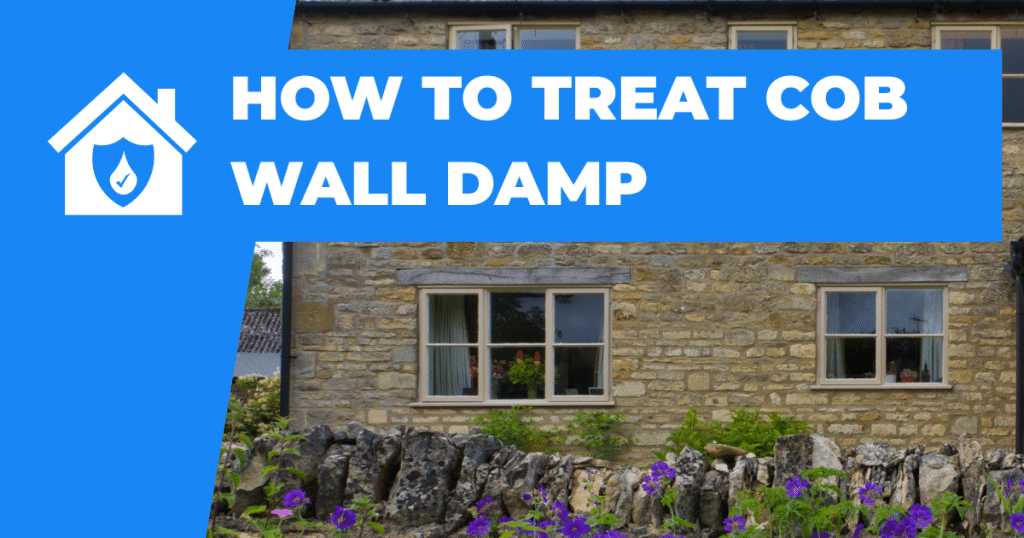
At Nordic Damp Proofing, we treat cob wall damp treatment as a specialist job, not a standard masonry one.
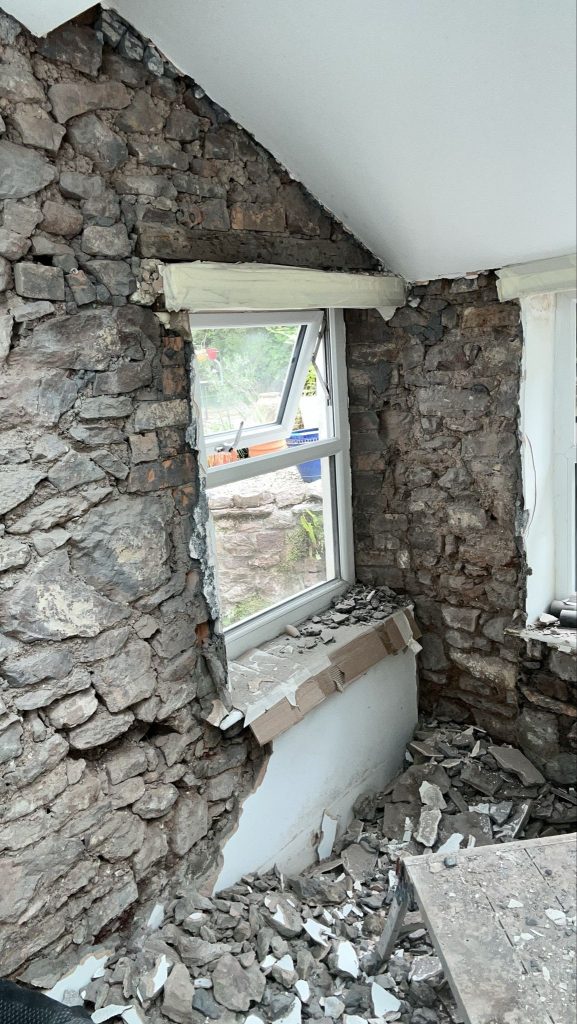
Cob is a traditional earthen material, typically built on a stone, brick, or flint plinth and finished with breathable materials so it can absorb and then release moisture safely. Cob is especially vulnerable when moisture rises above the plinth for long periods or becomes trapped behind impermeable surfaces, cob can decay very rapidly if it gets wet and cannot dry out.
That is why our answer to questions like how to stop damp on cob walls, do cob walls cause damp?, and how to get rid of damp on cob walls? always begins with diagnosis.
In cob buildings, penetrating damp, bridged plinths, salts, condensation, and inappropriate past repairs can all mimic one another.
Moisture investigations in traditional buildings must be holistic and deal with causes rather than symptoms, while BS 5250 takes the same whole-building approach to moisture management.
What Cob Walls Are and Why Damp Happens
Cob is a monolithic earthen wall formed from soil, water, and fibrous material. An earth-based material made from soil, water, and fibers, with hygroscopic and hygrothermal behavior that is central to how it performs in service.
Older earth walls were traditionally paired with permeable mortars, lime finishes, and protective masonry plinths so that absorbed moisture could evaporate back out of the wall.
So, do cob walls cause damp?
Not inherently.
At Nordic, we explain it this way: cob is moisture-sensitive, but it is not defective by nature.
Problems appear when rainwater loading is too high, the plinth is bridged by soil or paving, roof overhangs have been reduced, drainage is poor, or modern impermeable repairs stop the wall from drying.
A cob wall needs a good “hat” and “boots” — meaning a generous roof overhang and a sound plinth.
The Damp Problems We Most Often See in Cob Homes
The first and most common issue is penetrating damp.
Failed gutters, cracked render, hard cement pointing, reduced eaves overhangs, and splashback at the base of the wall all drive moisture into the fabric. When moisture is trapped behind an impermeable surface, cob can begin to disintegrate by slippage or collapse. Dense cement render and impervious paint commonly let water in through cracks and then stop it evaporating back out.
The second issue is ground-related damp (Rising Damp), but cob behaves differently from brick.
Risks are raised external ground levels, hard paving tight against the plinth, poor drainage, and sealed floors or bituminous coatings that displace moisture into a soft earth wall. Inserting impermeable floor membranes in earth-walled buildings can increase dampness in the walls to the point of collapse.
The third and fourth issues are hygroscopic salts and condensation.
Salts can distort resistance-meter readings, high electrical readings alone commonly misdiagnose rising damp in older buildings. Condensation also matters because BS 5250 identifies indoor humidity, surface condensation, and moisture in indoor air as core moisture risks, while the joint statement stresses the role of cooking, bathing, drying clothes, heating, and ventilation in how damp appears internally.
How We Diagnose Damp on Cob Walls
When people ask us how to get rid of damp on cob walls, the honest answer is that the cure depends on the mechanism.
Surveyors need to understand the original construction, later alterations, and the likely consequences of changes such as impermeable render, repointing, or retrofits before recommending repair work.
That is why we do not rely on a single handheld reading.
Electrical moisture meters can help when they are used to plot the distribution of moisture, but also rising damp is widely misdiagnosed when high readings are treated as proof on their own.
Salt testing, humidity and dew-point checks, infrared imaging, and other necessary more direct methods such as carbide or gravimetric testing.
On cob homes we also pay close attention to timber decay
Embedded timbers can suffer wet rot or dry rot where moisture levels remain too high, and the joint statement lists timber decay and insect activity among the moisture-related defects surveyors must be able to identify.
How to Stop Damp on Cob Walls
For most properties, how to stop damp on cob walls starts outside.
We look first at rainwater goods, render condition, cracks, plinth height, splashback, and drainage.
Brick or stone plinths should be kept clear of soil and vegetation and suggests replacing hard paving at the base with gravel and a shallow French drain, provided it is kept at a safe structural distance so the wall base is not weakened.
Inside, the safest route is usually a breathable repair strategy.
We usually recommend lime plaster internally with mineral paint or distemper rather than emulsion or vinyl wallpaper. Remedial work should ideally replace impervious materials with permeable ones and that lime-based rendering is the appropriate finish for traditional walls.
The cost bands below are our own relative guide only. Access, listed-building constraints, wall thickness, and the amount of repair can change the final price substantially.
Typical Cost for Damp on Cob Walls
| Method | Suitability for cob | Pros / cons | Typical cost band |
|---|---|---|---|
| Rainwater repairs, plinth clearance, careful drainage and shallow French drain work | High | Best first-line option because it removes moisture at source, but excavation must not undermine the wall base. | Low–Medium |
| Lime render, lime plaster, mineral paint or limewash | High | Supports drying and matches traditional wall behavior; hard cement removal often needs a cautious staged approach. | Medium |
| Local cob repair, plinth rebuilding, and associated timber repair | High | Deals with erosion, missing fabric, and vulnerable junctions, but needs heritage-compatible workmanship and good detailing. | Medium–High |
| Internal membrane or dry-lining system fixed with cob plugs | Selective | Can isolate new finishes from salts or persistent background damp, but it does not remove the moisture source and poor detailing can create hidden timber or condensation risks. | Medium–High |
| Retrospective chemical or physical DPC | Low / case-by-case | Chemical damp proofing into cob is resisted in our guidance, and physical and chemical DPCs should be avoided in earth buildings because structural damage can result. | Medium–High |
Membranes, DPCs, and Listed-Building Limits
Cob plugs
Cob walls are often too soft or friable for ordinary fixings, which is why membrane manufacturers supply specialist cob plugs for less stable substrates and sealing mastics to prevent damp bridging at the fixing point.
In the right circumstance, an internal membrane can be useful to isolate finishes from contaminated or persistently damp substrates.
But it is a control layer, not a substitute for finding the real moisture source.
DPC
When clients ask us how to fit a DPC on cob walls, our answer is: very cautiously, and often not through the cob body itself.
There should be a strong presumption against inserting retrospective DPCs in pre-1919 buildings, and specifically says physical and chemical DPCs should be avoided in earth buildings because major structural damage can result. If a plinth is being rebuilt and a DPC is genuinely justified, it is better placed lower in the masonry than directly under a timber cill plate.
Tanking
The same conservation caution applies to tanking. Traditional tanking is expensive and highly dependent on faultless workmanship, and its wider guidance says old buildings usually become damp when barriers are added. For above-ground cob walls, breathable solutions are normally preferable.
If the building is listed, process matters as much as product. Alterations affecting the character of a listed building need listed building consent, and compatible patch repairs to plaster or render often do not need consent, whereas non-matching materials or methods may.
Regional Relevance and When to Call Nordic
Cob is especially relevant across Dorset, Hampshire, Wiltshire, Somerset, Bristol, Berkshire, and Surrey, but not in exactly the same way everywhere.
Dorset Council records more than 60 listed cob buildings in East Dorset alone.
Somerset’s building history records that stone or cob was used in the majority of houses and farm buildings in the county.
Surrey is less characteristically cob than the West Country and Wessex, but historic and listed buildings there still need the same conservation-led moisture diagnosis.
At Nordic Damp Proofing, we work across those regions through our Dorset, Hampshire, Bristol/Bath, Berkshire, Surrey, and wider South of England coverage.
If you own or manage a cob cottage, farmhouse, boundary wall, or listed rural property, the right first step is a proper survey, not a cosmetic coating or automatic injection. You can start with our Damp Surveys, Wall Repair & Re-Plastering, or Damp Proof Course Installation pages.
FAQs
Do cob walls cause damp?
No. Cob walls are absorbent and moisture-sensitive, but traditional cob was designed to cope with moisture by drying through permeable finishes, roof overhangs, and a masonry plinth. Persistent damp usually points to defects, trapped moisture, or incompatible past repairs.
How do you stop damp on cob walls?
By diagnosing the mechanism first, then reducing water loading, improving drainage, restoring breathable finishes, and repairing damaged fabric. On cob, that usually means lime-based repair and source control before any invasive damp-proofing is considered.
How do you get rid of damp on cob walls?
You do not usually “get rid of it” with one product. You repair gutters and drainage, remove inappropriate cement or vinyl finishes where safe, address salts and condensation, and then let the wall dry in a controlled way.
Can a listed cob building be damp-proofed?
Sometimes, but only with great care. Listed status means compatible materials, heritage significance, and consent requirements all matter. The safest approach is always a conservation-aware damp survey before any work starts.