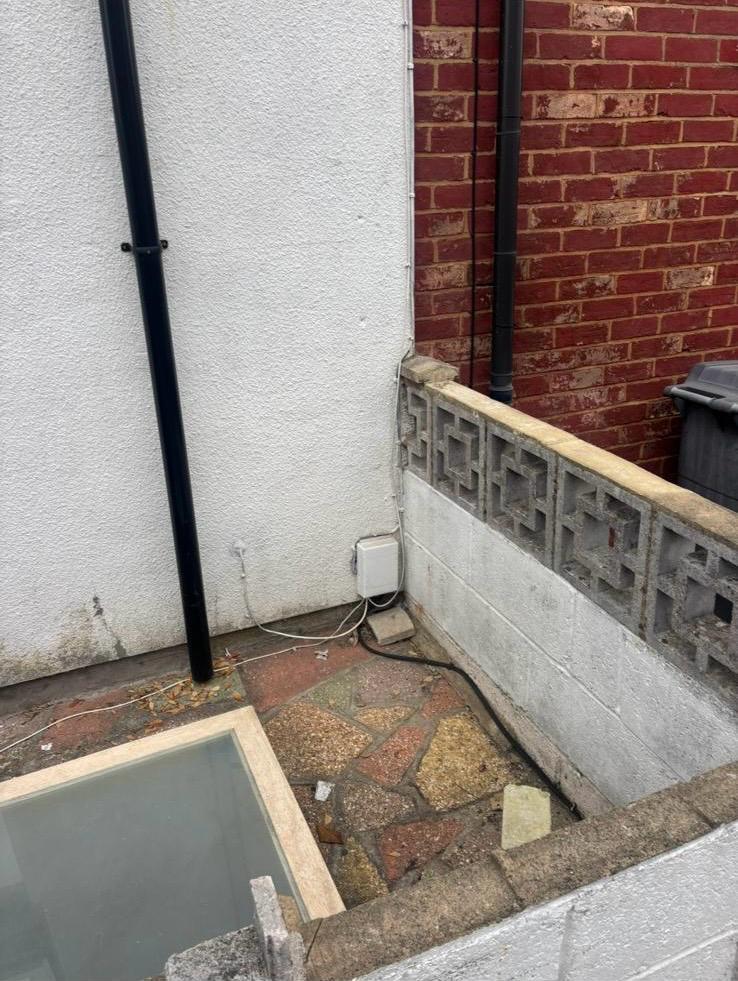
Poorly installed or badly positioned downpipes can cause rainwater to collect at ground level, increasing the risk of penetrating damp and moisture entering the property.
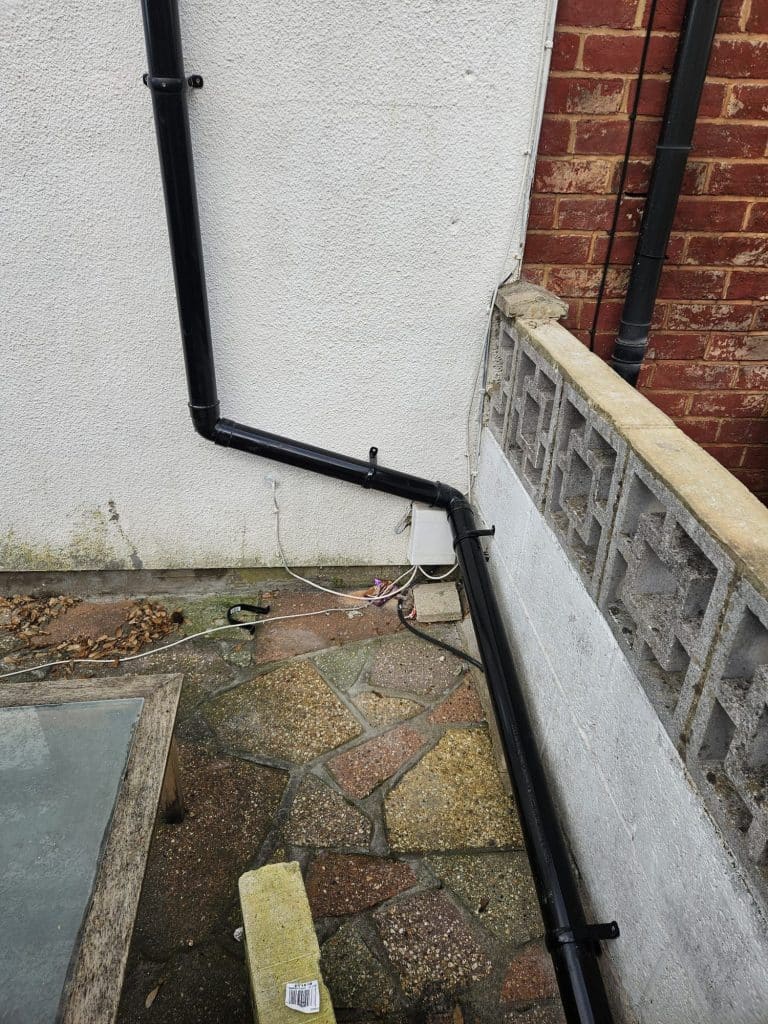
On this project in Bournemouth, our team carried out external drainage improvements by redirecting the guttering and downpipe system to ensure rainwater was safely carried away from the building.
Simple drainage issues like this are often overlooked but can play a major role in ongoing damp problems inside the home.
Why Incorrect Downpipes Can Cause Damp Problems
When rainwater is discharged too close to the property, moisture can begin soaking into external walls and surrounding ground areas.
Over time this can lead to:
• Penetrating damp
• Damp patches internally
• Saturated masonry
• Moisture around foundations
• Increased humidity indoors
In this case, water was not being directed away effectively, allowing excess moisture to build up near the property.
Redirecting the Rainwater Correctly
To solve the issue, we altered the downpipe and guttering layout to carry water away from the building more effectively.
Works included:
• Adjusting the downpipe route
• Installing new pipework
• Securing the new drainage position
• Improving rainwater flow away from the property
The updated setup now helps protect the external wall and surrounding area from unnecessary water exposure.
External Drainage Issues Are Often Overlooked
Many damp problems begin externally rather than internally.
Blocked gutters, leaking downpipes and poor drainage layouts can all contribute to excess moisture entering a property.
If you have noticed:
• Standing water outside your home
• Damp patches on internal walls
• Moss or algae growth externally
• Water pooling near brickwork
• Damp smells indoors
…it may be worth having your drainage and rainwater systems inspected.