Nordic Damp Proofing recently completed a comprehensive internal damp proofing project at a property in Tring, treating affected walls within both a bedroom and the entrance porch.
The property was experiencing moisture-related deterioration to internal wall finishes, with treatment required across the south-west facing bedroom wall and the walls surrounding the front porch.
Rather than simply replastering over the affected areas, our team installed a complete remedial system designed to permanently separate the new internal finishes from residual moisture and hygroscopic salt contamination within the original masonry.
The works included removing affected plaster from floor to ceiling, treating exposed masonry with a specialist salt neutralising solution, installing a chemical damp proof course where appropriate, fitting a cavity drainage membrane system and professionally replastering the treated areas.
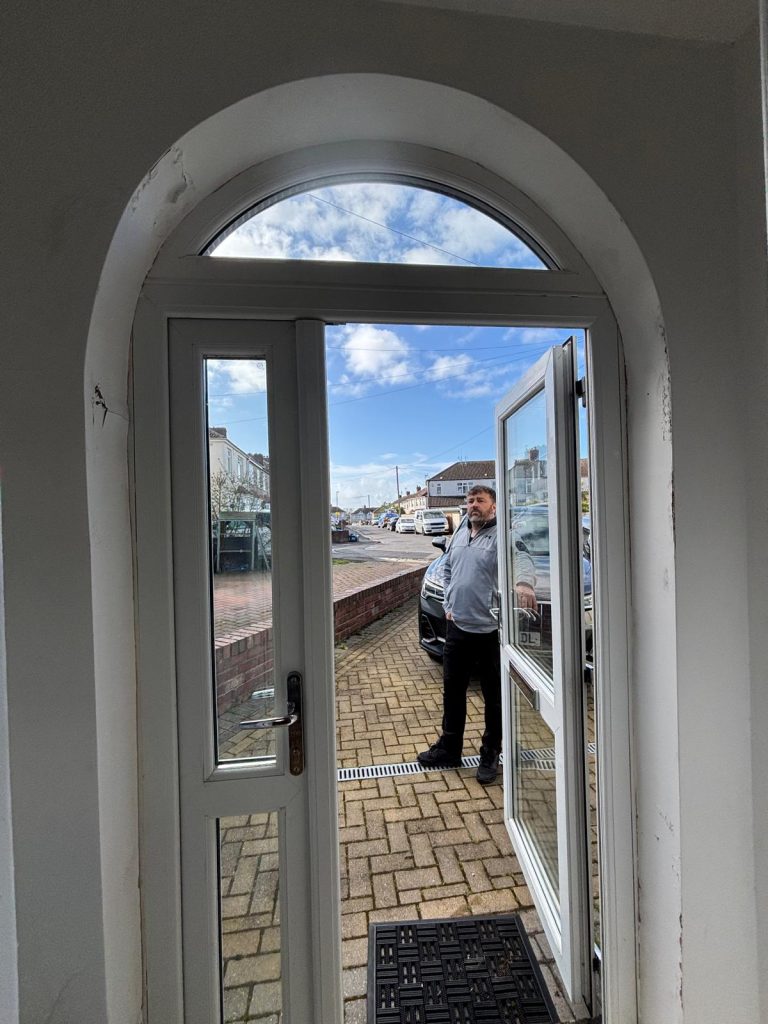
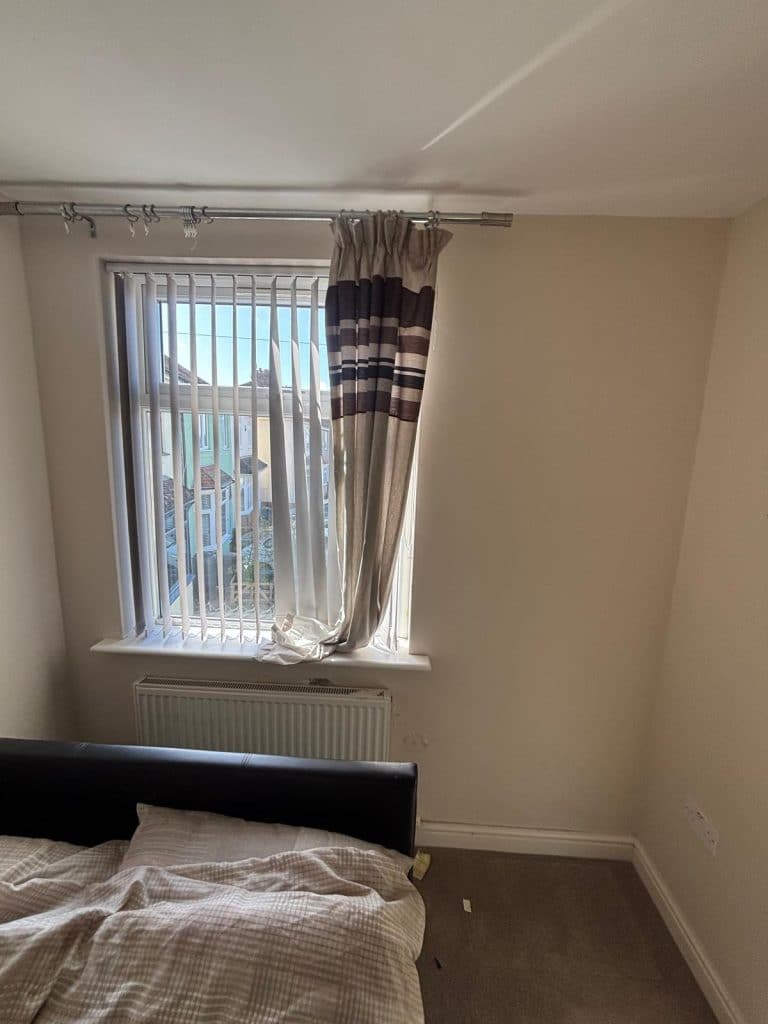
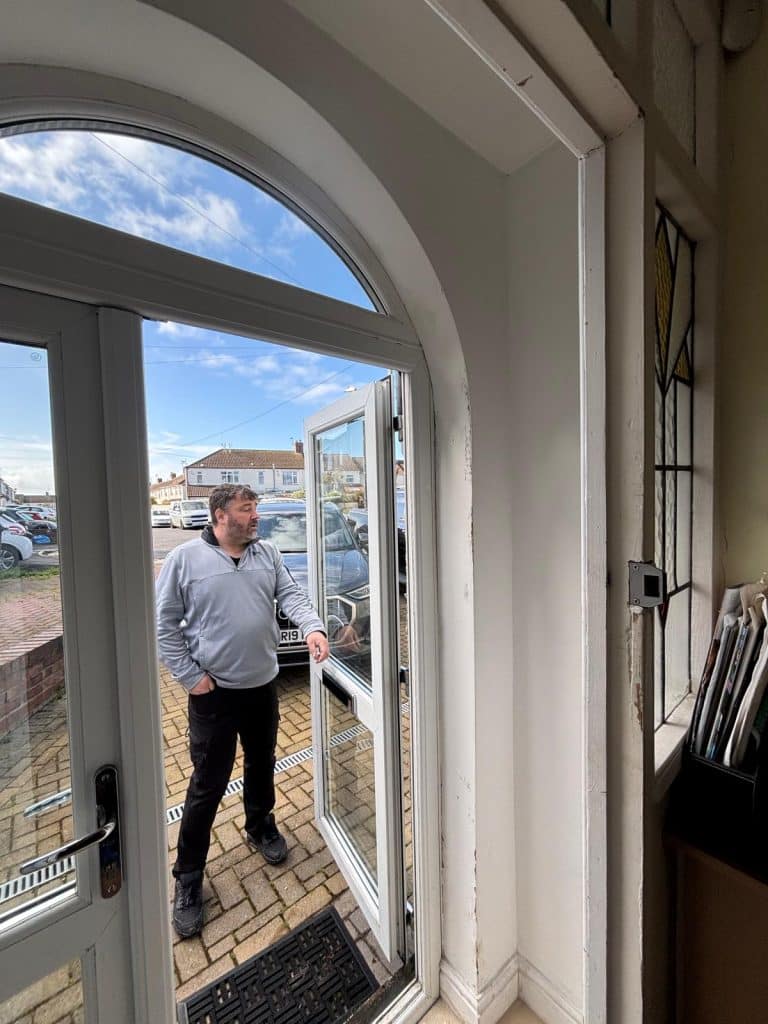
Damp Problems in the Bedroom and Entrance Porch
Moisture problems can appear in several different ways inside a property. In this case, the areas requiring treatment included the south-west facing bedroom wall and the internal walls around the entrance porch.
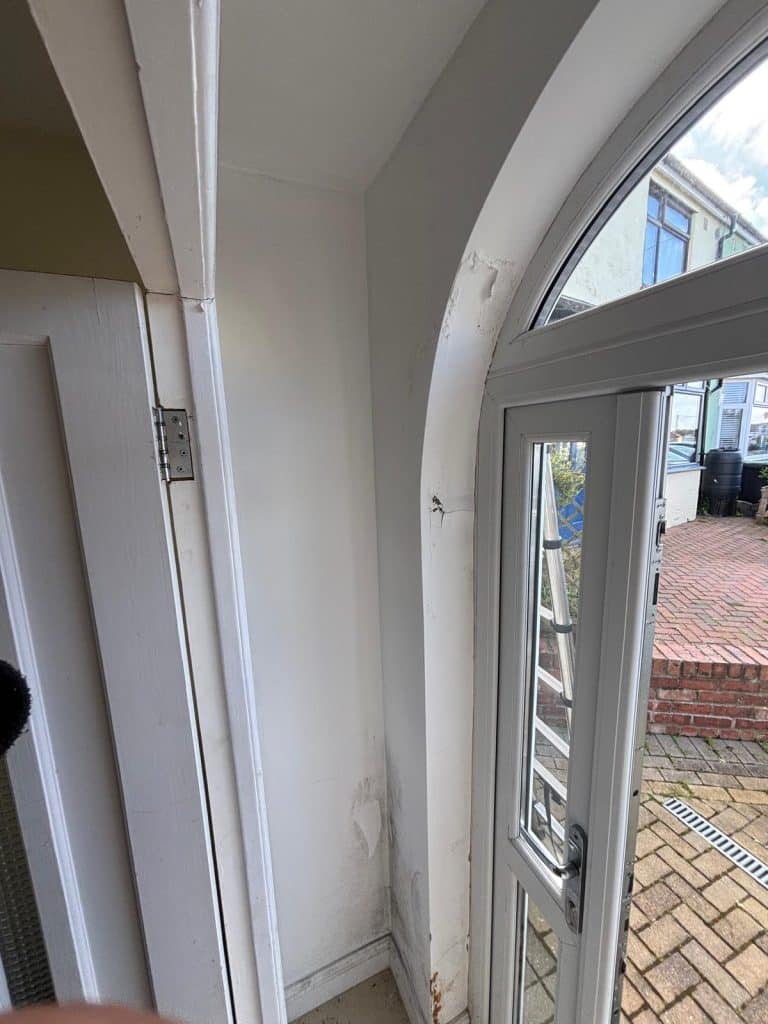
The photographs taken before work began show deterioration around sections of the porch walls and entrance, while signs of moisture-related damage were also visible around the bedroom wall and beneath the window.
Before specifying remedial work, it is important to understand how moisture is entering or affecting a building. Nordic Damp Proofing carries out professional damp surveys to identify the affected areas and determine an appropriate treatment specification.
Removing the Existing Damp-Affected Plaster
The first stage involved carefully removing the affected plaster finishes from floor to ceiling across the specified porch walls and the south-west facing bedroom wall.
Taking the affected finishes back to the original masonry allowed our technicians to inspect and prepare the wall surfaces before installing the new damp proofing system.
All contaminated plaster and associated debris was removed from the property, while floors, fixtures and surrounding finishes were protected throughout the work.
Treating Hygroscopic Salt Contamination
Once the original masonry had been exposed, a specialist salt neutralising solution was applied across the treatment areas.
Hygroscopic salts can remain within masonry and old plaster following prolonged exposure to moisture. These salts can absorb moisture from the surrounding air, meaning that simply allowing a wall to dry and applying new plaster may not resolve the visible problem.
Applying the specialist treatment helped stabilise the salt contamination before the main remedial damp proofing system was installed.
Chemical Damp Proof Course Installation
A chemically injected damp proof course was installed at low level within accessible and suitable mortar beds.
The treatment provides additional resistance against future low-level moisture migration through the masonry and forms one element of the wider damp prevention system used on the property.
Chemical DPC installation is not automatically the correct solution for every damp property, which is why the cause and construction of the affected wall should be assessed before treatment is specified.
Installing the Cavity Drainage Membrane System
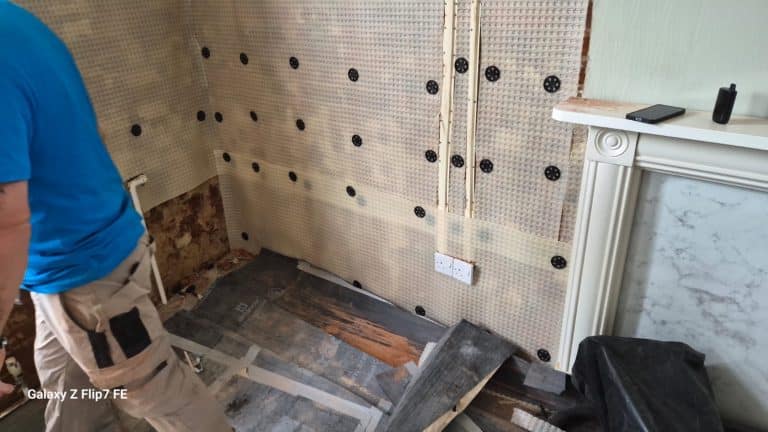
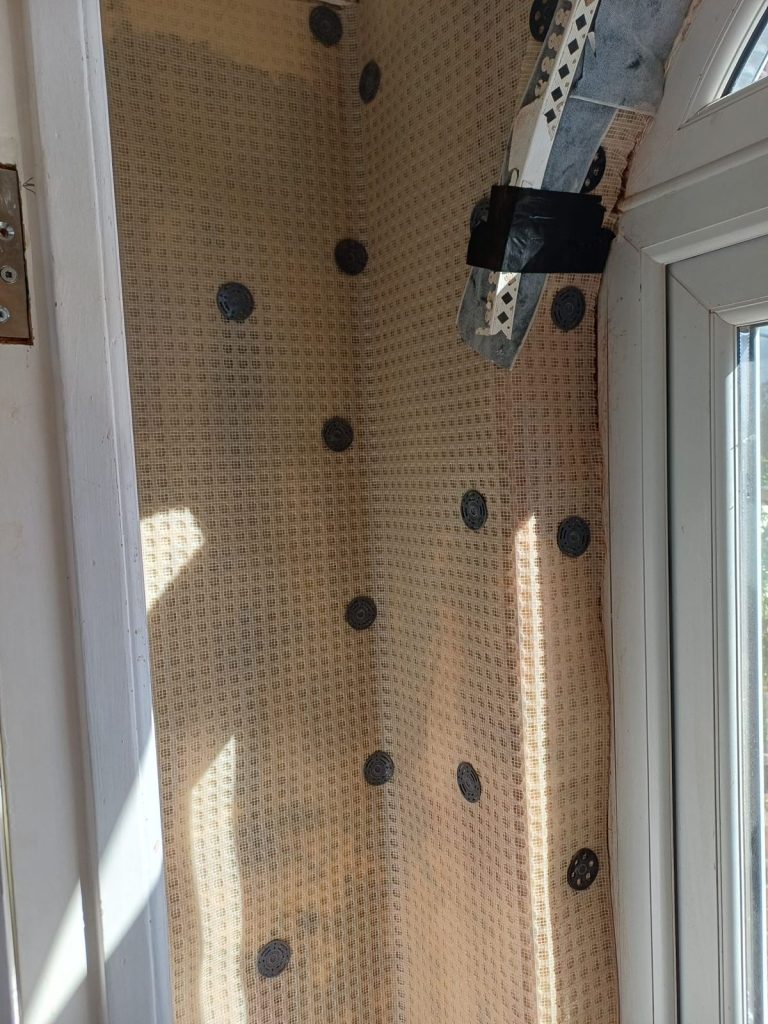
A key part of this project was the installation of a mechanically fixed cavity drainage membrane system across the treated wall surfaces.
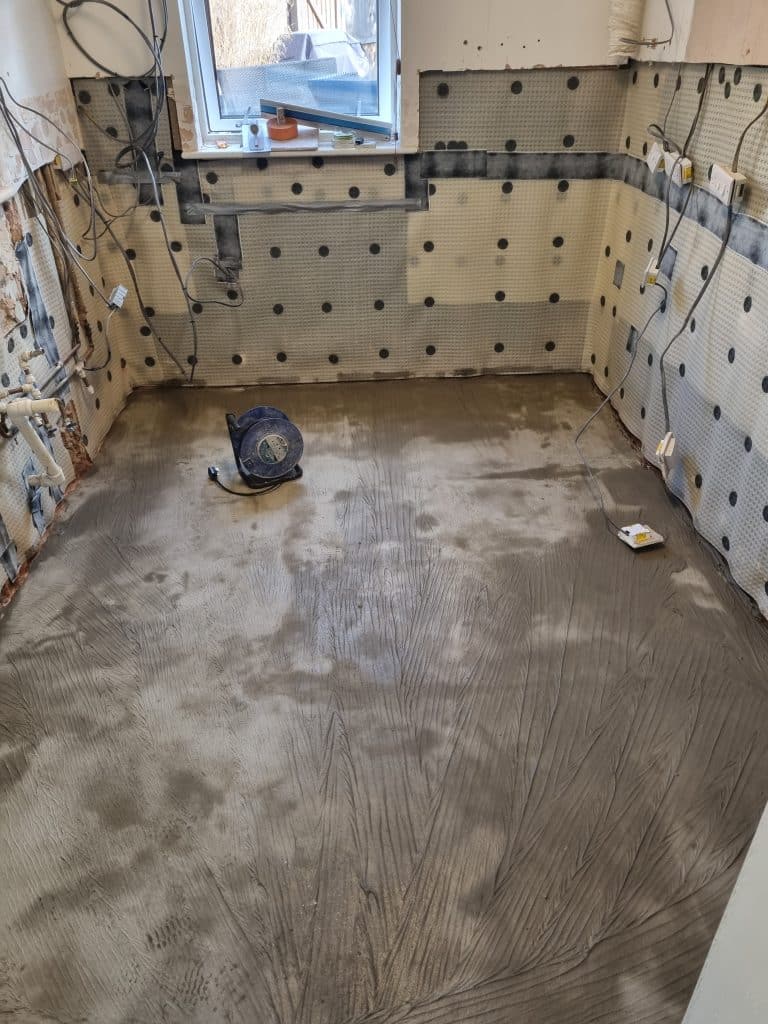
The photographs taken during the work clearly show the membrane installed around the bedroom window and within the entrance porch before the new finishes were applied.
The membrane creates a permanent separation barrier between the original masonry and the new plaster finish. This means residual moisture and hygroscopic salts within the existing wall are isolated from the newly finished internal surface.
Importantly, the system is not intended to force moisture into another area of the property or simply trap it within the wall. The original masonry can continue naturally regulating moisture while the membrane separates it from the internal decorative finish.
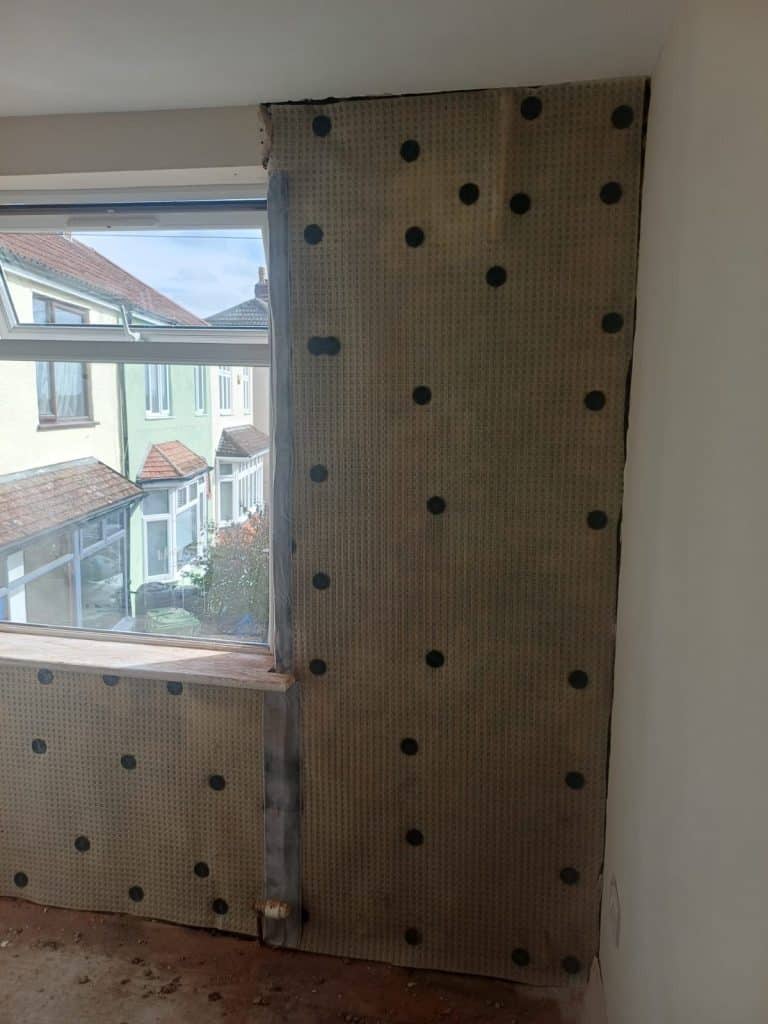
Membrane Installation Around Windows and Openings
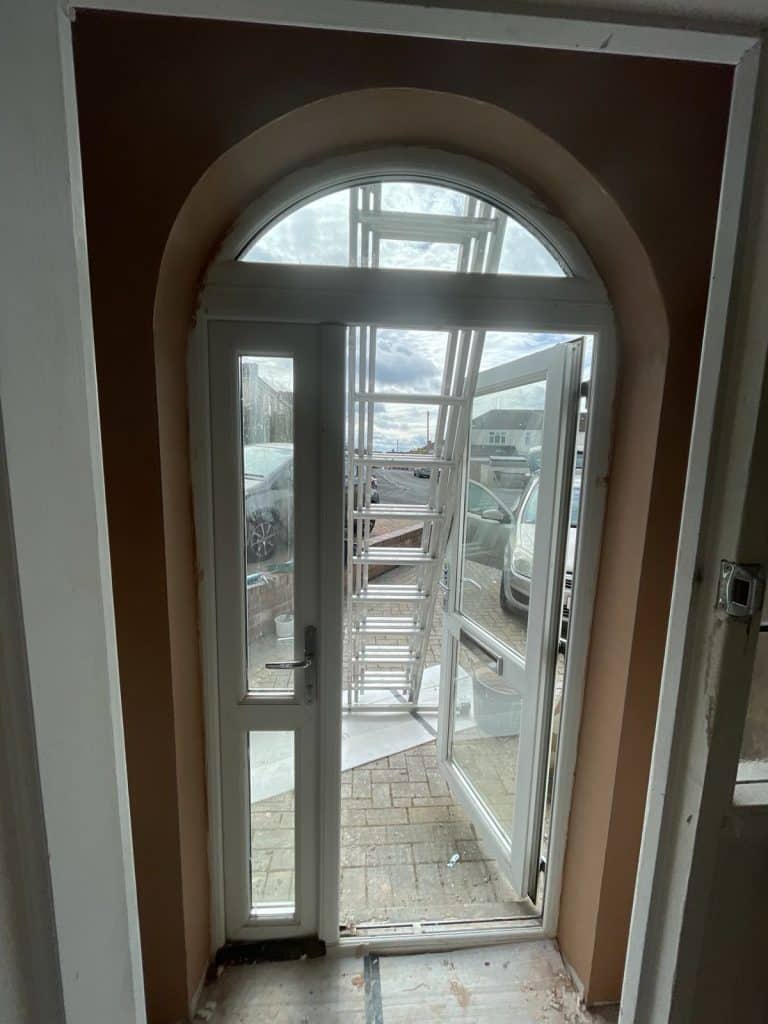
This particular project required careful installation because several of the treatment areas surrounded windows and the property’s arched front entrance.
The membrane was cut and mechanically fixed to follow the shape of each treatment area, including around the bedroom window reveals and the curved sections surrounding the entrance door.
Correct detailing around openings, corners, reveals and termination points is an important part of creating a consistent damp-resistant internal finish.
Formation of a Recessed Termination Channel
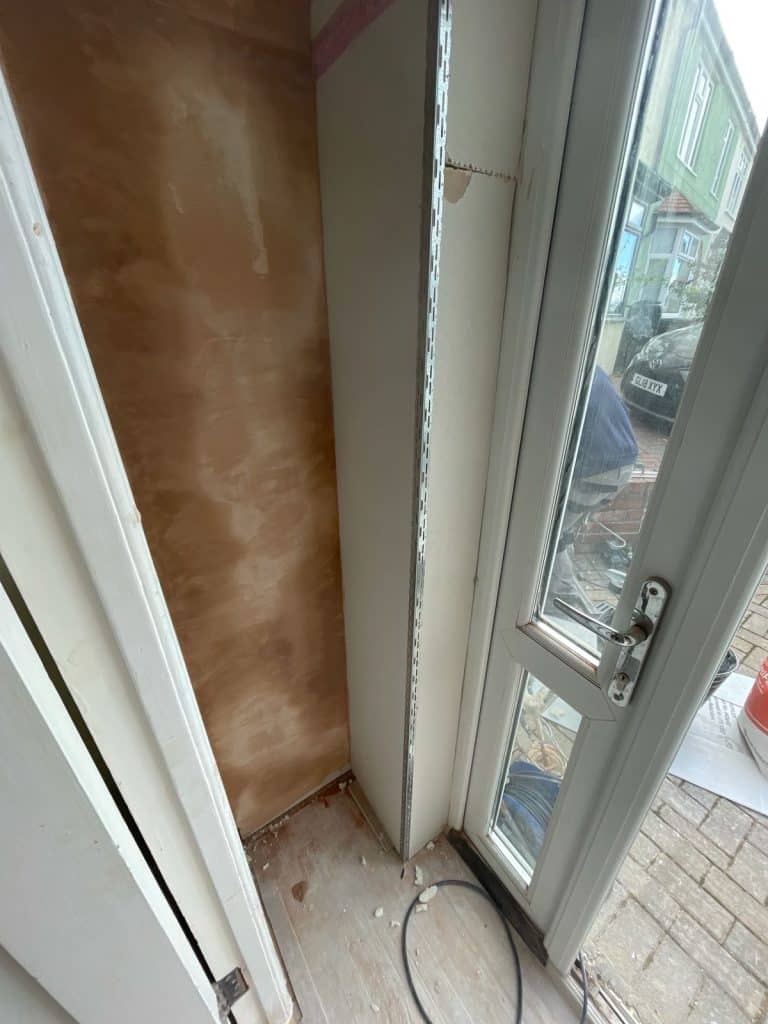
At ground level, our technicians formed a recessed channel to allow the cavity drainage membrane to return neatly into the wall before being sealed and finished.
This creates a clean and secure termination at the bottom of the membrane and forms part of Nordic Damp Proofing’s standard installation specification.
Attention to details such as membrane terminations is particularly important because the performance of a damp proofing system depends on more than simply covering the main wall area.
Replastering the Bedroom and Porch
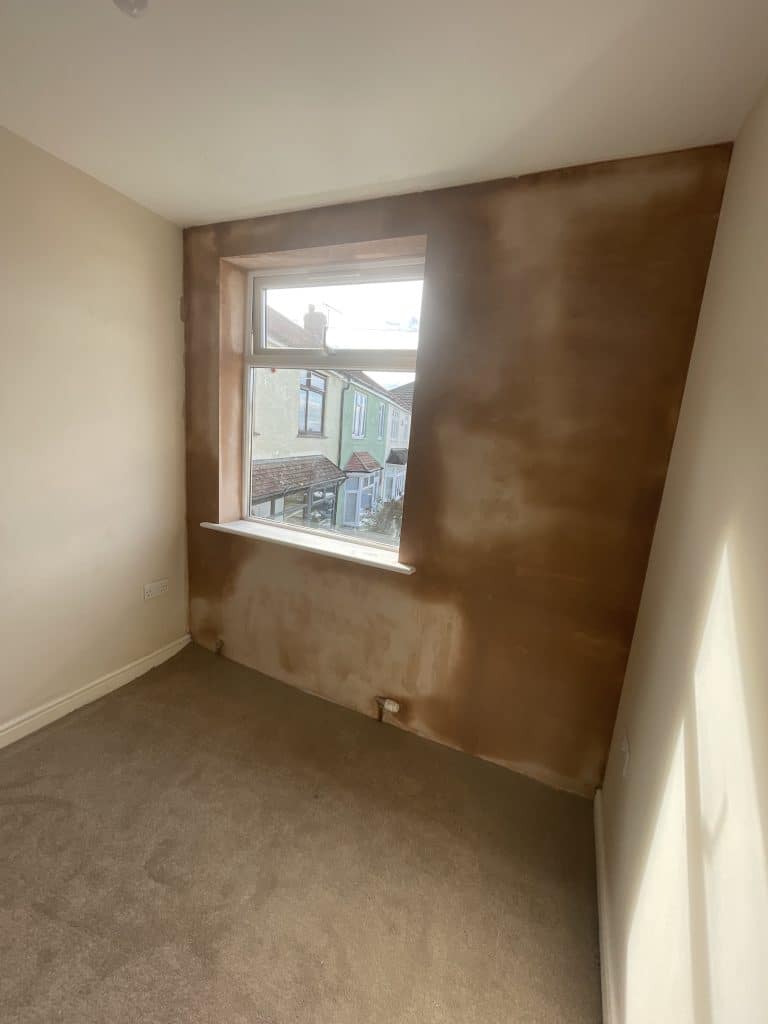
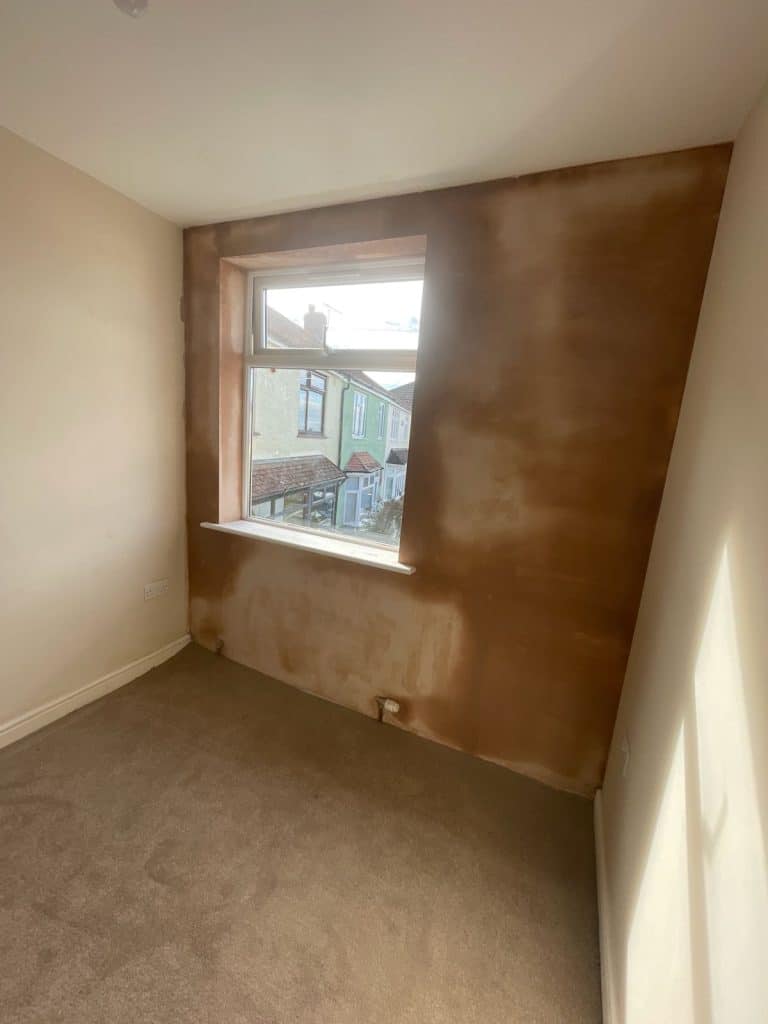
Once the damp treatment and membrane installations were complete, the treated walls were professionally replastered.
The finished photographs show the transformation particularly clearly in the bedroom, where the membrane system was installed across the affected wall and around the window before being completely concealed behind the new plaster finish.
The entrance porch was similarly restored, including the curved wall areas around the distinctive arched doorway.
Our wall repair and re-plastering service allows the remedial treatment and reinstatement work to be completed as part of the same project, leaving the walls with a smooth surface ready for decoration following the appropriate drying period.
A Complete Internal Damp Proofing System
The project involved much more than covering the visible signs of damp. Each stage formed part of a complete specification designed around the condition of the existing walls.
Works carried out included:
- Protection of floors, fixtures and surrounding finishes
- Removal of affected plaster from the specified walls
- Removal and disposal of contaminated plaster and debris
- Application of a specialist salt neutralising treatment
- Chemical damp proof course installation where suitable mortar beds were present
- Mechanical installation of a cavity drainage membrane system
- Careful membrane detailing around windows, reveals and the arched entrance
- Formation of recessed termination channels
- Sealing and finishing of the membrane system
- Replastering of the treated bedroom and porch walls
- Removal of waste and cleaning of the working areas
Why Use a Cavity Drainage Membrane on Damp Walls?
One of the advantages of a cavity drainage membrane system is that it provides a physical separation between the original masonry and the new internal wall finish.
Older or moisture-affected masonry can contain residual damp and salts even after the original source of a problem has been addressed. Applying a conventional plaster finish directly onto contaminated masonry can therefore create a route for that contamination to affect the new surface.
The membrane system used on this Tring project isolates the new plaster from the original wall while allowing the masonry behind it to continue naturally regulating moisture.
This provides a robust approach for properties where residual moisture and salt contamination need to be separated from the finished living space.
Damp Proofing in Tring and Hertfordshire
Nordic Damp Proofing provides professional damp proofing in Tring for homeowners, landlords and property professionals experiencing damp, moisture and deterioration to internal wall finishes.
We also provide damp surveys and remedial works throughout Hertfordshire and surrounding areas.
Depending on the cause and construction of the property, our recommendations may include chemical damp proof course installation, cavity drainage membranes, salt treatment, removal of contaminated plaster, wall repairs and complete replastering.
If you have noticed damp patches, deteriorating plaster, staining, salt deposits or recurring moisture around windows, external walls or ground-floor areas, the first step is establishing where the moisture is coming from.
Book a damp survey with Nordic Damp Proofing to have the affected areas professionally assessed and receive recommendations based on the condition of your property.