You have found a patch of black mould in the back bedroom, or a tide mark creeping along the hallway skirting, and you were hoping to have the house on the market by the end of the month. The question that follows is always the same one, and the answer is more reassuring than most sellers expect.
Yes, you can sell a house with damp. Thousands of people in the UK do it every year, and nothing in law prevents it. What you cannot do is pretend it is not there. That distinction is where sellers get themselves into trouble, and it is worth understanding properly before you speak to an estate agent.
What is damp?
Damp is excess moisture in a building where it should not be. That sounds obvious, but the type of damp you have matters enormously, because it changes the cost of the fix and it changes how a buyer reacts to it.
Condensation is the most common by a wide margin. Warm, moist indoor air meets a cold surface and the water it is carrying turns back into liquid. Cooking, showering, drying washing on radiators and simply breathing all add water vapour to the air of your home. Give that vapour nowhere to escape and it settles on cold walls, window reveals and the corners behind wardrobes. If you have black spotty mould in a bathroom corner or behind furniture on an external wall, you are almost certainly looking at condensation.
Penetrating damp is water finding its way in from outside through a defect. Cracked render, a blocked gutter overflowing down a wall, perished pointing, a slipped roof tile, or window sealant that gave up several years ago. It shows as a defined patch rather than a general haze, and it gets noticeably worse during and after heavy rain.
Rising damp is groundwater drawn up through the wall because the damp proof course has failed, been bridged by raised soil or a new patio, or was never installed in the first place. It affects ground floor walls only, rarely climbs beyond about a metre, and usually leaves a horizontal tide mark with salt deposits at the top edge.
Buyers react very differently to each of these, which is the first reason to find out what you have before you list.
What are the signs of damp in your house?
Before you can decide what to do, you need an honest walk around the property, ideally on a cold morning in winter when the house is showing you everything it has.
Look at the base of ground floor walls for yellow or brown staining and for that distinctive tide mark. Check whether wallpaper is lifting at the edges or whether paint has started to bubble and blister, both of which happen when moisture pushes out from behind a finish. Press the skirting boards with your thumb in a few places and see whether any of them feel soft or have begun to pull away from the wall.
Then look at the corners and the cold spots. Black spotted growth in the corners of ceilings, around window reveals and on the wall behind a wardrobe tells you the room is holding more moisture than it can shed. Condensation sitting on the inside of the windows most mornings tells you the same thing more directly.
Use your nose as well. A musty smell in a room you keep shut, in a cupboard under the stairs, or in an unused bedroom is one of the more reliable early indicators, and it often turns up before anything is visible. Finally, run the back of your hand along external walls. A wall that feels cold and slightly clammy compared with the internal walls of the same room is worth investigating.
One of these things on its own may be nothing much. Several of them clustered in the same area means a surveyor will find something.
Can you sell a property with damp?
Legally, yes, and without any special process. There is no requirement to fix damp before a sale, no certificate you must produce, and no prohibition on marketing a property in that condition. Damp is not like an unsafe electrical installation or an unregistered gas appliance.
Practically, damp affects three things: the number of buyers willing to view, the price they offer, and whether their lender will release the money. The first two you can work with. The third is the one that ends sales, and it is covered further down.
Properties with damp sell every week in every town in the country. They tend to sell to slightly different buyers, at slightly different prices, and sometimes on a slightly longer timescale.

Do you have to disclose damp when selling a house?
Yes. In England and Wales your solicitor will send you a TA6 Property Information Form to complete as part of conveyancing. It asks direct questions about the condition of the property, including whether it has suffered from damp and whether any treatment or remedial work has been carried out.
You must answer those questions honestly. That is the entire purpose of the form, and it is signed by you rather than by your agent or your solicitor.
If you have had a damp proof course installed, a specialist survey done, or remedial work completed, say so, and then hand over every piece of paperwork you have along with any guarantee. Sellers sometimes worry that disclosing past work makes the property look problematic. In practice the opposite is true. A documented problem that was diagnosed, treated by a reputable firm and covered by a transferable long-term guarantee reassures a buyer far more than silence does, because it converts an unknown into a known.
If you are aware of damp and have never dealt with it, you still have to declare it. Deciding privately that it was not a big deal is not a defence, and neither is assuming the buyer’s own survey will pick it up.
What happens if you don’t disclose damp?
Answering the TA6 falsely amounts to misrepresentation. Once contracts have been exchanged, the sale has completed and the buyer has moved in and discovered the thing you knew about, they have grounds to pursue you.
What that looks like in practice is a claim for the cost of putting the defect right, or a claim for the difference between what they paid and what the property was actually worth in its true condition, along with their legal costs. In more serious cases a court can order the sale to be unwound entirely. These claims are not limited to the first few weeks after completion either, and they have a habit of arriving long after you have spent the proceeds on your next house.
Set against the cost of a survey and an honest conversation, it is a poor trade. A damp problem you disclose is a negotiation you can manage. A damp problem you conceal is a lawsuit you cannot.
How much does damp devalue a house?
Anyone who gives you a single percentage figure for this is guessing, because the number depends almost entirely on circumstances that vary property to property.
The type and cause do most of the work. Condensation driven by ventilation and heating habits is the cheapest of the three to resolve and the least alarming to a buyer, because most people understand it and many have dealt with it themselves. Rising damp requiring a new damp proof course and replastering across several walls is a larger and more disruptive job, and buyers know it. Penetrating damp caused by a failing roof is a different conversation again, because your buyer is no longer thinking about a damp patch, they are thinking about a roof.
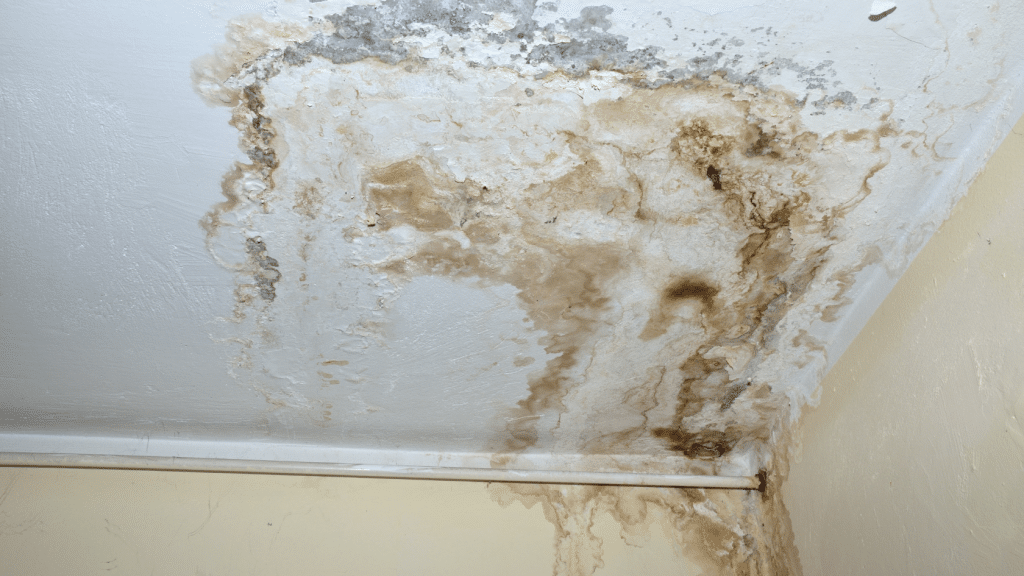
Whether the problem has been diagnosed matters just as much as what it is. An undiagnosed damp patch is an open-ended risk, and buyers price open-ended risk pessimistically. They imagine the worst realistic outcome, then deduct for that, and they are usually imagining something considerably worse than reality. A survey and a written quotation replace an unlimited fear with a specific, arguable number.
Visible damage skews things too. Blown plaster, rotten skirting boards, ruined flooring and stained ceilings all read as expensive regardless of whether they are, because they are the part the buyer can actually see.
When does damp actually stop a sale or mortgage?
This is the part that catches sellers out, and it is the reason damp so often becomes a crisis in week six of a sale rather than week one.
When your buyer applies for a mortgage, the lender arranges its own valuation, which is carried out to protect the lender rather than the buyer. If the valuer flags significant damp, the lender has several options and none of them are convenient. It may apply a retention, holding back part of the loan until the work has been completed and signed off, which means your buyer suddenly needs to find that money from somewhere before completion. It may make the offer conditional on a specialist damp report being obtained first. In more serious cases, where the property is judged unsuitable security for the loan, it may decline to lend at all.
A buyer who cannot get the money cannot buy your house, however much they want it and however far along the chain you both are. This is why dealing with damp early, on your own terms and your own timescale, is almost always cheaper than dealing with it in week six under pressure from a chain that is about to collapse.
Should you treat damp before selling a home?
Fixing it first tends to make sense when the cause has been identified and the work is proportionate to the value of the property, when your likely buyers are mainstream residential purchasers using mortgages, when the visible damage is putting people off at the viewing stage, and when you have enough time before you need to move.
Selling as it stands tends to make sense when the property already needs substantial renovation and your buyers expect to be doing work anyway, when you need a fast sale more than you need the last few thousand pounds, when the damp forms part of a wider job a buyer will want to approach their own way, or when the cost of the remedy is close to the discount buyers are asking for regardless.
There is no universal answer here. There is an answer for your property, your timeline and the kind of buyer your house is going to attract, and you can only reach it once you know what is actually wrong.
How to sell a house with damp
Three routes are open to you, and they suit different situations.
The first is to fix it properly. Get a survey that identifies the cause rather than the symptom, have the work carried out by a firm that provides a long-term guarantee, and keep every document. You then list the property with a clean story and transferable paperwork, which becomes a selling point rather than an apology. This route usually recovers more than it costs when the property is otherwise in good order.
The second is to price it in. Reduce the asking price to reflect the work and be upfront with viewers about what needs doing. Be aware that buyers tend to deduct more than the actual repair cost, because they are pricing the disruption and the uncertainty as well as the materials, so a written quotation in your hand at viewings is worth having.
The third is to sell as it stands to a cash buyer. Cash purchasers, developers and property buying companies do not need lender approval, so a valuation retention cannot derail the transaction. You will accept a lower figure in exchange for speed and certainty, which is a reasonable trade when a chain has already collapsed once.
Is anti-mould paint a long-term solution?
No, and it is worth being blunt about this because it is the most common mistake sellers make.
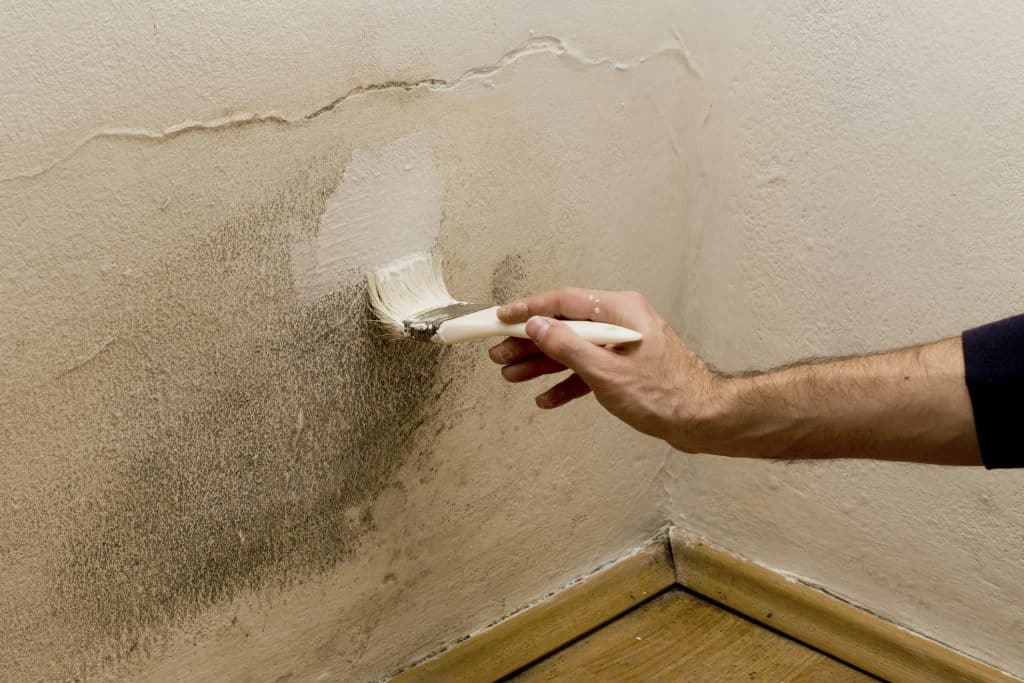
Anti-mould paint has a legitimate place as the final step of a properly completed job, once the moisture source has been dealt with and the wall has dried. Used on its own to cover a stain a fortnight before viewings, it buys you a few weeks at most. The moisture is still in the wall, the mould has not been removed, and it will come back through.
There is a second problem. Surveyors are trained to notice fresh paint in one isolated area of an otherwise tired room, and it invites exactly the scrutiny you were hoping to avoid. You have now created a trust problem on top of a damp problem, and the buyer will wonder what else has been painted over.
What to do next
Find out what is causing it before you make any decisions about price, timing or treatment. Not by guessing from a photograph, and not by taking the loudest opinion offered at a viewing, but by having someone assess it with a moisture meter, a thermal camera and no commercial reason to arrive at one diagnosis over another.
Once you know the cause, all three of your options become viable and you can choose between them on the numbers. Fix it, price it in, or disclose it and sell as it stands. Every one of those is a legitimate way to sell a house. The only genuinely bad position is not knowing, because that is the one where the buyer’s surveyor tells you first.
Nordic Damp Proofing carries out independent damp and mould surveys across the South Coast, the South West and the surrounding counties, using PCA-trained surveyors and full diagnostic equipment. If you are preparing to sell and want a clear answer on what you are dealing with before it reaches a buyer’s report, get in touch to book a survey.