Nordic Damp Proofing recently completed a specialist condensation and mould prevention project at a property in Bristol, following problems with mould growth across a bathroom ceiling and around the ceiling-to-wall junctions.
Bathrooms naturally produce significant amounts of warm, moisture-laden air. When this comes into contact with colder surfaces, condensation can form and create the conditions in which mould is able to develop.
For this project, our team carried out a combined treatment designed to deal with the existing mould contamination while also addressing the conditions contributing to the problem.
The works included a specialist acetic acid-based mould treatment, installation of an isothermal membrane system, complete re-plastering of the treated ceiling and an upgrade to the bathroom extraction system.
Mould and Condensation Problems in the Bathroom
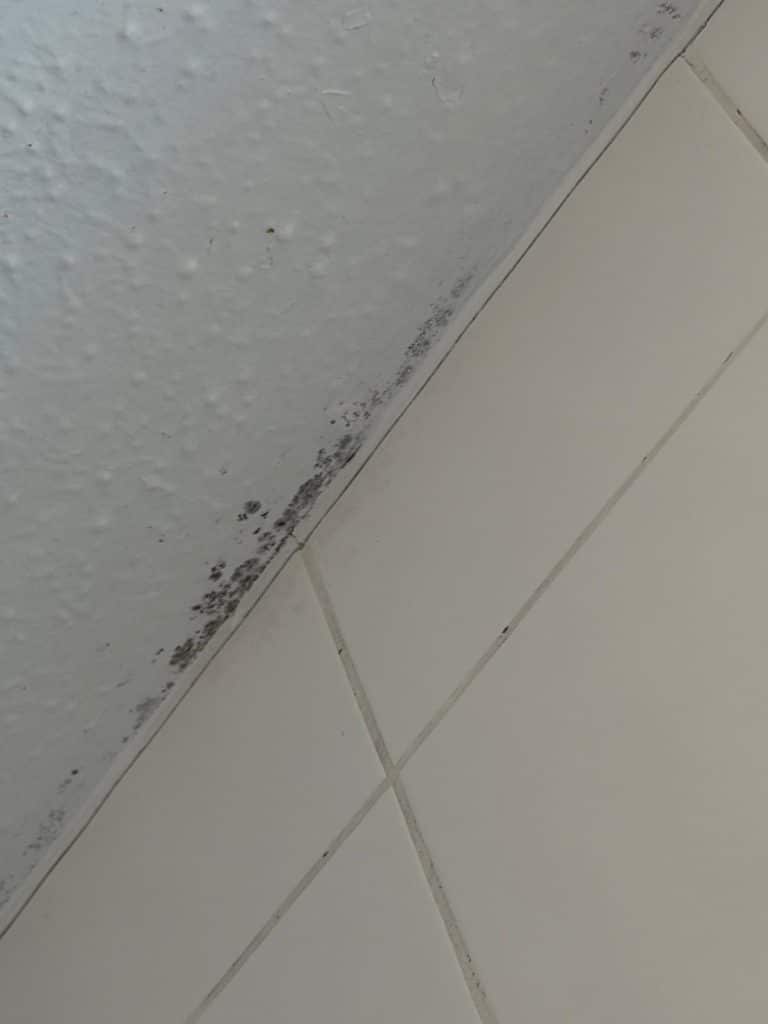
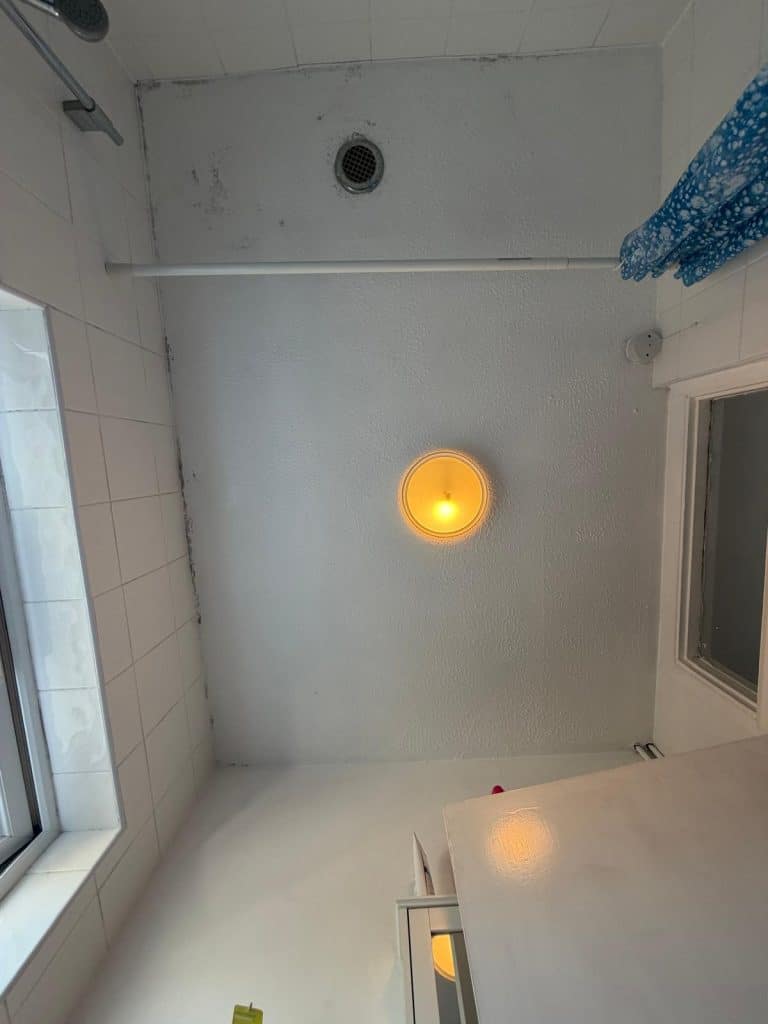
Before work commenced, visible mould contamination could be seen around sections of the bathroom ceiling, particularly along corners and ceiling-to-wall junctions.
These areas can be particularly vulnerable to condensation because surface temperatures can be lower than the warm air within the bathroom.
When showers and baths increase the amount of water vapour in the air, that moisture can condense on cold surfaces. If the area repeatedly remains damp, mould can begin to develop.
Rather than simply cleaning and redecorating the ceiling, the specification for this Bristol property combined mould treatment, thermal separation and improved extraction to provide a more comprehensive solution.
Specialist Mould Treatment
The first stage involved thoroughly treating the affected bathroom ceiling, corners and ceiling-to-wall junctions using a specialist acetic acid-based mould cleaning solution.
All visible fungal contamination was treated before installation of the new thermal membrane system.
This stage was important because the existing contamination needed to be removed and the ceiling properly prepared before the new system could be installed.
Professional mould treatment should form part of a wider assessment of why mould is developing, particularly where the problem repeatedly returns after cleaning or decoration.
Preparing the Bathroom Ceiling
Once the mould treatment had been completed, the existing ceiling was prepared ready for installation of the isothermal membrane.
Bathroom fixtures, flooring, tiles and surrounding finishes were protected while the work was undertaken. The ceiling substrate was also checked and prepared to provide a suitable and stable surface for the thermal adhesive and membrane system.
Correct preparation is particularly important with a thermal membrane because the system needs to be installed continuously and securely across the specified treatment area.
Installing an Isothermal Membrane System
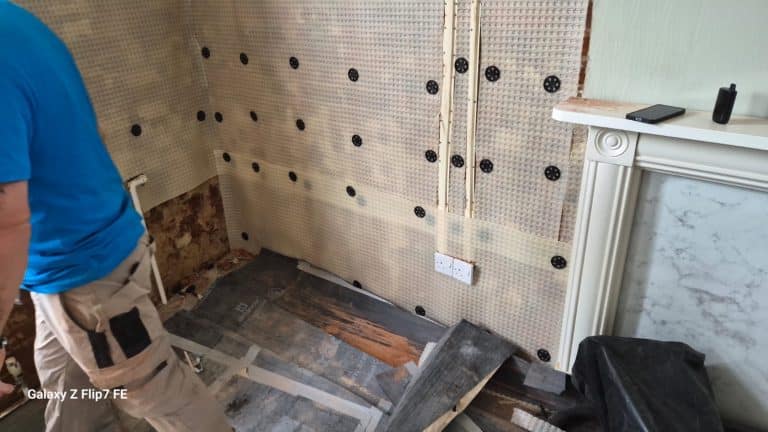
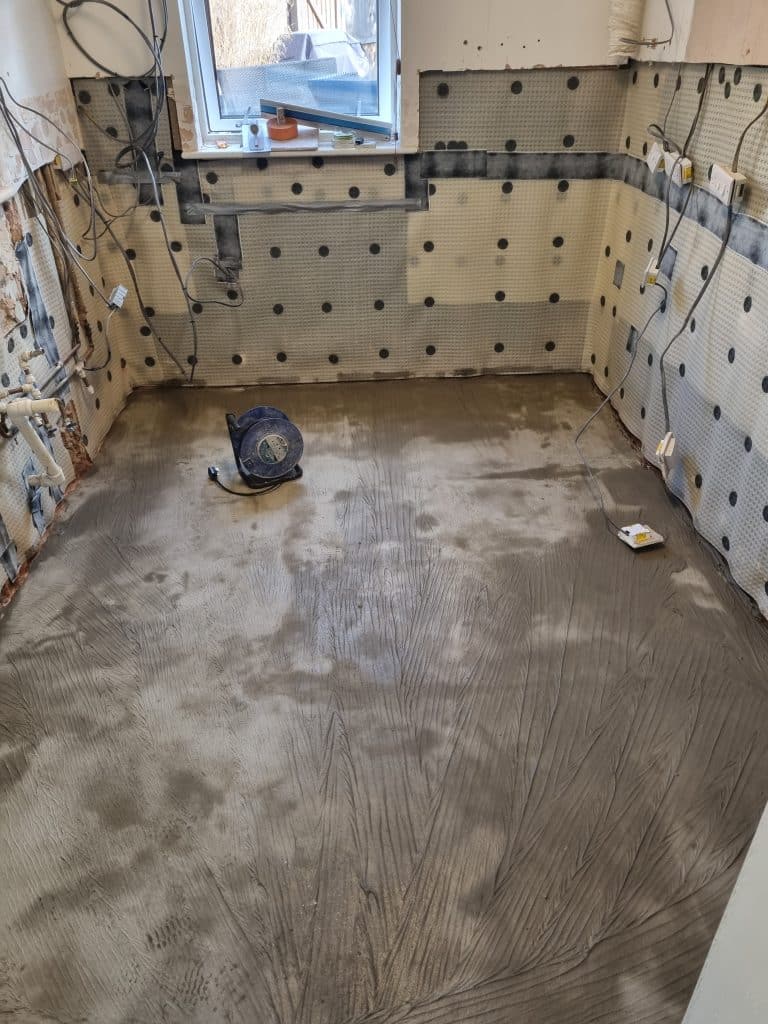
A specialist thermal adhesive was applied across the prepared ceiling before the isothermal membrane was securely installed over the agreed treatment area.
The membrane provides a layer of thermal separation between the colder underlying ceiling construction and the new internal surface.
By increasing the internal surface temperature of the ceiling, the system reduces the temperature difference between the ceiling and the warm, moisture-laden air generated within the bathroom.
This makes surface condensation significantly less likely to form and helps address one of the conditions that can contribute to recurring mould growth.
Why Surface Temperature Matters in a Bathroom
Condensation is not simply caused by there being ‘too much moisture’ in a property. The temperature of the surfaces that moisture-laden air comes into contact with is also important.
Warm air generated during a shower can hold considerable moisture. When that air reaches a sufficiently cold ceiling, wall or window surface, some of its water vapour can condense into liquid moisture.
Cold areas around external walls, ceilings, corners and junctions can therefore become recurring condensation points.
In suitable situations, an isothermal membrane can help by creating a warmer internal surface and reducing this temperature differential.
Careful Detailing Around the Ceiling
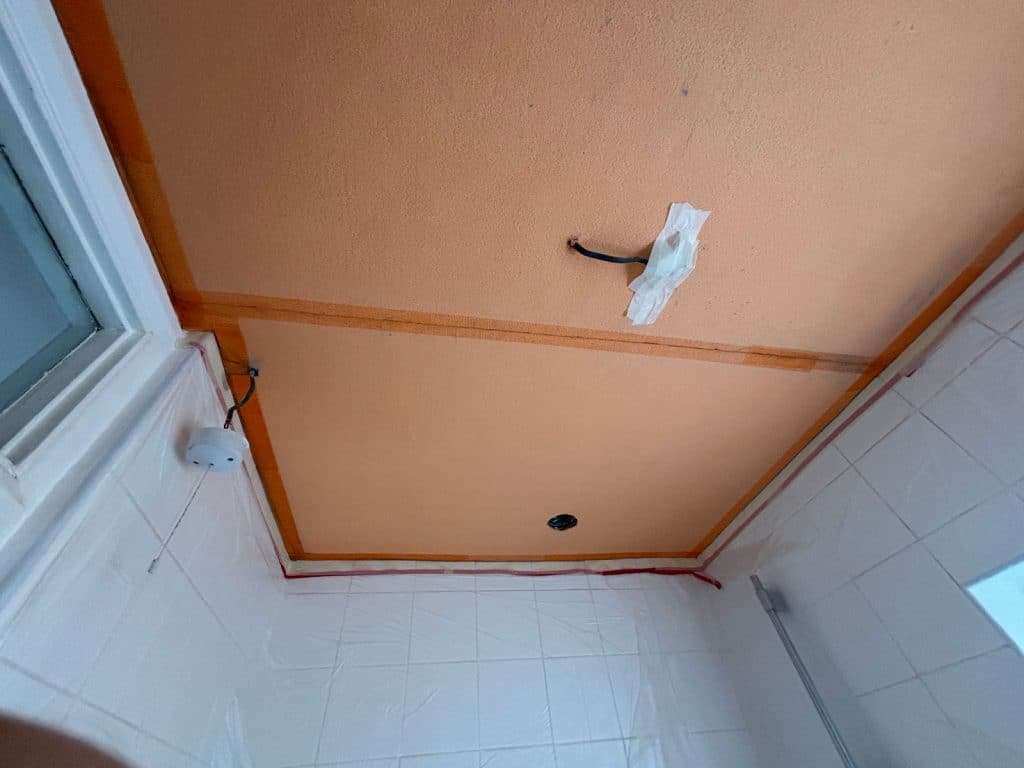
The photographs taken during this Bristol project show the membrane system installed across the bathroom ceiling, including the careful treatment of the perimeter and ceiling junctions.
All edges and junctions were correctly finished before the new plaster skim was applied.
This detailing is important because condensation and mould were particularly noticeable around some of the original ceiling-to-wall junctions. The thermal treatment therefore needed to form a continuous system across the agreed ceiling area.
Re-Plastering the Treated Bathroom Ceiling
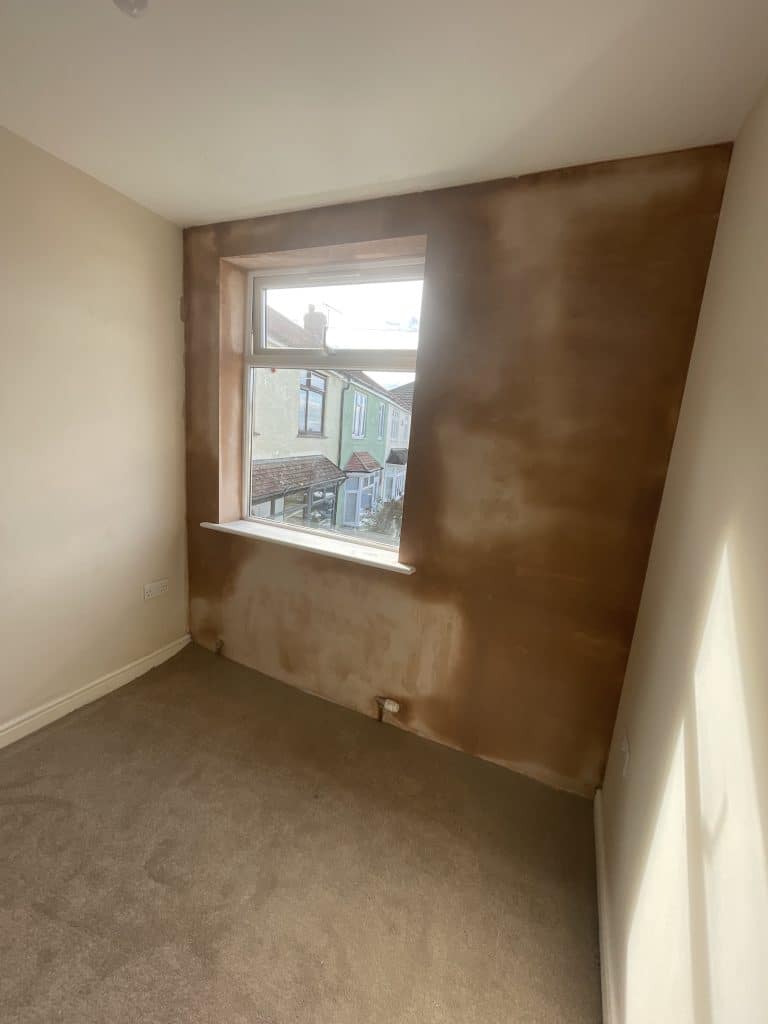
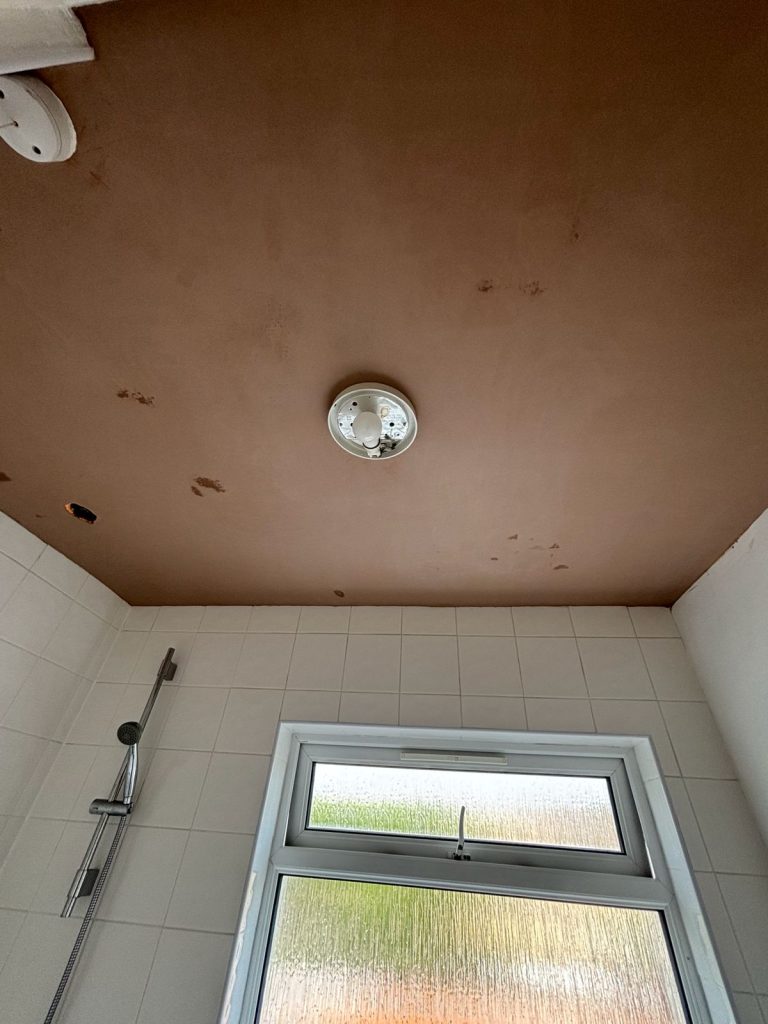
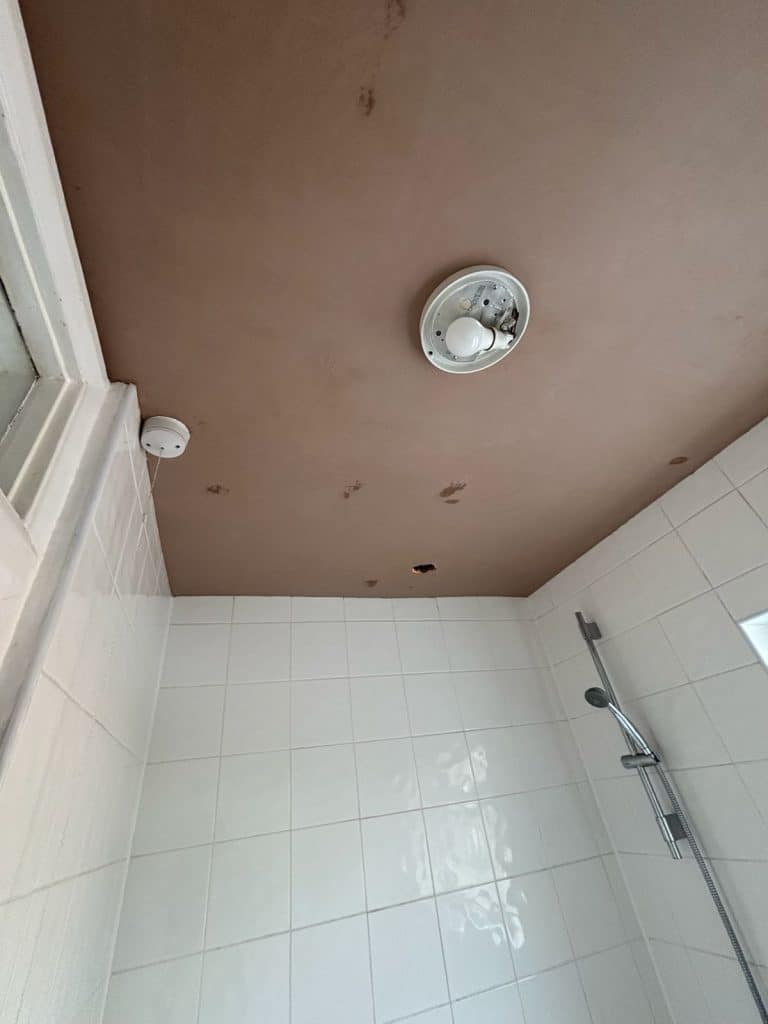
Following installation of the isothermal membrane, the complete treated ceiling was re-plastered.
A new plaster skim was applied over the membrane to reinstate the internal finish and provide a smooth surface ready for decoration once sufficiently dry.
The completed plasterwork completely conceals the thermal membrane system, allowing the bathroom to retain a conventional finished appearance while the specialist system remains behind the new surface.
Nordic Damp Proofing also provides professional wall repair and re-plastering as part of damp, mould and moisture remediation projects where required.
Bathroom Extraction Upgrade
Thermal improvements formed one part of the specification for this project. The bathroom extraction system was also upgraded to help control the amount of moisture remaining within the room.
Before installation, the electrical supply and extraction route were checked. The new humidistat-controlled extractor was then installed and tested before completion.
A humidistat-controlled extractor is designed to respond to increased humidity levels, helping remove moisture-laden air when humidity rises within the bathroom.
Effective humidity control and ventilation can be an important part of managing condensation, particularly in bathrooms, kitchens and other areas where significant amounts of water vapour are regularly produced.
A Combined Approach to Mould Prevention
This project demonstrates why recurring bathroom mould can require more than one form of remedial work.
The system installed at the Bristol property addressed three important elements of the problem:
- Existing contamination – visible mould was treated using a specialist acetic acid-based solution.
- Cold ceiling surfaces – an isothermal membrane was installed to provide thermal separation and increase the internal surface temperature.
- Moisture within the bathroom – the extraction system was upgraded with humidistat control to improve the removal of moisture-laden air.
Following these works, the ceiling was completely re-plastered to provide a smooth new internal finish.
Works Completed at the Bristol Property
The complete scope of work included:
- Protection of bathroom fixtures, flooring and surrounding finishes
- Treatment and cleaning of visible mould contamination
- Specialist treatment to affected corners and ceiling-to-wall junctions
- Preparation of the existing ceiling substrate
- Application of specialist thermal adhesive
- Installation of an isothermal membrane across the affected ceiling
- Detailed finishing of membrane edges and junctions
- Re-plastering of the complete treated ceiling
- Assessment of the electrical supply and extraction route
- Upgrade of the bathroom extraction system
- Testing of the humidistat-controlled extractor
- Removal of associated waste from the property
- Cleaning of the working area following completion
- Photographic documentation throughout the different stages of the project
Why Simply Painting Over Bathroom Mould May Not Solve the Problem
Cleaning mould and applying a fresh coat of paint can improve the appearance of a bathroom, but if the conditions responsible for the mould remain unchanged, the problem can return.
Recurring mould can be associated with a combination of high humidity, inadequate extraction, restricted ventilation and cold internal surfaces.
That is why identifying the underlying moisture conditions is important before deciding on the appropriate remedial work.
Depending on the property, recommendations could involve improved extraction, ventilation, humidity management, mould treatment, thermal improvements or a combination of measures.
Mould, Condensation and Damp Surveys in Bristol
Nordic Damp Proofing provides professional damp, mould and condensation solutions throughout Bristol and the surrounding areas.
Our team can investigate problems including recurring bathroom mould, condensation, damp patches, deteriorating plaster, moisture around windows and persistent high humidity.
A professional damp survey can help establish whether a problem is being caused by condensation, penetrating damp, rising damp, defective building elements or another source of moisture before remedial work is specified.
If mould keeps returning despite regular cleaning and decoration, or you are experiencing persistent condensation within your property, it is worth investigating the conditions causing it rather than repeatedly treating the visible symptoms.
Book a damp survey with Nordic Damp Proofing to have the affected areas professionally assessed and receive recommendations based on your property.