Nordic Damp Proofing recently completed a comprehensive internal damp proofing project at a property in Wembley, West London, following the identification of rising damp and moisture affecting a number of internal wall areas.
The remedial works involved removing contaminated plaster, installing a new chemical damp proof course, treating exposed masonry for salts and fitting a cavity drainage membrane system before replastering the affected areas.
As part of the wider moisture management works, a new Vent-Axia mechanical extractor fan was also installed within the bathroom to improve ventilation and help control excess humidity.
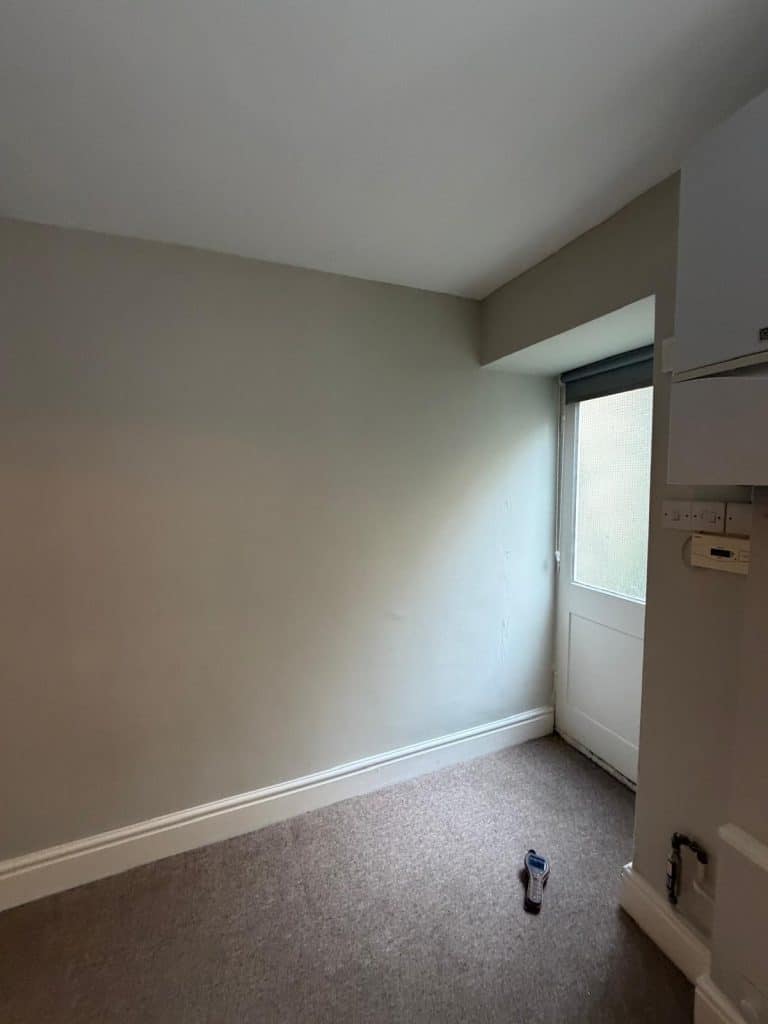
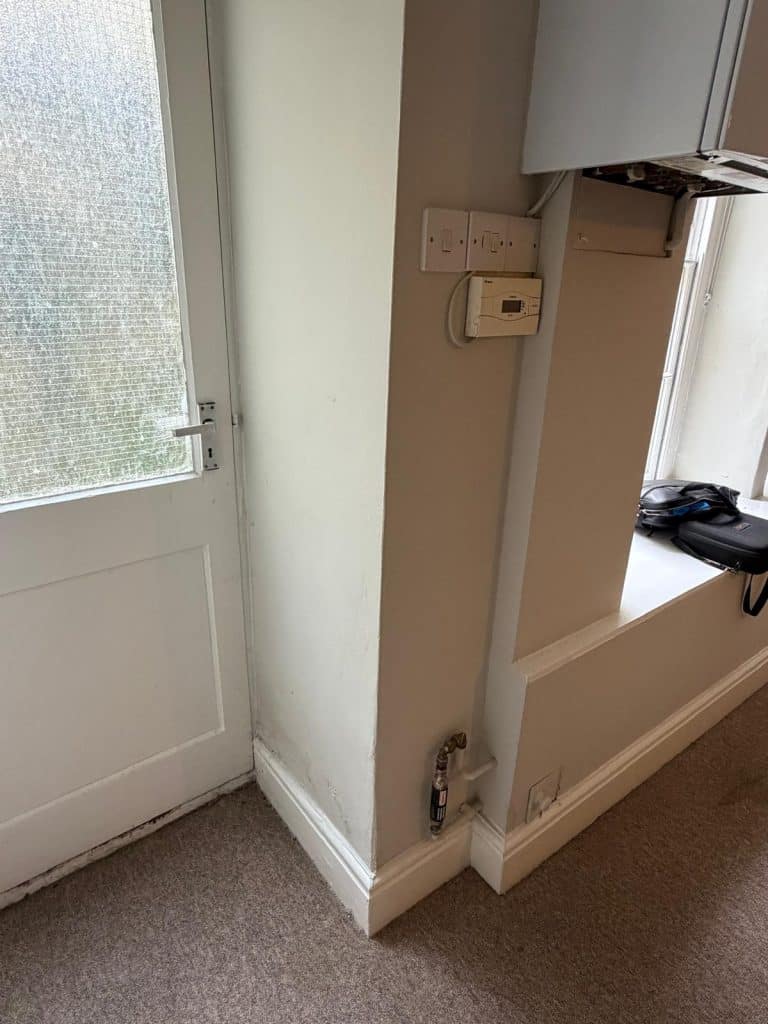
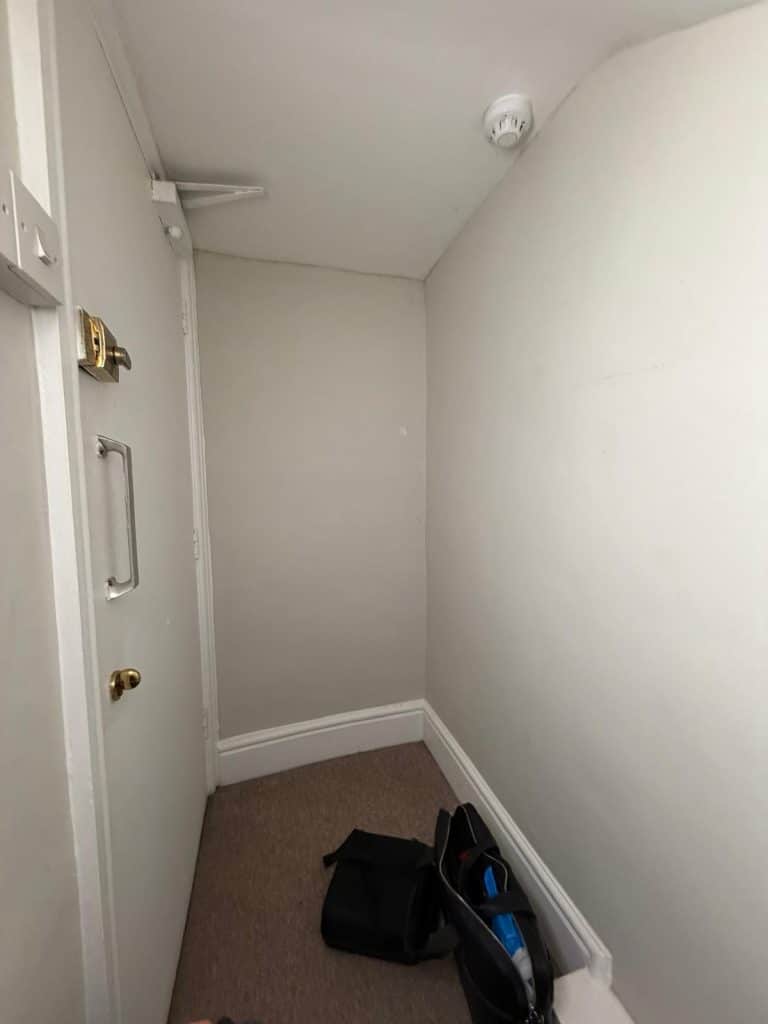
Identifying the Damp Problem
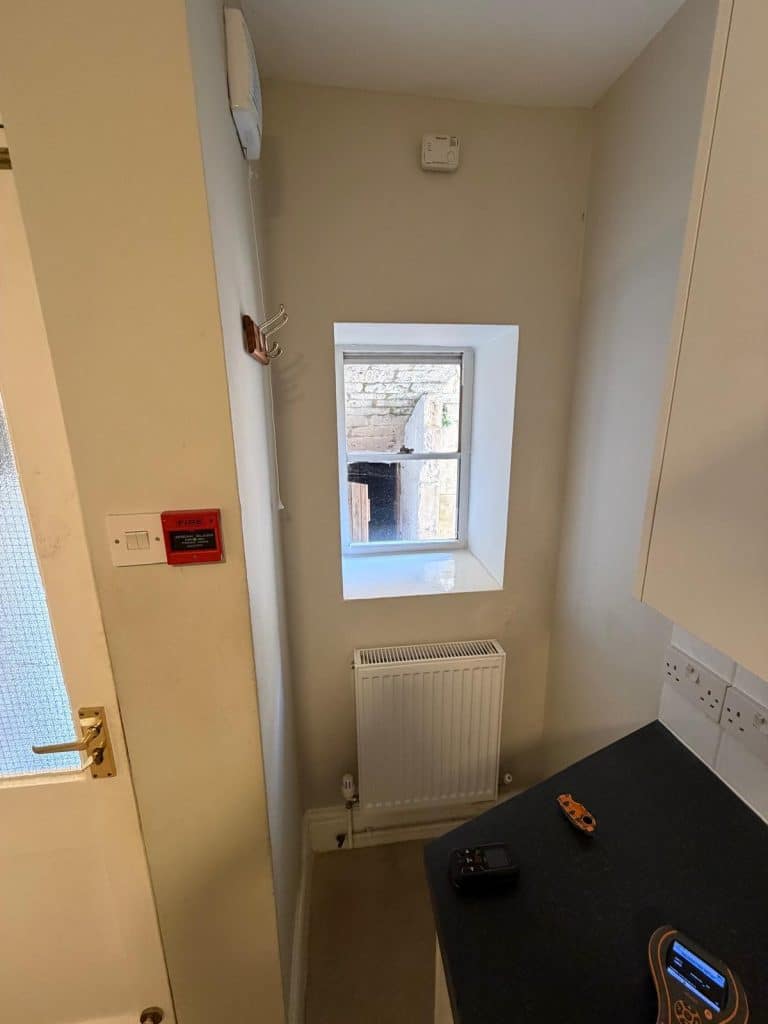
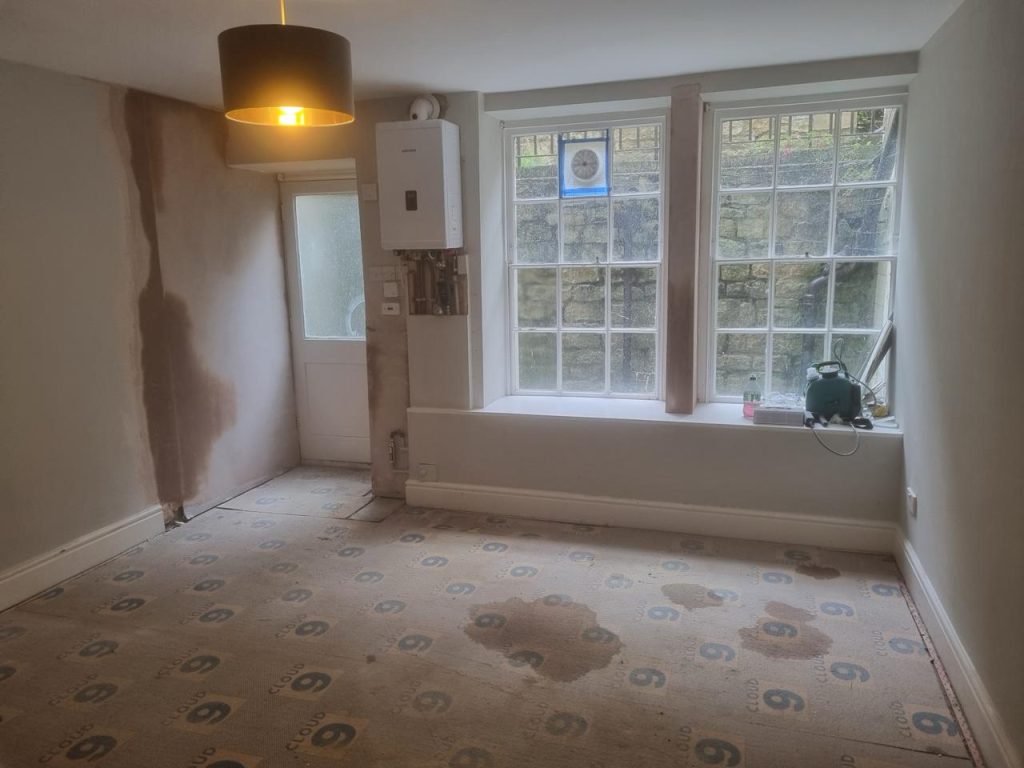
The affected areas showed signs of moisture ingress consistent with rising damp, with moisture and associated salts having affected the internal wall finishes.
Where rising damp is present, moisture can travel upwards through porous masonry. As that moisture evaporates from the surface, salts can remain behind within the masonry and plaster. Some of these salts are hygroscopic and can continue attracting moisture even after the original source has been addressed.
For this reason, the remedial specification needed to deal with both the movement of moisture through the walls and the contaminated internal finishes.
Removal of Damp and Salt-Contaminated Plaster
The first stage involved carefully removing the affected plaster from the identified wall areas to the required treatment height.
This exposed the underlying masonry and provided access for the new damp proofing system. Removing contaminated material is an important part of this type of remedial work, particularly where salts have migrated into the existing plaster.
Installation of a New Chemical Damp Proof Course
A new chemical damp proof course was installed within the affected walls.
The chemical DPC was injected into the appropriate mortar course across the identified areas affected by rising damp. Once installed, the treatment is designed to create a barrier within the masonry and restrict the upward movement of ground moisture through the wall.
Specialist Salt Neutralising Treatment
Following removal of the affected plaster, the exposed masonry was treated with a specialist salt neutralising solution.
This stage helps manage the residual salts present within masonry that has previously been exposed to moisture. The walls were thoroughly prepared and treated before installation of the new internal damp proofing system.
Cavity Drainage Membrane Installation
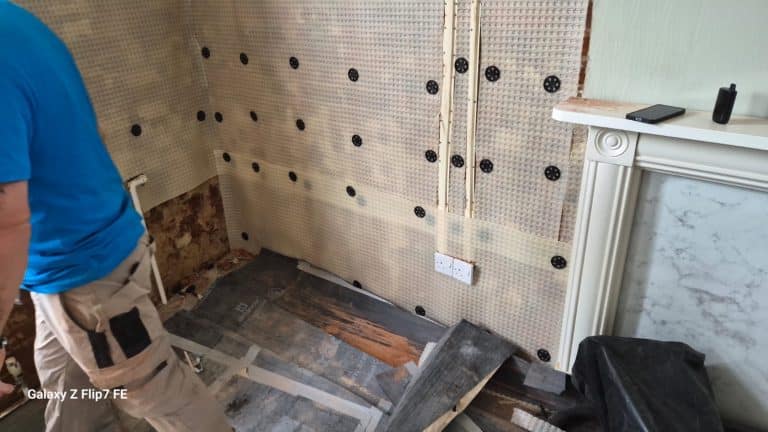
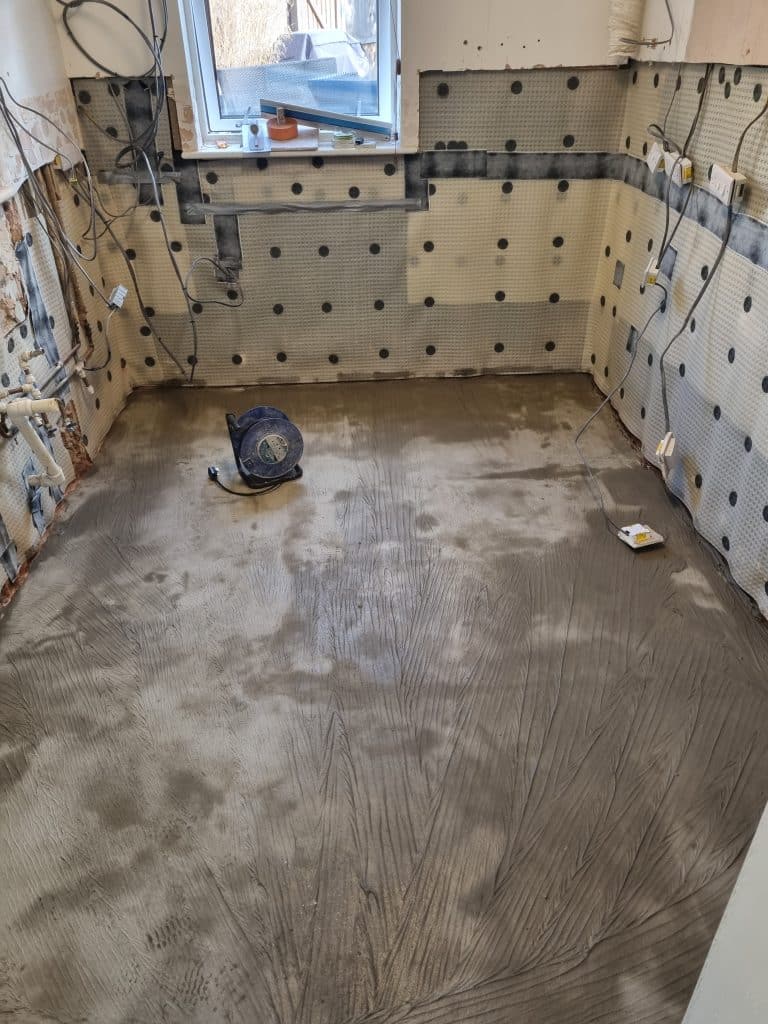
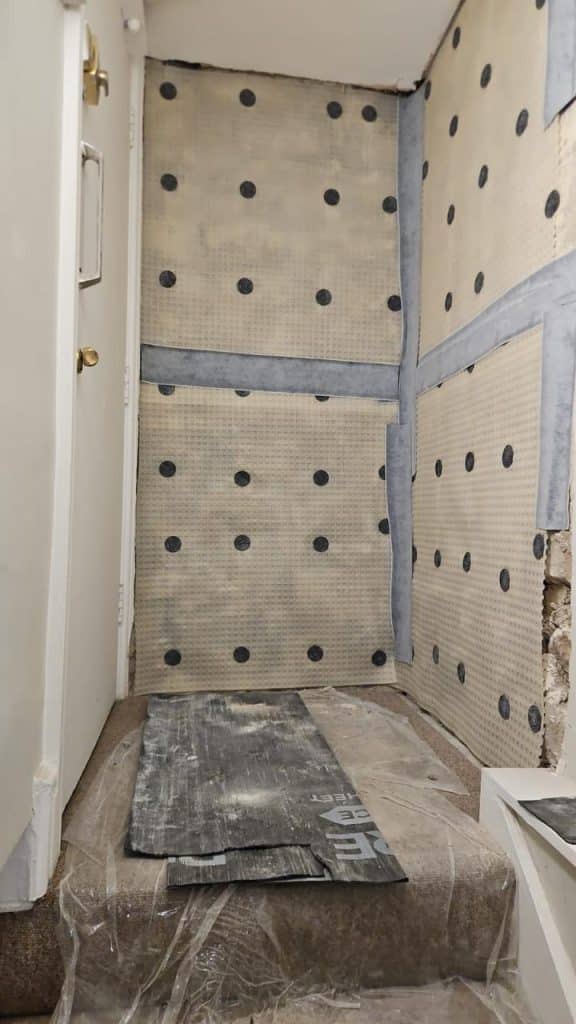
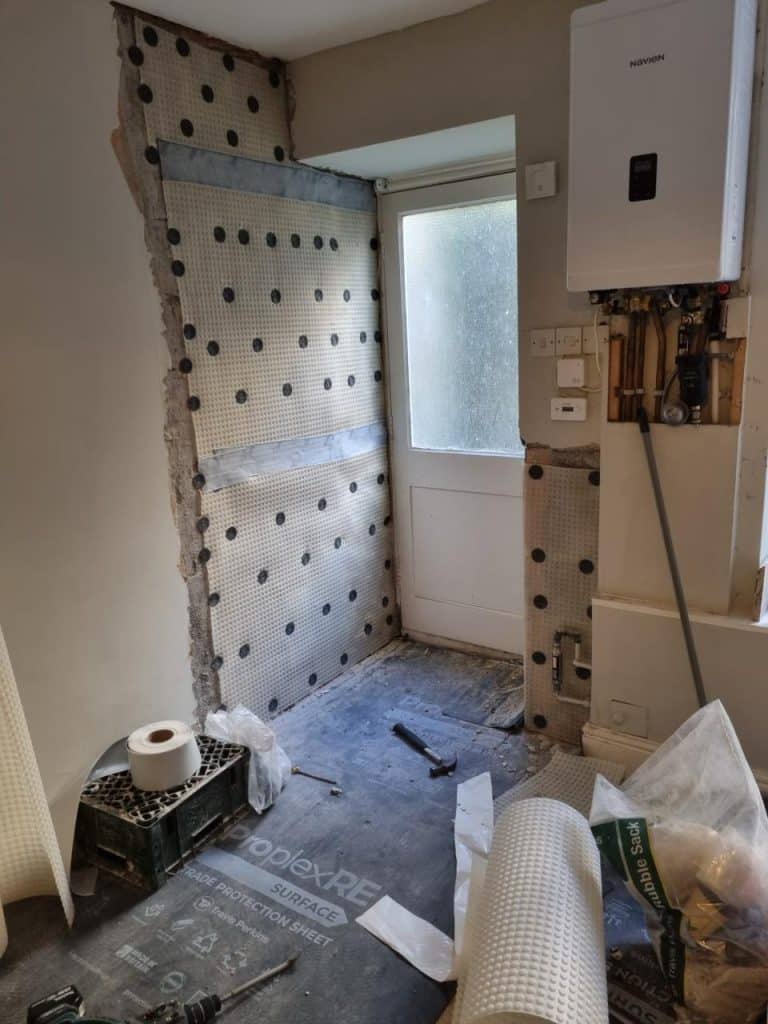
A specialist cavity drainage membrane system was then mechanically fixed across the specified wall areas.
The membrane provides a physical separation between the existing masonry and the new internal finish, helping to isolate residual moisture and hygroscopic salts within the original wall construction.
At ground level, a recessed channel was formed at the wall-to-floor junction. This allowed the membrane to be correctly returned and finished as part of the overall damp proofing specification.
The project photographs show the membrane system during installation, including the specialist fixings and sealed joints used to create the new internal treatment layer.
Replastering the Treated Walls
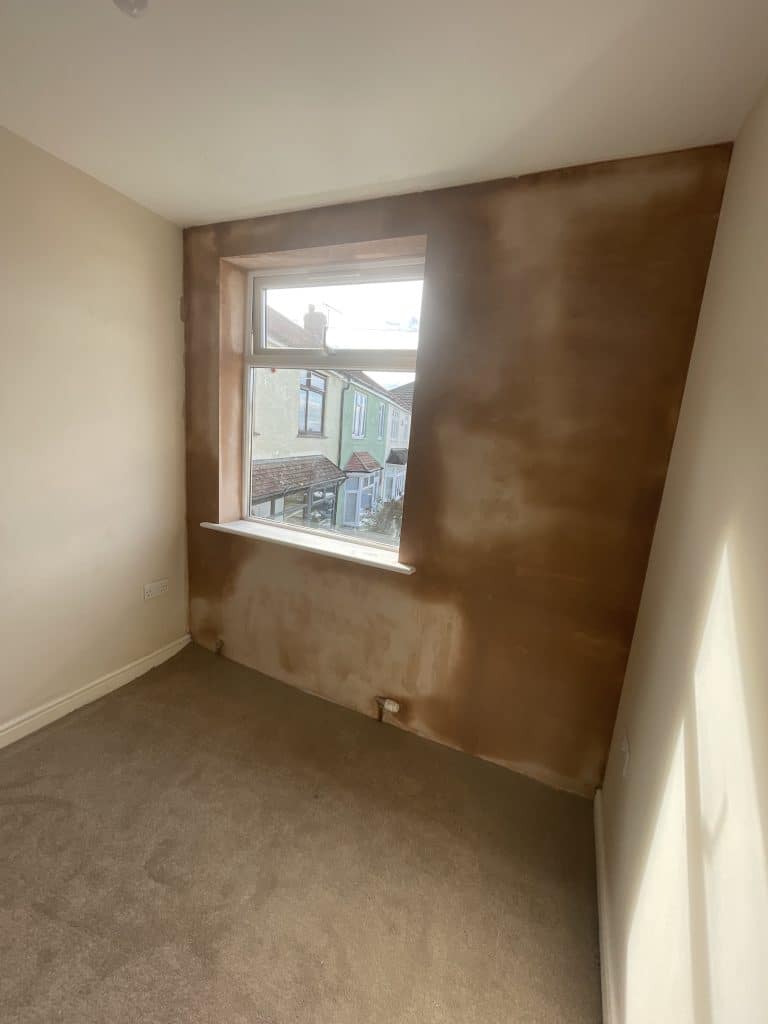
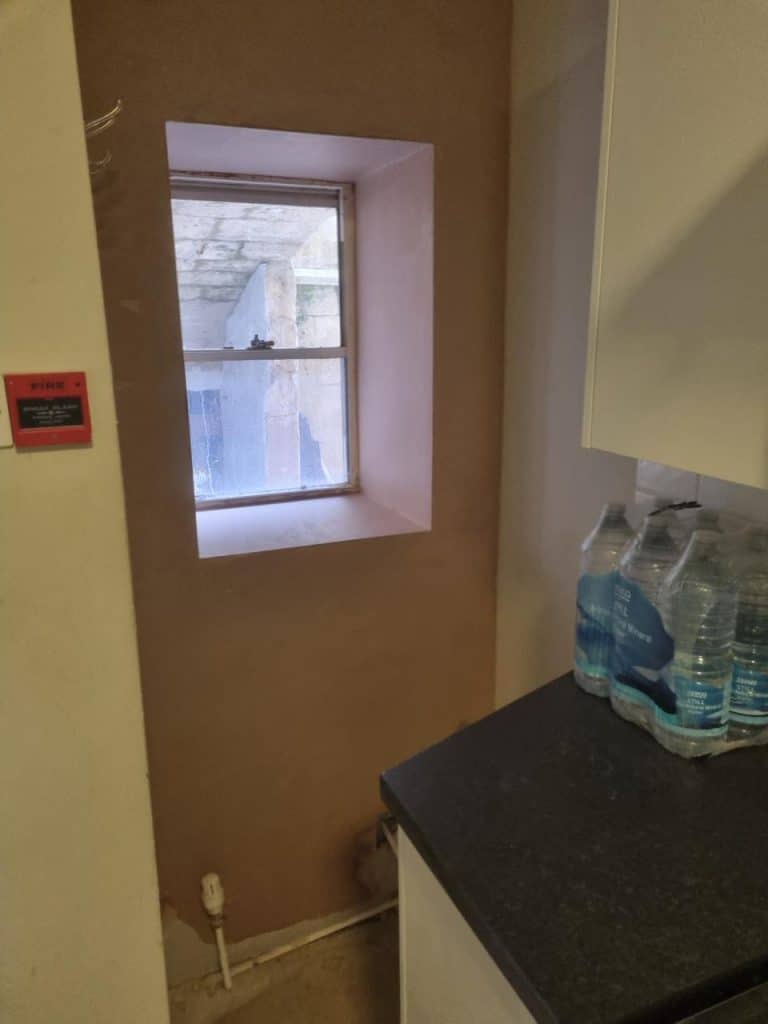
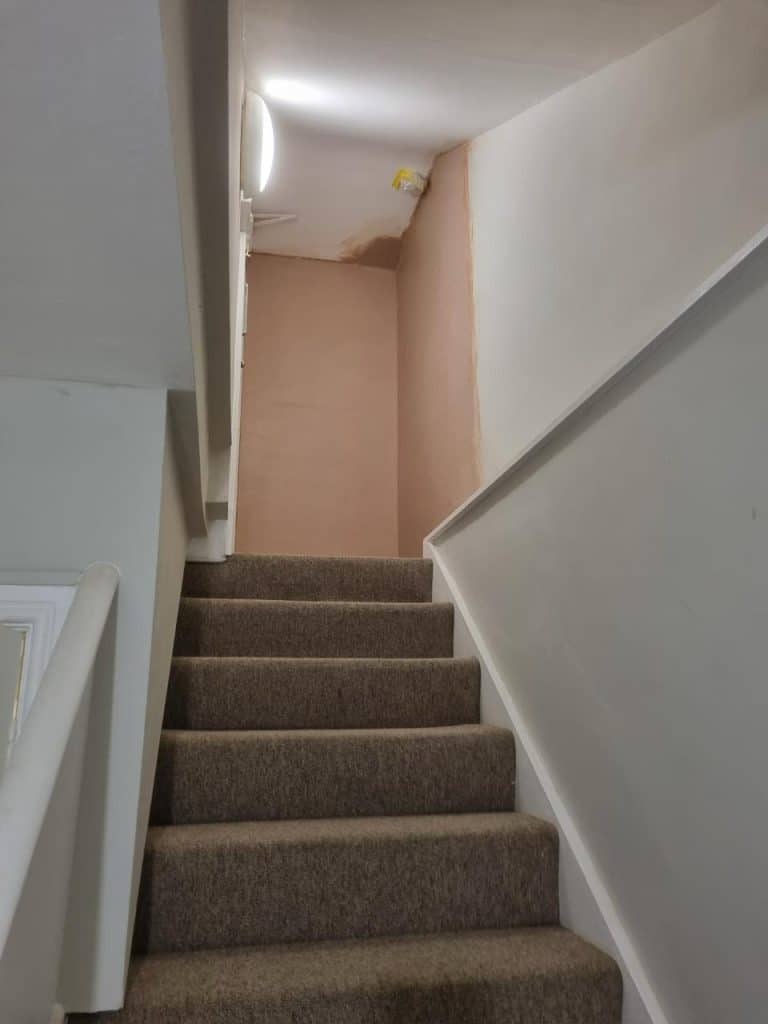
Once the damp proofing system had been completed, the treated wall areas were replastered to reinstate the internal surfaces.
The photographs show several stages of the project, from exposed and treated walls through to the reinstated internal finishes. The completed surfaces were left ready for final decoration.
Improving Bathroom Ventilation
Damp proofing formed the main part of the project, but controlling internal humidity was also considered as part of the wider moisture management strategy.
A new Vent-Axia mechanical extractor fan was supplied and installed within the bathroom to improve extraction and remove moisture-laden air more effectively.
Good ventilation is particularly important in bathrooms and other areas where significant amounts of water vapour are regularly produced. Improving extraction can help reduce condensation and prevent excess humidity contributing to future moisture-related problems.
Internal Damp Proofing Works Completed in Wembley
The complete remedial specification included:
- Removal of contaminated plaster from affected internal walls
- Exposure and preparation of the underlying masonry
- Installation of a new chemical damp proof course
- Specialist salt neutralising treatment to exposed masonry
- Installation of a cavity drainage membrane system
- Formation of the required recessed wall-to-floor channel
- Mechanical fixing and sealing of the membrane system
- Replastering of the treated wall areas
- Installation of a Vent-Axia mechanical bathroom extractor fan
- Final preparation ready for subsequent decoration
25-Year Damp Proofing Guarantee
The completed internal damp proofing system is covered by the Nordic Damp Proofing 25-year guarantee, subject to the specified system being completed and our standard guarantee conditions.
Our approach is focused on identifying the source of a damp problem, carrying out the appropriate remedial treatment and providing a long-term solution rather than simply covering over visible symptoms.
Damp Proofing in Wembley & West London
Nordic Damp Proofing provides specialist damp proofing services in Wembley and throughout West London.
We investigate and treat a wide range of property moisture problems, including rising damp, penetrating damp, condensation, mould, salt contamination and moisture affecting below-ground or retaining walls.
Our services include chemical damp proof courses, cavity drainage membrane systems, internal waterproofing, plaster removal and reinstatement, ventilation improvements and other specialist remedial treatments.
If you have noticed damp patches, deteriorating plaster, salt deposits, mould growth or other signs of excess moisture within your property, book a damp survey with Nordic Damp Proofing to arrange a professional assessment.