Nordic Damp Proofing recently completed internal damp repair and prevention works at a property in Hemel Hempstead, treating approximately 4.1 linear metres of affected wall.
The work focused on areas showing signs of damp deterioration, including the walls within a small ground-floor WC. Following assessment of the affected areas, a complete remedial system was carried out involving the removal of damaged plaster, installation of a new chemical damp proof course, application of a damp proof membrane and professional replastering.
The aim was not simply to cover the visible damage, but to provide a long-term solution designed to prevent rising moisture and residual salts within the masonry from affecting the new internal finish.
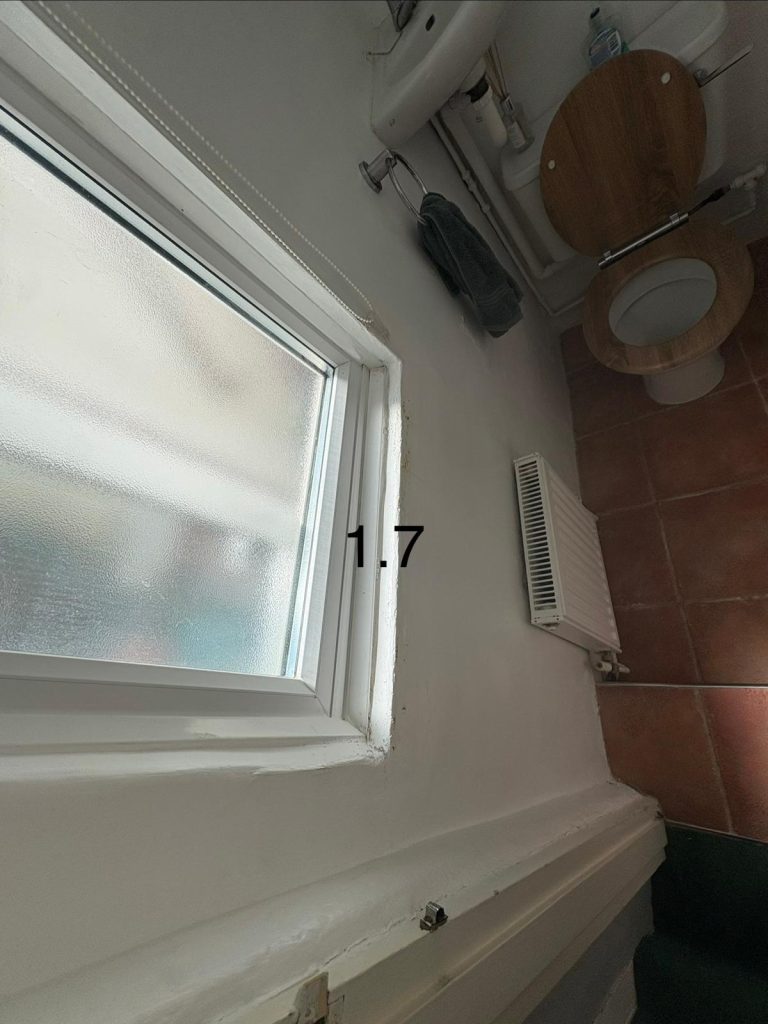
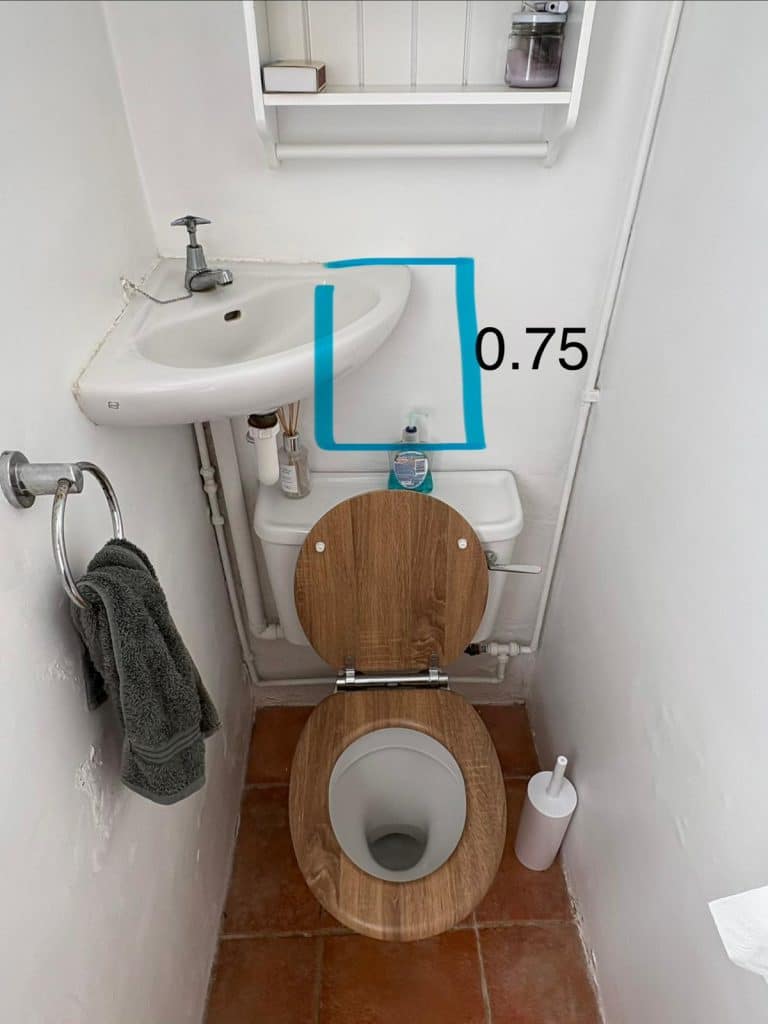
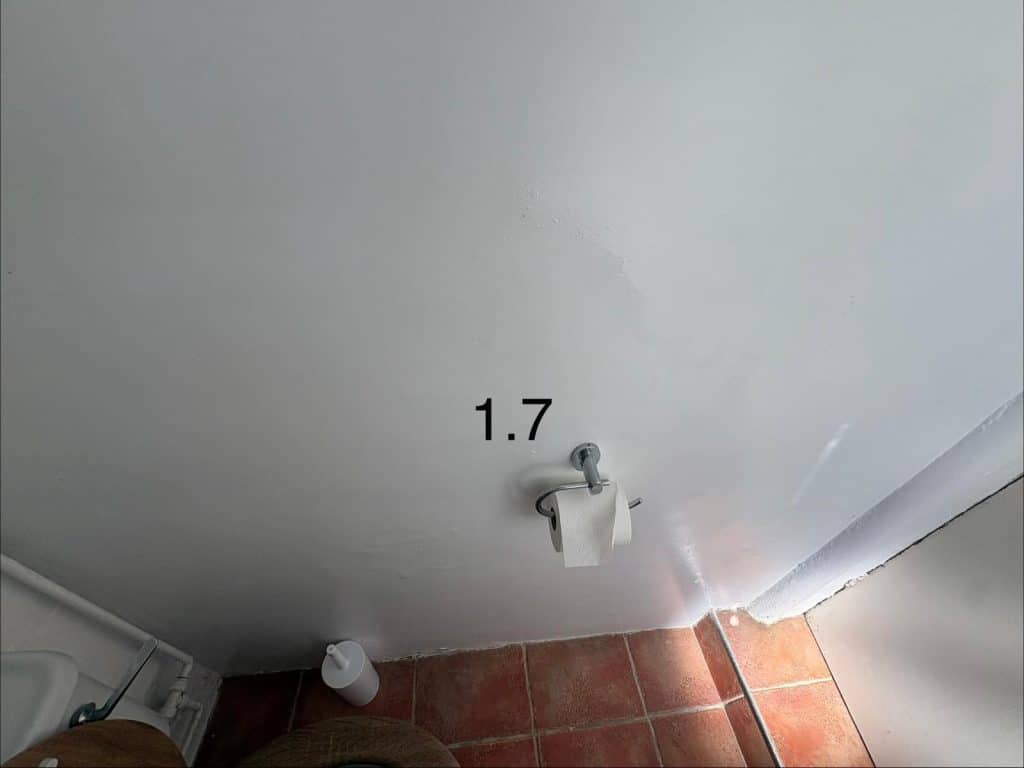
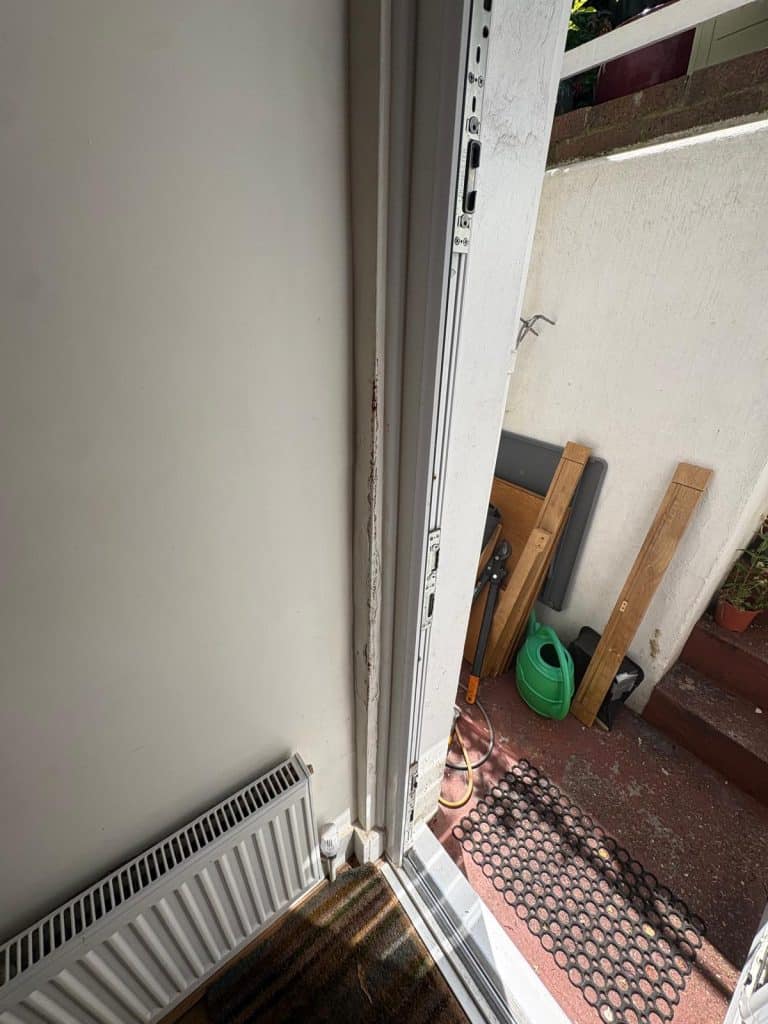
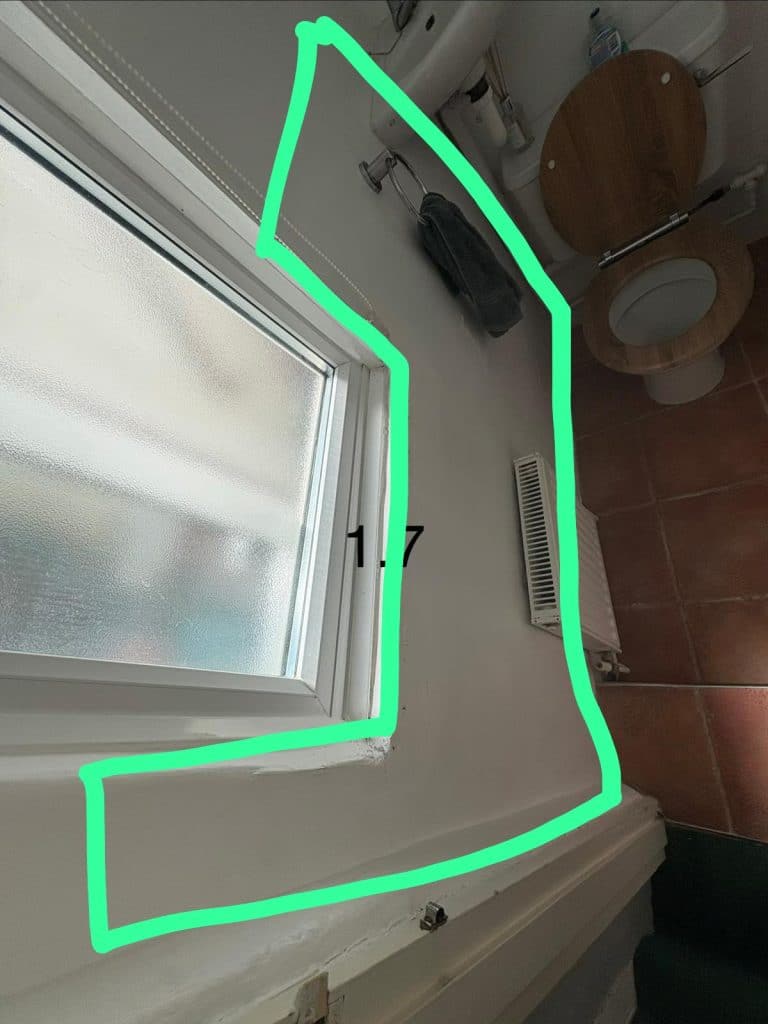
Identifying the Damp-Affected Areas
Before beginning the remedial work, the affected sections of wall were identified so that treatment could be limited to the areas where it was required.
Visible deterioration could be seen around sections of the wall and window area, with the lower parts of the walls requiring particular attention.
Problems like these can be associated with moisture travelling through masonry and contaminating internal plaster. Where rising moisture is suspected, a professional damp survey can help establish the extent of the problem and determine the appropriate remedial specification.
Removal of Damp-Affected Plaster
The first stage of the project involved carefully removing the damp-affected plaster from the identified wall areas.
Removing contaminated plaster is an important part of many damp-proofing projects because moisture and hygroscopic salts can remain within existing wall finishes even after the original source of moisture has been treated.
The affected finishes were removed to expose the underlying masonry and provide suitable access for the new damp treatment system.
This also allowed the walls to be correctly prepared before the installation of the new damp proof course and membrane system.
Installing a New Chemical Damp Proof Course
Once the affected areas had been prepared, a high-performance chemical damp proof course was injected into the mortar bed at the appropriate level.
A chemical damp proof course is designed to create a new moisture-resistant barrier within the wall, helping to inhibit moisture from rising through the masonry by capillary action.
This forms an important part of our rising damp treatment where investigation identifies that an existing damp proof course is absent, ineffective or has otherwise failed to provide adequate protection.
Applying a Damp Proof Membrane
Installing the new damp proof course addressed moisture travelling upwards through the masonry, but the internal wall finish also needed protection from residual moisture and salts already present within the wall.
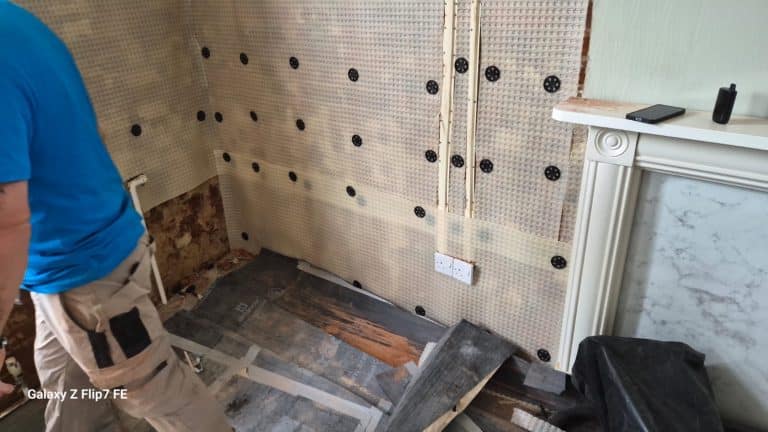
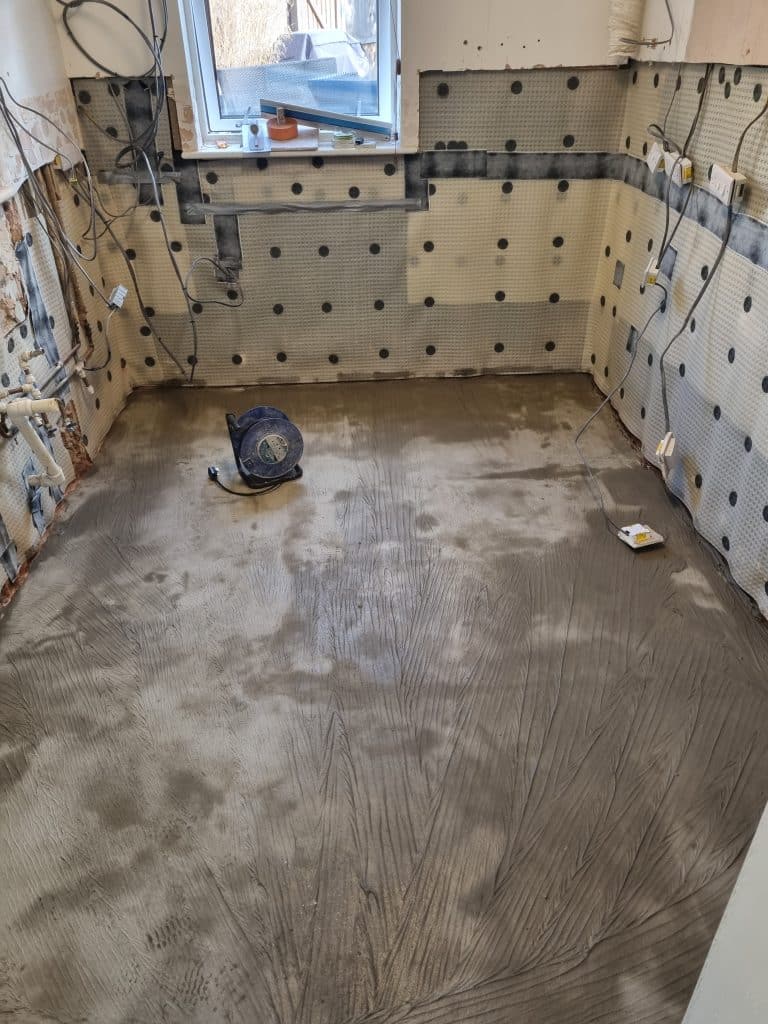
A damp proof membrane was therefore applied to the prepared wall surfaces.
The membrane provides a physical separation between the underlying masonry and the new internal finish. This helps prevent residual moisture and hygroscopic salts within the original wall from migrating through and damaging the newly plastered surface.
Using the appropriate combination of damp treatment and internal protection is particularly important when dealing with walls that have experienced moisture problems over an extended period.
Replastering the Treated Walls
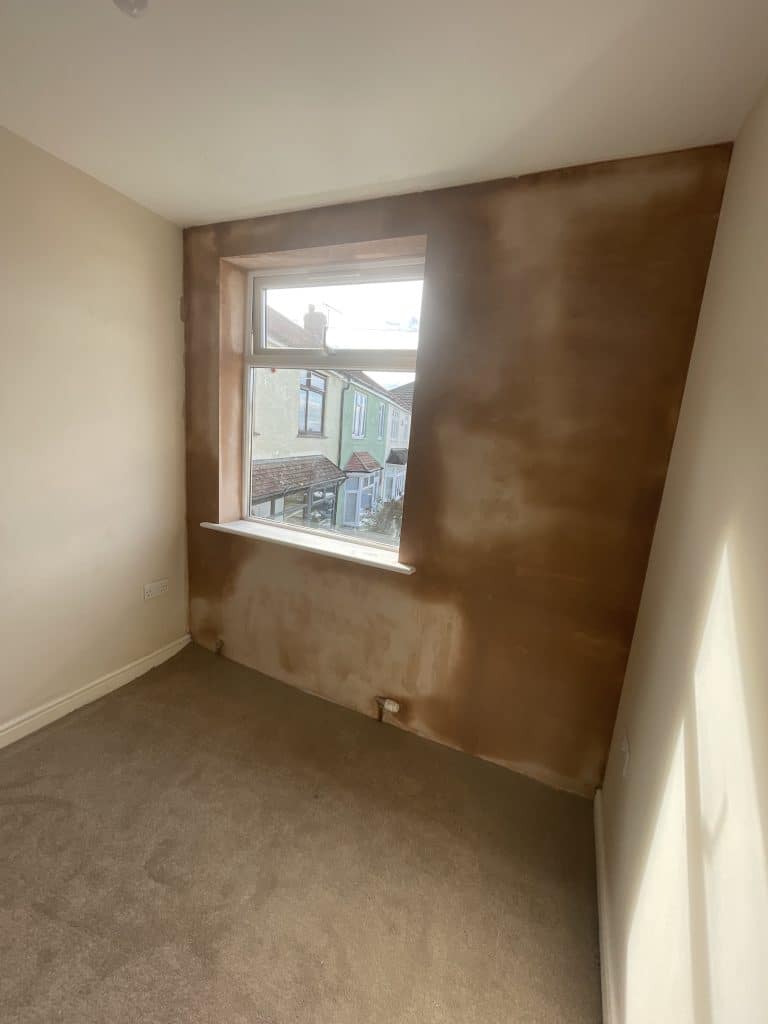
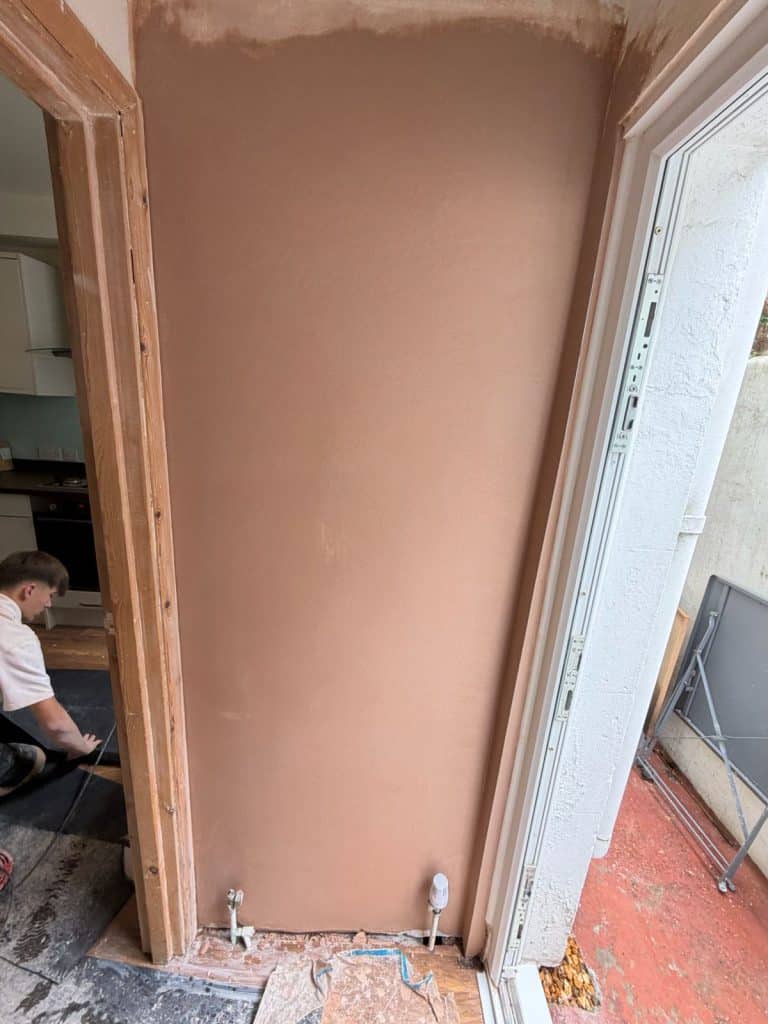
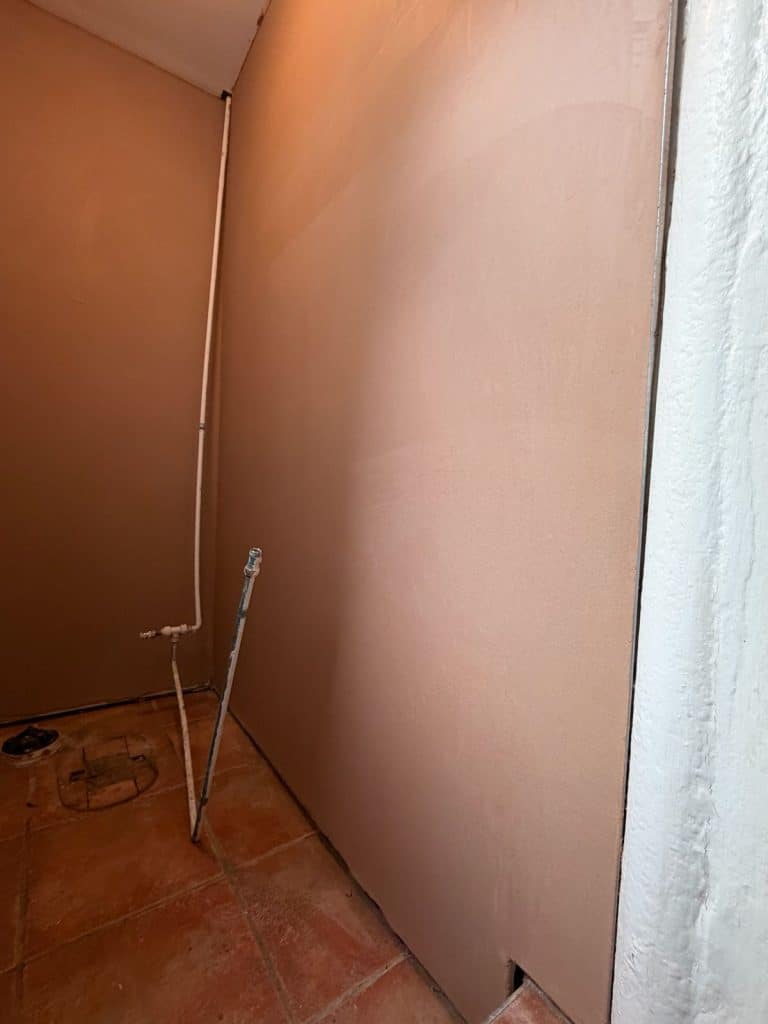
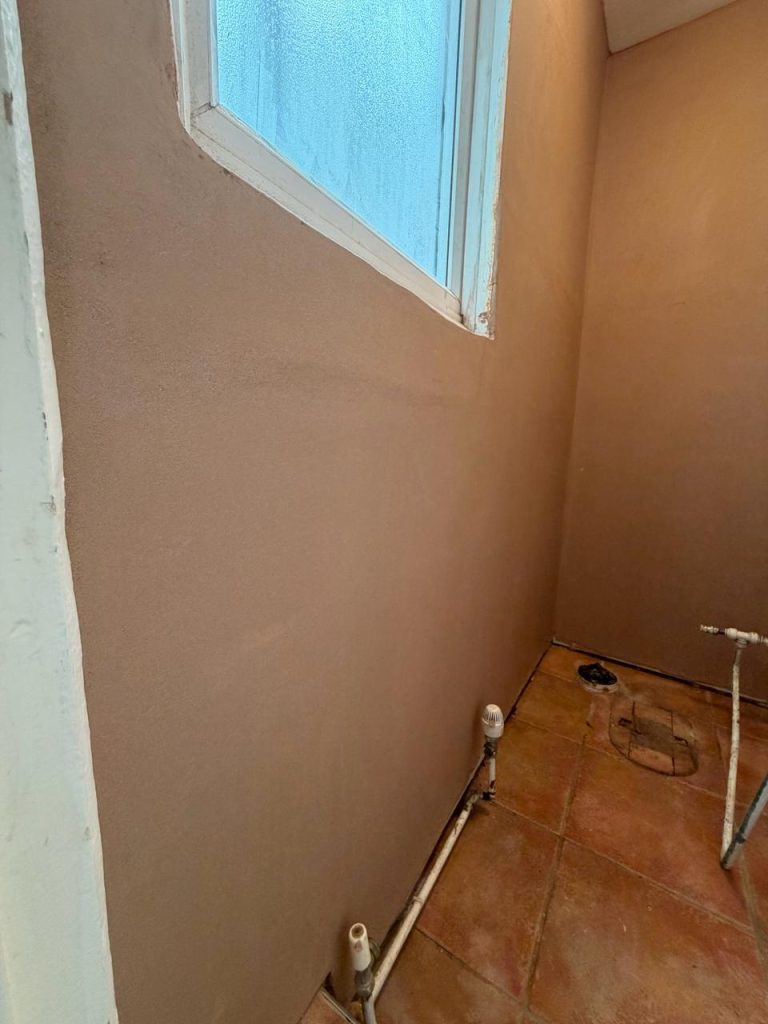
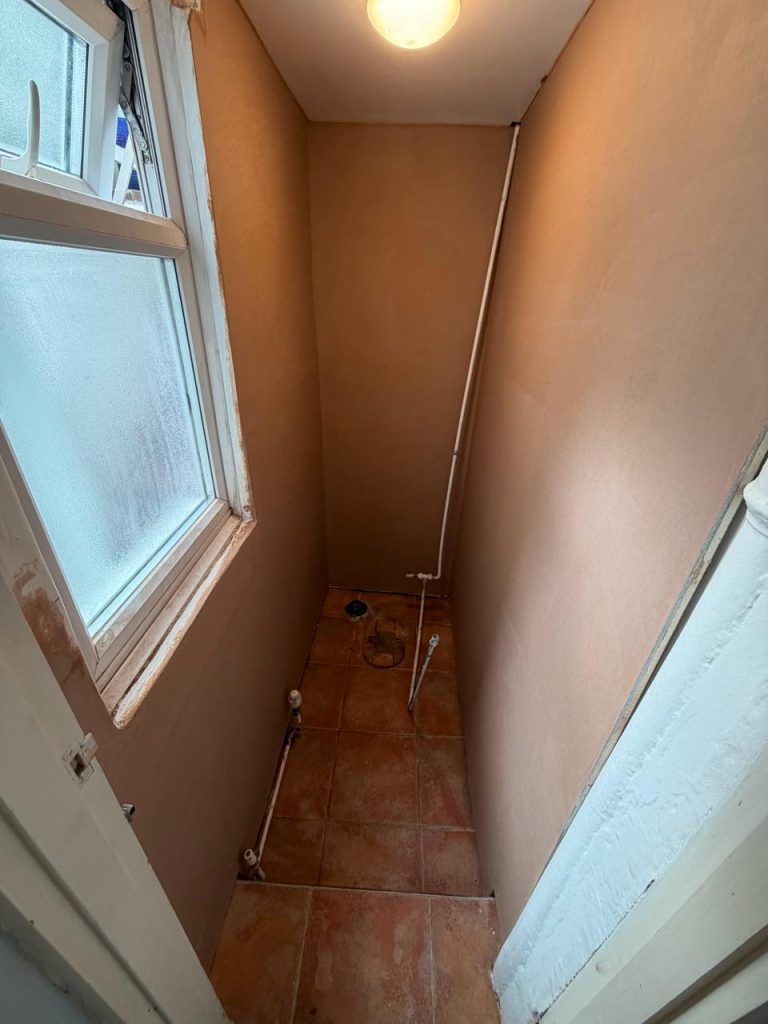
Following completion of the damp proofing system, the affected areas were professionally replastered.
The photographs from the project show the walls after the remedial work, with a clean and consistent new plaster finish applied throughout the treated sections.
Replastering forms the final stage of many damp repair projects and restores the internal walls after the underlying moisture problem has been addressed. Nordic Damp Proofing provides complete wall repair and re-plastering as part of our wider damp treatment services.
Once the new plaster has dried sufficiently, the walls can be prepared for the client’s final decorative finish.
A Complete Damp Repair System
Rather than carrying out an isolated repair to the visible damaged plaster, this project used a multi-stage approach designed to address both the source of the rising moisture and its effects on the internal wall finishes.
The approximately 4.1 linear metres of remedial work included:
- Removal of damp-affected and contaminated plaster
- Preparation of the exposed wall surfaces
- Injection of a new chemical damp proof course
- Installation of a damp proof membrane
- Isolation of the new finish from residual moisture and hygroscopic salts
- Replastering of the treated wall areas
- Preparation of the walls for final decoration once sufficiently dry
Completing these stages as part of one remedial specification helps reduce the risk of the same moisture and salt contamination simply appearing through the newly finished walls.
Why Hygroscopic Salts Matter When Treating Rising Damp
One of the reasons damp-damaged plaster may need to be removed is the presence of hygroscopic salts.
As groundwater moves through masonry, dissolved salts can be transported into the wall and its plaster finishes. Once deposited, certain salts can attract moisture from the surrounding air.
This means that even after the movement of rising moisture has been controlled, contaminated plaster can continue to show signs of dampness.
For this Hemel Hempstead project, the damp proof membrane was used to isolate the replacement plaster finish from residual moisture and hygroscopic salts remaining within the original masonry.
Before and After the Damp Repairs
The difference between the initial condition and the completed remedial work can be clearly seen in the project photographs.
Before work began, the affected walls showed areas requiring damp treatment and repair. The wall finishes were subsequently removed from the specified areas so that the underlying masonry could be treated correctly.
After installation of the chemical damp proof course and damp proof membrane, the walls were replastered to leave a smooth new surface ready for decoration following the appropriate drying period.
Rising Damp Treatment in Hemel Hempstead
Nordic Damp Proofing provides professional damp proofing in Hemel Hempstead and across Hertfordshire, helping homeowners, landlords and property professionals diagnose and treat moisture problems within their buildings.
Our services include rising damp treatment, damp proof course installation, damp proof membranes, plaster removal and replacement, wall repairs and wider damp investigation.
If you have noticed deteriorating plaster, damp patches, salt deposits, peeling decoration or other signs of moisture within your property, it is important to establish the cause before deciding on the appropriate repair.
You can learn more about our local services on our Hemel Hempstead damp proofing page or book a damp survey with Nordic Damp Proofing to arrange an assessment of your property.