Nordic Damp Proofing recently carried out a detailed damp inspection followed by remedial works at a ground-floor flat in Hemel Hempstead.
The property was experiencing moisture problems in several different areas, including around the window bay, boiler cupboard and chimney breast. Our inspection established that there was not one single cause. Instead, the flat was being affected by a combination of rising damp, penetrating damp and hygroscopic salt contamination.
This project demonstrates why proper diagnosis is such an important part of professional damp proofing. Treating damaged plaster alone would not have addressed the different sources of moisture affecting the property.
Starting With a Full Damp and Moisture Survey
Before specifying remedial work, our team completed a comprehensive damp survey covering all accessible internal areas of the flat, together with a visual assessment of the exterior wherever access allowed.
As a ground-floor property within a larger residential building, the flat can potentially be exposed to moisture from ground-bearing elements as well as defects within the external building envelope.
The assessment included:
- Moisture meter readings across affected walls
- Thermal imaging
- Humidity testing
- Condensation assessment
- Visual inspection of internal wall finishes
- Visual assessment of accessible external elevations
- Inspection of window surrounds, render and other potential moisture entry points
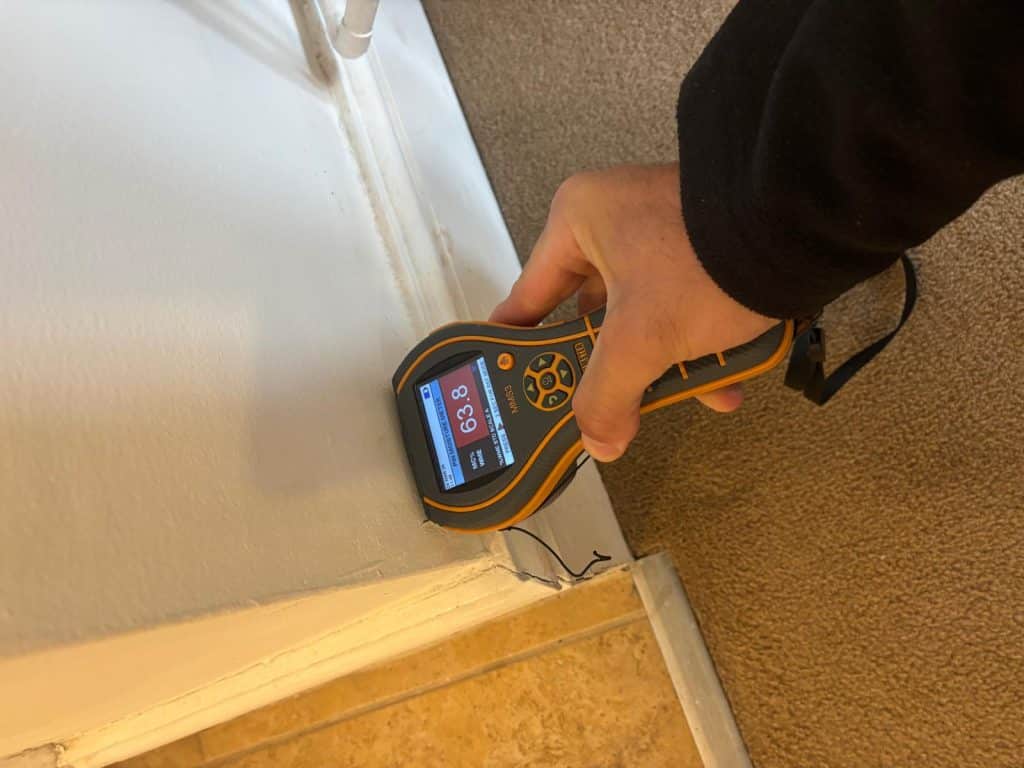
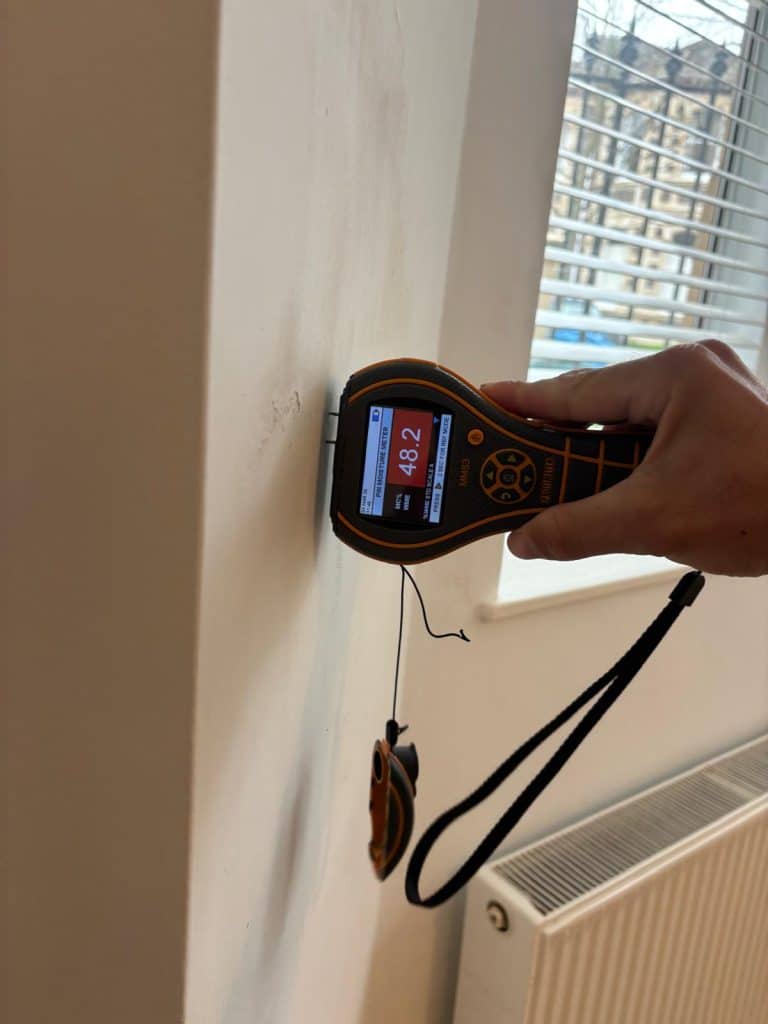
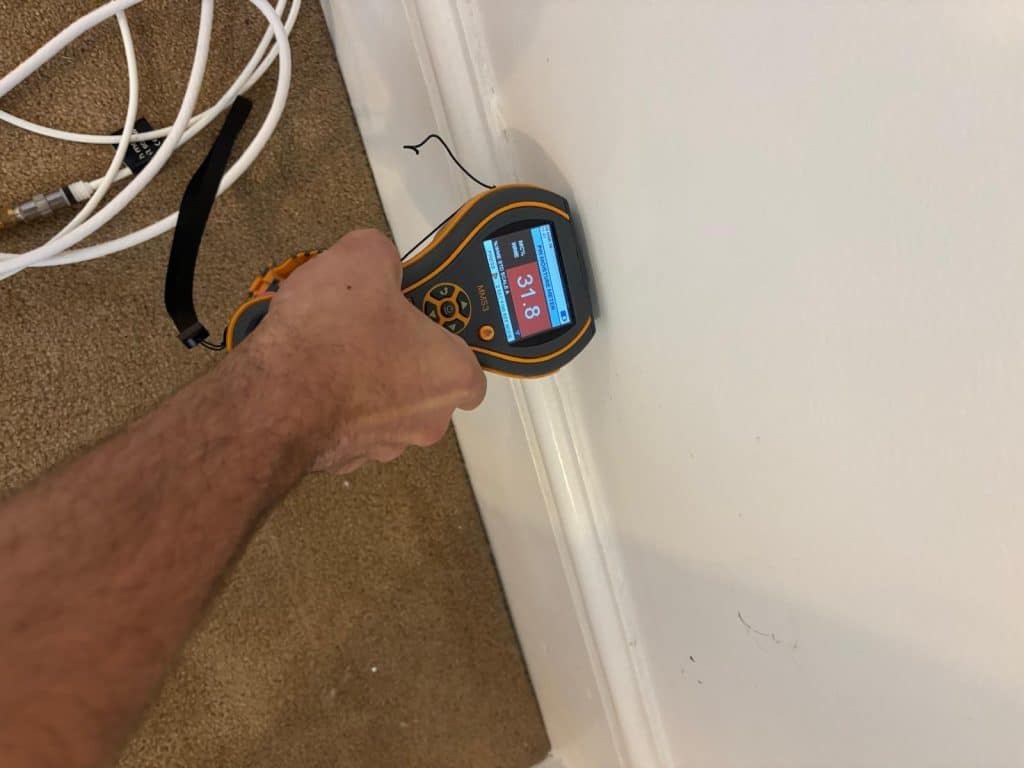
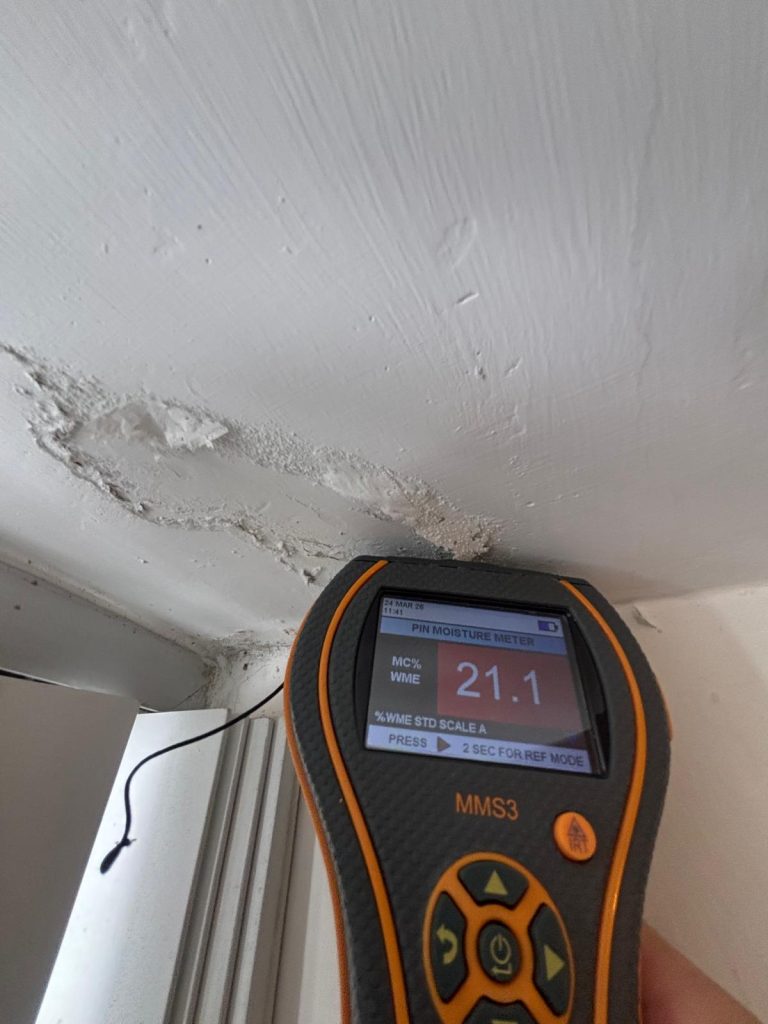
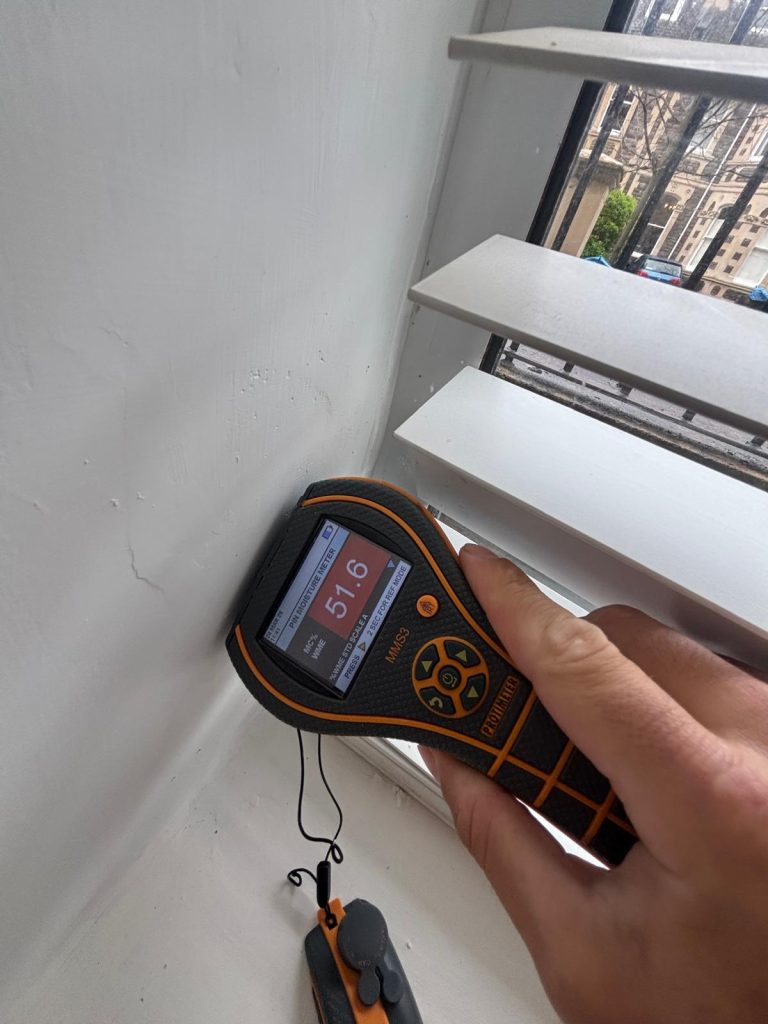
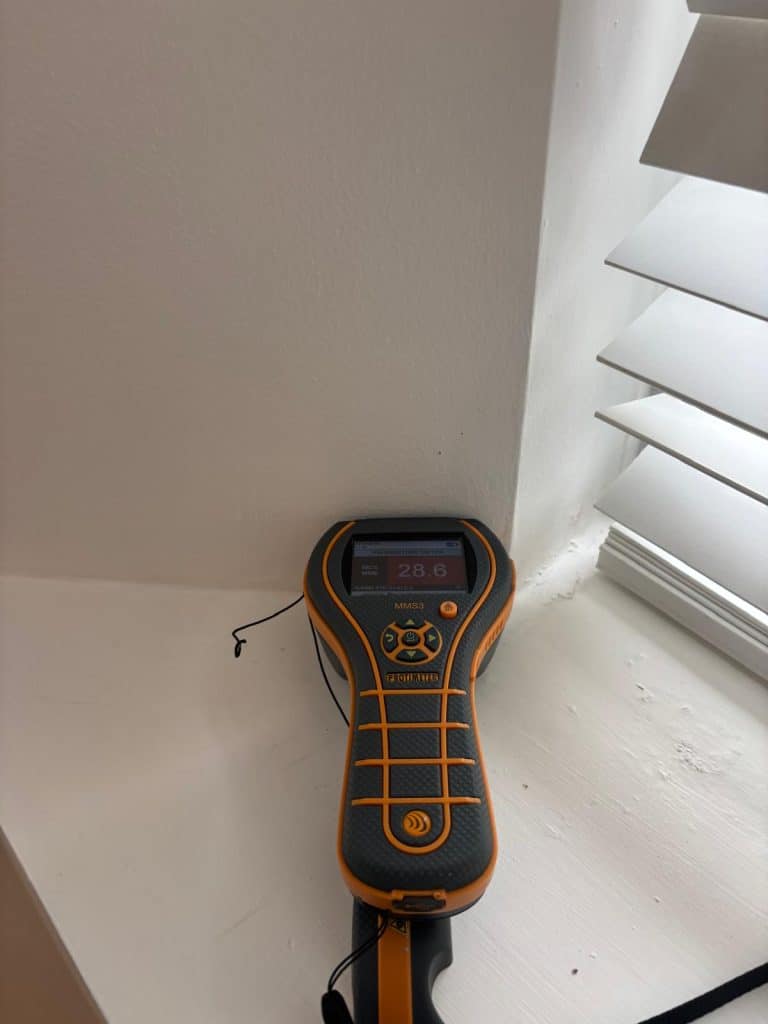
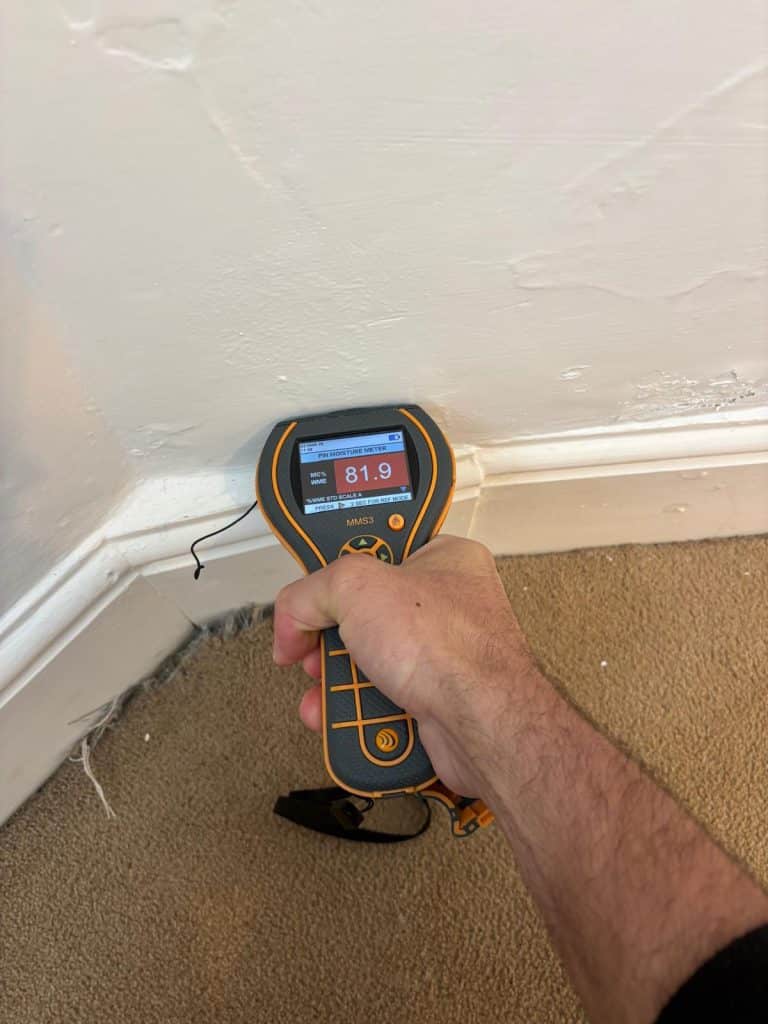
Elevated moisture readings were recorded in multiple locations. Some of the readings shown during our inspection included 31.8%, 48.2%, 51.6%, 63.8% and, in one particularly affected low-level area, 81.9% WME.
Importantly, moisture meter readings are considered alongside the location of the moisture, condition of the building materials and wider inspection findings. They are not used on their own to diagnose the cause of damp.
Rising Damp and Salt Contamination
At low level, the moisture distribution and deterioration were consistent with rising damp and associated salt contamination.
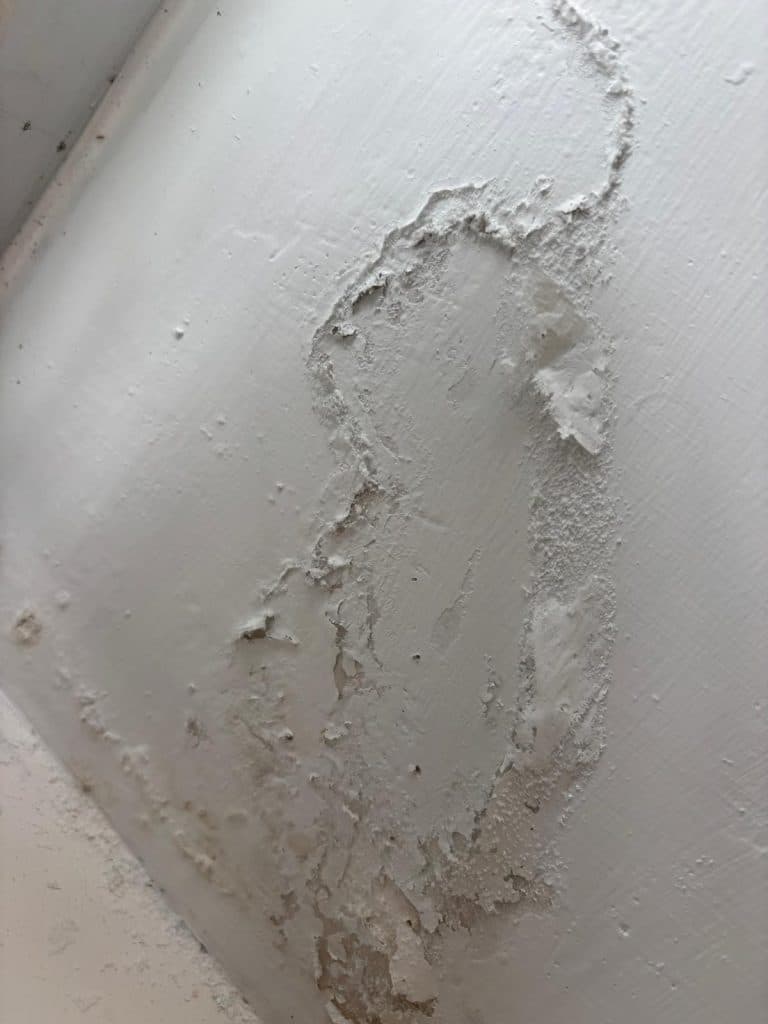
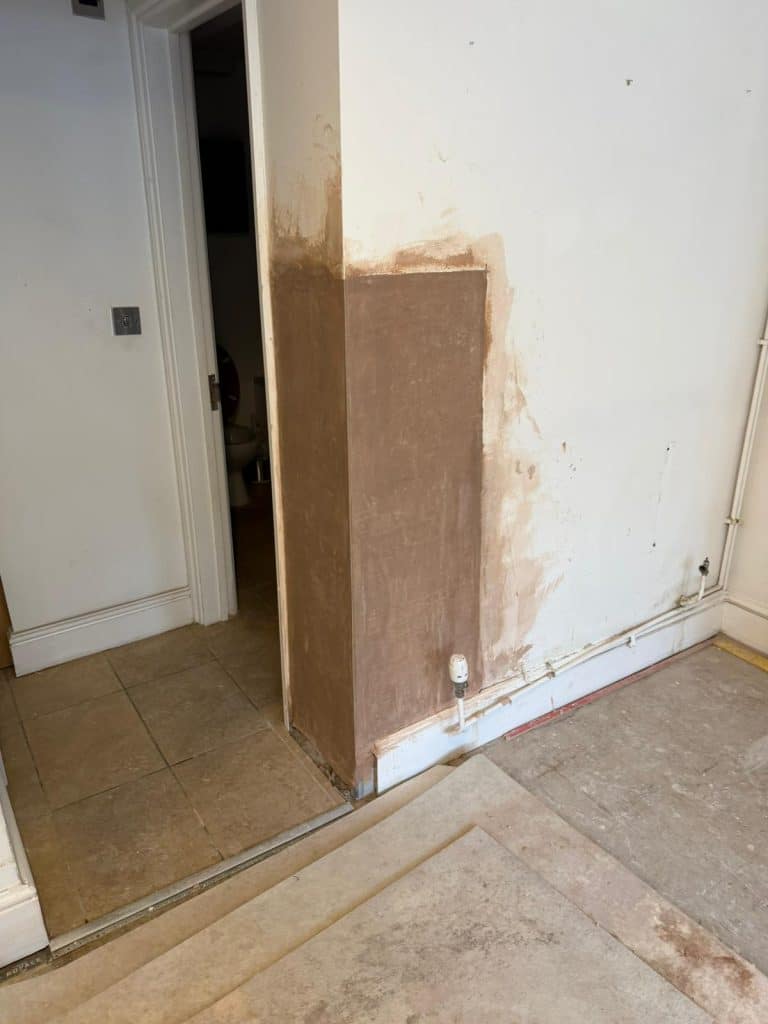
Visible deterioration to the internal finishes could be seen in several locations, including bubbling, damaged and deteriorating plaster close to floor level.
Where moisture has repeatedly moved through masonry, salts can accumulate within the wall and plaster. Some of these salts are hygroscopic, meaning they can attract moisture from the surrounding atmosphere and retain it within affected finishes.
This is particularly important when planning damp repairs because simply allowing a wall to dry and applying new decoration may not be enough. Salt-contaminated finishes may need to be removed or suitably isolated as part of the remedial system.
Penetrating Damp Around the Window Bay
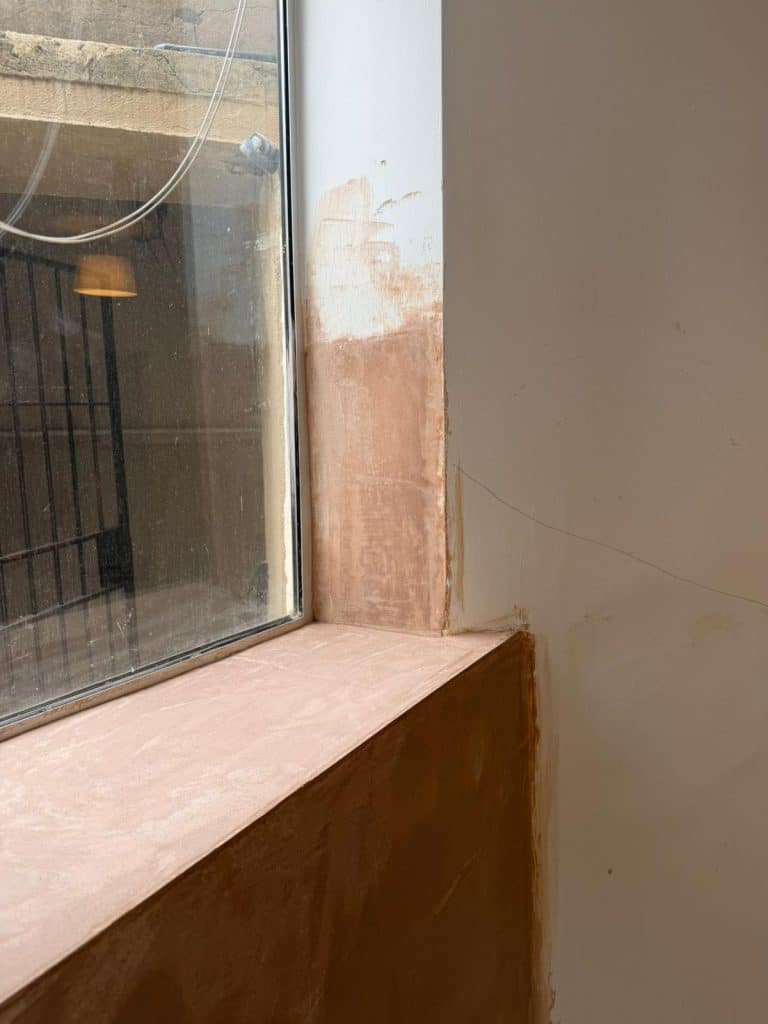
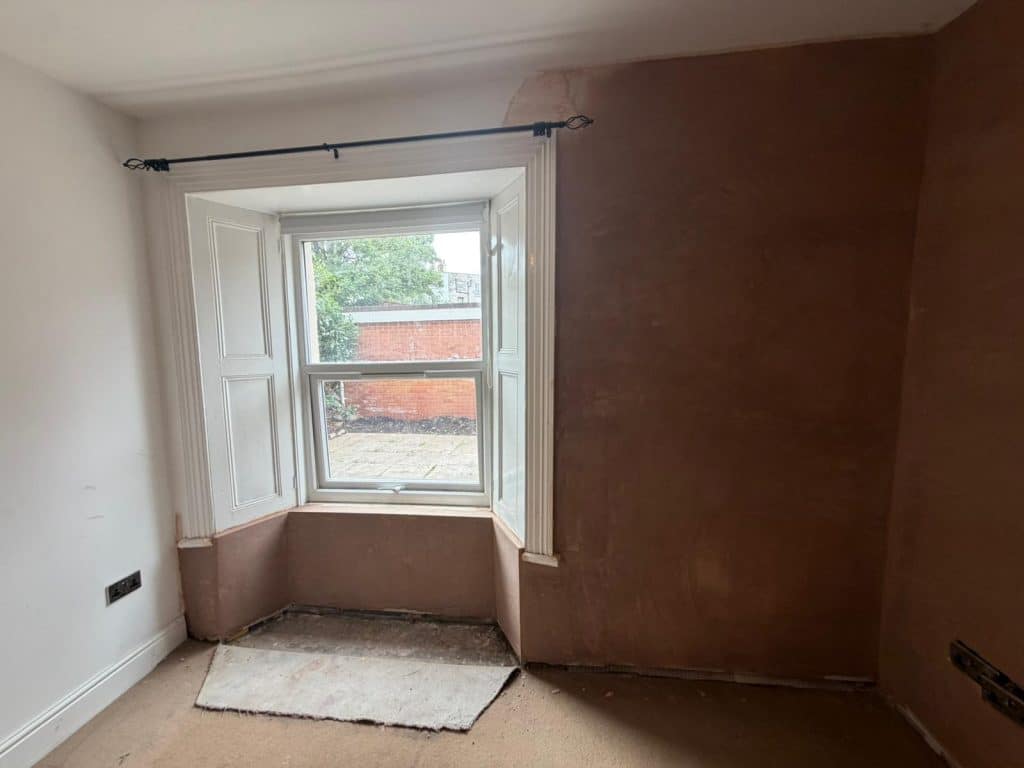
High moisture readings were also recorded around the window bay, where the pattern was consistent with penetrating moisture rather than moisture rising solely from ground level.
The external inspection helped identify several potential sources.
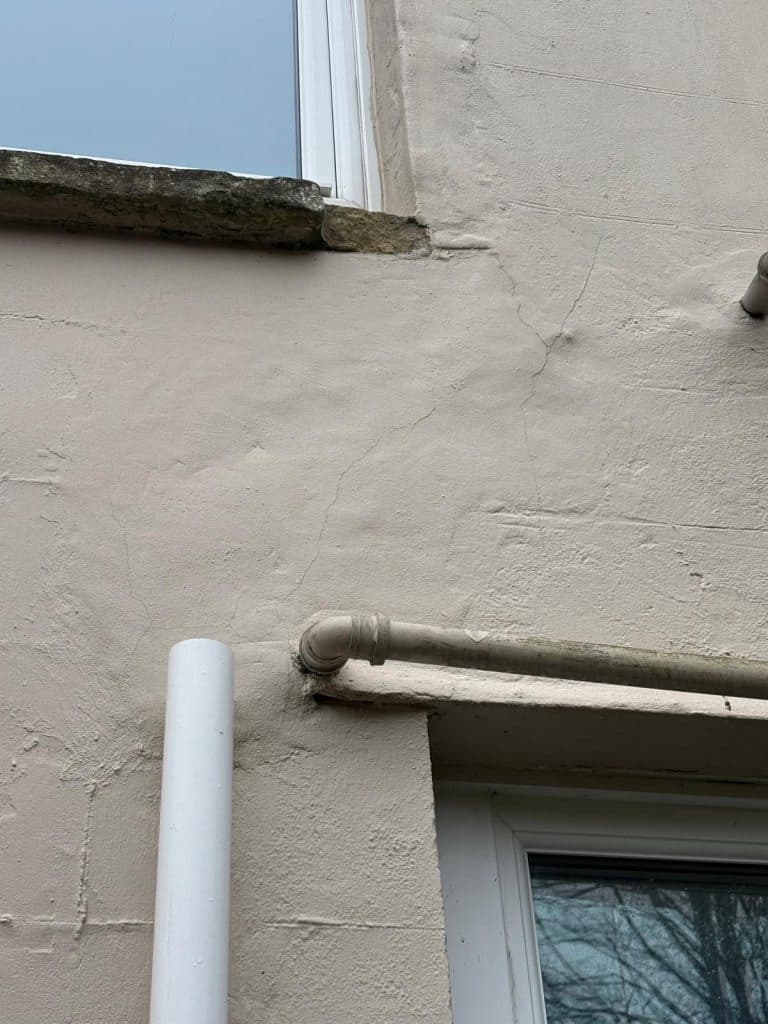
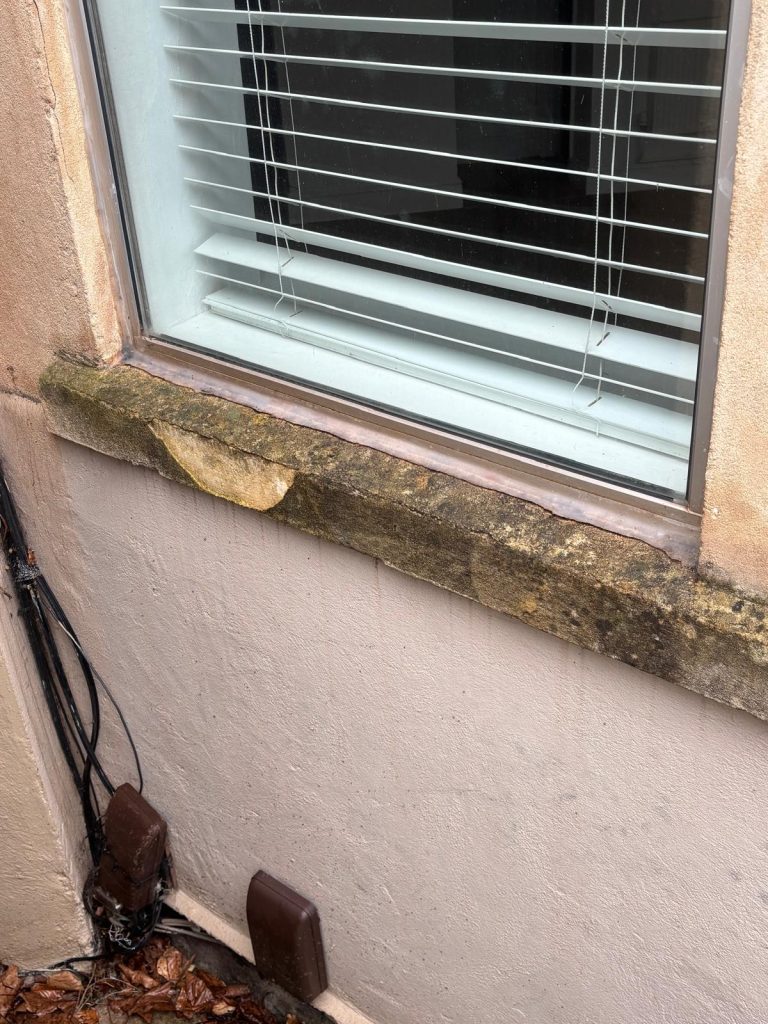
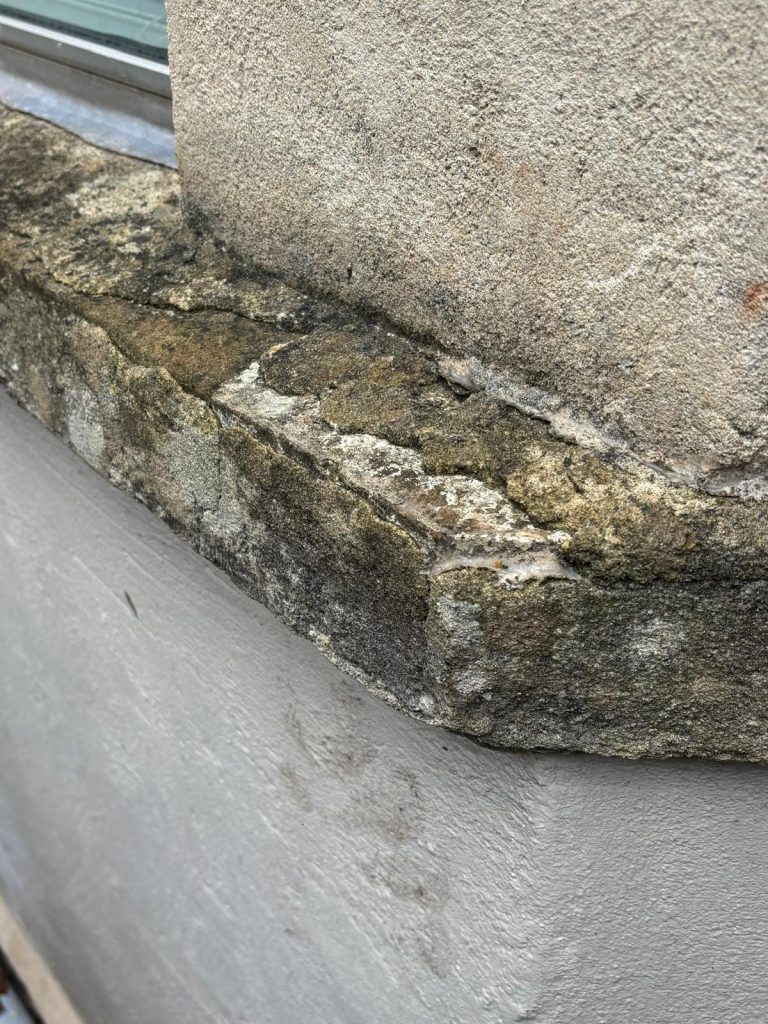
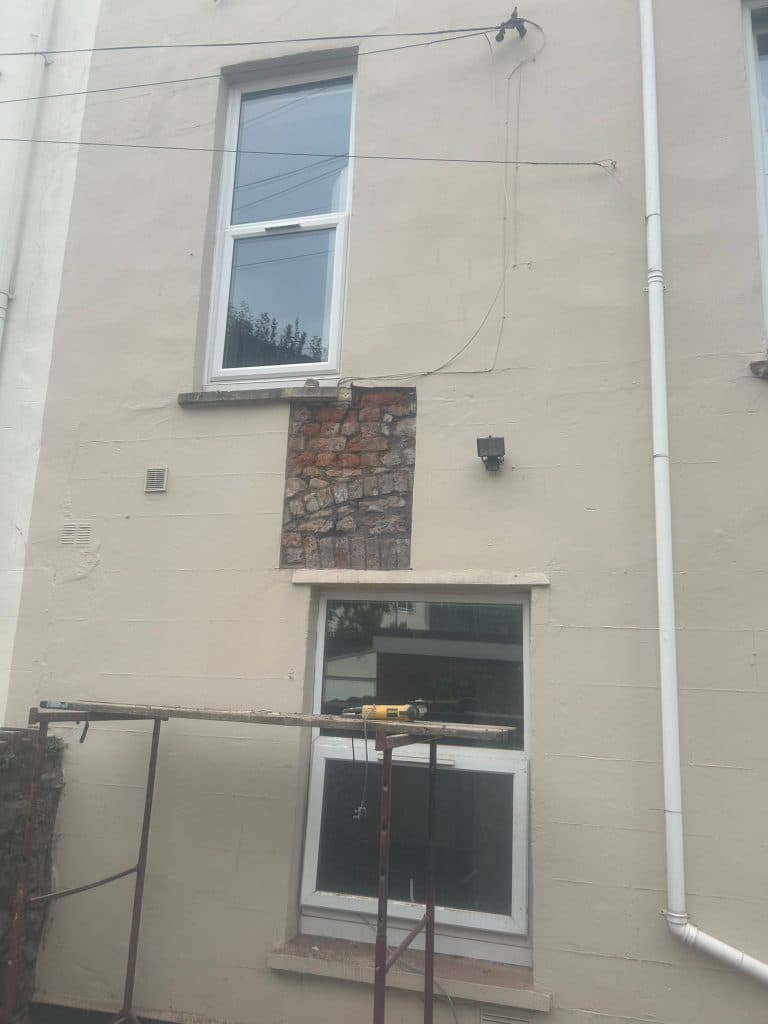
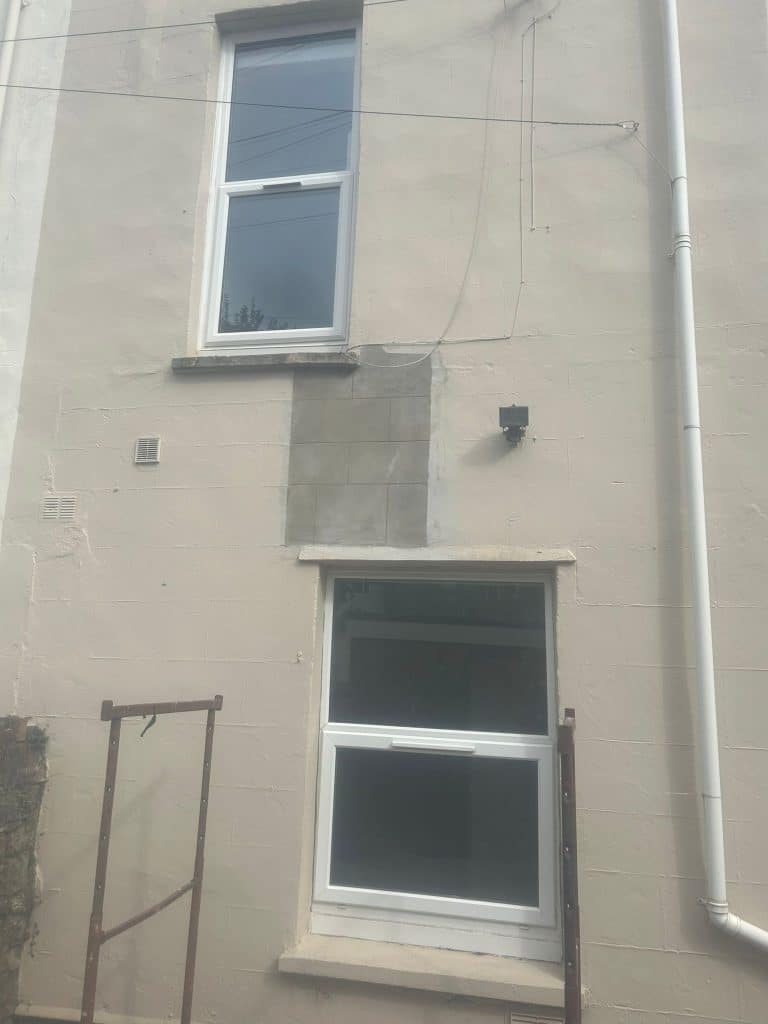
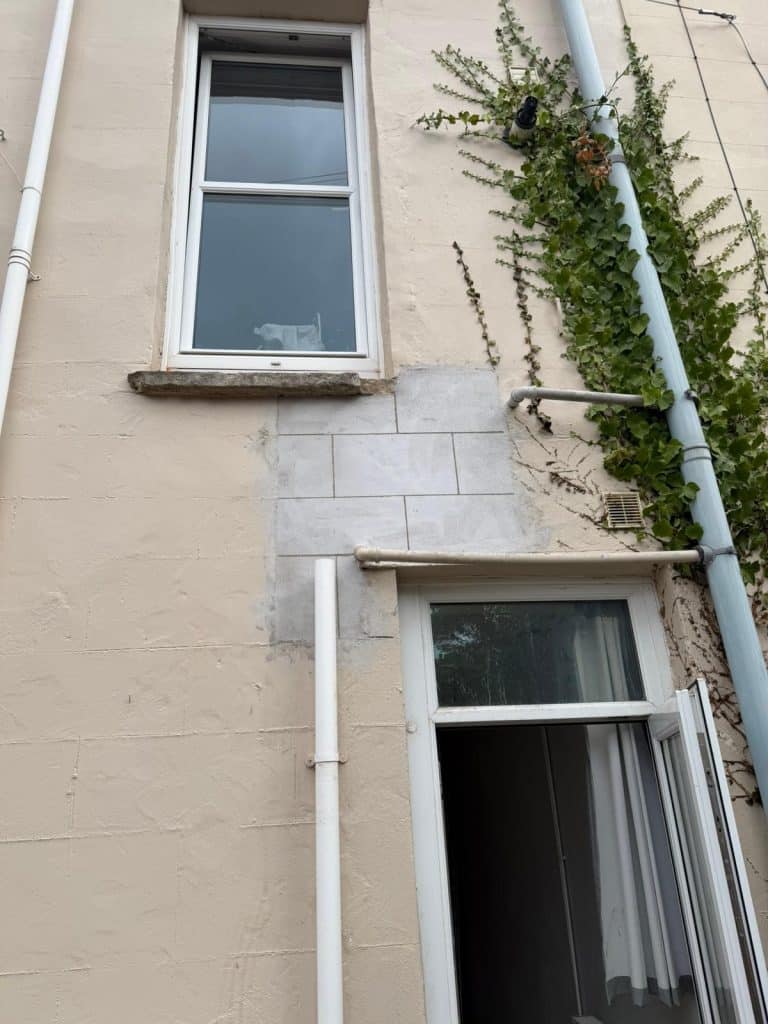
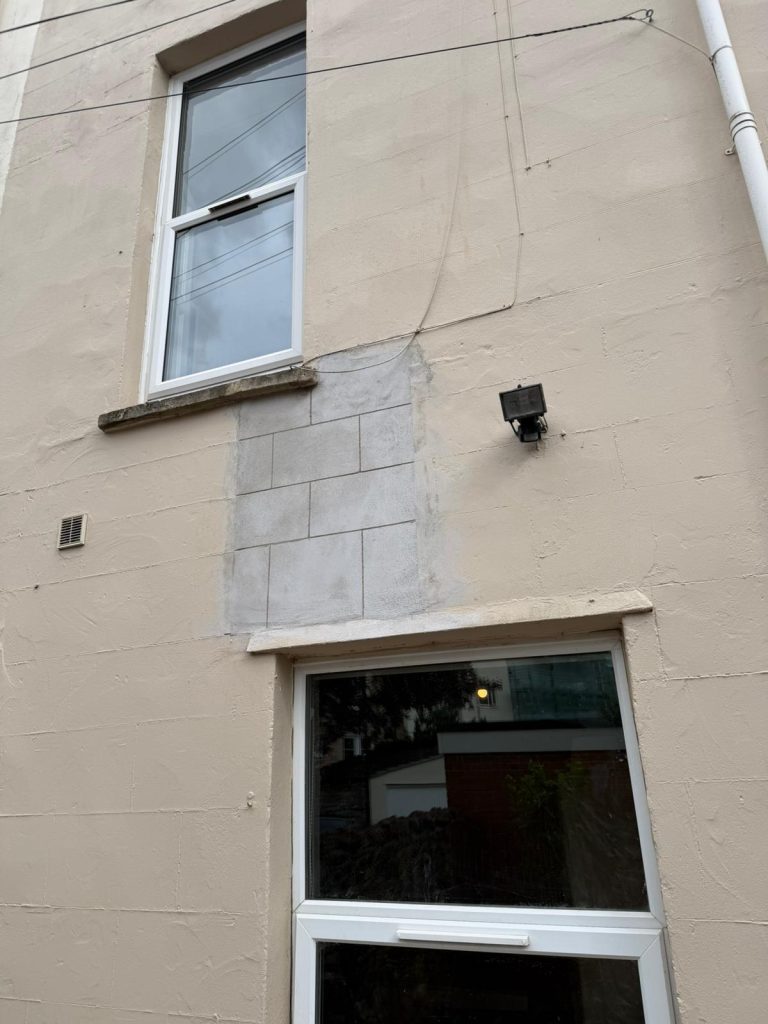
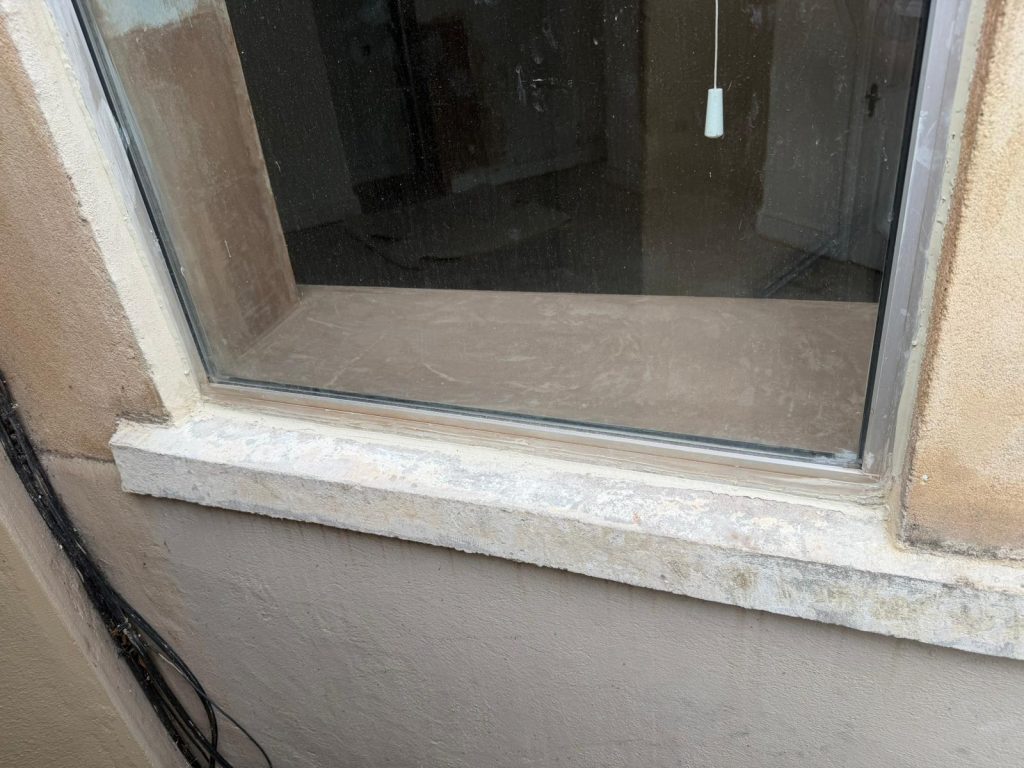
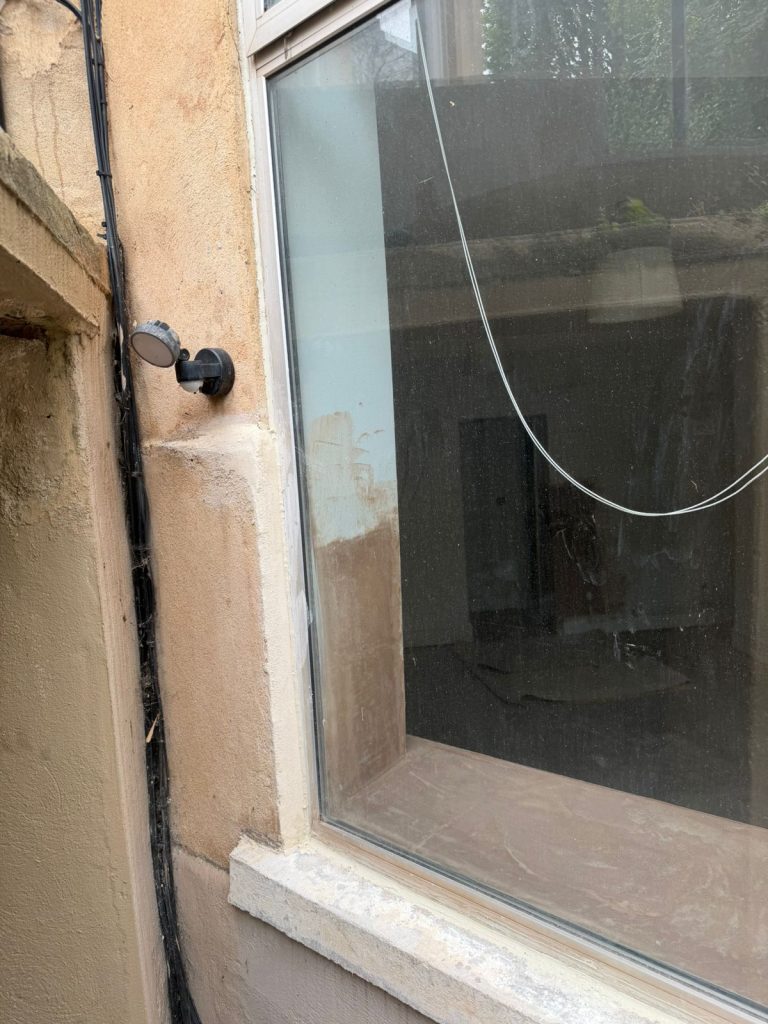
Areas around the window plinths showed signs of deterioration and blown masonry following prolonged exposure to moisture. Sealant around sections of the windows had also perished and was no longer providing an effective weatherproof junction.
The condition and detailing of the cast stone window cills were also contributing to moisture retention around these vulnerable areas.
These findings were consistent with the internal moisture readings and helped establish that penetrating damp was contributing to the problem.
Cracked and Defective External Render
Further defects were identified across the accessible external elevations.
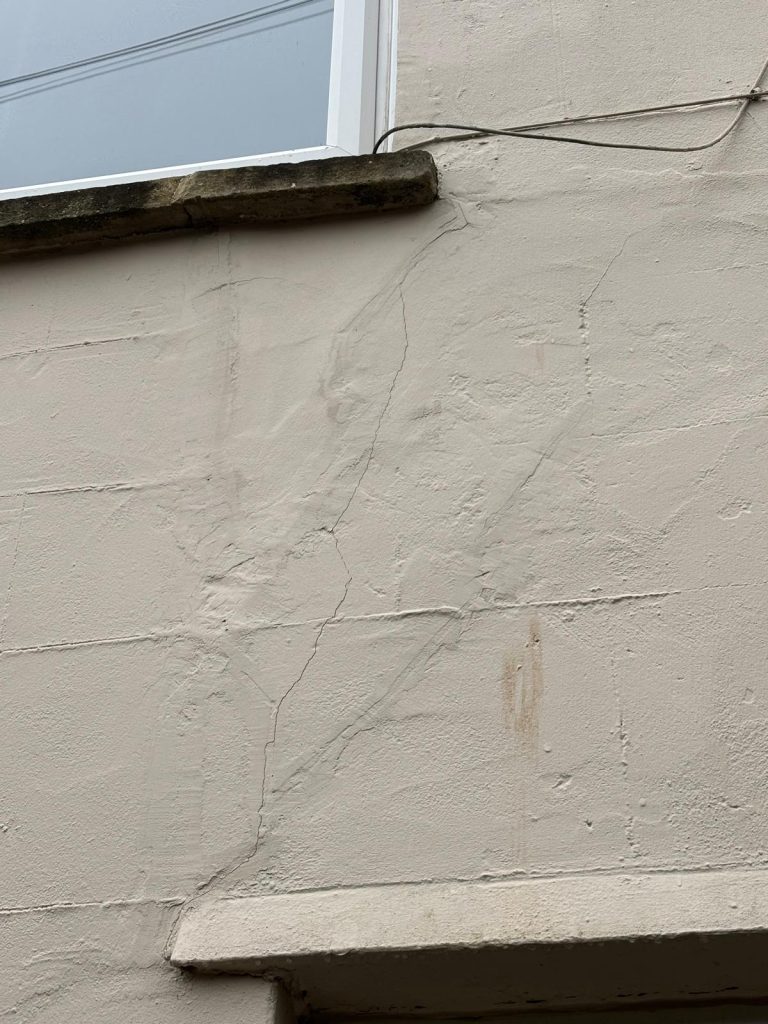
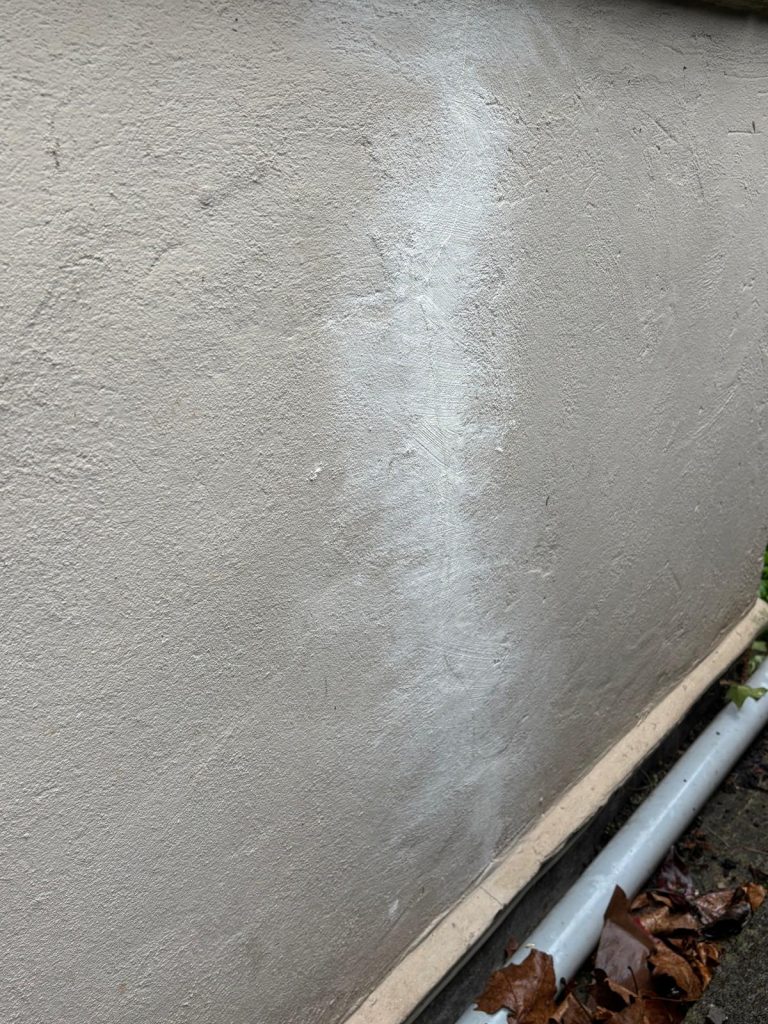
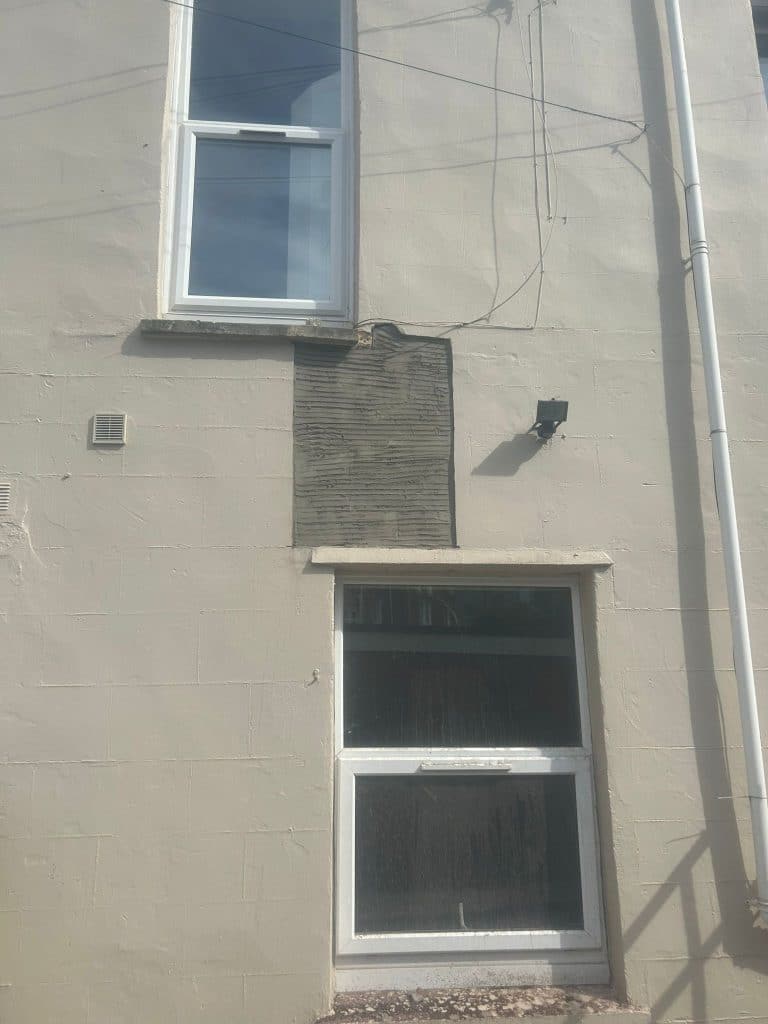
There were several cracks within the render, including larger cracks extending between openings. Open and deteriorated sections of the external finish provide potential routes for wind-driven rain to enter the underlying wall construction.
The inspection also identified weathering and deterioration around window cills and junctions, reinforcing the need to consider the outside of the building when diagnosing internal damp.
Repairing internal plaster without addressing these external defects could allow water to continue entering the building and eventually damage the new finishes.
Moisture Around the Boiler Cupboard
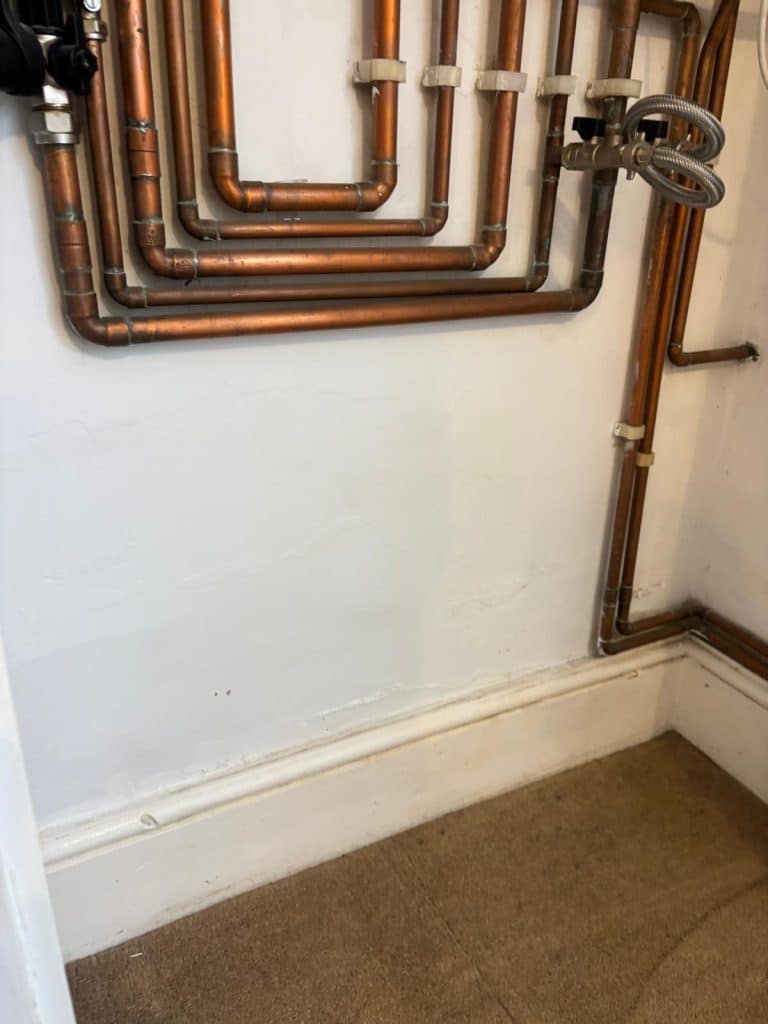
Another area of concern was found around the boiler cupboard, where elevated moisture readings were recorded.
The pattern here was consistent with the effects of a historic leak combined with residual hygroscopic salt contamination.
This was different from the moisture identified around the window bay and demonstrates how several separate moisture problems can exist within the same property.
Rising Damp Around the Chimney Breast
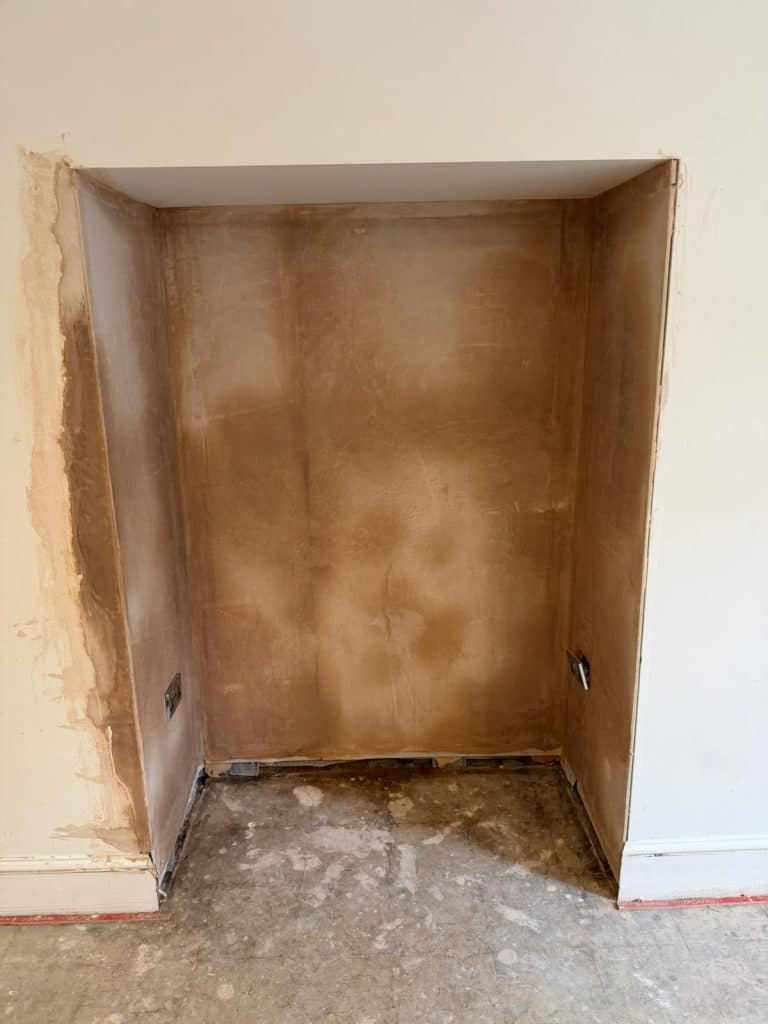
Evidence consistent with rising damp was also identified at the base of the chimney breast.
Low-level moisture combined with salt contamination meant that the affected wall finishes required appropriate isolation as part of the remedial works.
Where contaminated plaster has been affected over a prolonged period, Nordic Damp Proofing can combine damp treatment with appropriate wall repair and re-plastering to create a suitable new internal finish once the underlying moisture problem has been addressed.
Evidence of Previous Damp Proofing
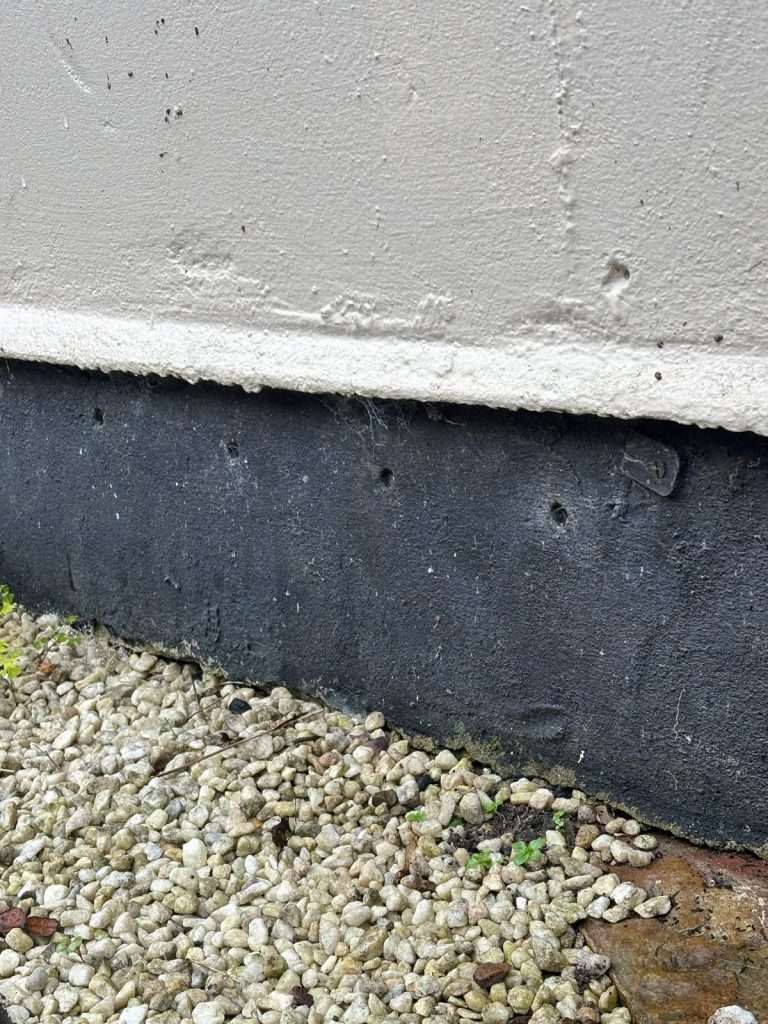
Interestingly, our external inspection found evidence that chemical injection damp-proofing works had previously been attempted at the property.
Despite this, significant moisture problems remained.
A previous damp-proof course does not automatically mean that every source of damp has been addressed. External water ingress, damaged render, failed window seals, historic plumbing leaks and salt-contaminated plaster can all continue to cause problems independently.
This is why Nordic Damp Proofing takes a survey-first approach rather than assuming that every low-level damp problem simply requires another injection treatment.
Remedial Damp Proofing Works
Following the inspection, remedial works were specified to deal with the affected internal areas and provide suitable protection from the identified moisture.
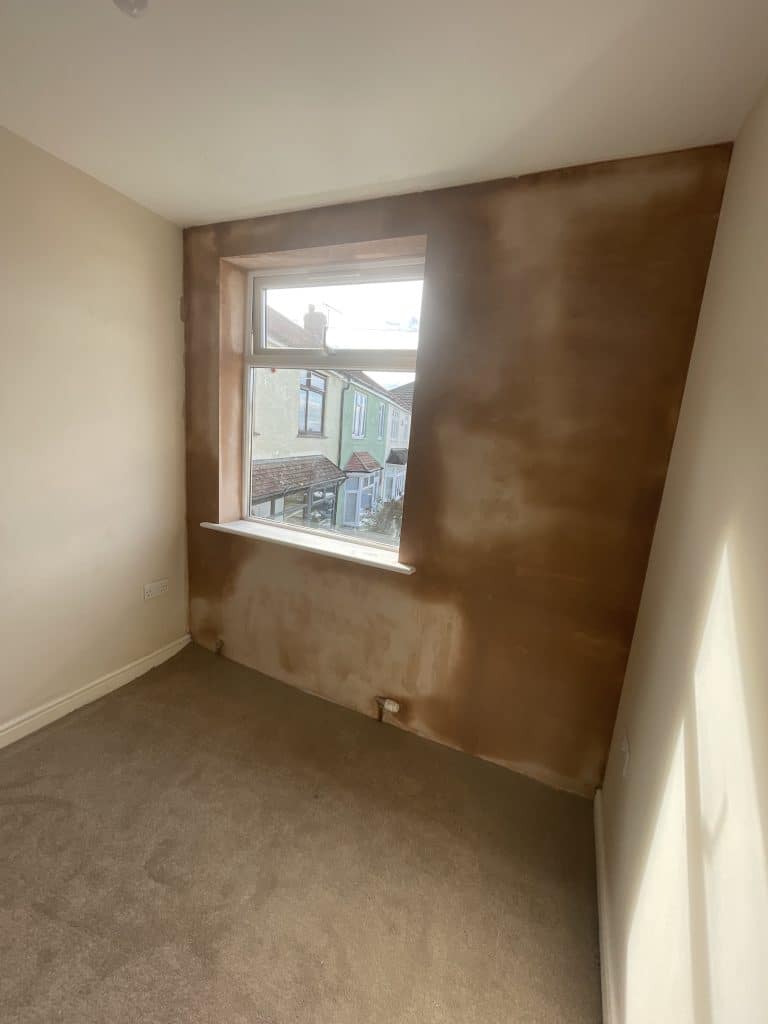
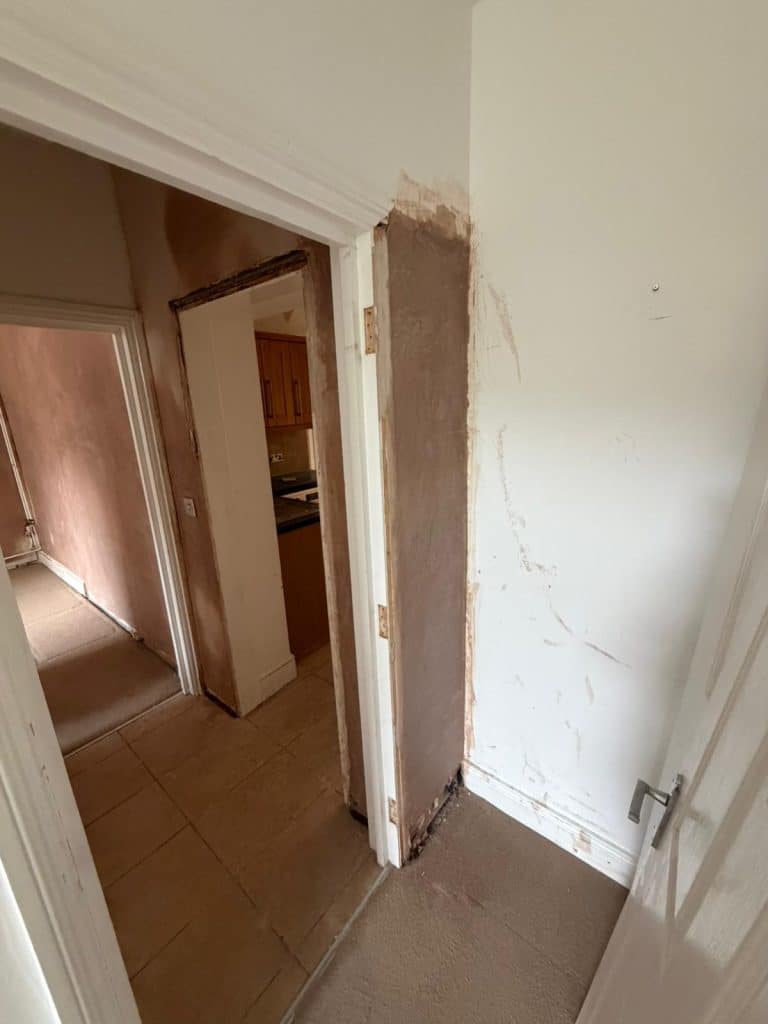
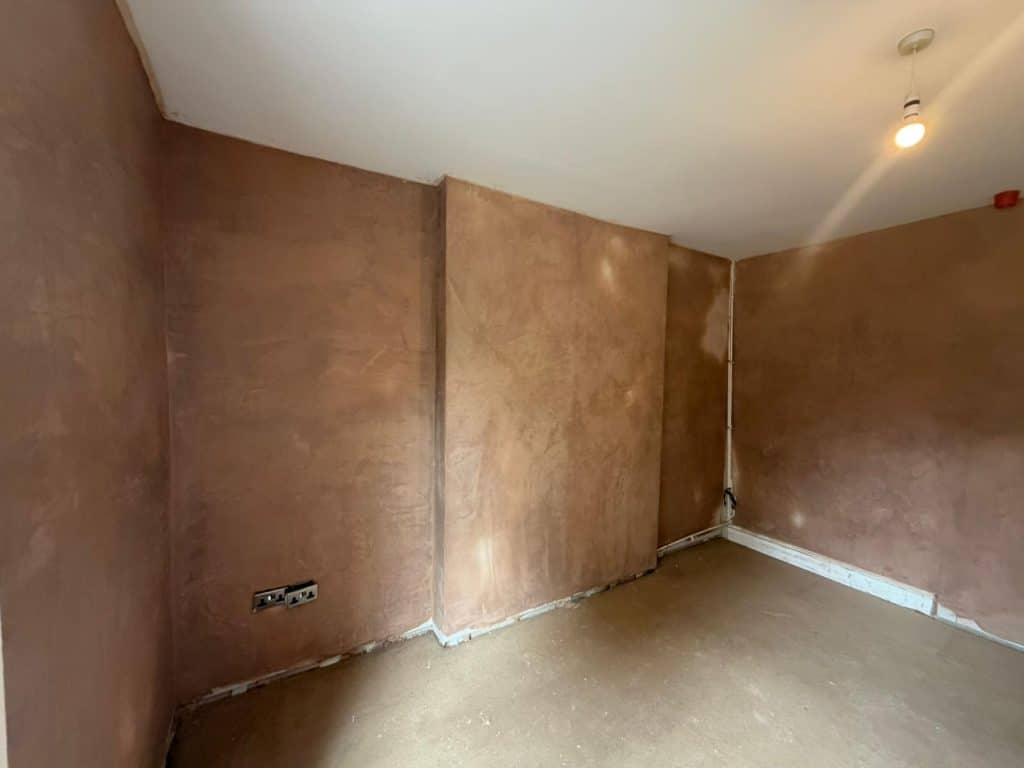
Damaged and contaminated finishes were removed where required, allowing the affected wall areas to be properly prepared.
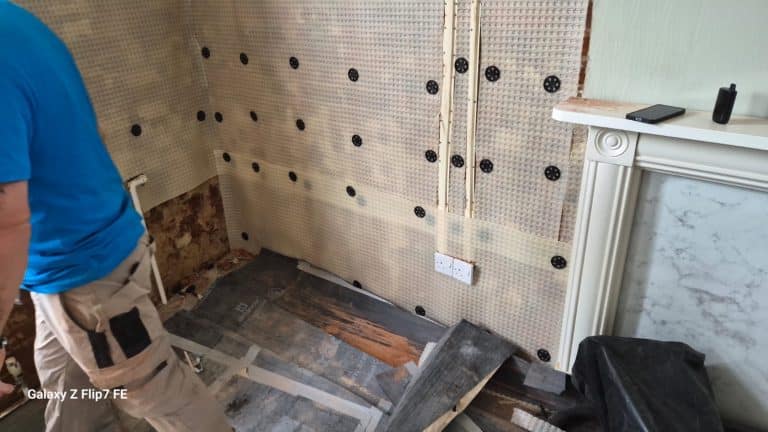
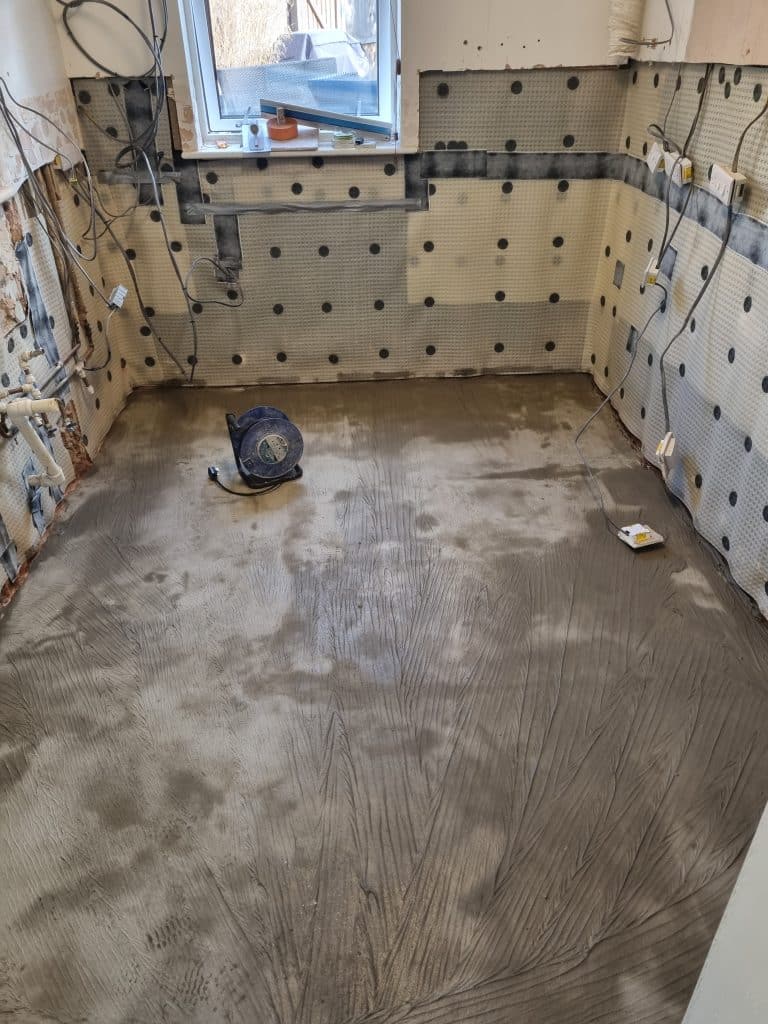
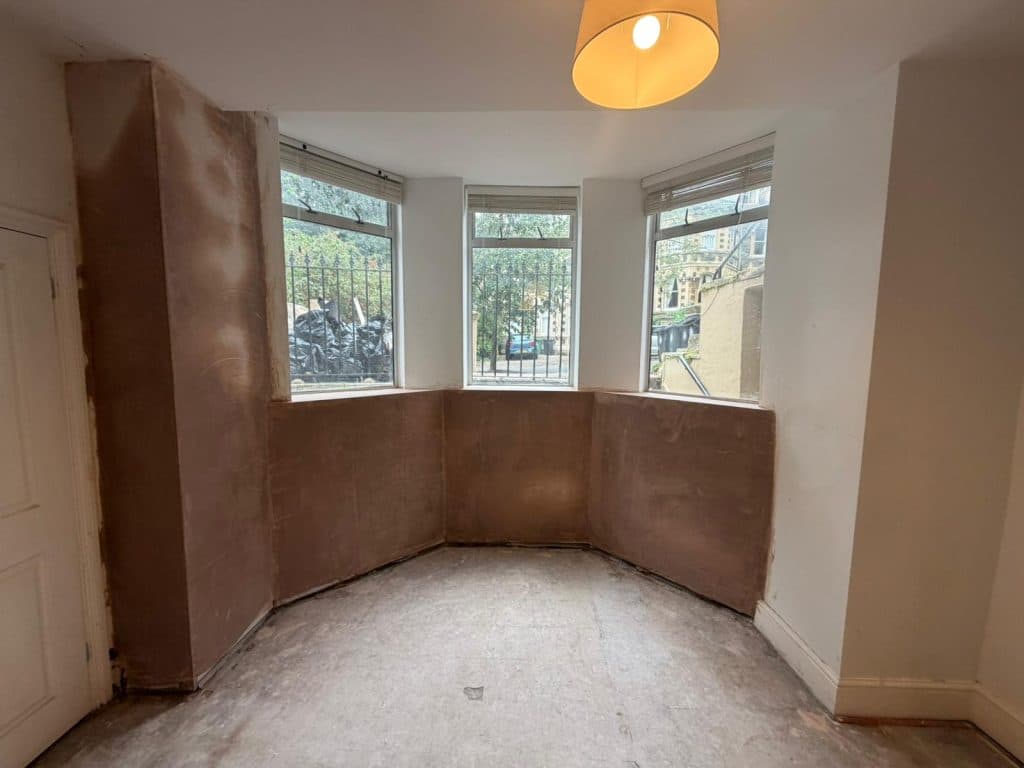
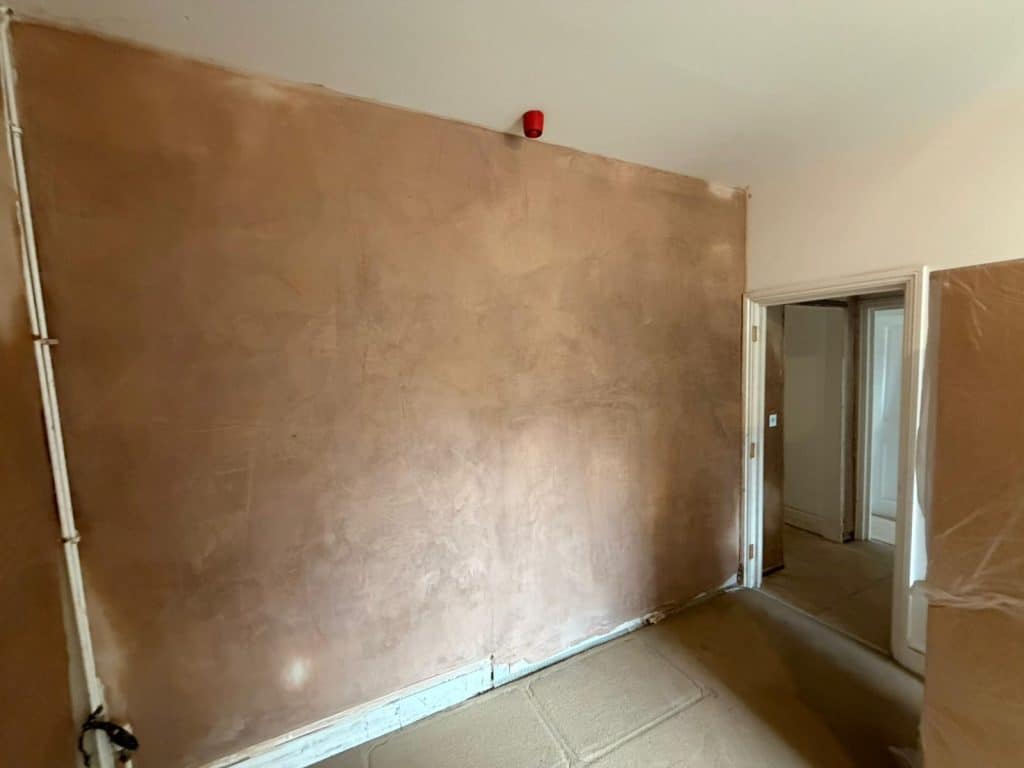
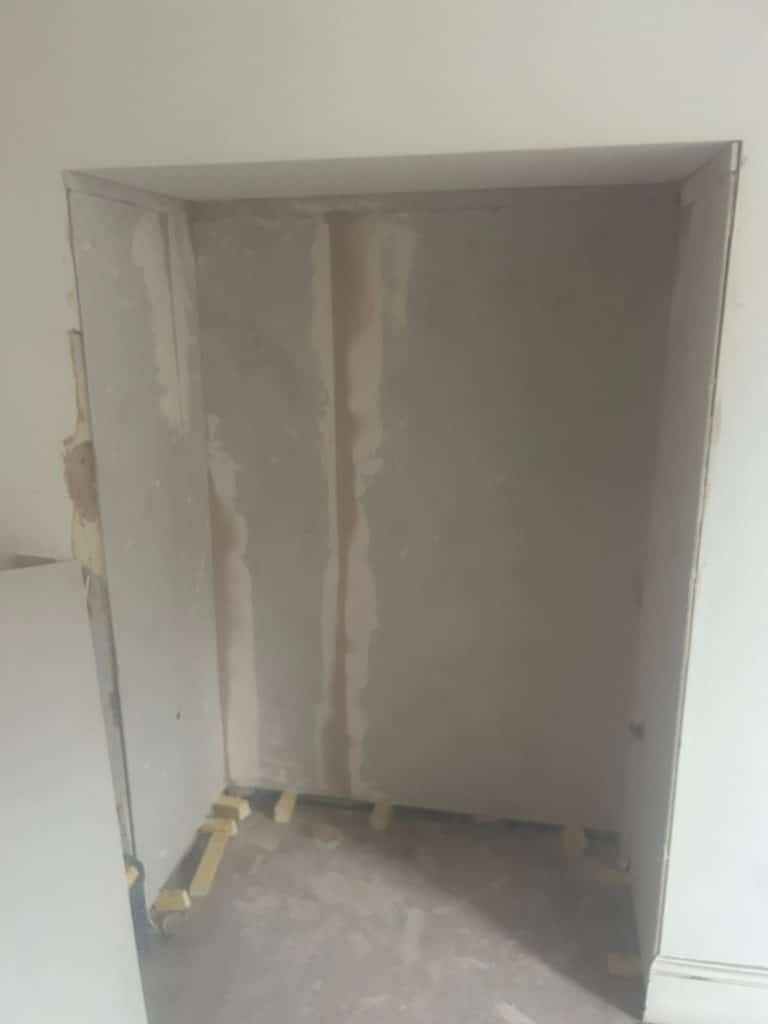
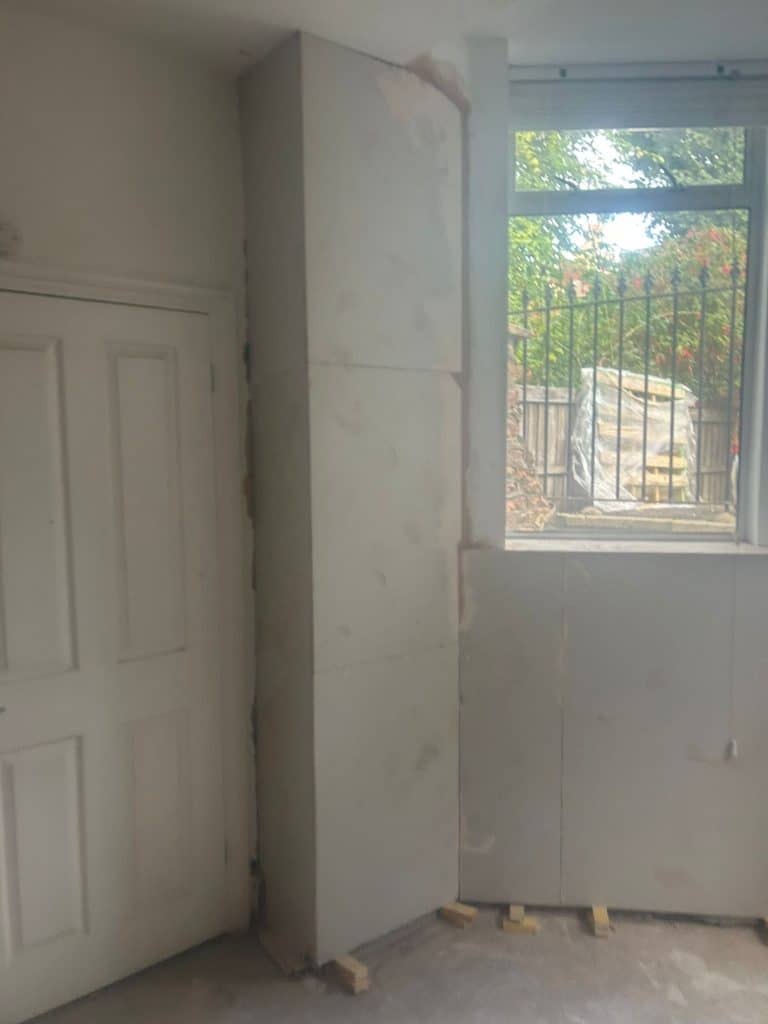
The project then involved the installation of a new internal wall system across affected sections of the flat. Depending on the construction and moisture conditions identified, damp proof membrane systems can be used to isolate vulnerable internal finishes from residual moisture and salt contamination within the underlying wall.
The photographs from the project show the new wall lining being installed around the bay and other affected sections after preparation of the original surfaces.
Why We Diagnose Damp Before Treating It
This Hemel Hempstead project is a particularly good example of why visible damp should not immediately be labelled as one specific problem.
Within the same ground-floor flat we found evidence consistent with:
- Rising damp at low level
- Hygroscopic salt contamination
- Penetrating moisture around the window bay
- Defective external render
- Failed and deteriorated window sealing
- Moisture associated with a historic leak around the boiler cupboard
Condensation-related moisture was minimal during the inspection. However, the property was vacant at the time, meaning internal humidity levels were not representative of normal occupation. For that reason, the readings taken on the day could not provide a complete picture of how the property would behave when occupied.
Our survey and diagnostic services are designed to identify these differences before remedial work is recommended.
Damp Proofing in Hemel Hempstead
If you have discovered peeling paint, damaged plaster, salt deposits, damp patches or unusually high moisture readings in your property, the first step should be establishing where the moisture is coming from.
Nordic Damp Proofing provides professional damp surveys and damp proofing in Hemel Hempstead for homeowners, landlords and property professionals, including investigation and treatment of rising damp, penetrating damp, salt contamination and other moisture-related problems.
Rather than simply covering the visible symptoms, our aim is to identify the underlying cause and specify remedial work appropriate to the property.
Book a damp survey with Nordic Damp Proofing if you are concerned about moisture within your property in Hemel Hempstead or the surrounding Hertfordshire area.