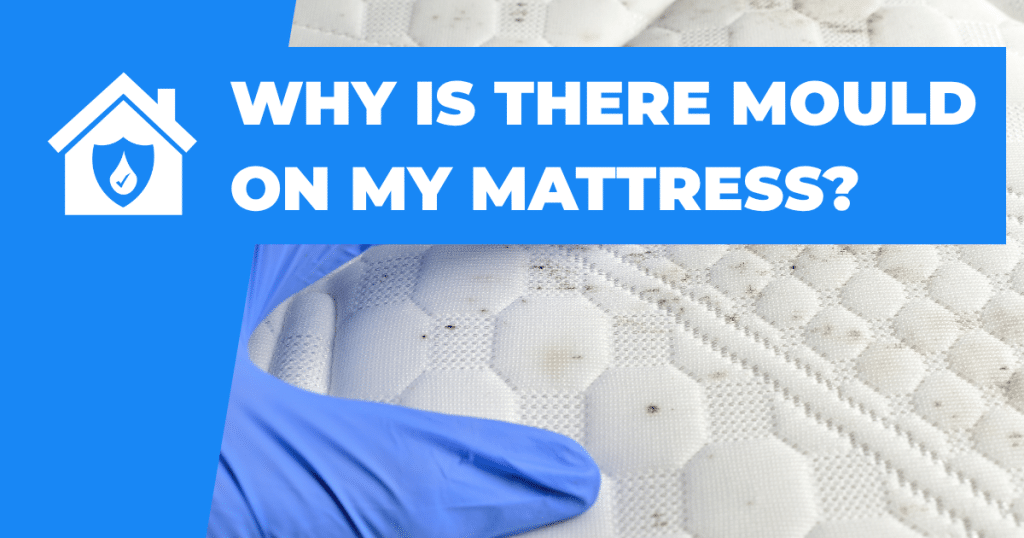
You have lifted the mattress to turn it and found black or green patches spreading across the underside, along with a smell you had been half-noticing for weeks without being able to place.
The instinct is to blame the mattress and start shopping for a new one. In most UK homes the mattress is not the problem. It is simply the first surface to show you a problem that belongs to the room, in the same way a bathroom ceiling shows you a ventilation issue rather than having one of its own.
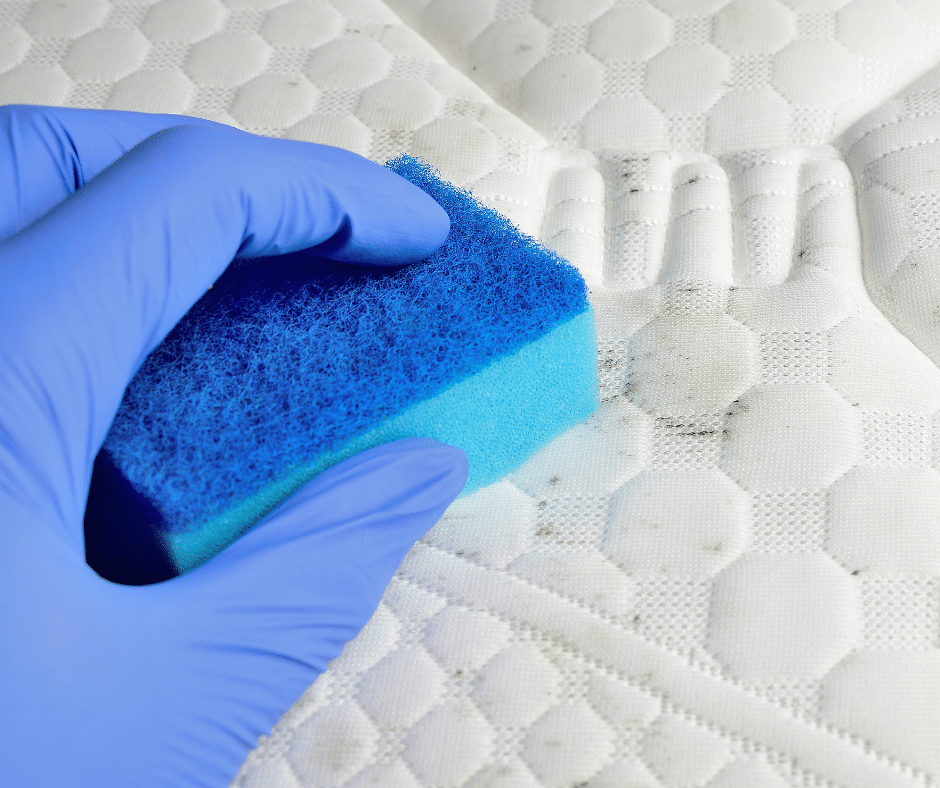
Why is my mattress mouldy?
Mould needs three things to grow, and your bedroom supplies all three without any effort on your part.
Spores are the first, and they are present in the air of every building on earth. There is no removing them and no point trying. A food source is the second, and a mattress is close to ideal, offering fabric, foam, skin cells and dust in a warm dark environment. Moisture is the third, and it is the only one of the three you can do anything about.
The moisture comes mostly from you. A sleeping adult loses somewhere in the region of half a litre of water every night through breathing and perspiration, and it goes into the bedding and into the mattress below. Two people over two nights puts a couple of litres of water into and around that mattress.
In a warm, well-ventilated bedroom that moisture evaporates away during the day and nothing happens. In a cold, humid, unventilated bedroom it does not, and after a few months of accumulation you have the conditions mould needs.
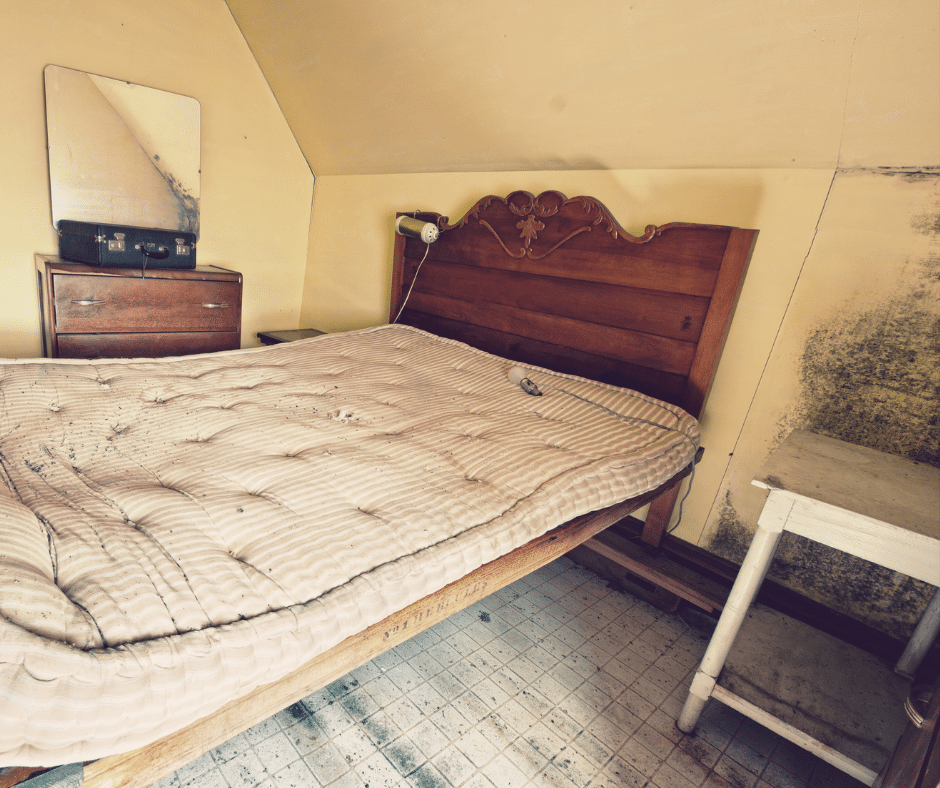
Mould needs a humid environment
This is the part worth understanding properly, because it explains why two households with identical mattresses can have completely different outcomes.
Cold air holds less water vapour than warm air. A bedroom that sits at 15 degrees with the door shut and the window closed reaches its saturation point far sooner than the same room at 19 degrees, so moisture that would evaporate harmlessly in a warmer room instead condenses onto the coldest surfaces available. Underneath a mattress, pressed against a cold floor or a solid base, is one of the coldest and least ventilated places in the entire house.
Unheated bedrooms are common in the UK, and they are usually the coldest rooms in an otherwise heated home. Add windows kept shut through the winter, clothes drying on a radiator in the corner, no trickle vents, and a door that stays closed all day, and you have created a space where nothing ever dries out.
If you also have condensation sitting on the windows in the morning, or black mould in the corners of the ceiling, the mattress is not your only problem and it will not be your last.
Mattresses kept directly on the floor
This is the most common single cause and the easiest to fix, so it is worth checking before anything else.
A mattress placed directly on the floor has no airflow underneath it at all. Every bit of moisture that passes down through the mattress overnight is trapped between the fabric and the floor, with no route out and no air movement to carry it away.
The floor makes it worse rather than better. Concrete and solid floors run colder than the air in the room, particularly at ground level and particularly against an external wall, so the underside of the mattress sits below the dew point for much of the day. A ground floor bedroom over an unheated cellar or a solid slab is the highest-risk situation of all.
The same applies, to a lesser degree, to solid platform bases and divans with no ventilation. A slatted base with genuine gaps between the slats lets air move under the mattress continuously, and moving that one thing resolves a large proportion of cases on its own.
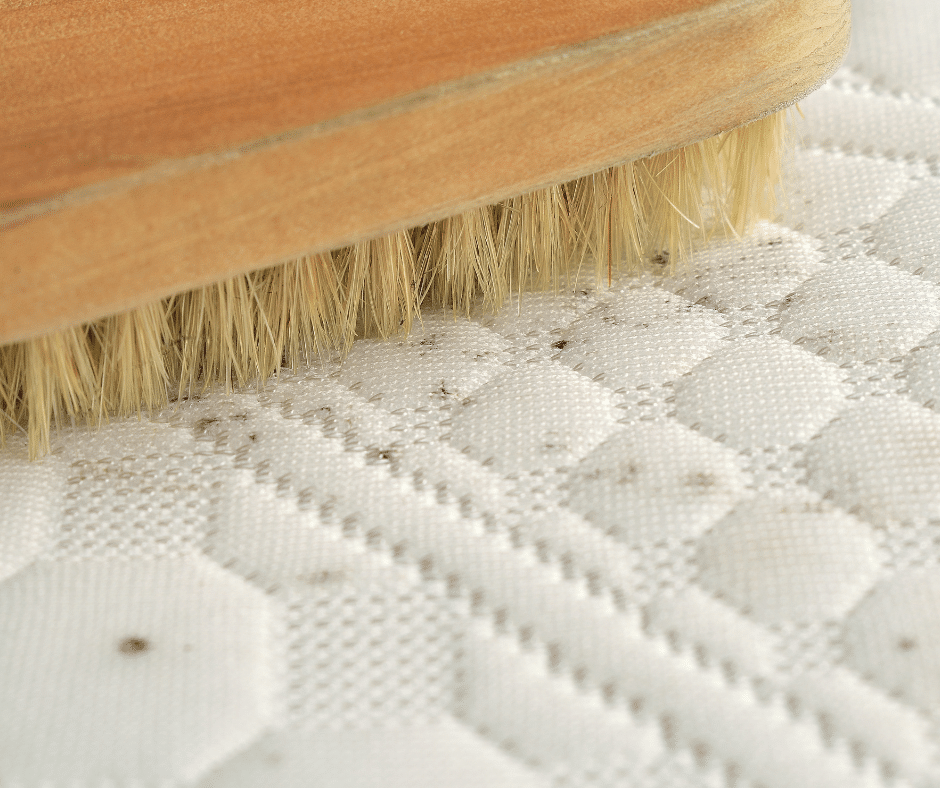
Why memory foam traps moisture (and natural fibres don’t)
Not all mattresses handle moisture the same way, and the difference matters more than most people realise when they are buying.
Memory foam and dense synthetic foams are effectively closed-cell structures. They do not breathe in any meaningful sense, so moisture that would pass through a sprung mattress and evaporate from the other side instead sits within the layers, held there by the foam itself. The foam is also warm and dense, which slows drying even further.
Natural fibres work differently. Wool, cotton and horsehair absorb moisture into the fibre and then release it back into the air as conditions change, which is the same behaviour that makes lime plaster work well on old walls. Wool in particular handles humidity well, holding a considerable amount of moisture without feeling damp and giving it up again when the air dries.
None of this makes memory foam a bad mattress, and plenty of people sleep on one for a decade with no trouble at all. It makes it far less forgiving of a damp bedroom, which is the point. A memory foam mattress in a cold unventilated room on a solid base is a combination worth avoiding.
Other contributors are worth checking while you are looking. A waterproof mattress protector that is impermeable on both sides traps vapour underneath it rather than protecting anything. A bed pushed hard against a cold external wall stops air moving behind the headboard. And a bedroom used for drying laundry is a bedroom that will grow mould somewhere eventually.
UK humidity control: stop mould before it starts
Before you replace anything, look at the room, because replacing a mattress without addressing the room means buying the same problem again in two years.
Buy a cheap hygrometer and leave it in the bedroom for a fortnight rather than taking a single reading. Below 50 percent relative humidity is comfortable and safe. Sustained readings above 60 percent mean mould is likely somewhere. Above 70 percent means something needs to change regardless of what the mattress is doing.
Check the windows on a cold morning. Water sitting on the glass tells you the room is holding more moisture than its surfaces can cope with. Look at the corners of the ceiling and the wall behind the wardrobe, particularly on external walls, and check the skirting boards. Shut the door for a day and then walk in and smell the room honestly.
The target for a bedroom is somewhere between 40 and 55 percent relative humidity, and reaching it is usually a matter of ventilation and a little warmth rather than equipment.
What to do if your mattress develops mould?
For a small area of surface growth, cleaning is worth attempting. For anything extensive, skip to the replacement section below, because you will not save it.
Work outside if the weather allows, or in a very well ventilated room with the door shut and the window open. Wear a mask and gloves throughout, and keep other people out of the room while you work.
5 proven methods to remove mattress mould
These work best in combination rather than alone, and the drying step at the end matters more than the cleaning method you choose.
Method 1: UV sunlight treatment
Get the mattress outside in direct sunlight for several hours. Ultraviolet light kills mould spores and the sun dries the mattress at the same time, which is the combination you want. On a dry breezy day this alone handles minor surface growth, and it should be the final step whichever other method you use.
Method 2: white vinegar.
Spray undiluted white vinegar directly onto the affected area, leave it for an hour to work, then blot with a clean damp cloth. Vinegar kills many common mould species, does not bleach fabric, and leaves no residue once it has dried. The smell disappears as it dries.
Method 3: baking soda and vinegar combination
Treat with vinegar as above, then once the surface has been blotted, sprinkle baking soda generously over the damp area and leave it for several hours or overnight. Vacuum it up thoroughly afterwards. The baking soda absorbs residual moisture and takes the musty smell with it, which vinegar alone does not always manage.
Method 4: rubbing alcohol
Mix surgical spirit or rubbing alcohol roughly half and half with warm water, apply with a cloth rather than a spray, and work in circles from the outside of the patch inwards so that you are not spreading it. Blot dry immediately. Alcohol evaporates quickly, which makes it a good choice on foam mattresses where you want to add as little liquid as possible.
Method 5: hydrogen peroxide
A three percent solution applied to the area and left for ten minutes before blotting will kill mould and lift staining. Test it on an inconspicuous corner first, because it can lighten coloured fabric, and use it in a well ventilated space.
Whichever you use, avoid soaking the mattress. Adding water to a mould problem is counterproductive, and foam in particular holds liquid for a very long time.
Then dry it completely, and treat this as the step that decides whether the mould returns. Direct sunlight for several hours is best. Where that is not possible, stand the mattress on edge in a warm room with a fan blowing across both faces and a dehumidifier running, and leave it until it is bone dry throughout rather than dry to the touch. It should not go back on the bed until you are confident about that.
When your mattress is beyond saving
Cleaning is not always the right call, and there is a point where continuing to try does more harm than good.
Replace the mattress where the affected area is larger than a dinner plate, where mould is visible on both the top and the underside, or where it has penetrated into the foam or filling rather than sitting on the surface fabric. Replace it where a strong musty smell persists after cleaning and thorough drying, since that means growth remains inside where you cannot reach it. Replace it where anybody in the household has asthma, a respiratory condition or a compromised immune system, because the margin for error is smaller. And replace it where the mattress is already eight to ten years old and approaching the end of its useful life regardless.
A mattress you cannot dry out fully is a mattress that will grow mould again. Where there is genuine doubt, replace it and then fix the room, so that the new one lasts as long as it should.
How to prevent getting a mouldy mattress
Get the mattress up off the floor onto a slatted base with real gaps between the slats. This single change resolves more cases than everything else combined.
Bring the bedroom humidity down to between 40 and 55 percent. Open the window for ten to fifteen minutes each morning even in winter, since cold outdoor air is drier than warm indoor air and lowers the humidity in the room as soon as it warms up. Keep trickle vents open rather than shutting them for the winter.
Stop drying clothes in the bedroom, because a single load of washing releases a couple of litres of water into the air of the room it is drying in. Heat the room a little, since an unheated bedroom in an otherwise heated house collects moisture from everywhere else in the building and has no way of shedding it.
Turn or rotate the mattress every few months, and leave it standing on edge for a few hours while you change the bedding so that both faces get air. Pull the bed a few centimetres away from external walls so air can move behind the headboard. And throw the duvet back for half an hour before making the bed each morning, which lets overnight moisture evaporate rather than sealing it in for the day.
Where a bedroom runs persistently humid despite all of that, a dehumidifier over the winter months is worth the running cost.
If mould keeps returning after you have done all of this, the moisture is coming from the building rather than from you. Penetrating damp in an external wall behind the bed, a cold bridge at a wall junction, failed cavity wall insulation holding water, or rising damp in a ground floor bedroom will all produce exactly this pattern. At that point the mattress is a symptom and the wall is the patient.
Nordic Damp Proofing carries out damp, mould and ventilation surveys across the South Coast, the South West and the surrounding counties, using thermal imaging and humidity monitoring to establish where the moisture is coming from. If mould keeps returning in your bedroom, book a survey and get the cause identified.