Nordic Damp Proofing recently completed an extensive damp proofing project at a property in Bath, Somerset, following the identification of moisture and salt contamination across several internal walls.
The works involved treatment within both the dining room and bedroom, including areas around the chimney breast, fireplace, rear walls and adjoining sections extending towards the hallway.
Due to the extent of the moisture and salt contamination, this required considerably more than simply removing and replacing the damaged plaster. The affected finishes were stripped back so the underlying masonry could be properly treated before installing a new chemical damp proof course, salt treatment and cavity drainage membrane system.
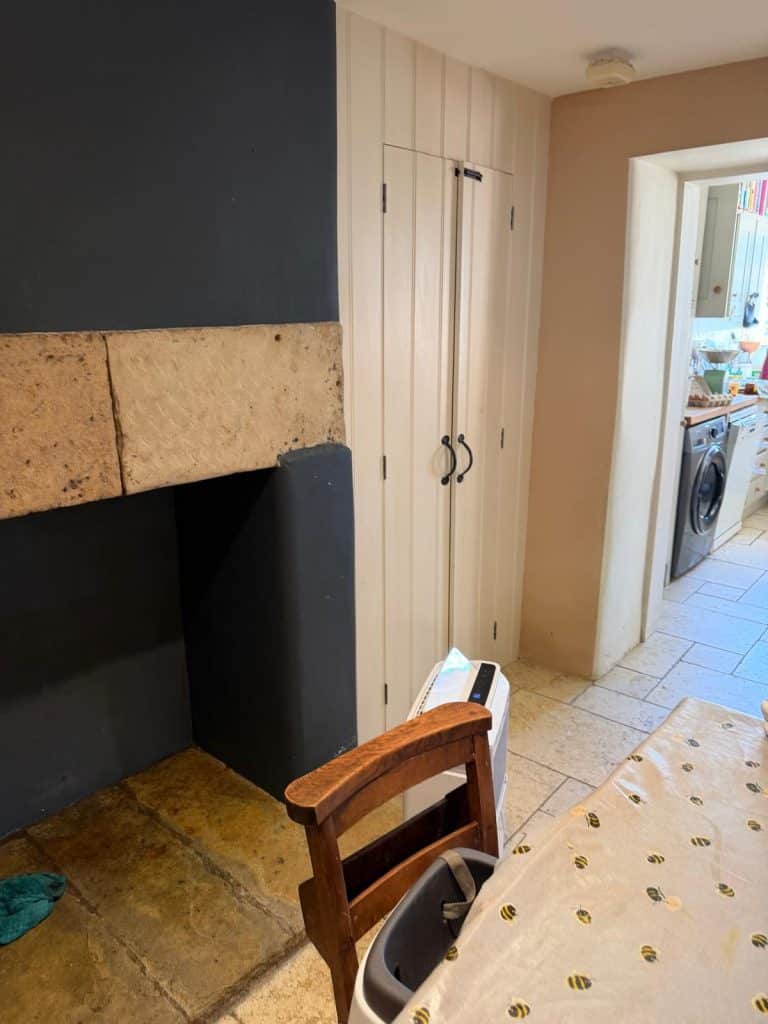
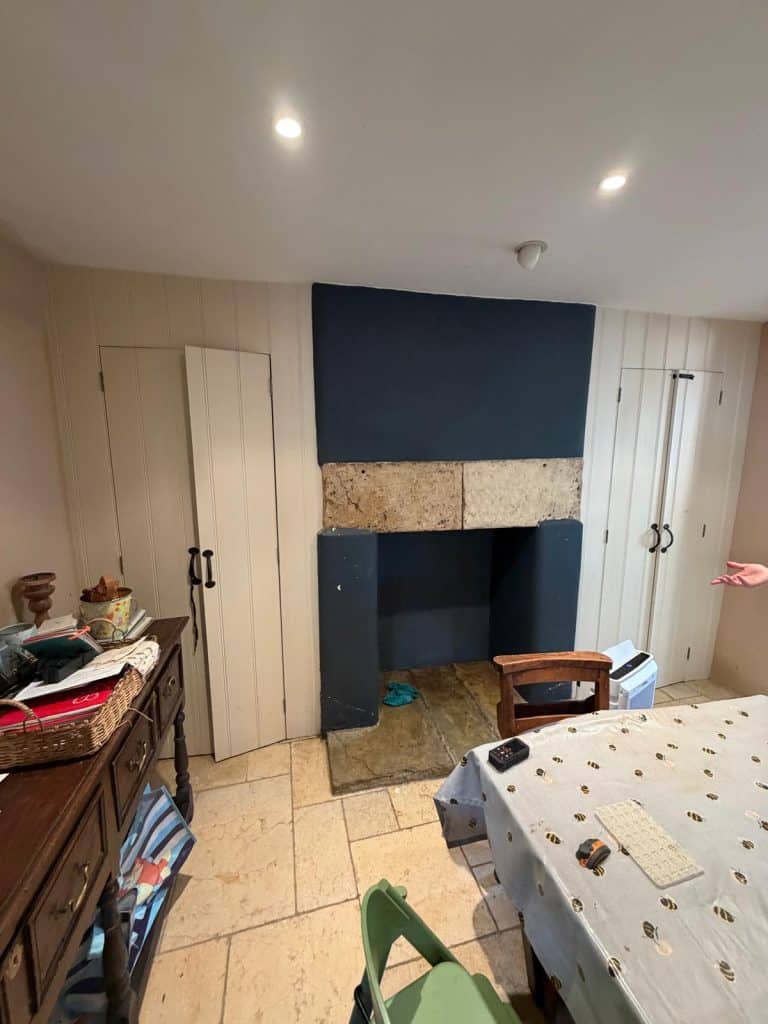
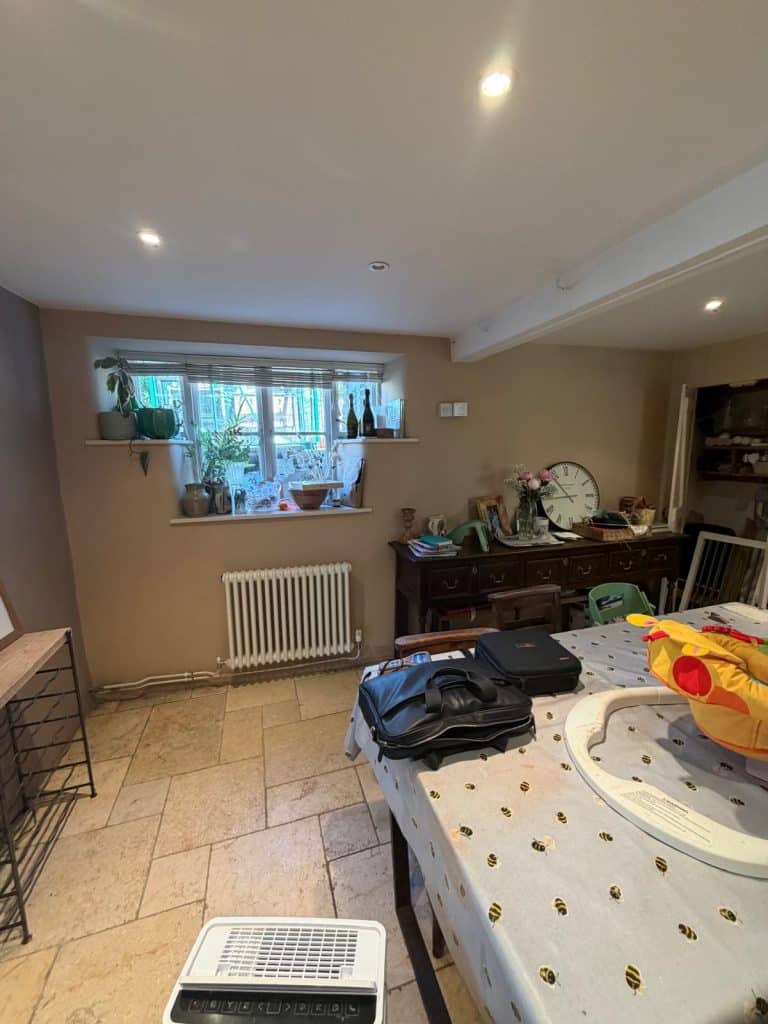
Assessing the Damp-Affected Walls
The damp problem at this property in Bath extended across more than one room and included sections surrounding the existing fireplace and chimney breast.
Where moisture has been present within masonry for a prolonged period, soluble salts can migrate through the wall and contaminate the internal plaster. Even after the primary source of moisture has been addressed, these hygroscopic salts can continue to attract moisture from the surrounding air.
This is why simply allowing the wall to dry before applying fresh plaster is not always an appropriate long-term solution.
Before deciding on any form of damp treatment, it is important to identify the type of moisture affecting the property and how far the problem has spread. Nordic Damp Proofing provides professional damp surveys to help determine the cause and recommend an appropriate treatment.
Dining Room Damp Proofing in Bath
The dining room required some of the most extensive remedial work during this project.
The affected areas included the chimney breast and adjoining rear window wall, where moisture and salt contamination had affected the existing internal finishes.
Before treatment could begin, plumbing fixtures and associated pipework serving the treatment area needed to be removed or disconnected. This provided unrestricted access to the wall surfaces and prevented the pipework from obstructing the new damp proofing system.
The existing wooden cupboards positioned around the chimney breast were also carefully removed. Removing the cupboards allowed the damp proofing system to continue behind these areas rather than leaving untreated sections of masonry hidden behind the joinery.
Removing the Existing Damp and Salt-Contaminated Plaster
Once the room had been prepared, the affected plaster was removed to expose the original masonry beneath.
Within the dining room, the treatment required plaster to be removed from floor to ceiling across the chimney breast wall and adjoining rear window wall.
This was necessary because the existing plaster had been affected by moisture and hygroscopic salt contamination.
Removing the contaminated material gave our team direct access to the masonry and created a suitable substrate for the new damp proofing system.
In cases involving rising damp treatment, the extent of plaster removal will depend on moisture readings, salt contamination and the construction of the property. Treatment therefore needs to be specified according to the individual building rather than applying the same height of treatment to every wall.
Specialist Salt Neutralising Treatment
With the original masonry exposed, a specialist salt-neutralising solution was applied to the affected wall surfaces.
Salt contamination is an important consideration when treating long-term damp. Moisture moving through masonry can transport soluble salts towards the internal surface of a wall, where they remain after the moisture evaporates.
Some of these salts are hygroscopic, meaning they can absorb moisture directly from the surrounding air. If contaminated plaster is simply covered over, damp-looking patches can therefore return even after the original source of moisture has been reduced.
Treating the exposed masonry helped prepare the walls for the next stage of the damp proofing system.
Installing a New Chemical Damp Proof Course
A new chemical damp proof course was installed into the appropriate mortar course across the affected areas.
The treatment is injected into the masonry at predetermined intervals to create a moisture-resistant barrier and significantly reduce the upward movement of ground moisture through the wall.
Damp proof injection can be particularly useful where an original damp proof course is absent, has deteriorated or is no longer providing sufficient protection against rising moisture.
However, a chemical DPC is only one part of the overall treatment. The contaminated internal finishes also needed to be properly isolated from the new decorative surfaces.
Cavity Drainage Membrane Installation
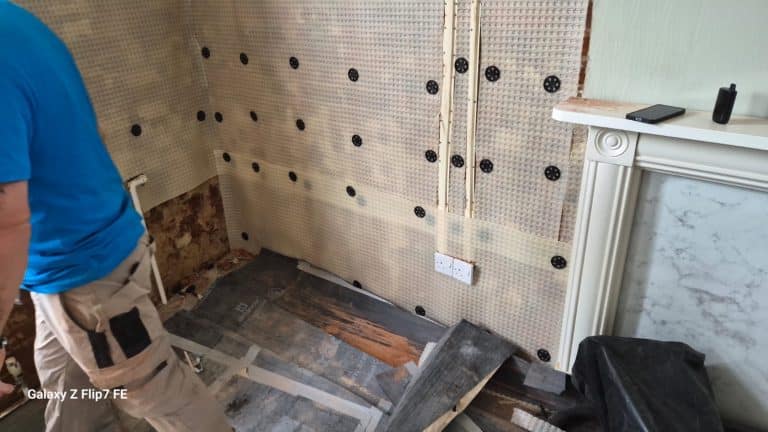
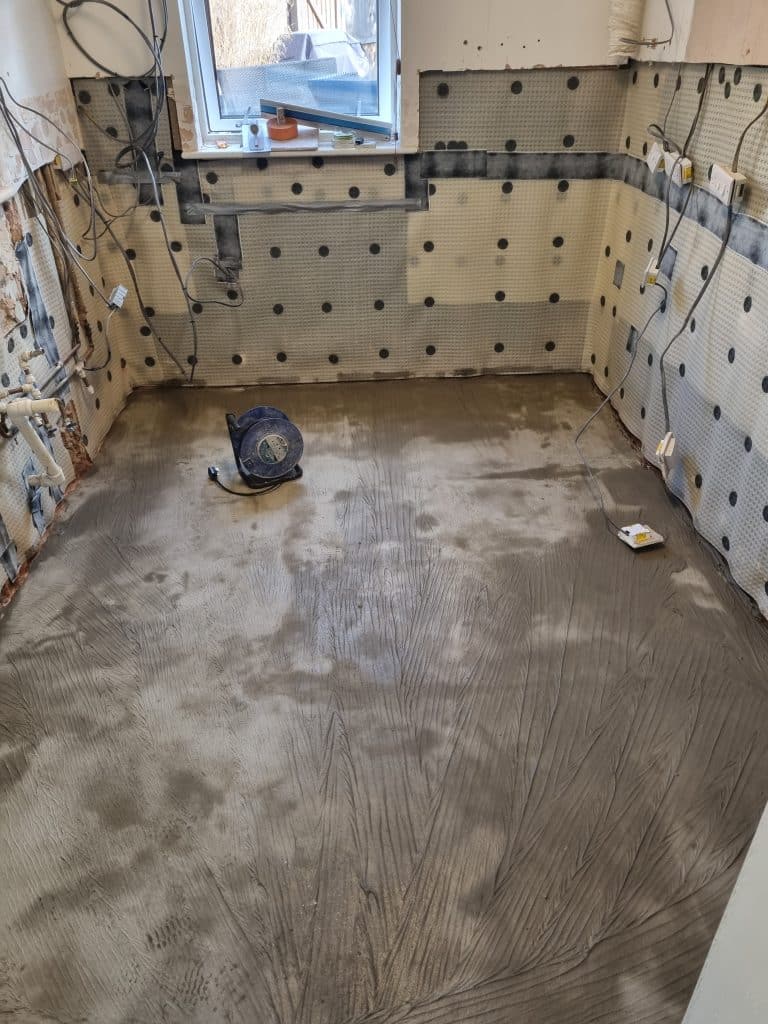
Following preparation of the walls and installation of the new damp proof course, a cavity drainage membrane was installed across the treated masonry.
The membrane was mechanically secured using specialist cavity drainage fixing plugs, commonly referred to as CD plugs.
This creates a permanent separation between the original masonry and the new internal plaster finish.
Rather than relying on the existing wall to become completely dry before reinstatement, the membrane isolates residual moisture and remaining salts from the new decorative surface.
This type of system can form an important part of both internal damp remediation and more extensive structural waterproofing projects.
Replastering the Dining Room
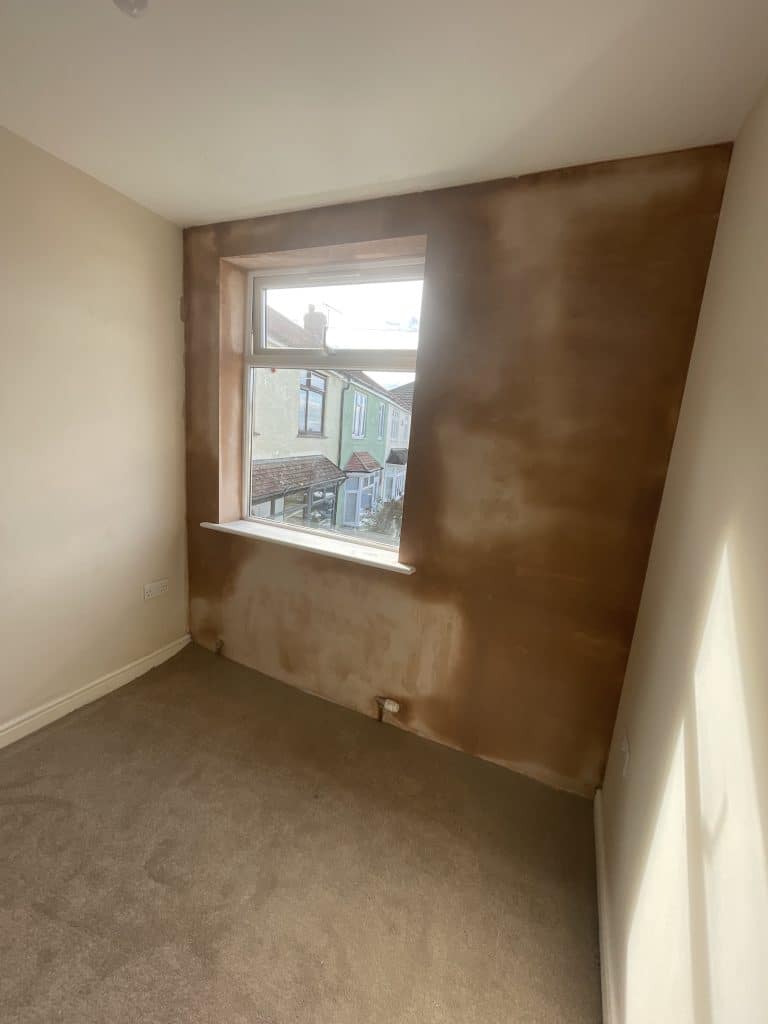
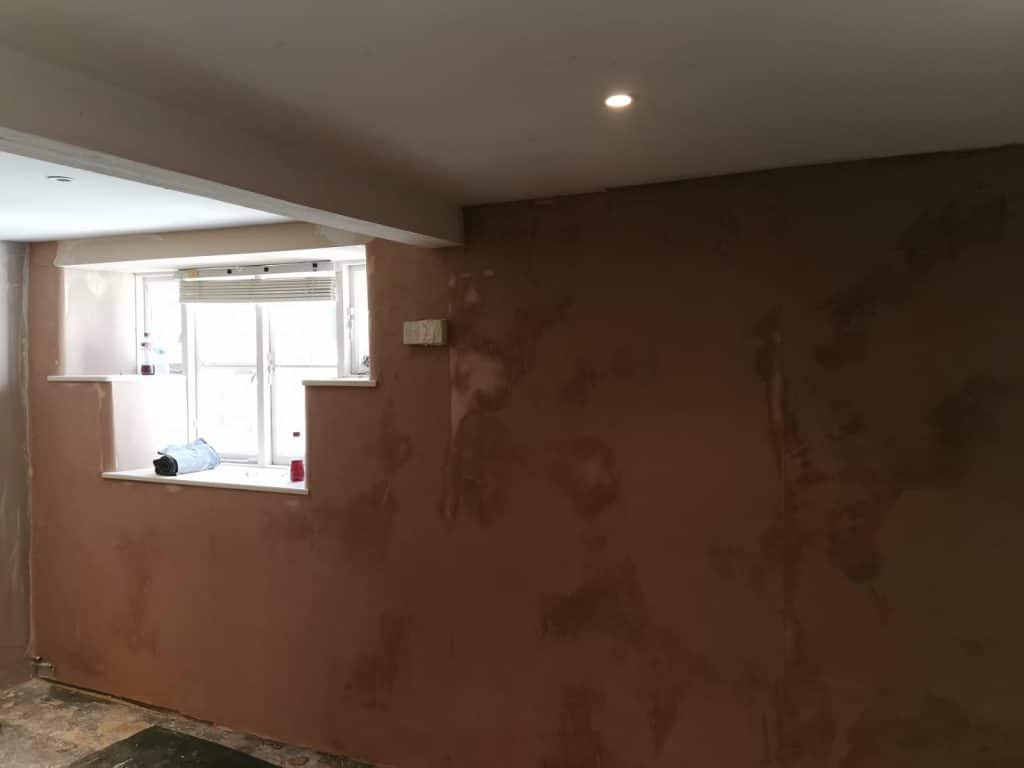
Once the cavity membrane had been securely installed, the dining room walls were professionally replastered.
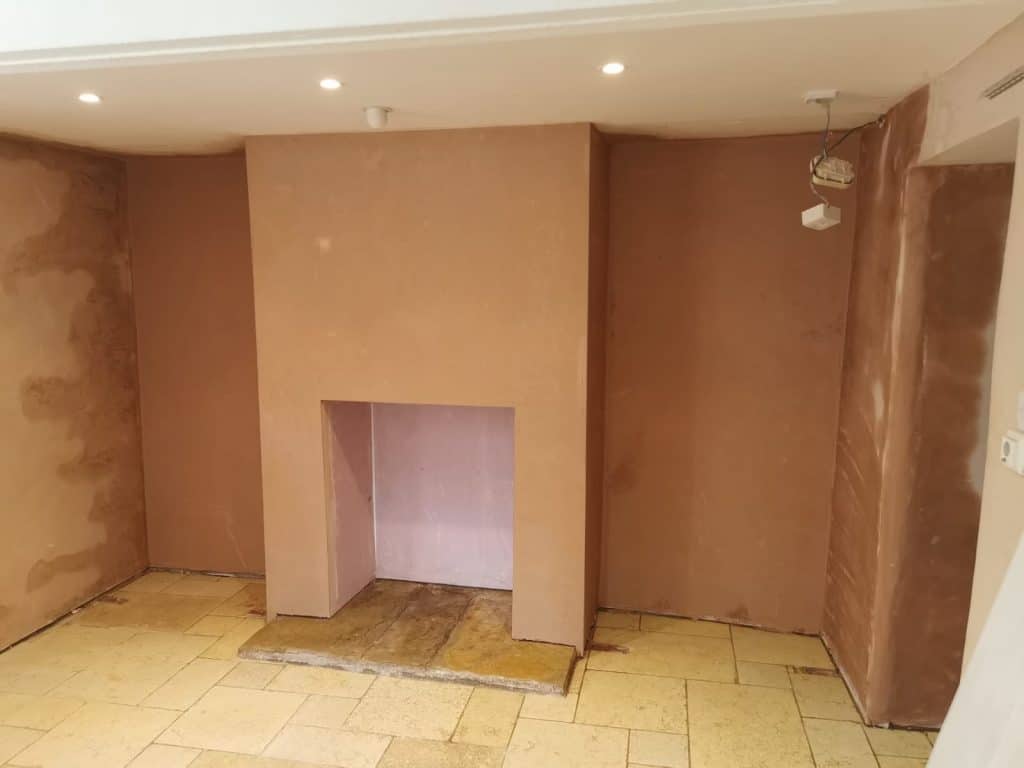
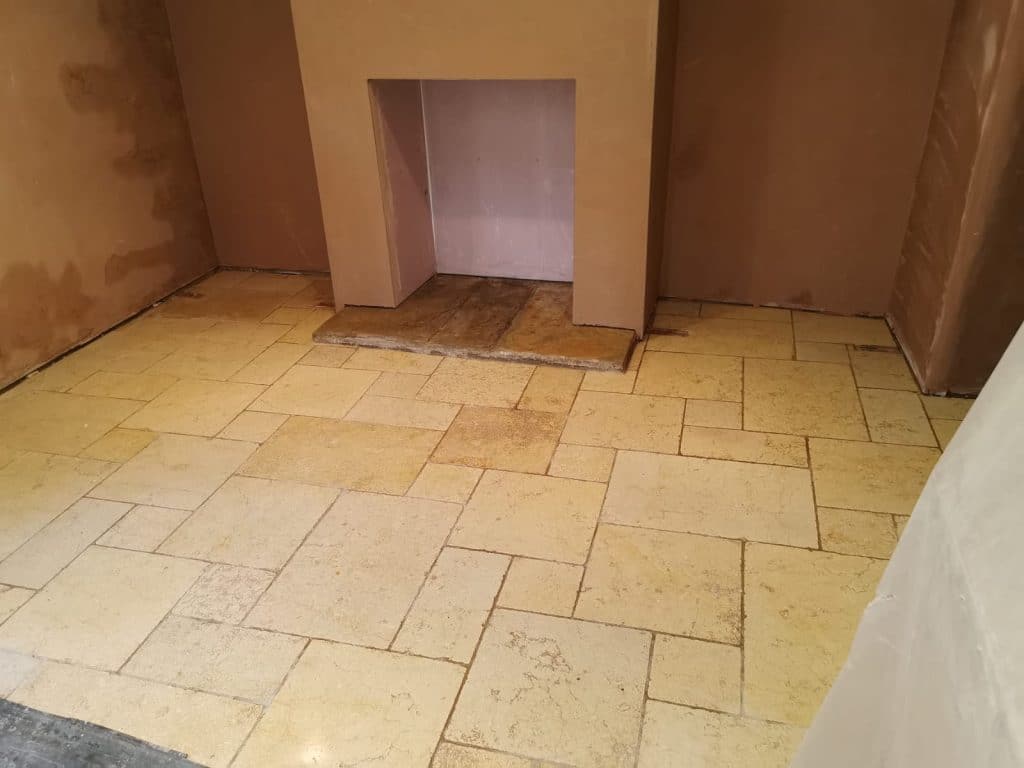
The fresh plaster was applied across the treated surfaces, including the chimney breast, surrounding alcoves and rear wall sections.
This returned the previously stripped walls to a smooth internal finish ready for decoration after the appropriate drying period.
Nordic Damp Proofing also provides wall repair and replastering as part of our damp remediation work, allowing the affected areas to be properly reinstated after treatment.
Bedroom Damp Proofing Works
The second major area of this Bath damp proofing project was within the bedroom.
Elevated moisture readings had been identified along the rear wall, continuing around the side elevation and towards the hallway.
The existing dado rail was removed so that the damp proofing treatment could continue uninterrupted across the affected wall surfaces.
Plumbing serving the radiator also needed to be disconnected prior to treatment so that safe and unrestricted access could be provided to the affected area.
Removing Plaster to Approximately 1.5 Metres
Unlike the full-height treatment required within the dining room, affected plaster within the bedroom was removed to approximately 1.5 metres above floor level.
The plaster was removed along the rear wall before treatment continued around the side elevation and into the hallway where elevated moisture readings had been identified.
Removing these affected finishes exposed the underlying masonry and ensured the damp proofing system could be installed directly onto the wall rather than over contaminated material.
The exposed bedroom masonry then received the same specialist salt-neutralising treatment before installation of the chemical DPC and cavity drainage membrane system.
Continuing the Damp Treatment Around Corners and Into the Hallway
An important part of this project was ensuring continuity between the different affected wall sections.
Damp does not necessarily stop where one room ends. Moisture can travel through connected masonry and around corners, particularly where walls share the same construction or ground conditions.
For this reason, treatment at the Bath property continued around the side elevation and towards the hallway wherever elevated moisture readings indicated that additional work was required.
Stopping the treatment prematurely could have left damp or salt-contaminated masonry immediately alongside the newly treated areas.
Damp Proofing Around the Existing Fireplace
The existing fireplace opening required additional consideration during the works.
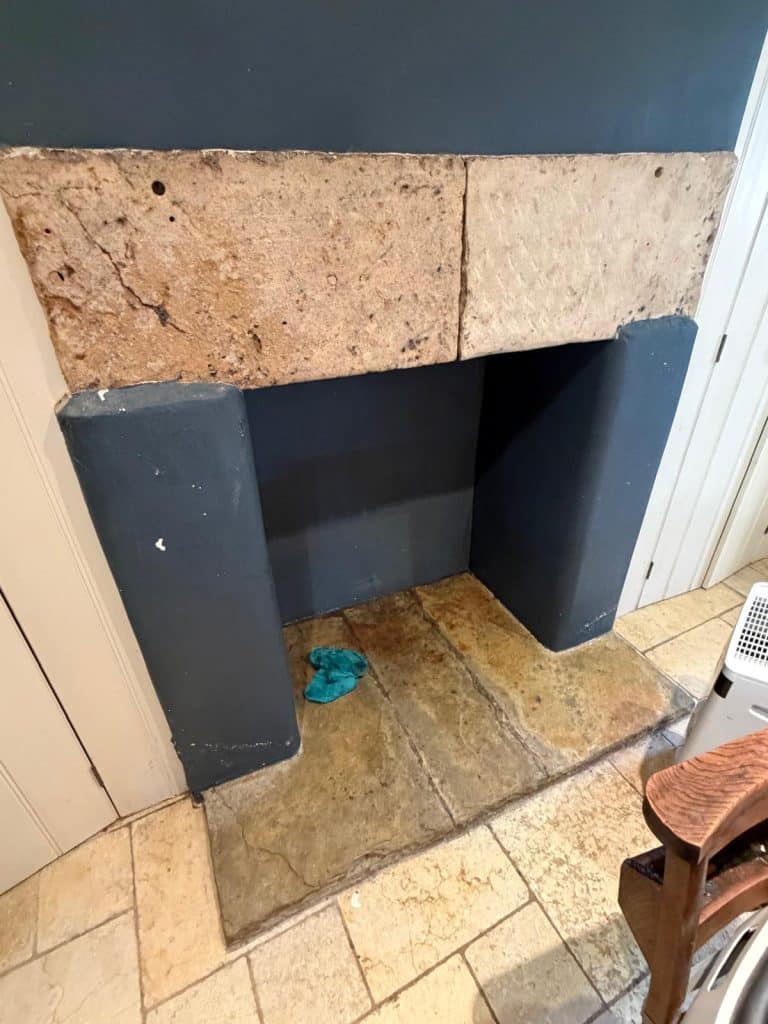
Rather than permanently removing the fireplace, the opening was incorporated into the new damp proofing system.
The cavity drainage membrane was continued around the fireplace opening to maintain the integrity of the moisture management system and prevent untreated sections from compromising the surrounding work.
The opening was then overboarded using a suitable fire-rated board.
This created a safe and tidy internal finish while retaining the original fireplace opening behind the new surface.
Importantly, this approach means the fireplace could potentially be reopened in the future if the homeowner decides to install a log burner or similar appliance, subject to the appropriate installation, ventilation and fire safety requirements.
The existing decorative stone detail above the fireplace was concealed behind the new damp proofing system as part of the treatment.
Why Chimney Breasts Can Develop Damp Problems
Chimney breasts and fireplace areas can be particularly susceptible to damp and salt-related problems, especially in older properties.
The source is not always rising damp. Moisture around a chimney breast can potentially be associated with rainwater penetration, defects higher up the chimney, historic combustion salts, condensation, unused flues or moisture entering through adjoining masonry.
Where external moisture is passing through the building fabric, penetrating damp treatment may be required instead of, or alongside, other remedial measures.
This is why Nordic Damp Proofing assesses the underlying cause before specifying treatment rather than assuming every damp patch requires the same solution.
A Complete Damp Remediation System for the Bath Property
This project demonstrates the different stages that can be required when treating extensive damp and salt contamination within a property.
The completed works included:
- Removal of existing wooden cupboards around the treatment area.
- Removal or disconnection of plumbing where required for access.
- Full floor-to-ceiling plaster removal within the affected dining room areas.
- Removal of affected bedroom plaster to approximately 1.5 metres.
- Removal of the existing dado rail.
- Exposure and preparation of the original masonry.
- Application of a specialist salt-neutralising solution.
- Installation of a new chemical damp proof course.
- Installation of a cavity drainage membrane system.
- Mechanical fixing using specialist cavity drainage plugs.
- Continuation of treatment around adjoining walls and into the hallway.
- Specialist detailing around the existing fireplace opening.
- Overboarding of the fireplace using a suitable fire-rated board.
- Professional replastering of the treated wall surfaces.
Using a combination of treatments allowed both the moisture movement within the masonry and the contaminated internal finishes to be addressed as part of one comprehensive damp remediation system.
The Finished Damp Proofing Works
Following completion of the underlying treatment, the affected walls were fully reinstated with new plaster.
The photographs from this Bath project show the transformation clearly, with the previously stripped dining room walls returned to a clean, smooth finish around the chimney breast, alcoves and adjoining walls.
The original fireplace opening has also been retained behind the new system, giving the homeowner the option to reopen it in the future if required.
Once the new plaster has completed the recommended drying period, the walls can be decorated to complete the internal finish.
Damp Proofing in Bath, Somerset
Bath contains a wide variety of properties, from historic stone buildings and period terraces to more modern homes. The construction of the building can have a significant influence on how moisture moves through walls and how a damp problem should be treated.
Nordic Damp Proofing provides professional damp investigation and treatment throughout Bath and the surrounding areas of Somerset.
Our services include rising damp treatment, penetrating damp treatment, chemical damp proof course installation, damp proof membranes, structural waterproofing and remedial plastering.
Rather than treating the visible symptoms alone, our aim is to identify the underlying cause of the moisture and specify a treatment appropriate for the property.
Need a Damp Survey in Bath?
If you have noticed damp patches, damaged plaster, salt deposits, peeling decoration or recurring moisture around a chimney breast, fireplace or external wall, it is important to establish where the moisture is coming from before carrying out repairs.
Nordic Damp Proofing can inspect the affected areas and recommend an appropriate treatment based on the condition and construction of the property.
Book a damp survey with Nordic Damp Proofing if you require professional damp investigation or treatment in Bath, Somerset.