Finding mould in a loft can be alarming, especially when the roof itself appears perfectly sound. You may see black or grey growth across rafters, water droplets on nail points, damp insulation or a strong musty smell, even though there are no missing tiles and no obvious leak.
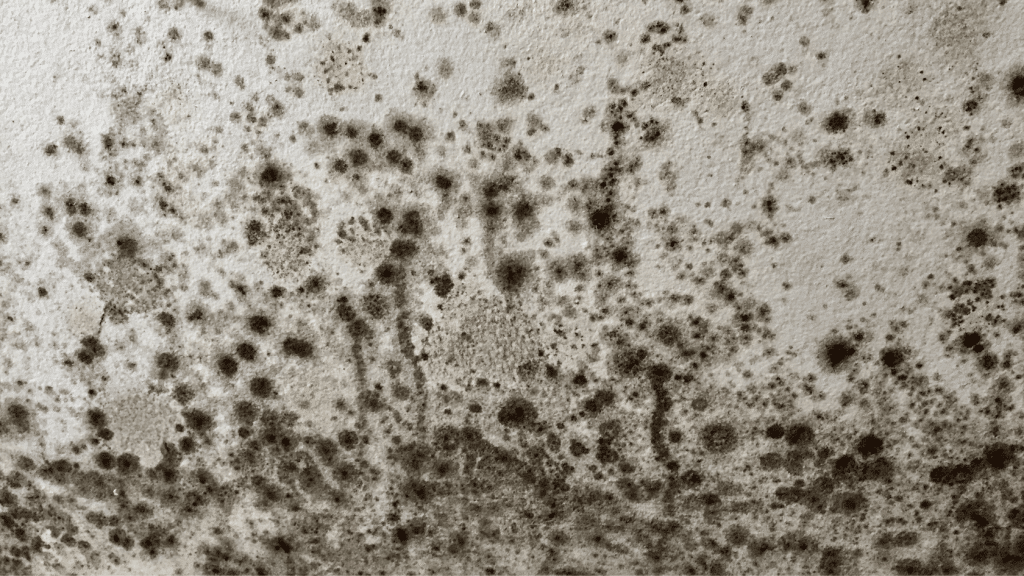

In most UK homes, loft mould is caused by condensation rather than rainwater getting through the roof. Warm, moisture-filled air rises from the rooms below, enters the cold loft space and condenses on the roof timbers and underside of the covering. If that moisture cannot escape, mould begins to grow.
The problem usually comes down to two things: too much moisture is reaching the loft, and there is not enough airflow to remove it. Fixing either side of that equation can make a significant difference, but the best results come from understanding where the moisture is coming from first.
Why does mould grow in a loft?
A traditional cold loft is meant to stay close to the outside temperature. The insulation sits at ceiling level to keep heat inside the rooms below, leaving the roof space itself unheated. That means the rafters, roof deck and metal fixings become very cold during winter.
Meanwhile, everyday life produces large amounts of water vapour. Cooking, showering, drying clothes indoors, boiling kettles and even breathing all release moisture into the air. Because warm air rises, some of that moisture naturally moves towards the highest part of the building.
If it passes through gaps in the ceiling and reaches the cold loft, the vapour turns back into liquid water. Poor ventilation then allows that moisture to remain on the timbers for long periods, creating ideal conditions for mould.
What are the most common causes?
Blocked eaves ventilation is one of the most common causes of loft condensation. The gaps at the eaves are meant to allow fresh air into the roof space, but they are often covered when additional insulation is pushed too far towards the wall plate. The loft may technically have ventilation, but the air cannot actually enter.
Another common issue is a lack of high-level ventilation. Air needs both an entry and an exit point. If fresh air can enter through the eaves but there are no ridge, tile or slate vents higher up, the airflow can remain weak and moisture stays trapped.
Extractor fans can create an even more serious problem. Bathroom or kitchen fans should always discharge outside the building. If the duct ends inside the loft, or has become disconnected from its external vent, it can pump warm, saturated air directly into the coldest part of the house.
Other routes include poorly sealed loft hatches, recessed downlights, gaps around pipes and cables, unvented tumble dryers and bathrooms without effective extraction. Older roofs with non-breathable bitumen felt can be particularly vulnerable because moisture cannot escape through the roof covering, making adequate ventilation even more important.
Is it condensation or a roof leak?
The easiest way to distinguish condensation from a leak is to look at when and where the moisture appears.
Condensation tends to affect broad areas of the roof space. You may see water droplets across the underside of the felt or roof deck, mould on several rafters and condensation forming on exposed nail points. It is often worse on the colder, north-facing side of the roof and can still be present after several days without rain.
A leak normally produces a much more defined pattern. Water appears in one area, can often be traced upwards towards a slipped tile, failed flashing or another roof defect, and becomes noticeably worse when it rains. If you inspect the loft after several dry days and it is still wet across a wide area, condensation is much more likely.
It is also possible to have both problems at the same time. If there is an obvious roof defect, repair that first. Once the roof is watertight, you can then assess whether condensation and ventilation issues remain.
What signs should you look for?
Loft mould does not always appear as obvious black patches. Different symptoms can give useful clues about how long the problem has been developing and where the moisture is coming from.
Look for:
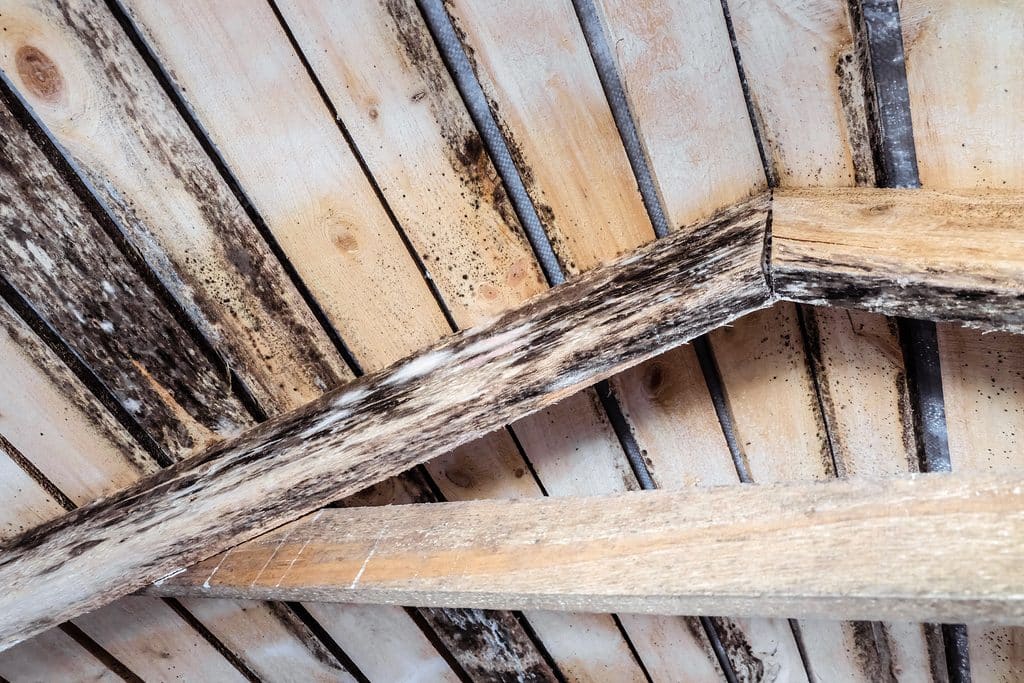
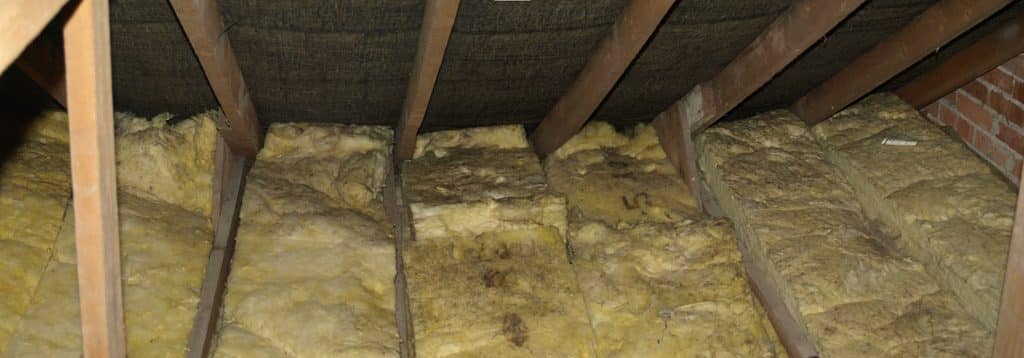
- Black or grey spotted mould across rafters, boards or roofing felt
- Water droplets forming on nails or other metal fixings
- Damp, dark or matted insulation
- Mould concentrated around the loft hatch
- White fungal growth on timber that needs proper identification
- Soft or weakened roof timbers
- A strong musty smell with no obvious leak
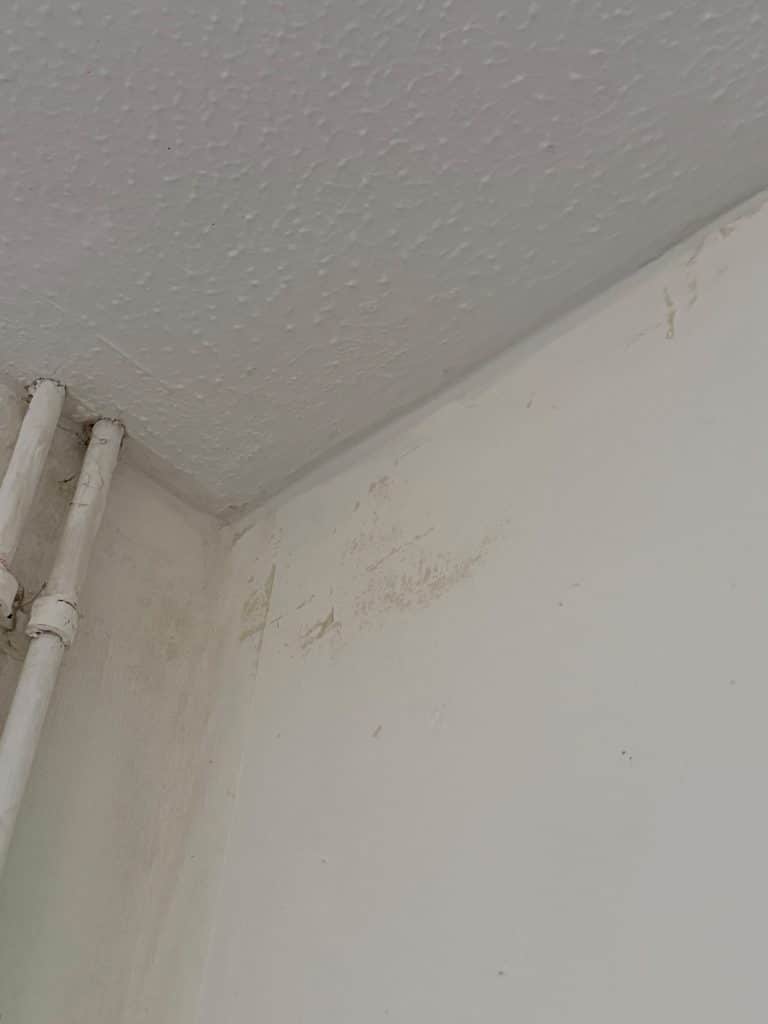
- Staining beginning to appear on ceilings below the loft
Mould spread across a large part of the roof usually points towards condensation. A single trail or patch is more suggestive of water ingress. Damp around the loft hatch can also indicate that warm air from the house is escaping directly into the roof space.
Is mould in the loft dangerous?
The health risk depends partly on how often the loft is used and how much mould is present. A loft that is entered only occasionally creates less direct exposure than mould growing in a bedroom or living room, but disturbing the growth can release spores into the air.
The longer-term concern is often the building itself. Persistent moisture can eventually lead to timber decay, encourage wood-boring insects and reduce the performance of insulation. Wet insulation transfers heat more easily than dry insulation, which can increase heat loss while leaving the homeowner unaware that the insulation is no longer working properly.
If you need to inspect a mouldy loft, avoid disturbing the growth unnecessarily. Appropriate respiratory protection, gloves and eye protection are sensible where there is significant visible mould.
How do you work out where the moisture is coming from?
Start by establishing whether you are dealing with condensation or rainwater. Compare the loft during dry weather and after heavy rain, and look at whether the moisture is widespread or concentrated around one particular point.
Next, inspect the ventilation route. Check the full length of the eaves and make sure insulation has not been pushed into the ventilation gap. Look for ridge vents, tile vents or slate vents higher up and confirm that air has a clear route through the roof space.
Then trace any extractor ducting and check where it actually terminates. Inspect the loft hatch, downlights and gaps around cables or pipes as well. Finally, think about the rooms below. If washing is regularly dried indoors, bathroom extraction is poor or the house remains very humid, the loft may simply be where a whole-house moisture problem is becoming visible.
What actually fixes loft mould?
The correct solution depends on what is causing the moisture, but the order of the work matters. Cleaning the mould before correcting the underlying problem usually means it will return the following winter.
The main fixes are:
- Repair any roof leaks first. Replace broken tiles, repair flashing and clear blocked valleys before addressing condensation.
- Restore the ventilation path. Keep the eaves clear and add suitable high-level ventilation where needed so air can move from low level to high level.
- Stop warm air leaking into the loft. Insulate and draught-seal the loft hatch and seal gaps around pipes, cables and downlights.
- Correct extractor ducting. Bathroom and kitchen extractors must discharge outside, not into the loft.
- Improve insulation without blocking airflow. Extra insulation helps, but it should never be packed into the eaves ventilation route.
- Reduce humidity in the rooms below. Use extractor fans properly, vent tumble dryers outdoors and avoid drying large amounts of washing in unventilated rooms.
In many cases, restoring proper airflow from the eaves towards the ridge makes the biggest difference. More ventilation is not simply about adding random vents; the goal is to create a clear route for moist air to enter, move through and leave the loft.
How should loft mould be cleaned?
Deal with the moisture source before cleaning the affected timber. If ventilation remains poor or humid air continues entering from below, cleaning alone is cosmetic and the mould is likely to return.
Where cleaning is appropriate, use a product intended for fungal growth on timber rather than relying on household bleach. Avoid aggressive dry scraping, which can release large quantities of spores into the air. Wet or heavily matted insulation is usually better replaced than dried and reused because its thermal performance may already have deteriorated.
Timbers that feel soft, crumble under pressure or show signs of decay should be assessed before they are simply cleaned. White fungal growth should also be identified properly, particularly if there is any concern about rot.
Can you stop loft mould coming back?
Prevention is mainly about keeping air moving and controlling how much moisture enters the roof space. Check the eaves after any insulation work, because blocked ventilation often appears immediately after an otherwise sensible energy-efficiency upgrade.
Extractor ducting should be checked periodically because flexible connections can loosen over time. The loft hatch should remain insulated and reasonably airtight, while bathrooms, kitchens and utility areas below should have effective extraction.
It is also worth checking the loft during winter rather than waiting until something appears on the ceiling below. A quick inspection on a cold morning can reveal condensation, damp insulation or early mould long before the problem becomes expensive.
Should bathroom extractor fans vent into the loft?

No. Bathroom and kitchen extractor fans should never terminate inside the loft.
The air being removed from these rooms is some of the warmest and most moisture-heavy air in the property. Discharging it into a cold loft creates ideal condensation conditions within minutes. The duct should run to a proper external outlet through a roof vent, tile vent or gable wall.
Insulated ducting is usually preferable through a cold loft because it reduces condensation forming inside the duct itself. The run should also be kept as short and straight as practical, with no low points where water can collect.
When should you get the loft checked?
Professional investigation is worthwhile if roof timbers are becoming soft, white fungal growth is present, woodworm appears alongside the mould, or the problem returns after ventilation improvements have already been made. Mould spreading through to the ceilings below is another sign that the issue has been present for some time.
A proper assessment should look beyond the visible mould and establish how moisture is entering the loft, whether the ventilation route is working and whether any timber has started to deteriorate.
Across Dorset, Hampshire, Wiltshire, Somerset and the wider South Coast and South West, Nordic Damp Proofing investigates loft mould, condensation and ventilation problems using moisture assessment and building diagnostics. Where the cause involves airflow, timber deterioration or persistent humidity, the aim is to identify the source first and specify the work that will actually prevent it returning.