You made a smart choice. You have an extractor fan. You switch it on, and yet black mould keeps coming back around the ceiling, the sealant and the corners. This is a common and frustrating issue. The reality is that having a fan and having enough ventilation are not the same. A fan that is not performing well can easily be mistaken for one that is.
Here is why the mould keeps returning and what you can do about it
A fan alone isn’t always enough
Bathrooms are often breeding grounds for mould. A single shower pours a huge amount of warm, moist air into a small room, and that moisture needs to go somewhere. An extractor fan is designed to push it outside before it settles on cold surfaces. However, if the fan is too weak, badly placed or not used long enough, then plenty of that damp air stays behind and condenses on the walls and ceiling, and feeds mould.
The common reasons mould persists
- The fan is too weak for the room. Cheap or older fans often do not move enough air to clear the steam in a busy family bathroom.
- It is not vented to the outside. This is a common oversight. Some fans simply push air into the loft or a wall cavity rather than outside the building, which just moves the moisture problem somewhere you cannot see it.
- It is not running long enough. Turning the fan off right after you leave leaves most of the steam behind. A fan needs to work for a while after a shower to clear the air, which is why timer- or humidity-controlled fans are more effective.
- There are cold spots. External walls, tiles and ceilings under a cold loft remain cool, causing moisture to condense there first. A fan helps, but it cannot fully combat surfaces that stay cold and damp.
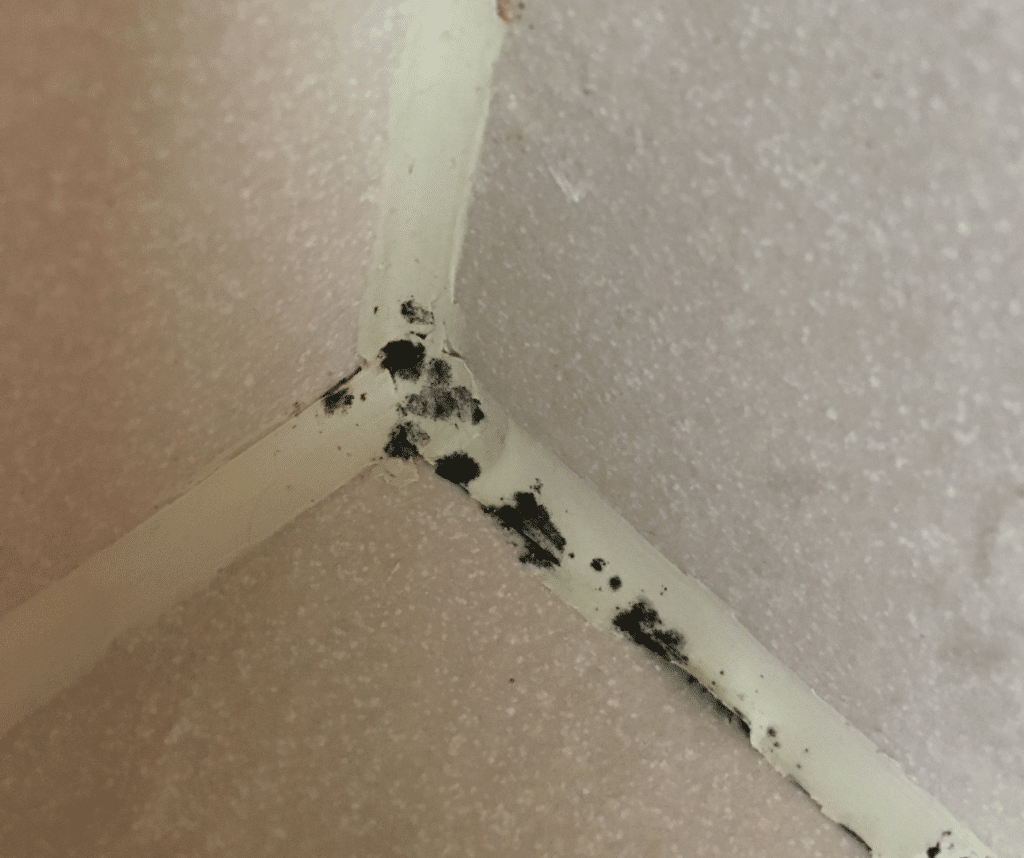
- Old sealant and grout are harboring it. Once mold gets into silicone sealant or grout lines, it can keep reappearing even when the air dries out because the spores are embedded.
Windowless bathrooms need extra help
If your bathroom lacks a window, the extractor fan has to do all the work on its own. So it needs to be up for the job. In these rooms, a weak or slow fan struggles to remove the steam from a hot shower, and the moisture lingers much longer than in a room that can be ventilated. A properly sized fan with a timer, or a quiet continuous extract fan that runs all day, often makes a significant difference in an internal bathroom.
What you can do
Start with the basics. Run the fan during your shower and for fifteen to twenty minutes afterwards. Open a window if you have one. Wipe down wet surfaces and keep the door shut during and just after showering to prevent moisture from spreading through the house. Clean existing mould from tiles and sealant, and replace any sealant that is too far gone to save. If the fan is old, weak or obviously not clearing the steam, consider installing a properly sized unit that vents outside and operates on a timer or humidity sensor.

A couple of small habits can help too. Wipe down the shower screen and tiles after use to reduce the amount of water left to evaporate into the room. You may consider an anti-condensation or anti-mould paint on ceilings that frequently show spots. Neither will solve a ventilation issue by itself, but they can ease some of the strain.
When it’s more than ventilation
Sometimes, the fan is not the issue. If mould keeps coming back despite good ventilation, or you notice it spreading beyond the bathroom, then there may be another source of moisture, such as a hidden leak, penetrating damp, or poor insulation that creates cold surfaces. In that case, it is worth having the room properly assessed rather than fighting a losing battle with bleach spray.
When to stop guessing
If you have upgraded the fan, changed your habits, and cleaned everything in reach, yet the mold still keeps coming back, the problem probably is not ventilation at all. It is time to have the room assessed rather than purchasing yet another bottle of spray. A quick survey can tell you whether a cold surface, a hidden leak, or a wider damp issue is really behind it, so you can stop chasing the same patch every few weeks.
If you are not sure what is driving the damp in your home, a proper survey will tell you. We’re around across Dorset, Hampshire and the South Coast if you would like a hand.