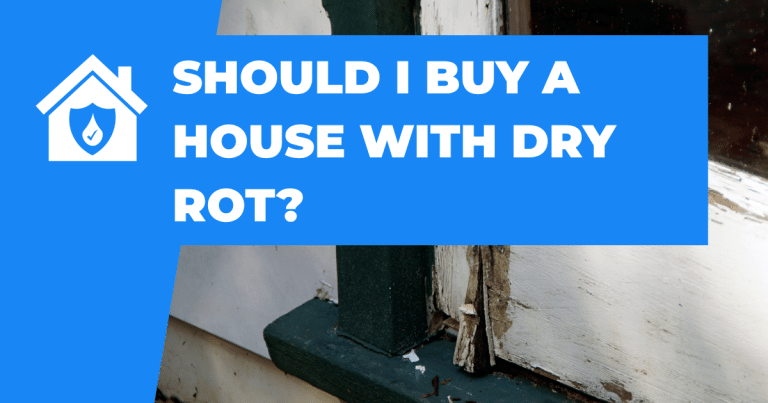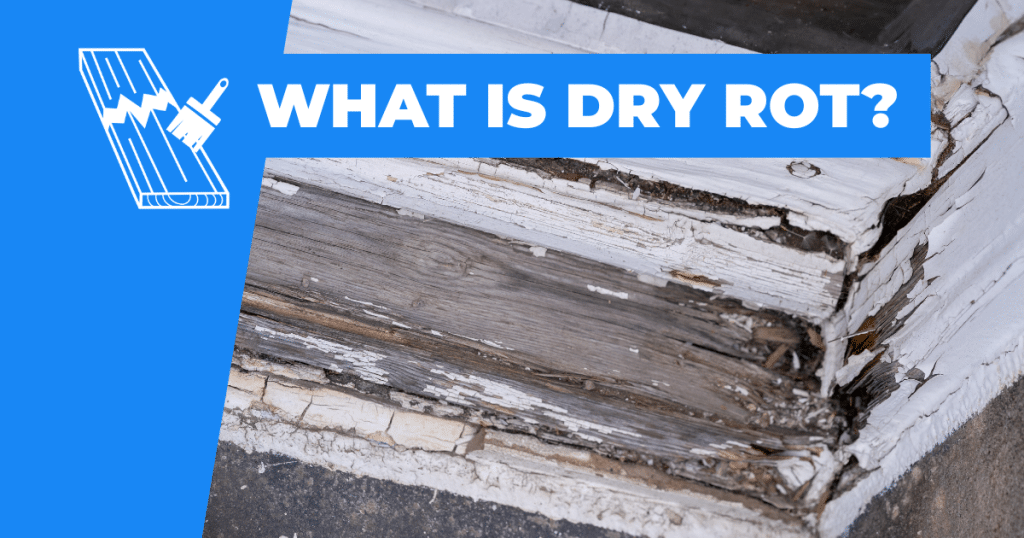
Dry rot is a wood-destroying fungus that can cause serious structural damage if left untreated. Despite the name, dry rot is caused by damp conditions. The most common species in the UK, Serpula lacrymans, attacks timber that has become wet or moisture-rich. As the fungus digests the wood, it leaves it dry, brittle, cracked and crumbly.
The term “dry rot” comes from the dried-out appearance of the decayed timber, but moisture is always the root cause. Dry rot occurs when timber reaches a moisture content of around 20% or higher – often due to leaks, poor ventilation, rising damp, penetrating damp, or building defects. Once it has established itself, dry rot is notorious for spreading beyond the initial damp zone. It can travel through masonry and across surfaces to find new timber to feed on, making it one of the most damaging forms of timber decay in buildings.
Where Does Dry Rot Occur in Homes?
Dry rot thrives in dark, unventilated and damp areas – typically parts of the home you rarely inspect. Common locations include:
• Under floorboards and in crawl spaces, especially if air bricks are blocked
• Basements and cellars where humidity is high
• Loft spaces and roof timbers, particularly if there is a leak or poor ventilation
• Behind plasterboard, panelling and inside wall cavities
• Around skirting boards, door frames and window frames where adjoining walls are damp
• Under stairs, behind built-in cupboards and in other enclosed spaces
Dry rot often begins in one spot – such as near a leaking pipe – and then spreads along timber or behind walls into other rooms. Any area that is damp and lacking airflow is a potential hotspot.
How to Identify Dry Rot (Looks, Smell and Feel)
Dry rot isn’t always obvious in the early stages, but it does produce clear signs as it develops.
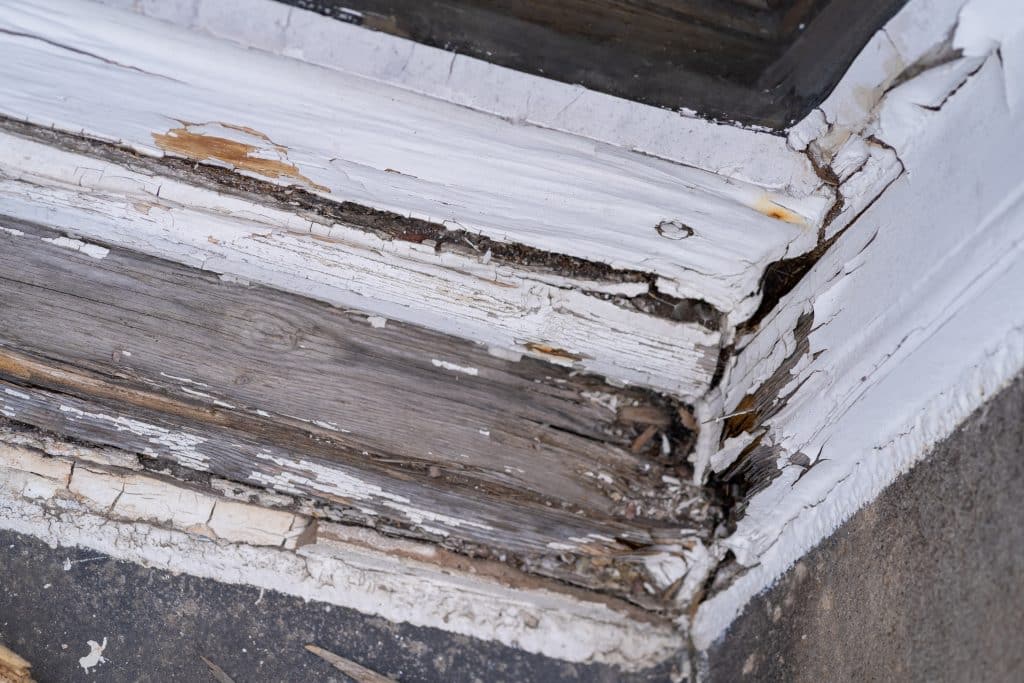
Appearance of the Wood
- Timber becomes dry, brittle and crumbly
- Wood often cracks into cube-shaped segments (known as cuboidal cracking)
- The colour may darken or look brown and dusty
- Affected wood often breaks apart by hand
This differs from wet rot, which leaves wood soft, spongy and visibly wet.
Fungal Mycelium
The fungus produces mycelium – a cotton-wool-like growth that may be:
- White and fluffy
- Thin and grey-white in drier areas
- Sometimes with yellow or purple tinges
- Root-like strands (rhizomorphs) that look like pale or grey cords and help the fungus spread
Fruiting Bodies and Spores
In advanced cases, dry rot forms mushroom-like fruiting bodies. These:
- Often appear as flat discs or brackets
- Are typically orange-brown or rusty red in the centre with white edges
- Shed red-brown dust (spores) onto surrounding surfaces
The spore dust looks like fine rust-coloured powder.
Smell
Dry rot gives off a strong, damp, earthy, mushroom-like odour. This smell is often the first sign that rot is developing behind walls or under floors.
Touch
Affected wood feels very dry and fragile. Mycelium on the surface may feel silky or cottony.
By the time fruiting bodies or spores appear in visible areas, the infestation is usually well advanced behind the scenes.
Dry Rot vs Wet Rot – How to Tell the Difference
Identifying the correct type of rot is essential, as treatment varies significantly.
Moisture Levels
- Wet rot requires ongoing high moisture and stays confined to damp timber.
- Dry rot needs moisture to start, but once active it can move away from the damp source and continue to spread.
Ability to Spread
- Dry rot can travel through masonry, plaster and brick to reach new timber.
- Wet rot cannot spread through masonry – it stays in one localised area.
Condition of the Timber
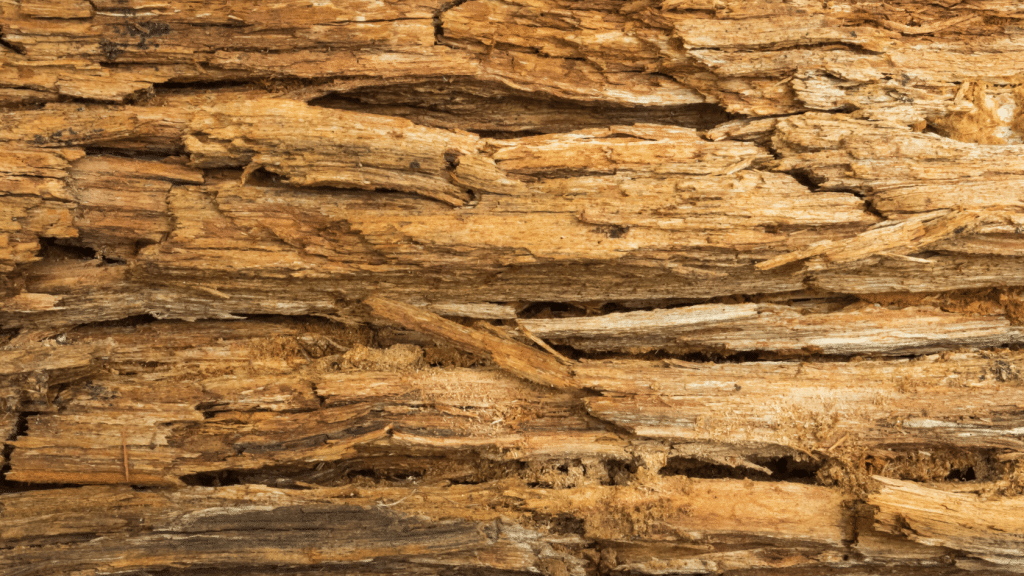
- Wet rot: wood feels wet, soft and spongy.
- Dry rot: wood is dry, cracked, brittle and crumbly.
Fungal Growth
- Wet rot rarely produces large visible mycelium or fruiting bodies.
- Dry rot often produces thick white mycelium and mushroom-like fruiting bodies.
Smell
- Wet rot smells damp.
- Dry rot has a strong mushroom-like smell.
Severity and Speed
Dry rot spreads faster and can cause far more widespread structural damage than wet rot. Wet rot tends to remain localised.
If you’re unsure which rot you have, always get a professional survey to avoid misdiagnosis.
How Quickly Does Dry Rot Spread?
Dry rot spreads alarmingly fast in the right conditions. It can advance several centimetres per day in warm, humid environments. Even in less-than-ideal conditions, it spreads far quicker than most other wood decay fungi.
Much of this growth happens out of sight – under floors, behind plaster, or inside cavities. Often the first visible sign is a fruiting body or fungal smell, meaning the fungus may already have caused months of hidden damage. A small patch of rot can become a major infestation within weeks or months.
Why You Must Treat Dry Rot Quickly
Dry rot must never be ignored. If left untreated, it can:
• Cause structural timbers to weaken or collapse
• Spread rapidly into joists, beams, floors and roof structures
• Lead to expensive repairs – often running into thousands
• Devalue your property or delay mortgage approvals
• Affect indoor air quality
• Void insurance claims (many policies exclude rot damage caused by lack of maintenance)
Dry rot is a progressive problem – it does not stay contained. The longer it’s active, the more destructive it becomes.
Professional Dry Rot Treatment and Prevention
Dry rot cannot be properly treated with DIY products. Professional intervention is essential because the fungus can hide deep within building materials.
A comprehensive treatment programme typically includes:
1. Identifying and eliminating the moisture source
Whether it’s a leak, poor ventilation, rainwater ingress or rising damp, the cause must be fixed first. Without moisture, dry rot cannot survive.
2. Removing damaged timber
All severely decayed or structurally unsafe wood must be cut out and replaced with sound, pre-treated timber.
3. Treating surrounding areas
Specialist fungicidal treatments are applied to adjacent timber and masonry to kill remaining spores and prevent re-growth. Improving ventilation or drying the area is often essential.
4. Rebuilding and restoring the structure
Once the fungus is eliminated, new structural components are installed and finishes restored.
Professionals also use moisture meters, thermal imaging and specialist tools to ensure hidden pockets of rot are located and eradicated. Treating only the visible areas will not stop the fungus.
Early intervention always results in less damage and lower repair costs.
We Find It. We Treat It. We Stop It Coming Back.
Professional dry rot treatment gives you long-term peace of mind. By locating the damp source, removing affected timber and treating all surrounding areas, the fungus can be completely eradicated and prevented from returning.